
ml1 project review

ML-1 project review to be completed by October 30

An important meeting regarding the ML-1 project was held under the chairmanship of Chairman Pakistan Railways Syed Mazhar Ali Shah. International design consultants, review consultants, and senior officers of Pakistan Railways attended the meeting.

The meeting reviewed in detail various matters related to the upgradation of the Karachi-Rohri section. Discussions were also held on the project’s preparation, progress, and future course of action.

Chairman Pakistan Railways directed that the review phase of the ML-1 project be completed by October 30, 2026. He also directed that the progress of the project be continuously monitored and reviewed on a weekly basis.

It was decided that the second phase of market consultation for the ML-1 project will commence on September 8, 2026. The second phase will include detailed consultations with market experts and relevant stakeholders on project preparation, technical matters, and the way forward.

Pakistan Railways will benefit from market proposals, international experience, and expert opinions to make the ML-1 project more effective, modern, and viable. The principles of merit, transparency, and competitiveness will be ensured at every stage of the project’s preparation and implementation.

Federal Minister for Railways Muhammad Hanif Abbasi expressed satisfaction over the progress on the ML-1 project and said that ML-1 is the foundation for the development and modernization of Pakistan Railways and for meeting future requirements. The upgradation of the project will significantly improve train speeds, passenger facilities, and the overall performance of Pakistan Railways.

The Federal Minister said that the ML-1 project would be further strengthened and made more effective in light of the best proposals and expert opinions. He emphasized that merit, transparency, and competitiveness are of fundamental importance to the project and that there would be no compromise on these principles.

Muhammad Hanif Abbasi said that Prime Minister Muhammad Shehbaz Sharif is taking a keen interest in the ML-1 project and has directed that it be completed within the stipulated timeframe. The Prime Minister is also continuously monitoring progress on the project.

The Federal Minister for Railways said that, in view of the progress made so far, the prospects for the commencement of Pakistan Railways’ flagship ML-1 project this year are bright. The government is taking all necessary measures to make ML-1 the foundation of a modern, safe, high-speed, and efficient railway system in the country.
Similar Posts

  • KP to celebrate International Youth Day at University of Peshawar

    PESHAWAR: The Directorate of Youth Affairs, Government of Khyber Pakhtunkhwa, will organise a programme to mark International Youth Day 2026 at Sahibzada Abdul Qayyum Hall, University of Peshawar, on Wednesday, August 12, from 2pm to 6pm. Chief Minister Khyber Pakhtunkhwa Sohail Afridi will attend the event as the chief guest, while Advisor to the Chief Minister for Sports and Youth Affairs Taj Muhammad Khan Tarand will also participate. The event has been planned as a celebration of the passion, potential and power of youth and will feature a range of activities aimed at recognising young people’s achievements and providing them with a platform for expression and engagement. A key feature of the programme will be a panel discussion featuring Akif Khan, Sumaira Shams, Samar Khan, Abaseen Yousafzai, Junaid of Jamboys and Asif Qurashi. The programme will also include the Youth Excellence Awards, through which outstanding young people will be recognised for their achievements and contributions. A youth anthem will be launched during the event, with Mehtab Ziyab associated with its presentation. The celebrations will also feature live music performances by Tamash Band and Junaid Kamran Siddique, besides a segment featuring inspirational stories. Director Youth Affairs Abbas Khan Afridi said the event was being organised to celebrate the talent, energy and achievements of young people in Khyber Pakhtunkhwa. He said the Directorate remained committed to creating opportunities for young people to showcase their abilities, develop their potential and play a constructive role in society. “Our youth possess immense talent, creativity and potential. It is our responsibility to provide them with platforms where their abilities can be recognised and their voices can be heard,” Mr Afridi said. He added that the International Youth Day celebrations would bring together young people from different backgrounds and provide them an opportunity to engage with distinguished personalities, share ideas and celebrate youth achievements. The event carries the message “Empowering Youth, Shaping the Future” and will run from 2pm to 6pm at Shahzebda Abdul Qayyum Hall, University of Peshawar.

  • | | | |

    Pakistan, Saudi Arabia and Türkiye sign Makkah jo…

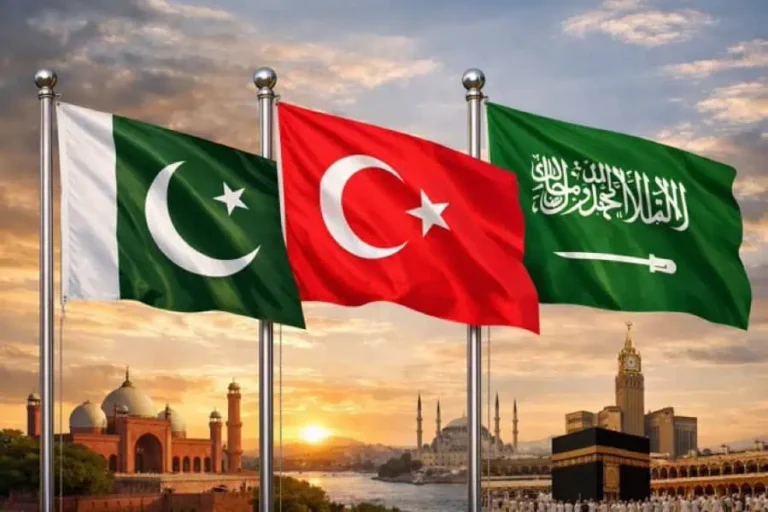
    MAKKAH: Pakistan, Saudi Arabia and Türkiye have signed the Makkah Joint Defence Agreement, pledging to strengthen collective security and defence cooperation among the three countries. The agreement was signed on Friday during a high-level summit at Al-Safa Palace in Makkah, where Saudi Crown Prince and Prime Minister Mohammed bin Salman received Pakistani Prime Minister Shehbaz Sharif and Turkish President Recep Tayyip Erdogan. According to the agreement, the three countries reaffirmed their commitment to strengthening collective security and promoting peace, stability and security in the region and beyond. The agreement is based on the longstanding relations and shared strategic interests of Pakistan, Saudi Arabia and Türkiye. It also highlights their continued defence cooperation and commitment to closer coordination on security matters. Any attack to be treated as an attack on all three A key provision of the agreement states that an armed attack against any one of the three countries will be regarded as an attack against all three. The pact is intended to enhance collective deterrence against acts of aggression and expand cooperation across various areas of defence. The agreement also seeks to strengthen military and security coordination among the three states and build a framework for closer cooperation in the face of regional security challenges. The summit brought together the leaders at a time of heightened tensions and instability across the Middle East. Recent reporting had indicated that the three countries were preparing to deepen defence coordination through a joint pact. Prime Minister Shehbaz Sharif was accompanied by Deputy Prime Minister and Foreign Minister Ishaq Dar, Chief of Army Staff and Chief of Defence Forces Field Marshal Syed Asim Munir, and Defence Minister Khawaja Asif. The leaders also reviewed bilateral and regional matters of mutual interest and discussed ways to further strengthen cooperation. The Makkah agreement marks a significant development in defence ties among Pakistan, Saudi Arabia and Türkiye, establishing a stronger trilateral framework for collective security and defence cooperation.

  • | |

    Justice delayed for 40 years is injustice, says Mu…

    Prominent religious scholar Mufti Muneeb-ur-Rehman has called for urgent reforms in Pakistan’s justice and economic systems, saying that a legal framework that fails to deliver justice for decades cannot be considered fair. Addressing a gathering in Karachi on Tuesday, Mufti Muneeb said prolonged court cases lasting 40 years amount to injustice and place an enormous burden on ordinary citizens. He stressed that timely justice is essential for social stability and public trust in institutions. The scholar also urged those in power to focus on resolving Pakistan’s domestic challenges. He said leaders often discuss global issues, but greater attention should be given to pressing national matters, particularly economic concerns affecting millions of people. Referring to the energy sector, Mufti Muneeb called for a solution to issues related to Independent Power Producers (IPPs), which have frequently been debated in Pakistan due to their impact on electricity costs and the national economy. He further highlighted the country’s financial difficulties, saying that after payments related to provincial allocations and debt obligations, limited resources remain for development and public welfare. Speaking at the same event, Maulana Bashir Farooqi expressed concern over the continuation of the interest-based banking system. He said there was a need for serious efforts to move toward alternative financial models and added that his organization was prepared to help train employees of conventional banks if reforms were introduced. The remarks come amid ongoing debates in Pakistan over judicial reforms, economic challenges and proposals for changes in the financial system.

  • | |

    Balochistan home minister survives Mastung convoy …

    QUETTA: Balochistan Home Minister Mir Ziaullah Langove remained safe after armed attackers targeted his convoy in Mastung on Friday. The attack took place in the Khad Kocha area. Langove was travelling from Kalat to Quetta when his convoy came under fire. The minister was not injured in the attack. However, six people sustained bullet wounds. Three of the injured were police personnel accompanying the convoy. The injured were immediately taken to Nawab Raisani Memorial Hospital for treatment. Hospital officials said six wounded people were brought to the facility. Two injured people were in serious condition. Two others were later referred to Quetta for further medical treatment. Security forces quickly surrounded the area after the attack. A search operation was launched to trace the attackers and determine their whereabouts. Security personnel also began collecting evidence from the site. The authorities are investigating how the attackers targeted the convoy and managed to escape. No group has so far claimed responsibility for the attack. The incident has raised fresh security concerns in Mastung and surrounding areas. Balochistan has witnessed several attacks in recent years, with security forces frequently conducting operations against armed groups. Langove belongs to the Balochistan Awami Party. He assumed the provincial home ministry in March this year. He has previously served as Balochistan’s home minister. His earlier appointment was later declared invalid after he was removed from the provincial cabinet in August 2024. The latest attack has prompted authorities to review security arrangements for senior government officials travelling through sensitive areas.

  • | |

    Rs19,000 billion federal spending sparks Senate de…

    Islamabad: A Senate committee has raised serious questions over the functioning of the Council of Common Interests (CCI), warning that constitutional powers given to provinces after the 18th Amendment are being weakened through the revival of federal ministries on devolved subjects. The Senate Standing Committee on Devolution expressed concern that ministries related to education, health, agriculture, food security, climate change and other provincial matters were recreated at the federal level despite their transfer to provinces under the constitutional process. The committee questioned why federal institutions were continuing to handle matters that were supposed to belong to provinces after the 18th Constitutional Amendment, calling for a review of the entire system. The meeting was held at Parliament House, Islamabad, where Senator Zamir Hussain Ghumro presided over the session. Senators Poonjo Bheel and Jan Muhammad Buledi also attended the meeting. Senator Ghumro said that under the 18th Amendment, a detailed process was completed in 2010 and 2011 to transfer powers from the federal government to provinces. He explained that notifications issued on December 2, 2010, April 15, 2011, and June 29, 2011 resulted in the devolution of 17 ministries dealing with subjects that were shifted to provincial control. According to Senator Ghumro, the recreation of ministries after June 30, 2011, on subjects already transferred to provinces was against the spirit of the Constitution. He specifically pointed towards areas including education, health, national food security, culture, climate change, housing, social initiatives, EOBI, Evacuee Trust matters and Zakat and Ushr related functions. The senator argued that creating federal structures for provincial subjects has increased government expenses at a time when Pakistan is facing financial pressure. He claimed that federal government expenditure has increased to around Rs19,000 billion, while the country’s total tax and non tax revenue stands near Rs20,000 billion. Senator Ghumro said that apart from defence requirements due to security challenges, other federal ministries should have limited budgets according to constitutional responsibilities. He suggested that reducing unnecessary federal administrative structures could save around Rs5,000 to Rs6,000 billion and help reduce dependence on foreign loans. The committee also raised concerns about the ineffective role of the Council of Common Interests, a constitutional body responsible for resolving issues between the federation and provinces. Senator Ghumro said the CCI’s permanent secretariat was not functioning effectively and stressed that the institution must be strengthened to protect provincial rights. The committee decided to form a subcommittee to examine alleged violations related to the implementation of the 18th Amendment, including the revival of ministries and the role of the CCI. Senator Poonjo Bheel said that ministries created on devolved subjects should be abolished because the matter had already been settled through the constitutional process. Senator Jan Muhammad Buledi said the subcommittee should not only review the recreated ministries but also examine why the CCI had become ineffective despite having an important constitutional role. The committee also directed the Establishment Division to avoid making appointments in departments dealing with devolved subjects and ensure that provincial representation is protected in government appointments and promotions. Officials were asked to provide details of appointments in different grades within two weeks and submit a compliance report within 15 days. It emphasized that the federal government should support provinces rather than reduce their constitutional benefits. The committee also reviewed the issue of the Rs46 billion allocation for Quaid-e-Azam’s Mausoleum, which was not released last year and was reportedly transferred to another ministry. The committee directed authorities to provide monthly progress reports regarding the development and maintenance of Mazar-e-Quaid. The committee further sought details about the tenure of federal secretaries and directed the Establishment Division to submit complete records.

  • | |

    Hafiz Naeem calls rising levies ‘petrol bombs’…

    Jamaat-e-Islami Pakistan Ameer Hafiz Naeem-ur-Rehman has strongly criticized the government’s taxation and energy policies, accusing authorities of placing an unbearable financial burden on ordinary citizens. Addressing participants at a sit-in in Lahore, Hafiz Naeem said people were being economically crushed in the name of petroleum levies, describing the frequent increases in fuel costs as “petrol bombs” being dropped on the public. He said the government attributed rising petroleum prices to higher rates in the international market and argued that importing refined petroleum products had become increasingly expensive. However, he maintained that the resulting burden was ultimately transferred to consumers. The JI chief also criticized the condition of Pakistan’s oil-refining sector, saying successive governments had failed to modernize and upgrade refineries. He pointed out that motorcycle users and other ordinary consumers were also paying petroleum levies, while higher petrol prices eventually pushed up the cost of everyday goods. Hafiz Naeem described the petroleum levy as a form of taxation and argued that the existing system had little connection with the welfare of ordinary people. He also criticized the country’s electricity pricing structure, claiming that consumers were being charged heavily despite relatively low generation costs. He further warned that once an effective judicial system was established, those responsible for governance and financial decisions would face scrutiny. He said audits and trials would reveal the assets and financial dealings of those involved. Hafiz Naeem emphasized that the ongoing sit-in was not aimed at advancing the interests of any individual or political personality. He said the movement was being organized to raise the grievances of the public and demand relief from mounting economic pressures.

Leave a Reply

Your email address will not be published. Required fields are marked *