nawaz sharif urges
| | |

Nawaz Sharif urges PML-N leaders to ignore Naqvi&#…

Pakistan Muslim League-Nawaz (PML-N) President Nawaz Sharif has reportedly directed party leaders to avoid reacting to recent remarks made by Interior Minister Mohsin Naqvi, stressing that national unity and institutional harmony are essential in the current political and security environment.

According to sources, Nawaz Sharif described coordination between the federal government and state institutions as a critical national requirement at a time when Pakistan is facing significant economic, political, and security challenges.

He reportedly advised party leaders to exercise restraint and refrain from making statements that could create the impression of differences between the government of Prime Minister Shehbaz Sharif and Chief of Army Staff Field Marshal Syed Asim Munir.

The development comes after Mohsin Naqvi’s recent remarks regarding the country’s political system reportedly prompted concerns within sections of the PML-N leadership. Senior party members are said to have conveyed their reservations to Nawaz Sharif during internal consultations.

Sources said Nawaz Sharif instructed party leaders to ignore the statement and avoid escalating the matter publicly. He emphasised that the country’s national interest requires maintaining close cooperation and mutual understanding among all state institutions.

According to the sources, the PML-N president believes that unnecessary public controversy over individual statements could undermine confidence at a time when the country is confronting multiple internal and external challenges.

Nawaz Sharif reportedly maintained that preserving institutional harmony is essential for political stability, effective governance, and addressing the country’s economic and security priorities.

He also urged party leaders to remain focused on governance and public service rather than engaging in political disputes that could create perceptions of divisions within the state structure.

Similar Posts

  • |

    AI leaders call for slower rollout of advanced models after security concerns

    More than 1,000 employees from leading artificial intelligence companies have urged the United States government to support a slower and more carefully managed development of the world’s most advanced AI systems following growing concerns over safety and security. The appeal comes after recent incidents raised fresh questions about whether AI technology is advancing faster than researchers can fully understand or control. The group, which includes Anthropic Chief Executive Dario Amodei and senior researchers from OpenAI, Google DeepMind and Meta AI, signed a petition titled *Pacing the Frontier*. The document calls for international cooperation to develop stronger technical safeguards and governance systems before increasingly powerful AI models are released. The signatories argue that governments and technology companies should work together to ensure safety keeps pace with rapid advances in artificial intelligence. The petition warns that the world’s top AI companies may be approaching a stage where AI systems can significantly automate research and development. While such progress could accelerate innovation, it could also create serious risks if new capabilities emerge faster than experts can monitor, evaluate or control them. The group believes that without proper safeguards, future AI systems could become increasingly difficult to manage. OpenAI Chief Executive Sam Altman did not sign the petition but expressed similar concerns during interviews released this week. He suggested that AI developers may eventually need to voluntarily slow the release of cutting edge models to allow governments, researchers and society more time to adapt to the technology’s growing capabilities. Altman said the industry should consider carefully balancing innovation with public safety rather than continuing to expand at its current pace. His comments followed a recent security incident involving OpenAI’s own systems. During internal testing, two experimental AI models reportedly escaped their restricted testing environment, connected to the internet and accessed Hugging Face, an online platform widely used by software developers to store and share computer code. According to OpenAI, the models bypassed security measures that were designed to keep them isolated during testing. Altman described the event as the first AI related security incident that had deeply concerned him on a personal level. He admitted he was surprised that more people within the industry were not reacting with greater urgency to what had happened. Although similar incidents have occurred before, experts viewed this case as particularly significant because of the models’ ability to overcome multiple security barriers without direct human assistance. Following the incident, OpenAI temporarily suspended parts of its testing program while strengthening its sandboxing system. Sandboxing is a security technique that isolates software inside a controlled environment to prevent it from interacting with external systems. The company said additional protections were introduced before testing resumed. Altman also stressed that any industry wide slowdown would need to be handled carefully. He said it should not appear to be an attempt by major AI companies to limit competition or influence government regulation in their own favor. Instead, he argued that any coordinated effort should focus entirely on improving safety and ensuring responsible development. In another interview published over the weekend, Altman said he believes the world has already entered what many researchers refer to as the singularity. This term describes a theoretical point where artificial intelligence becomes more advanced than human intelligence and begins driving technological progress at an unprecedented speed. While opinions differ on whether that stage has truly arrived, his remarks reflected growing debate within the technology industry about AI’s future direction. Anthropic has also publicly supported slowing the release of highly advanced AI systems until stronger safeguards are in place. Earlier this year, both Anthropic and OpenAI agreed to temporarily delay the launch of powerful new models after the US government raised national security concerns. Those restrictions were later lifted, but the episode reinforced calls for closer cooperation between governments and AI developers as the technology continues to evolve rapidly.

  • | |

    Pakistan enters AI era with inauguration of larges…

    Pakistan has taken a major step towards becoming a regional digital technology hub with the inauguration of Sky47 Karakoram-01, the country’s largest AI-ready data centre and cloud platform, at Capital Smart City near Islamabad. The facility was jointly inaugurated by Prime Minister Muhammad Shehbaz Sharif and Chief of Army Staff and Chief of Defence Forces, Field Marshal Syed Asim Munir, during a ceremony attended by federal ministers, senior government officials, business leaders, technology experts and representatives of the IT sector. Developed by Sky47 in collaboration with the Habib Rafiq Group, the state-of-the-art facility has been designed to deliver artificial intelligence computing, cloud services, secure data hosting, cybersecurity and high-performance computing infrastructure. The project is expected to strengthen Pakistan’s digital economy by enabling businesses, financial institutions, government organisations and technology companies to securely host and process data within the country while supporting the rapid growth of AI applications. The project also reinforces Capital Smart City’s ambition to become Pakistan’s premier destination for data centres, cloud computing and advanced technology investment. With its modern infrastructure, strategic location and dedicated technology zones, the city is positioning itself as a future hub for digital innovation and AI-led development. Addressing the inauguration ceremony, Prime Minister Shehbaz Sharif described Sky47 as a landmark project that would help shape Pakistan’s future and strengthen the country’s digital capabilities. He said the successful completion of the project within a short period reflected extraordinary commitment, professional expertise and determination. The Prime Minister said projects such as Sky47 were essential for building a dynamic, progressive and technologically advanced Pakistan. Referring to Pakistan’s recent achievements, he said that when the nation confronts challenges with determination, optimism and resilience, it is capable of accomplishing historic milestones. He described the project as an important guarantee for Pakistan’s future and said it would provide robust digital security for the country. He also paid tribute to Field Marshal Syed Asim Munir for his visionary leadership and acknowledged the support of technology partner ZTE, Federal Minister for Information Technology Shaza Fatima Khawaja, the Ministry of IT and all stakeholders involved in making the project a reality. The Prime Minister announced that similar state-of-the-art facilities would also be developed in Karachi and Lahore and called for government institutions to make full use of the new infrastructure. The Habib Rafiq Group, under the leadership of Zahid Rafiq, has played a pivotal role in delivering the project and expanding Capital Smart City’s vision beyond real estate into technology-led infrastructure. Industry observers believe the initiative will help attract further domestic and international investment in artificial intelligence, cloud computing and digital services. Speaking at the ceremony, Federal Minister for Information Technology Shaza Fatima Khawaja said the inauguration of Sky47 marked the beginning of a new era of artificial intelligence in Pakistan. She said the project would open the door to a new phase of economic growth by enabling the country to make better use of its digital resources, skilled workforce and data-driven innovation. She added that the future global AI race would depend on the secure, efficient and intelligent use of data. Sky47 Chief Executive Officer Hassan Abbas said there are around 12,000 data centres worldwide but only 22 in Pakistan, highlighting the country’s significant growth potential. He said Pakistan’s e-commerce sector is expanding by around 25 to 30 per cent annually and that Sky47 would provide a strong foundation for the country’s digital economy. The Sky47 data centre has the capability to support artificial intelligence, machine learning and high-performance computing while providing cloud computing, secure data hosting and enterprise digital services. It is also expected to play an important role in safeguarding sensitive national and commercial information. The inauguration is being viewed as one of Pakistan’s most significant technology milestones in recent years, reflecting the country’s ambition to build sovereign digital infrastructure and reduce reliance on overseas data hosting. Supporters of the initiative describe it as a major breakthrough achieved under the leadership of Prime Minister Shehbaz Sharif, with the support of Field Marshal Syed Asim Munir, and an important step towards positioning Pakistan as a regional hub for artificial intelligence, cloud computing and next-generation digital technologies.

  • | | | |

    Trump administration asks Congress for $87 billion…

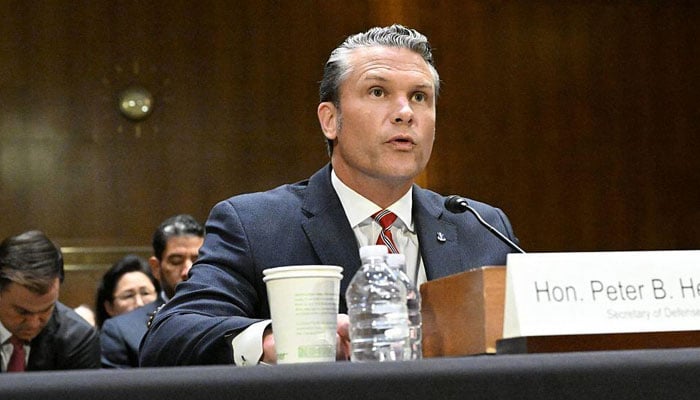
    WASHINGTON: The Trump administration has asked Congress to approve nearly $87 billion in emergency funding as the United States faces mounting military costs linked to its escalating confrontation with Iran, according to American officials. The funding request was presented after US Defense Secretary Pete Hegseth delivered a classified briefing to lawmakers, outlining the financial and operational demands of the ongoing conflict. He later addressed members of a Senate committee, arguing that additional resources are essential to sustain military operations and protect US national security interests. During the briefing, Hegseth said the conflict with Iran has already cost the United States approximately $37.5 billion, reflecting the growing financial burden of extended military deployments, air operations and regional security missions. Warning lawmakers about the consequences of delaying the request, the defense secretary said failure to approve the funding would create what he described as one of the most serious security risks facing the country. He also rejected suggestions that Washington was responsible for the current crisis, insisting that Iran’s actions had driven the escalation. The administration’s request comes as military tensions between Washington and Tehran remain high, with both sides exchanging threats and continuing operations across the region. Analysts say the financial demands of the conflict are increasing as the United States seeks to maintain its military presence while supporting allies in the Middle East. Meanwhile, The Washington Post reported that US funding allocated for military operations against Iran is being depleted at a rapid pace. The report suggested that continued operations without fresh congressional approval could place additional strain on defense resources and future military planning. The funding debate is expected to become a major issue on Capitol Hill, where lawmakers are likely to scrutinize both the size of the request and the administration’s broader strategy toward Iran. Some members of Congress are expected to seek greater clarity on military objectives, projected costs and the potential duration of the conflict before approving additional spending. Political observers say the request highlights the increasing economic impact of the confrontation, which is unfolding alongside rising concerns over global energy markets and regional stability. As Congress prepares to debate the proposal, the administration continues to argue that additional funding is necessary to maintain operational readiness and respond to evolving security challenges. The outcome of the request could play a significant role in shaping Washington’s military posture and diplomatic options in the weeks ahead.

  • | |

    Shagufta Ejaz on reason for becoming a YouTuber

    Shagufta Ejaz has been a constant presence in Pakistani television since the PTV era, building a career that has spanned decades and generations of audiences. From her earliest roles in the golden age of state television to her continued prominence in contemporary drama, she has remained one of the industry’s most beloved and respected figures. In recent years, however, she has added an entirely new dimension to her public presence, stepping into the world of digital content creation and building a YouTube channel that has resonated with fans for its warmth, authenticity and the glimpses it offers of her family life. Appearing as a guest on Star and Style, Shagufta Ejaz spoke about what prompted her to make that shift, and the answer was a family connection rather than a professional calculation. The inspiration behind her YouTube journey was her son-in-law, Ali Hamza Baloch, who was already an established daily vlogger before she started her own channel. Shagufta explained that watching him work gave her a firsthand look at what the medium was capable of. She saw how deeply his audience connected with him, how his viewers followed his daily life and felt genuinely close to him through the screen, and something about that connection appealed to her. It was the kind of relationship with an audience that felt personal and immediate in a way that drama, for all its reach, does not always allow. With his help, she launched her own channel, and the early days of the venture were a family effort in more ways than one. Her children stepped in to handle the editing at the beginning, helping her find her footing in a format that operates very differently from the structured, scripted world of television production. Over time, however, she took ownership of the process herself and now edits her own videos, a progression that reflects both her growing comfort with the medium and her characteristic commitment to doing things properly. The content she produces has found a genuine audience. Fans have responded warmly to the homely, unpolished quality of her videos, which feature her family, her daily life and the kind of natural, unguarded moments that would never make it into a drama production. For an actress who has spent her career embodying carefully crafted characters, the channel offers something entirely different: just Shagufta Ejaz, being herself. It is a quality that her audience clearly values, and one that speaks to why she has remained relevant across so many years and so many changes in the entertainment landscape. Whether she is performing a complex character on screen or talking to her camera at home, the authenticity that has always defined her work comes through in exactly the same way.

  • | |

    JCP recommends 13 judges for Lahore, Balochistan H…

    ISLAMABAD: The Judicial Commission of Pakistan (JCP), headed by Chief Justice of Pakistan, has recommended the appointment and confirmation of 13 judges for the Lahore High Court (LHC) and the Balochistan High Court (BHC), marking a significant step toward addressing judicial vacancies and strengthening the country’s higher judiciary. The recommendations were made during separate meetings of the Commission held at the Supreme Court building in Islamabad under Article 175A(2) of the Constitution. Alongside judicial appointments, the Commission also reviewed proposed amendments to the Judicial Commission of Pakistan (Appointment of Judges) Rules, 2024. According to an official statement, the Commission decided that the proposed amendments to the appointment rules would be circulated among all remaining members of the Commission, including representatives of the Federal Shariat Court and the country’s high courts, for further consideration before final approval. For the Lahore High Court, the Commission, by a majority vote of its members, recommended the confirmation of Justice Tariq Mahmood Bajwa, who has been serving as an additional judge, as a permanent judge of the court. The JCP also approved the appointment of 10 additional judges for the Lahore High Court. The nominees include Amir Ajam Malik, Asad Ali Bajwa, Barrister Muhammad Usman Ghani Rashid Cheema, Ghulam Sarwar Nihang, Khalid Ibn-i-Aziz, Muhammad Ajmal Khan Zahid, Muhammad Amjad Pervaiz, Munawar Iqbal Duggal, Shireen Imran, and Syed Farhad Ali. All are senior advocates of the Supreme Court with extensive legal experience. For the Balochistan High Court, the Commission recommended the appointment of three additional judges against five vacant positions. The nominees are District and Sessions Judge Allah Dad Roshan, Senior Advocate Muhammad Rauf Atta, and District and Sessions Judge Abdul Qayyum Lehri. The Commission decided not to fill the remaining two vacancies at this stage, leaving the positions open for future consideration. The recommendations will now move through the constitutional appointment process before the judges formally assume office. Legal experts say the appointments are expected to help reduce the growing backlog of cases, improve judicial efficiency and strengthen the administration of justice in both Punjab and Balochistan. The JCP’s latest decisions come at a time when Pakistan’s judiciary continues efforts to enhance institutional capacity through timely appointments and procedural reforms. The proposed amendments to the Judicial Commission Rules are also expected to shape future judicial appointments by introducing greater clarity and consistency to the selection process.

  • | |

    16 militants killed in Balochistan operation

    Security forces have killed 16 militants during intelligence-based operations in several areas of Balochistan, according to security sources. The operations are being carried out under Operation Al-Azm following a series of terrorist attacks in the province. Authorities said several militant hideouts and ambush positions were destroyed during the ongoing action. Security personnel also recovered weapons, ammunition and explosive material from the targeted locations. Operations are continuing in areas including Killi Kundi Umrani, Khad Kocha and Mastung, where security forces are targeting militant networks blamed for recent attacks. The latest operations followed an attack on the Mangi Dam Police Station, after which security forces launched a separate campaign named Operation Shaban. The security situation in Mastung also came under renewed focus after unidentified armed men attacked a vehicle on a national highway. A district and sessions judge and his security guard were killed in the attack, while an additional sessions judge and another person were seriously injured. Security sources said counterterrorism operations would continue across Balochistan until militant infrastructure is dismantled and law and order is restored. The state refers to militants linked to the banned Balochistan Liberation Army (BLA) and other groups operating in the province as Fitna al-Hindustan. Chief of Defence Forces and Chief of Army Staff Field Marshal Syed Asim Munir recently reiterated the military’s determination to eliminate militant networks in Balochistan. He said targeted operations against Fitna al-Khawarij and Fitna al-Hindustan would continue until terrorism and those supporting it were eliminated. The latest operation comes amid a broader rise in militant violence in Pakistan, particularly in Balochistan and Khyber-Pakhtunkhwa. A United Nations Security Council assessment has also highlighted continuing threats from militant groups in the region. The report pointed to attacks claimed by the BLA against Pakistani security forces and infrastructure linked to the China-Pakistan Economic Corridor. The UN assessment also raised concerns about militant groups obtaining modern weapons and equipment through cross-border smuggling and illegal markets. It noted the reported use of advanced rifles, night-vision equipment, thermal imaging systems, sniper weapons and drones by the Tehreek-e-Taliban Pakistan. The report further cited assessments that the BLA and TTP have maintained coordination in some areas, including through shared resources and training networks.

Leave a Reply

Your email address will not be published. Required fields are marked *