nepal teams seek
| |

Nepal teams seek hundreds trapped in hydropower tunnels after deadly floods

Nepal‘s rescue teams, helped by Chinese and Indian experts, stepped up efforts on Monday, August 31, to reach hundreds of people believed to be stuck inside blocked hydropower project tunnels in the aftermath of last week’s Himalayan flood.

The unprecedented deluge of ice, rock, mud, and debris carved a trail of destruction in the country’s valley towns and villages, as well as across the border in China, on Wednesday, August 26, killing more than 900 people, with nearly 5,000 still missing.

A glacier collapse is thought to have triggered the disaster.

Hundreds of bodies, many unidentified, have been buried in shallow graves as they began decomposing in the humid weather in the plains of the Himalayan country after being swept down the mountains by the torrent.

Search teams use controlled blasts

Nepali officials said that the focus was on reaching the 933 workers believed to be trapped at 11 hydropower projects, including many who were working in about half a dozen tunnels, in the two hard-hit districts of Rasuwa and Nuwakot.

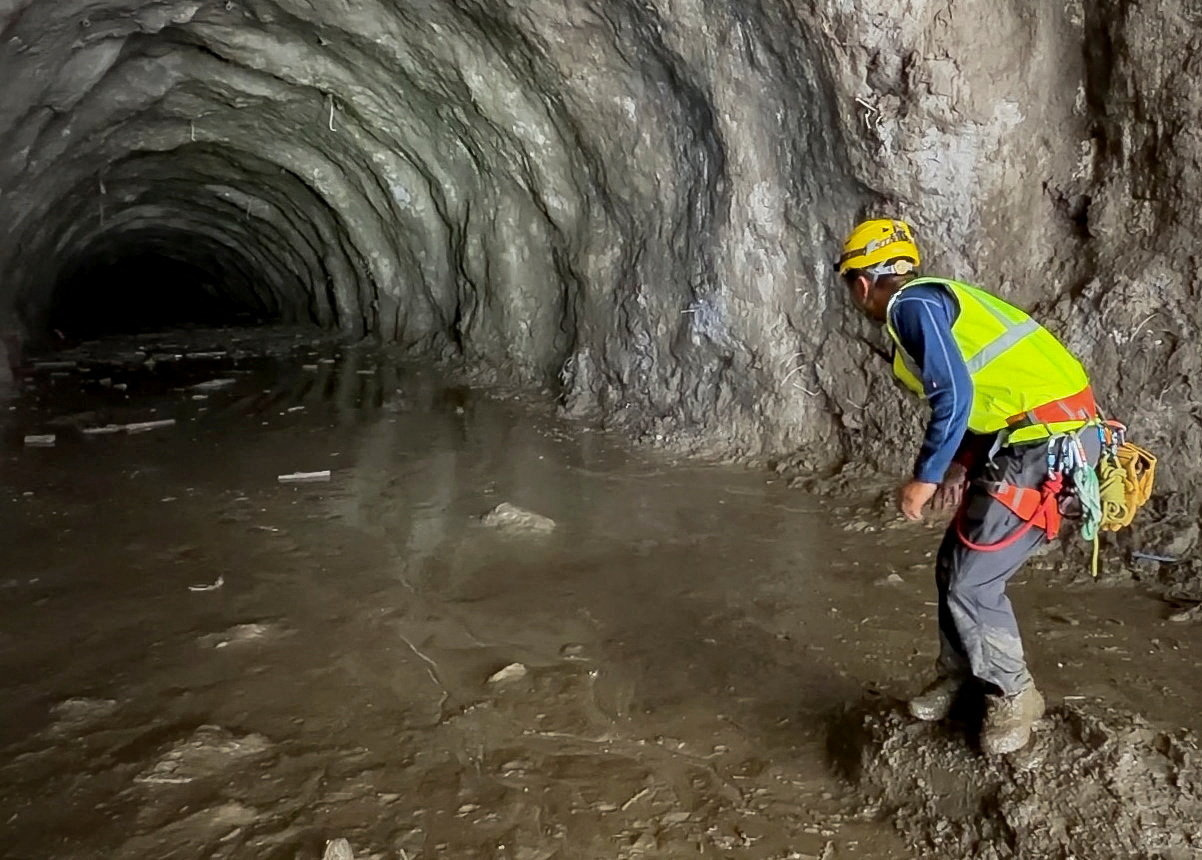
Pictures and videos shared by rescue teams showed earth-moving equipment digging and shovelling mud and rocks under lights in the dark of the night as workers watched. Soldiers used torchlight in a big pit they had created to look for space to get into one tunnel.

The Nepali army said search-and-rescue teams were using controlled blasts, excavators and searchlights to clear water and mud and reach trapped people. Teams recovered three bodies after entering two tunnels, while other sections remained buried in mud and were still being searched, it said.

“A large amount of debris has been deposited, and that is posing us a big challenge to open the tunnels,” Nepali army spokesperson Raja Ram Basnet said. “Our main focus is on opening the tunnels.”

Nepal’s hydropower projects boom

On Monday, Nepali authorities said 903 people were confirmed dead, with 4,247 missing, including the 933 at hydropower projects. On the Chinese side, authorities said 16 people were killed in Gyirong County, and 546 were missing.

The Nepali foreign ministry said that about 590 foreign nationals from 39 countries were still missing. More than 10,000 people had been rescued from the flood-hit region, including 323 foreign nationals, it added.

The Red Cross has estimated that more than 90,000 people were likely to have been affected by the disaster, which China has linked to the effects of climate change.

There has been a boom in hydropower projects in Nepal since the turn of the century as the mountainous country sought to take advantage of its Himalayan water resources to address chronic domestic power shortages and exploit prospects for selling electricity to southern neighbor India.

Hydropower projects in Nepal’s mountains need tunnels to carry water through the steep terrain, allowing developers to exploit the sharp elevation drop between Himalayan rivers and powerhouses to generate electricity.

Prime Minister Balendra Shah said the flood was an “unprecedented and devastating natural disaster” and it remained challenging to compile a complete assessment of the damage.

Beijing has said 261 foreign nationals from 23 countries were unaccounted for in Tibet, near a key border crossing with Nepal.

On Monday, Chinese foreign ministry spokesperson Guo Jiakun said that nearly 100 Chinese citizens have not been contactable on the Nepalese side.

A meeting of the Chinese cabinet urged all-out effort to search for the missing, the release of authoritative information, addressing risks and hidden dangers, and further improvement of emergency management capabilities, state television CCTV said.

Risk from lakes and landslides

Although Nepal has said that it does not need foreign help in general rescue and search, it has leaned on giant neighbors India and China for their expertise in tunnel rescue.

Rescue operations have been suspended several times because of bad weather and concerns that a lake formed across the Nepal-China border by the disaster could trigger fresh flooding after it began overflowing into Nepal’s rivers.

On Monday, CCTV said that glaciers around an impact crater carved out near the site of last week’s glacier collapse on the Nepalese side remained at risk of collapse. Drone footage showed multiple landslide deposits along both riverbanks, posing a risk of further collapses and the formation of new lakes, it said.

Last week’s flood was “caused by glacier instability under the long-term effects of global warming,” the state broadcaster reported.

Two Nepali officials told Reuters that China had not shared much information on glacier risks and water levels following a meeting to strengthen cooperation earlier this year, and they feared that a lack of data sharing could hamper future disaster preparedness.

The Chinese foreign ministry said that Beijing had continuously provided Nepal with meteorological and hydrological data and would continue to “strongly support” Nepal’s disaster relief efforts and safeguard the two countries’ common interests. – Rappler.com


Similar Posts

  • | | |

    Urmila Matondkar’s ex-husband Mohsin Akhtar shar…

    Mohsin Akhtar, the former husband of veteran Bollywood actress Urmila Matondkar, has shared a fresh collection of romantic photographs with his new wife, Nida Bhatt, giving fans another glimpse into their wedding celebrations. The 43-year-old businessman and model posted photographs from his walima ceremony several months after announcing his marriage to Nida. Alongside the pictures, Mohsin shared an emotional message expressing his love and appreciation for his new wife. In his heartfelt post, Mohsin described Nida as much more than his wife, calling her his “home” and “peace.” He also promised to stand by her, value her and continue loving her throughout every chapter of their journey together. The new photographs offer glimpses of the couple celebrating their marriage with family and friends. Mohsin had previously shared pictures from his wedding with Nida in June, officially revealing details of his new marriage to his followers. His latest social media post has attracted attention largely because of his previous high-profile marriage to Urmila Matondkar, one of Bollywood’s well-known actresses. Before marrying Nida, Mohsin was married to Urmila. The couple tied the knot on February 4, 2016, in an intimate ceremony attended by close friends and family members. Their relationship attracted considerable attention at the time, partly because of their age difference and their interfaith marriage. Mohsin, who comes from a Kashmiri business background and has worked as a model, is around 10 years younger than Urmila. Following their separation, both have continued with their respective lives and careers. Mohsin’s latest posts now focus on his new relationship and marriage, with his affectionate message to Nida offering a glimpse into his current personal life. The newly shared wedding photographs have given fans a closer look at the celebrations surrounding Mohsin and Nida’s marriage. His romantic caption has also drawn attention, particularly his description of his wife as his source of comfort and happiness. While Urmila Matondkar remains a prominent name in Indian cinema, Mohsin Akhtar’s latest social media update has shifted the spotlight toward his new chapter in life. The couple’s wedding pictures are continuing to attract interest online as fans react to the romantic moments and Mohsin’s emotional message for his new bride.

  • |

    Five dead, 41 missing after Indonesia ferry catches fire

    At least five people have died and 41 others remain missing after a passenger ferry caught fire while sailing off Indonesia’s Madura Island, prompting a large-scale search and rescue operation. According to Indonesian authorities, the ferry was carrying at least 250 passengers and crew when the blaze erupted during its voyage from Surabaya in East Java to Makassar in South Sulawesi. The captain alerted rescue authorities after the fire broke out early in the morning. Within hours, emergency teams launched a major operation involving rescue vessels and other maritime agencies to evacuate passengers from the burning ship. Officials said the fire rapidly spread across the ferry, leaving much of the vessel engulfed in flames. Many passengers gathered at the bow and bridge while waiting for help, while others were forced to jump into the sea to escape the intense heat and thick smoke. Videos circulating on local media showed heavy black smoke rising from the ferry as passengers wearing life jackets crowded onto lifeboats. Other footage captured desperate scenes of people entering the water as rescue teams threw lifebuoys and pulled survivors aboard nearby vessels. Search and rescue teams have so far recovered five bodies and rescued a large number of passengers. However, 41 people are still unaccounted for, and the operation continues with authorities searching the surrounding waters. Officials said emergency crews responded immediately after receiving the distress call and continue to coordinate efforts to locate the missing. Medical teams are also providing treatment to survivors rescued from the sea. The exact cause of the fire has not yet been determined. Maritime authorities have launched an investigation to establish how the blaze started and whether any safety violations contributed to the incident. Indonesia, an archipelago of more than 17,000 islands, depends heavily on ferry transport for inter-island travel.

  • | | |

    Justice for Kashmir begins with implementing UN re…

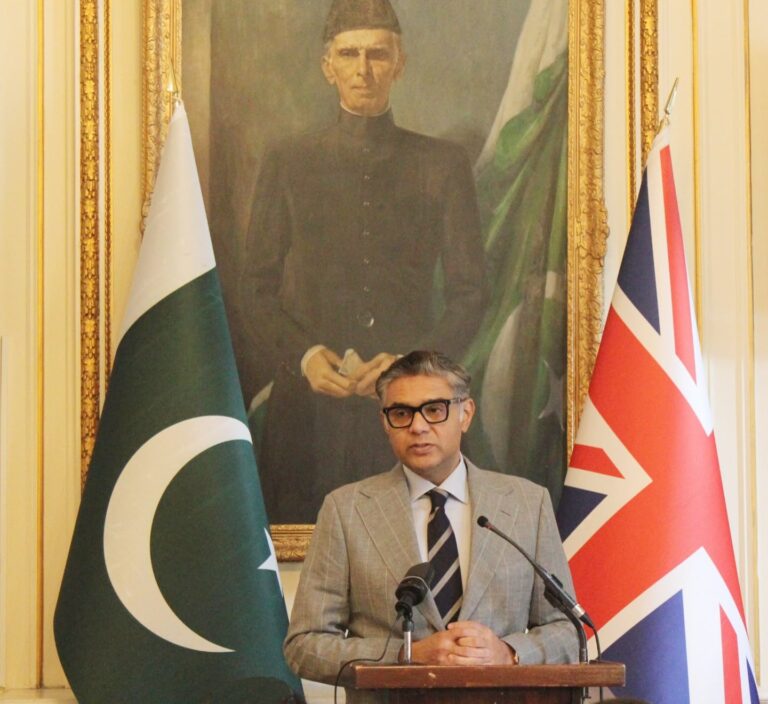
    Pakistan’s High Commissioner to the UK, Tipu Usman, has urged the international community to play a more proactive role in resolving the Kashmir dispute, declaring that “justice for Kashmir begins with implementing United Nations Security Council resolutions” and reaffirming that Pakistan’s support for the people of Jammu and Kashmir “remains unwavering and unconditional.” He was addressing a seminar organised by the Pakistan High Commission in London to observe Youm-e-Istehsal Kashmir, marking the anniversary of India’s August 5, 2019 decision to revoke the special status of Indian Illegally Occupied Jammu and Kashmir (IIOJK). The event brought together British parliamentarians, diplomats, community leaders and members of the British Pakistani and Kashmiri diaspora, who condemned India’s revocation of Article 370 and reiterated support for the Kashmiri people’s right to self-determination. In his keynote address, Tipu Usman called upon the international community, particularly the United Kingdom, to stand on the side of justice by urging India to reverse the unilateral measures introduced on August 5, 2019, restore the rights and special status of Jammu and Kashmir, and honour the relevant United Nations Security Council resolutions. “Pakistan’s support for the people of Jammu and Kashmir remains unwavering and unconditional,” he said, adding that a peaceful and lasting settlement of the dispute must be achieved in accordance with the wishes of the Kashmiri people as reflected in the UN resolutions. The seminar was attended by Lord Qurban Hussain, Baroness Nosheena Mobarik, Afzal Khan MP and Adnan Hussain MP, alongside prominent community figures including Councillor Yasmine Dar, UK-Pakistan Kashmiri Councillors Forum Chairman Liaqat Ali MBE, Jammu Kashmir Self Determination Movement International Chairman Raja Najabat Hussain and former Deputy Mayor of Peterborough Mohammad Nadeem. Speakers strongly criticised India’s constitutional changes of August 2019, describing them as illegal and unconstitutional. They expressed concern over the human rights situation in IIOJK and called for an immediate end to alleged rights violations. Participants stressed that the Kashmir dispute remains an internationally recognised issue that should be resolved through dialogue and in line with UN Security Council resolutions. The seminar also proposed a strategic roadmap to enhance engagement with policymakers, parliamentarians and international stakeholders to build support for a just and lasting resolution of the Kashmir dispute. Messages from the President of Pakistan, the Prime Minister and the Deputy Prime Minister and Foreign Minister were read out during the event, reiterating Pakistan’s continued diplomatic, political and moral support for the people of Jammu and Kashmir. The ceremony concluded with participants observing a minute’s silence in memory of those who lost their lives in the Kashmir conflict.

  • |

    Lebanese PM vows efforts to secure full Israeli withdrawal

    Lebanese Prime Minister Nawaf Salam has said the government will continue working through diplomatic and political channels to secure a complete Israeli withdrawal from southern Lebanon. His remarks came during a visit to the village of Zawtar al Gharbiyah where the Lebanese army has recently expanded its deployment following a new security agreement aimed at reducing tensions along the border. Speaking to residents and military personnel, Salam said Lebanon remains committed to restoring full control over all its territory. He stressed that the government would continue its efforts to ensure Israeli forces leave the remaining occupied areas in the south while supporting the Lebanese army as it strengthens its presence in the region. The prime minister’s visit followed talks between Lebanese President Joseph Aoun and US President Donald Trump at the White House. During the meeting, Aoun urged the United States to support Lebanon’s demand for a complete Israeli withdrawal from its territory as part of ongoing efforts to stabilise the border. Last month, Lebanon and Israel agreed to a US backed framework under which the Lebanese army would gradually deploy in designated areas while Israeli troops would withdraw from selected locations. The agreement also calls for the Lebanese military to take responsibility for disarming Hezbollah in those zones. Hezbollah has rejected the deal and insists it will not surrender its weapons. Tensions remain high despite the agreement. Lebanon’s army said Israeli forces opened fire near soldiers who were deploying in Zawtar al Gharbiyah on Tuesday. The Israeli military responded by saying its troops fired warning shots after Lebanese soldiers entered an area outside the agreed deployment zone. The border region has remained unstable since Hezbollah entered the regional conflict by launching attacks against Israel in support of Iran earlier this year. Israel responded with large scale airstrikes and a ground offensive that caused widespread destruction across southern Lebanon. Although violence has eased following recent diplomatic agreements, occasional military exchanges continue. During his visit, Salam raised the Lebanese flag in the village and promised that the government would focus on rebuilding damaged communities. He said authorities would work alongside the army to reopen roads, clear rubble, restore essential public services, and create conditions that allow displaced residents to return home safely. Many local residents gathered near the village hoping to receive permission to inspect their homes after months of conflict. Some expressed relief over the arrival of the Lebanese army, saying its presence gave them confidence that life could gradually return to normal. However, military officials advised civilians to wait until security operations in the area are completed before returning. The army is currently conducting security sweeps in villages close to Israeli controlled positions to ensure the areas are safe for returning residents. Officials say these operations are necessary because of the continued risk of military activity near the border. Meanwhile, Lebanon’s state news agency reported additional Israeli drone strikes and artillery shelling in nearby areas on Wednesday. It also said Israeli troops entered the Dubieh area near the border town of Shaqra and raised an Israeli flag over the historic Dubieh Castle. Lebanese Culture Minister Ghassan Salame strongly criticised the move, describing it as a provocative action that violates Lebanon’s sovereignty. He said the government remains committed to regaining control over all historic sites and national territory in the south. The latest incident follows Israel’s seizure of the historic Beaufort Castle in May. International attention has also turned to the condition of several historic castles in southern Lebanon. The United Nations is expected to consider adding five of these sites, including Beaufort Castle and Dubieh Castle, to its list of cultural landmarks at risk due to ongoing conflict. Lebanese officials hope international support will help protect these important heritage sites while diplomatic efforts continue to prevent further escalation along the border.

  • |

    DR Congo releases 15 prisoners to M23 rebel group

    Authorities in the Democratic Republic of Congo have released 15 prisoners and handed them over to the AFC/M23 rebel movement. The International Committee of the Red Cross facilitated the transfer, marking the first known exchange under last year’s peace agreement signed in Qatar. The detainees departed from the government-held city of Beni in a convoy and travelled through Uganda before being delivered to rebels in Rutshuru territory. All 15 individuals explicitly agreed to the transfer after months of bilateral negotiations regarding the finalised list of detainees. The diplomatic step aims to bring relief to separated families while addressing ongoing conflict in eastern Congo.

Leave a Reply

Your email address will not be published. Required fields are marked *