• |

    Pakistan, Iran agree to boost bilateral trade to $10 billion

    ISLAMABAD: Pakistan and Iran have reaffirmed their commitment to significantly strengthen economic cooperation by increasing bilateral trade to $10 billion and accelerating efforts to finalize a long-awaited Free Trade Agreement (FTA). The understanding was reached during the 10th meeting of the Pakistan-Iran Joint Trade Committee, held in Islamabad on Tuesday. The session was jointly chaired by Federal Minister for Commerce Jam Kamal Khan and Iranian Minister for Industry, Mine and Trade Dr. Mohammad Atabak, with senior officials from both countries participating in discussions aimed at expanding trade and investment ties. During the meeting, both sides reviewed the current state of bilateral trade and explored practical measures to unlock its full potential. The two countries agreed that stronger economic integration, improved connectivity, and enhanced cross-border cooperation are essential for achieving the ambitious trade target of $10 billion. Speaking on the occasion, Commerce Minister Jam Kamal said Pakistan and Iran enjoy longstanding historical, cultural, and religious ties, but stressed that these relations should now be translated into a robust economic partnership. He emphasized that expanding trade and investment would bring mutual economic benefits and contribute to regional prosperity. The minister underscored the importance of completing the Pakistan-Iran Free Trade Agreement at the earliest opportunity, describing it as a key step toward facilitating commerce between the neighboring countries. He also called for the removal of bottlenecks affecting border logistics, customs procedures, and cargo movement to ensure smoother and faster trade flows. Jam Kamal noted that bilateral trade could be further enhanced through the development of joint border markets, greater use of electronic data interchange systems, and closer coordination between relevant government agencies. He said modernizing trade infrastructure and simplifying customs procedures would help businesses on both sides benefit from increased commercial activity. The Joint Trade Committee also agreed to formulate a practical roadmap aimed at strengthening economic cooperation across multiple sectors. The roadmap will focus on trade facilitation, infrastructure development, logistics, and investment opportunities while encouraging closer collaboration between the public and private sectors. Iranian Minister Dr. Mohammad Atabak described Pakistan as one of Iran’s key long-term strategic trade partners and expressed confidence that bilateral economic relations could expand considerably in the coming years. He highlighted the importance of increasing regional trade and logistics cooperation, particularly by utilizing Pakistan’s Karachi and Gwadar ports to improve connectivity and facilitate the movement of goods. Dr. Atabak also voiced optimism about the early conclusion of the Pakistan-Iran Free Trade Agreement, saying it would create new opportunities for businesses in both countries. He added that cooperation in electricity trade, transport networks, and regional connectivity projects could open new avenues for economic growth and strengthen commercial links across the region.

  • |

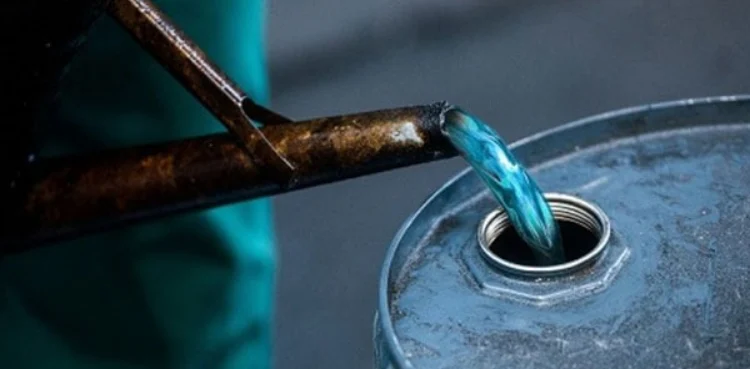
    Oil prices tumble to three-week low as Trump delays Iran strike

    LONDON: Global oil prices recorded their sharpest single-day decline in weeks on Monday, falling to a three-week low after US President Donald Trump stepped back from plans for a military strike against Iran, raising hopes that diplomatic efforts could ease tensions and prevent disruptions to energy supplies from the Gulf. International benchmark Brent crude dropped 7 percent, or $6.35, to settle at $83.77 per barrel, while US West Texas Intermediate (WTI) crude fell 5.1 percent, losing $4.33 to close at $80.34 per barrel. The decline marked Brent’s weakest closing level since mid-July. Market analysts said the drop was also influenced by the expiry of the higher-priced September Brent contract, with the less expensive October contract becoming the new front-month benchmark. Investor sentiment shifted sharply after Trump announced that he had postponed military action against Iran, saying he wanted to allow time for diplomacy aimed at reaching an agreement that could reduce regional tensions and potentially increase Iranian oil exports. The possibility of additional crude entering global markets eased concerns over supply shortages, prompting traders to sell oil futures and pushing prices lower. However, Tehran quickly dismissed suggestions that negotiations with Washington were underway. Iranian Foreign Ministry spokesman Esmail Baghaei said there were no talks taking place with the United States and no meetings had been scheduled. He added that Iran had no plans to host foreign delegations or send negotiators abroad in the coming days. Trump, meanwhile, maintained that discussions with Iran were in progress and warned Tehran of serious consequences if it failed to reach an agreement aimed at ending the ongoing confrontation. Analysts call market reaction excessive Energy analysts said oil markets appeared to react strongly to political rhetoric rather than confirmed developments. According to analysts at energy consultancy Ritterbusch and Associates, the steep decline in crude prices reflected what they described as an overreaction by investors to Trump’s comments suggesting that an agreement with Iran could be imminent. They noted that the US president has repeatedly made strong statements regarding Iran before later softening his position, creating significant volatility in energy markets. Analysts also observed that Trump’s public calls for lower fuel prices in the United States have frequently weighed on oil markets by reducing expectations of sustained price increases. During Monday’s trading session, US gasoline and diesel futures also declined by nearly 5 percent, reflecting broader weakness across the energy sector. Shipping routes remain under pressure Despite hopes for diplomacy, concerns over maritime security in the Middle East continued to influence market sentiment. Shipping data showed that six Saudi-flagged supertankers altered their routes in recent days, avoiding the Gulf of Aden and instead sailing around southern Africa after Yemen’s Iran-backed Houthi movement threatened to target Saudi vessels. At the same time, some oil tankers continued to transit the region. Two Saudi oil tankers successfully crossed the Bab el-Mandeb Strait over the weekend, while vessel movements through the Strait of Hormuz slowed following reports of attacks on commercial shipping. The Strait of Hormuz remains one of the world’s most strategically important energy chokepoints, carrying roughly one-fifth of global oil trade before hostilities between the United States, Israel and Iran escalated earlier this year. A Panama-flagged tanker transporting Russian naphtha also reportedly abandoned plans to pass through the Bab el-Mandeb, choosing the longer route around Africa due to security concerns. Russia boosts maritime security Russia announced on Monday that it was strengthening security measures for commercial shipping in the Azov-Black Sea region while working to expand alternative export routes, following increased attacks on vessels linked to the conflict in Ukraine. As one of the world’s largest crude producers and a leading member of the OPEC+ alliance, Russia remains a key player in global energy markets. Disruptions to exports from the Gulf, Russia and Kazakhstan have continued to limit global oil supplies throughout the year, preventing previously announced OPEC+ production increases from fully reaching international markets. In a separate development, OPEC+ approved a production quota increase of approximately 188,000 barrels per day beginning in September. Although the move is intended to gradually raise output, analysts believe geopolitical risks and transportation disruptions could continue to limit the actual flow of additional crude to global buyers.

  • |

    Govt approves 16 pension fund managers for new pension scheme

    The federal government has taken a significant step towards implementing its newly introduced contributory pension system by approving 16 eligible Pension Fund Managers (PFMs) under the Defined Contribution Pension Fund Scheme-2024 for newly recruited federal employees. According to an official notification issued by the Ministry of Finance, the approved Pension Fund Managers have successfully completed all required legal and administrative agreements with the federal government. Following the completion of these formalities, they are now authorized to receive, manage, and invest pension contributions under the new pension framework. The move marks an important milestone in the government’s broader pension reform agenda, aimed at ensuring the long-term financial sustainability of the country’s pension system while reducing the growing fiscal burden associated with traditional pension payments. The Defined Contribution Pension Fund Scheme-2024 was introduced under the Federal Government Defined Contribution Pension Fund Scheme Rules, 2024, replacing the long-standing defined benefit pension model for newly appointed federal government employees. Under the previous system, retired employees received pensions funded entirely by the government. The new framework, however, shifts to a contributory model in which both employees and the government make regular monthly contributions toward retirement savings. As per the scheme, every newly recruited federal employee will contribute 10 percent of their pensionable salary each month to an individual pension account. In addition, the federal government will contribute 12 percent of the employee’s pensionable salary, creating a combined retirement fund that will be professionally managed by the approved Pension Fund Managers. The accumulated contributions will be invested in a diversified portfolio of financial instruments and investment opportunities with the objective of generating long-term returns. Upon retirement, employees will receive pension benefits based on the total value of their accumulated savings and the investment returns earned over the course of their service, rather than relying on a fixed government-funded pension. Officials believe the reform will help establish a financially sustainable pension system by encouraging long-term savings and reducing future pension liabilities on the national exchequer. The appointment of the 16 Pension Fund Managers is expected to facilitate the smooth rollout of the scheme and provide newly inducted federal employees with multiple professionally managed investment options for their retirement savings.

  • Swat bombing demands unity, not division

    The suicide bombing at Kabal Police Station in Swat has claimed 17 lives. Seven police officials  and 10 civilians were martyred in this attack. More than 23 injured people are still fighting for their lives in hospitals. We pray for their speedy recovery. This attack was not just on a police station. It was an attack on the peace of an entire community. The people of Swat have already suffered greatly from terrorism in the past. They rebuilt their lives after years of conflict. They deserved better than this bloodshed. Markets closed across Kabal as residents mourned their dead. This attack must be condemned in the strongest possible terms. The bomber used between six and eight kilograms of explosives. Police officers showed real courage. They stopped the bomber from reaching his main target. Their bravery saved many more lives. These officers deserve recognition, not just words of praise. Their families deserve the full compensation that has been promised to them, delivered without delay. The formation of a Joint Investigation Team is a necessary step. Investigators must move quickly and use every modern tool available to find those responsible. But investigation alone is not enough. Pakistan needs a sustained and serious campaign against terrorism, not scattered responses after each tragedy. Chief Minister Muhammad Suhail Khan Afridi used this moment to blame federal security policies. This kind of political point scoring serves no one right now. Terrorism is a threat to the entire country. It cannot be treated as a provincial problem or a political weapon. What Khyber Pakhtunkhwa needs is genuine cooperation between the provincial and federal governments, not finger pointing while bodies are still being buried. The Rs20 billion allocation for police capacity is a welcome move. But money alone will not defeat this threat. Pakistan needs unity among political parties, religious leaders, security forces, and ordinary citizens. Terrorists thrive on division. They exploit political blame games and public distrust. Every time leaders turn a tragedy into a political argument, they hand terrorists a small victory. The victims of Kabal deserve more than condolences. They deserve a state that protects its citizens and brings the guilty to justice without delay. They deserve leaders who put aside politics and work together against a common enemy. Pakistan has defeated terrorism before through unity and sacrifice. It must find that same resolve again. Swat has bled too many times. This must be the last time.

  • | |

    Ariana Grande explains decision to step back from …

    Ariana Grande has finally addressed her decision to step back from public life, reassuring fans that the move is about finding balance and protecting her well-being rather than reacting to recent criticism. During an emotional speech at her Eternal Sunshine Tour stop in Chicago, the singer explained that her upcoming break had been planned long before recent public discussions about her appearance. Grande said the decision was not a response to online negativity but part of a personal commitment to creating a healthier and more balanced future.  The Grammy-winning artist told fans that the tour has been one of the most healing experiences of her career. Speaking from the stage, she thanked concertgoers for their unwavering support and said their love has carried her through challenging moments. Grande emphasized that stepping away from the spotlight is an empowering choice that allows her to prioritize herself after years of nonstop work.  Grande has spent the past several years balancing multiple high-profile projects, including new music, a worldwide tour and her acting career. Earlier this year, she admitted in an interview with Vogue Japan that taking a break would probably be healthy because she has rarely slowed down since becoming a global star as a teenager. She said her goal for the next chapter of her life is to find more balance than she had during the previous 15 years.  Her representatives recently confirmed that she will step back from public-facing appearances after the Eternal Sunshine Tour concludes in September. They explained that Grande wants to finish the tour on a positive note before taking a well-earned break from constant public visibility. The statement also confirmed that she has withdrawn from the planned West End production of Sunday in the Park with George, with producers expressing their full support for her decision.  Despite the temporary pause, Grande has made it clear that she is not saying goodbye to music or acting. She has previously described music as her “lifeline” and has repeatedly said she hopes to continue exploring both creative passions in the future.  For now, Ariana Grande is choosing rest over relentless schedules. Her latest message highlights the growing importance of setting boundaries, proving that even one of the world’s biggest pop stars recognizes the value of protecting personal well-being while looking ahead to the next chapter of her career.

  • |

    Kerosene price reduced as government extends relief on petroleum products

    The federal government has extended the latest reduction in petroleum prices by lowering the cost of kerosene oil, providing additional relief to consumers who rely on the fuel for household and commercial use, particularly in remote and off-grid areas. According to a notification issued by the Oil and Gas Regulatory Authority (OGRA), the price of kerosene has been reduced by Rs3.58 per litre. Following the latest revision, the new retail price of kerosene has been fixed at Rs301.64 per litre, down from the previous rate of Rs305.22 per litre. The reduction comes as part of the government’s broader revision of petroleum product prices aimed at passing on the benefit of changes in international oil markets to consumers. Earlier, the Petroleum Division announced fresh prices for major petroleum products effective from August 4, confirming a decrease in the prices of both petrol and high-speed diesel. Under the revised rates, petrol has become cheaper by Rs4.80 per litre, bringing its new price down to Rs331.95 per litre. Likewise, the price of high-speed diesel (HSD) has been reduced by Rs2.45 per litre, setting the new rate at Rs389.93 per litre. The latest cuts are expected to provide modest relief to motorists, transporters, and businesses facing high operating costs, while the reduction in kerosene prices is likely to benefit households in regions where the fuel remains a primary source for cooking, heating, and lighting.

  • |

    Andrew Garfield sets his terms for a Spider-Man return

    Andrew Garfield has finally given fans a real answer on when he might swing back into the Spider-Man suit. The 42-year-old actor first played the superhero in The Amazing Spider-Man and its 2014 sequel. He returned briefly in 2021, teaming up with Tobey Maguire for a surprise cameo in Tom Holland’s No Way Home. That appearance only fueled the speculation. Fans have been asking him about a full comeback ever since, and Garfield has mostly dodged the question with vague replies. That changed recently. With Brand New Day now out in theatres, the topic resurfaced in a new interview, and this time Garfield spelled out his actual condition. He said any future project would need to feel nothing like the Spider-Man stories audiences already know. The actor wants something genuinely unexpected, a version of the character dropped into a completely different kind of film. As an example, he floated the idea of a road trip movie built around Spider-Man, something far removed from the usual superhero formula. The comment set off a wave of reactions online. Fans have started pitching their own concepts for what a Garfield return could look like. Much of the excitement ties back to a running theory that Tom Holland’s latest Spider-Man film quietly teased Miles Morales through a post-credits scene. Riding that theory, one fan on X proposed that Garfield’s Spider-Man could take on a mentor role opposite Miles, rather than headline another solo outing. There’s also a sense among supporters that Garfield has been shortchanged by the studio. Both Maguire and Holland got three Spider-Man films apiece, while Garfield only appeared in two before his brief cameo. Many fans see that gap as proof he deserves another proper shot at the role. For now, nothing is confirmed. But Garfield’s comments make one thing clear: a simple return to the character wouldn’t be enough for him. He’s looking for something that reinvents what a Spider-Man movie can even be, not just another sequel wearing the same mask. Whether Sony or Marvel ever build a project around that idea is still unknown. Until then, Garfield’s fans will keep speculating, and keep hoping he gets the film he’s actually asking for.

  • | |

    Spider-Man: No Way Home actress Mary Rivera dies a…

      Mary Egida Rivera, the actress who won the hearts of Marvel fans with her memorable appearance as Ned Leeds’ grandmother in Spider-Man: No Way Home, has passed away at the age of 82. Her family confirmed that Rivera died peacefully on April 15, 2026, in Honolulu, Hawaii, after suffering a stroke. The news became public this week after a family member shared the details with TMZ.  Although Rivera had only a brief role in the 2021 blockbuster, her performance left a lasting impression on audiences around the world. She portrayed the loving grandmother, or “Lola,” of Ned Leeds, played by Jacob Batalon. One of the film’s funniest scenes featured Rivera speaking Tagalog while asking Andrew Garfield’s Spider-Man to clean the cobwebs from her ceiling, creating a heartfelt moment that quickly became a fan favorite.  According to her family, Rivera suffered a stroke that left her in a coma. Doctors reportedly warned that even if she regained consciousness, her chances of meaningful recovery were extremely low. After careful consideration, her loved ones made the difficult decision to remove her from life support. She later passed away peacefully and was cremated in Honolulu.  Born on June 2, 1943, in Iloilo, Philippines, Rivera later settled in Hawaii, where she built a life centered on family, education and community service. Before making her Hollywood debut, she worked as a teacher, radio broadcaster and church missionary. Her family said she was incredibly proud to represent the Filipino community in one of Marvel’s biggest films and cherished the opportunity to share the screen with stars including Tom Holland, Zendaya, Jacob Batalon, Andrew Garfield and Tobey Maguire.  Tributes have continued to pour in from fans and colleagues following the announcement of her passing. Jacob Batalon honored his on-screen grandmother with a heartfelt social media message, writing, “Rest in paradise Lola.” Many fans also praised Rivera for bringing Filipino culture and the Tagalog language to a global audience through her unforgettable scene in the film.  Rivera is survived by her husband, Alejandro Rivera, four children, 11 grandchildren and four great-grandchildren. While her acting career was brief, her warmth, authenticity and pride in her heritage made her performance truly unforgettable. Her role in Spider-Man: No Way Home remains a touching reminder that even a small part can leave a lasting legacy in the hearts of millions. 

  • Privatisation must move fast and stay transparent

    Prime Minister Shehbaz Sharif has told all ministries to meet their deadlines under the privatisation programme. This push for speed and coordination is the right instinct. Pakistan cannot afford more delays in selling off loss making state enterprises. The government has listed 27 public sector organisations for privatisation in three phases. Officials briefed the prime minister on progress at Islamabad, Lahore and Karachi airports. They also updated him on the sale of IESCO, FESCO and GEPCO. Expressions of Interest have already been invited for all three power companies. FESCO submissions close on August 7. GEPCO closes on August 21. IESCO closes on September 7, 2026. International investors are showing interest and roadshows are continuing. This pace is encouraging but Pakistan has been here before. The privatisation of Pakistan International Airlines dragged on for years through failed bids, legal challenges and political hesitation. That delay cost the national exchequer billions in continued losses. It also damaged investor confidence in Pakistan’s ability to complete a sale once it starts one. The government must not let IESCO, FESCO and GEPCO suffer the same fate. Speed alone is not enough. Every step of this process must remain transparent. Bidding criteria, investor qualifications and final sale terms should be made public and open to scrutiny. Citizens deserve to know that state assets are being sold at fair value, not handed over through backroom deals. The prime minister was right to direct that ZTBL continue serving farmers after privatisation. Agriculture remains central to Pakistan’s economy and food security. Any new owner must be bound by clear conditions to protect farmer access to credit. The economy needs the discipline that privatisation brings. But the PIA experience proves that half measures and delays only deepen losses. The government must finish what it starts, openly and on schedule.

  • Trump talks, Iran denies, Pakistan mediates

    I have lost count of how many times I have written this sentence. Trump announces a possible dialogue with Iran. Iran denies it within hours. Then Pakistan quietly steps in to keep the peace alive. I sit down to write about it again, and I feel a strange mixture of hope and exhaustion. This cycle has repeated itself so many times since this war began that I could write it in my sleep. Let me walk you through what happened this time, because I think you deserve to understand the pattern as clearly as I do. President Donald Trump took to his social media platform Truth Social and declared that Washington and Tehran are talking. He said Iran may not admit it, but both nations are working through a problem that has lingered for decades. He accused Iranian leaders of playing a double game. He said the outcome will be one of two things. Either a deal gets made, or Iran faces what he called complete surrender. He also insisted that America will never let Iran get its hands on a nuclear weapon. Then, right on cue, Iran said no. Foreign ministry spokesman Esmaeil Baghaei stood before reporters and rejected every word of it. He said there are no negotiations happening with the United States. He said the only contact right now involves Oman, and it concerns nothing more than keeping ships moving safely through the Strait of Hormuz. I want you to notice something here. This is not a new argument. I have watched this exact exchange play out again and again. One side claims talks are happening. The other side flatly denies it. And somewhere in the middle, the truth probably sits quietly, waiting for someone honest enough to admit it. This is where Pakistan enters the picture, as it so often does. Turkish news agency Anadolu reported that Pakistan and Qatar are working to arrange a new round of direct talks. Islamabad and Doha are both being considered as possible venues where America and Iran might eventually sit across from each other again. I find this part of the story important, and I do not think it gets enough credit. Pakistan helped broker something called the Islamabad Memorandum of Understanding, which brought about a ceasefire back in June. That agreement asked both sides to stop military action, keep the Strait of Hormuz open for trade, and begin serious talks on Iran’s nuclear program and American sanctions. Iranian parliamentary spokesman Hassan Gashghavi confirmed that mediating countries are now trying to breathe new life into that same agreement. Deputy Prime Minister and foreign minister Ishaq Dar spoke by phone with his Iranian counterpart, Abbas Araghchi, on Monday. They discussed the broader situation in the region and the ongoing diplomatic efforts across the Middle East. Dar also invited Araghchi to visit Pakistan soon. I keep coming back to one question as I write this. How many more times will I have to write this same story? How many more announcements, denials, and quiet rescues will it take before something actually holds? I will be honest with you. I am tired of writing about tension. I am tired of watching one side hint at peace while the other side pulls back. I am tired of hearing familiar names promise a resolution that never quite arrives. But I still hold onto something, and I think you should too. I hope this is the last time I have to write this cycle. I hope the next headline is not about another denial or another delayed meeting. I hope it is about a real, lasting peace, the kind that does not need Pakistan or Qatar or anyone else to keep rescuing it.