pakistan mens team
|

Pakistan men’s team to make historic FIFA ASEAN …

Pakistan’s men’s football team is set to make its debut at the FIFA ASEAN Cup, to be held in Indonesia from 21 September to 6 October, marking a significant milestone for the country’s footballing ambitions.

Pakistan are among the 14 teams taking part in the tournament and one of eight teams competing in Indonesia. The Shaheens are one of three invited teams, with the remaining 11 sides representing Southeast Asia. Following the announcement, Pakistan Football Federation (PFF) President Syed Mohsen Gilani thanked FIFA President Gianni Infantino for the opportunity. “The Pakistan Football Federation is extremely thankful to FIFA President Gianni Infantino for presenting us with the opportunity to participate in our second-ever FIFA event,” he said. “After the women’s national team participated in the FIFA Series, it is now the turn of our men’s national team to take part in their maiden FIFA tournaments.”

“It is time to dream big. We are not content with playing development competitions. Pakistan is not just with the big boys. Pakistan football truly arrived at the global stage,” said Gilani. “The ASEAN Cup aims to provide high-quality football, strengthen regional ties, and create new opportunities for fans to enjoy the game.”

The tournament will feature two tiers of competition. The top-tier FIFA ASEAN Cup, hosted by Indonesia, will include Pakistan, Malaysia, India, the Philippines, Singapore and Thailand. The second-tier FIFA ASEAN Challenge Cup will feature hosts Hong Kong, along with Brunei Darussalam, Cambodia, Laos, Myanmar, and Timor-Leste. Teams will be allocated to groups based on the FIFA Men’s World Ranking to ensure competitive balance throughout the tournament. Each competition will be divided into two groups, with teams playing each other once in a round-robin format. The group winners will advance to their respective finals to compete for the title, while the runners-up will face off in the third-place playoff.

The historic debut marks a new chapter for Pakistani football on the international stage.

Similar Posts

  • |

    Current Petroleum prices to remain unchanged until…

    The federal government has announced that current petroleum product prices will remain unchanged until July 27. According to sources from the Petroleum Division, petrol will continue to be sold at Rs335.18 per litre, while high-speed diesel will remain at Rs383.46 per litre. The price of kerosene oil has also been maintained at Rs301.14 per litre. This decision comes after the government introduced a daily fuel price revision mechanism on July 18 to reflect fluctuations in the international market. Since then, prices have seen multiple adjustments. On July 18, petrol became more expensive by Rs5.44 per litre and diesel by Rs31.05 per litre. Due to the closure of international markets, prices were revised on July 21, with petrol decreasing by Rs0.35 per litre while diesel increased by Rs5.71 per litre. Subsequent revisions saw petrol and diesel prices rise by Rs4.93 and Rs7.15 per litre on July 22, followed by further increases of Rs6.39 and Rs7.83 per litre on July 23. On July 24, petrol was hiked by Rs4.40 and diesel by Rs3.62 per litre. The latest decision to freeze prices until July 27 provides temporary relief to consumers after a series of increases driven by volatility in global oil markets. The daily price revision mechanism, introduced amid rising geopolitical tensions in the Middle East, aims to ensure timely adjustments to international market trends. However, the frequent changes have drawn criticism from dealers and consumers alike. The government has assured that it is monitoring the situation closely and will continue to make adjustments as needed to balance the impact on the economy and the public. The current freeze offers a brief respite before the next scheduled revision, with consumers hoping for stability in the coming days.

  • |

    Mohammad Amir questions Babar Azam’s Test captaincy return

    LAHORE: Former Pakistan fast bowler Mohammad Amir has questioned the Pakistan Cricket Board’s decision to reappoint Babar Azam as the national Test captain, saying the star batter should have been allowed to focus entirely on his batting rather than taking on the added responsibility of leadership. Babar recently returned as Pakistan’s Test skipper after replacing Shan Masood, whose tenure ended after 16 matches, during which Pakistan recorded four wins and suffered 12 defeats. The appointment marks Babar’s second stint as Test captain, having previously led the national side from 2020 to 2023. The PCB’s decision has generated considerable discussion among former players and cricket analysts, with opinions divided over whether the move will strengthen the team’s performance. Speaking during an interview with Wisden, Amir said he was not convinced that handing the captaincy back to Babar was the right decision, especially at a time when the batter had only recently regained his form after a prolonged lean patch. According to Amir, Babar’s improved performances with the bat should have been the team’s primary priority, rather than placing additional expectations on him through captaincy. “He has only just started performing well again after a long period. He’s finally looking in good rhythm,” Amir said, suggesting that leadership duties could once again distract him from maintaining consistency with the bat. The former left-arm pacer also highlighted the intense scrutiny faced by Pakistan’s captains, noting that media attention and public expectations make the role particularly demanding. He argued that every decision taken by the captain is closely examined, creating constant pressure both on and off the field. In his view, such an environment could affect a player’s confidence and performance if they are already carrying the responsibility of being the team’s leading batter. Amir, who represented Pakistan in 36 Tests, 61 One-Day Internationals and 62 T20 Internationals, described Babar as the country’s finest batter and said his greatest contribution comes through scoring runs. “I believe Babar should have played as a player with a free mind and less pressure because he is the best player Pakistan has right now,” he said. While stressing that his remarks reflected his personal opinion, Amir concluded that reappointing Babar as Test captain was not the ideal solution for Pakistan cricket. He added that protecting the team’s premier batter from additional pressure would have been a better long-term strategy as Pakistan looks to rebuild its Test fortunes.

  • |

    PTI gears up for August 5 rally

    Pakistan Tehreek-e-Insaf (PTI) has stepped up preparations for its August 5 public rally, launching a mobilisation campaign to bring party workers together in Peshawar and other parts of Khyber-Pakhtunkhwa. PTI workers are holding meetings across the provincial capital, while banners and promotional material for the rally have begun appearing in different areas of the city. Party leader Zubair Ahmad Qureshi said workers from other provinces would also attend the gathering, which will take place near the Peshawar Motorway Plaza. Qureshi called the event one of the biggest rallies in the province’s history and said PTI would observe August 5 as a “day of referendum.” He also said Chief Minister Sohail Afridi would make an important announcement about the party’s future strategy. The PTI leader said party workers had prepared for a movement seeking the release of the party’s founding chairman and would not compromise on the demand. He added that the party had expanded its outreach campaign and started contacting members of the business community. Qureshi said PTI would also observe August 5 as a Black Day and hold a strike. However, he stressed that the party would keep its protest peaceful.

  • | | |

    PM Shehbaz accuses India of backing terrorism, urg…

    ISLAMABAD: Prime Minister Shehbaz Sharif on Friday accused India of playing a direct role in terrorism inside Pakistan and urged Afghanistan’s interim government to prevent militant groups from using its territory to launch attacks across the border. Addressing participants at the Balochistan National Workshop, the prime minister said Pakistan had successfully eliminated terrorism by 2018, but claimed that violence later resurfaced as part of what he described as a “well-organized conspiracy.” “India’s role in terrorism inside Pakistan is evident,” Shehbaz said, adding that the country had paid an enormous price in the fight against militancy, with more than 90,000 Pakistanis losing their lives over the years. Referring to the recent killing of a session judge in Mastung, the prime minister described the incident as another reminder of the continuing terrorist threat facing the country. He stressed that defeating terrorism requires a united national response involving state institutions and the public. Shehbaz also called on Afghanistan’s interim authorities to ensure that Afghan soil is not used by militant groups to carry out attacks against Pakistan. While emphasizing the importance of good relations between the two neighboring countries, he expressed regret that the Afghan administration had failed to stop terrorist elements operating from its territory. The prime minister said Pakistan’s diplomatic efforts for regional peace had received international recognition, adding that the country’s recent achievements had unsettled its adversaries. He praised Field Marshal Syed Asim Munir and Deputy Prime Minister and Foreign Minister Ishaq Dar for their diplomatic initiatives aimed at strengthening Pakistan’s regional and international engagement. Turning to development, Shehbaz highlighted the strategic importance of Balochistan, describing it as Pakistan’s largest province by area and the smallest by population. He said the people of Balochistan had always played a vital role in strengthening the federation and assured them that their sacrifices would never be forgotten. He also announced that construction work on the dual carriageway linking Karachi and Chaman was progressing, calling it a major infrastructure project expected to improve connectivity and economic activity in the province. Discussing the National Finance Commission (NFC) Award, the prime minister said Punjab had made significant contributions for Balochistan while the other provinces had also extended full support. He pledged to correct past shortcomings and ensure every province receives its constitutional share of national resources. Responding to questions from workshop participants, Shehbaz said Pakistan’s future prosperity depends on the collective efforts of all four provinces, expressing confidence that the country is ready to embark on a new phase of national development while continuing its fight against terrorism.

  • |

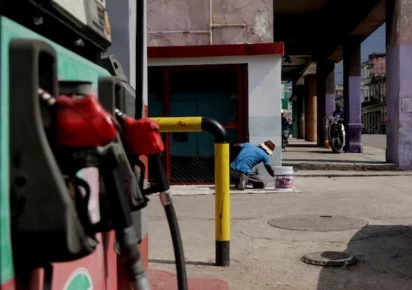
    US fuel opens a capitalist crack in Cuba

    HAVANA: Gasoline selling for as much as $38 a gallon, diesel advertised on social media and fuel stored inside cramped apartments are offering an unusual glimpse of private enterprise in communist Cuba, where the energy sector has long remained firmly under state control. A US policy allowing American companies to export fuel to private Cuban businesses has triggered an unexpected transformation. As Cuba struggles with shortages, blackouts and a weakened public transport system, imported fuel is creating a growing private market — while also exposing a sharp divide between those who can afford it and millions who cannot. The change follows the collapse of Cuba’s traditional fuel supplies from Venezuela and Mexico after the United States removed Venezuelan President Nicolas Maduro in January. With sanctions discouraging tankers from sailing toward the island, fuel shortages have increasingly affected transport, hospitals, schools and other essential services. Under an exception to Washington’s oil restrictions, however, private Cuban restaurants, retailers, taxi operators and other businesses have been allowed to import fuel. The impact has been striking. Between February and May, around 900,000 barrels of US fuel entered Cuba — enough to meet only about nine days of the country’s energy requirements. Yet those relatively small shipments have helped create a new network of legal wholesalers, private buyers and illegal resellers. Gasoline becomes a luxury For ordinary Cubans, the new fuel market has often brought frustration rather than relief. On a July afternoon in Havana, 53-year-old Amarilis Sanchez waited for hours at a bus stop after attending her daughter’s birthday celebration. Public buses, which normally cost only two pesos, were unreliable. Nearby, taxi drivers offered rides in vintage cars, but one driver quoted Sanchez 1,000 pesos for the journey — roughly 500 times the price of a bus ride. Unable to afford it, Sanchez considered spending the night at her daughter’s home and trying again for a bus the following day. Her experience illustrates how Cuba’s fuel crisis is creating two very different realities: one for people with access to private vehicles and imported fuel, and another for those dependent on the country’s struggling public transport network. Black-market gasoline prices reportedly reached $10 per litre, or about $38 per gallon, during the spring before falling as imports increased. Social media fuels a new market The emerging trade is increasingly visible online. WhatsApp groups and Facebook pages advertise gasoline and diesel, while some sellers store fuel in apartments and small shops despite the dangers posed by fire, explosions and toxic fumes. At one Havana convenience store, a shopkeeper reportedly kept around a dozen 20-litre fuel containers in a backroom, selling gasoline for approximately $5 per litre. Private companies are also moving into the newly emerging legal wholesale market. By late July, almost 200 Cuban businesses had received permission to distribute fuel wholesale to other private companies. One company, A Granel, advertises diesel through social media and charges $2.50 per litre for a 940-litre tank. The promotion reportedly features a model walking through a warehouse of diesel containers while Daddy Yankee’s famous song Gasolina plays in the background — an unusually flashy image for a country where the energy industry has historically been dominated by the state. Are Cuban gas stations next? The transformation could go further. Cuban lawmakers approved a broad package of economic reforms in June aimed at opening the energy sector to private and foreign investment. Prime Minister Manuel Marrero Cruz later announced that Cuba had approved its first foreign investment project focused on importing and selling fuel, although he did not name the company. The reforms have raised the possibility that private operators could eventually take control of some of Cuba’s familiar state-run Cupet petrol stations. For now, however, retail fuel sales remain largely under state control. Some state-owned stations are storing imported fuel but can distribute it only to vehicles belonging to authorised private businesses. Cuban authorities have defended the reforms while rejecting the idea that they represent a move toward large-scale privatisation. President Miguel Diaz-Canel has accused Washington of imposing a “genocidal siege” on Cuba and said economic changes were not being introduced to satisfy the United States. A lifeline with a heavy price The new fuel market has helped prevent some businesses from shutting down completely. During recent power outages, restaurants and shops with generators powered by imported fuel remained illuminated while much of Havana was plunged into darkness. But experts warn that the emerging system could deepen inequality. With the average government salary reportedly around $10 a month, imported gasoline remains unaffordable for most of Cuba’s roughly nine million residents. Cuban sociologist Mayra Espina said the limited fuel supplies had helped prevent “complete paralysis” but warned that the benefits were overwhelmingly concentrated among those able to pay. The result is an extraordinary contradiction: a small opening toward private enterprise is helping Cuba keep parts of its economy running, while simultaneously making access to basic mobility and energy increasingly dependent on wealth. For a country that has spent decades keeping fuel firmly within the state system, Cuba’s new gasoline economy may therefore prove to be more than a temporary response to shortage. It could become an early test of how far Havana is prepared to let capitalism into one of its most tightly controlled sectors.

Leave a Reply

Your email address will not be published. Required fields are marked *