pakistan urges back
| |

Pakistan urges US to back Islamabad MoU as regiona…

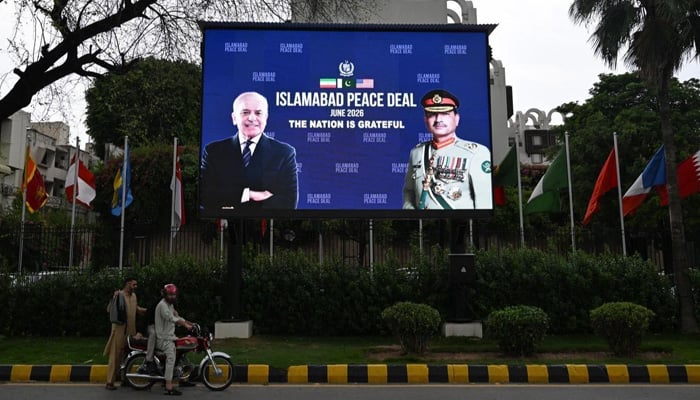
ISLAMABAD: Pakistan has urged the United States to fully implement the June 18 Islamabad Memorandum of Understanding (MoU), describing the agreement as the best path toward lasting regional peace and stability amid rising tensions involving Iran.

Deputy Prime Minister and Foreign Minister Ishaq Dar conveyed the message during a meeting with US Chargé d’Affaires Natalie A. Baker in Islamabad on Friday. He stressed that dialogue and diplomacy remained essential for resolving regional disputes while reaffirming Pakistan’s commitment to protecting its national interests.

The US diplomat acknowledged Pakistan’s constructive role in supporting regional peace and stability and congratulated the Pakistani leadership and people on Independence Day.

Dar also held talks with British High Commissioner Jane Marriott, during which the two sides discussed regional and international developments, bilateral ties and ways to enhance cooperation. Dar again called for the Islamabad MoU to be implemented in its entirety.

Separately, Chinese Ambassador Jiang Zaidong met the foreign minister and expressed appreciation for Pakistan’s assistance following the death of a Chinese mountaineer in an avalanche at Broad Peak, Gilgit-Baltistan. Dar assured him of Pakistan’s support in facilitating the repatriation of the deceased’s remains.

Dar also spoke by phone with Egyptian Foreign Minister Badr Abdelatty. The two leaders exchanged Independence Day greetings and reaffirmed their commitment to strengthening Pakistan-Egypt relations through greater cooperation and high-level engagement.

The diplomatic engagements come as tensions surrounding Iran continue to intensify, with Pakistan maintaining that dialogue and diplomacy are the most viable means of addressing outstanding regional issues.

Similar Posts

  • |

    India’s Supreme Court protects student protesters as government moves to tighten exam leak laws

    India’s Supreme Court has directed authorities not to take any coercive action against student protesters involved in recent demonstrations over examination paper leaks. The court also ordered the immediate release of all detained protesters who are under the age of 18 and instructed officials to preserve surveillance footage and digital records linked to the protests as allegations of police brutality continue to be examined. According to Indian media reports, Chief Justice Surya Kant issued the interim directions while hearing petitions filed by students and rights activists. The petitions accused police and paramilitary forces of using excessive force, including pellet guns, against demonstrators during weeks of protests in New Delhi and several other cities. The court stressed that all available evidence, including drone recordings, body camera footage and CCTV videos, must be secured to ensure a fair investigation. It also ordered that the personal and digital data of protesters should remain protected and must not be made public. The Chief Justice said any investigation into the allegations would be meaningless if responsibility was not fixed for those found guilty of misconduct. He emphasized the need for an independent and impartial inquiry into claims that innocent protesters were subjected to unnecessary violence during the demonstrations. The Indian government has maintained that police acted within the law while controlling large crowds. Solicitor General Tushar Mehta told the court that although complaints of attacks on students deserved serious attention, nearly 250 police personnel were also injured during the protests. He said the government had no objection to an independent investigation into the incidents. At the same time, the government has introduced proposed amendments aimed at imposing much tougher punishments for examination paper leaks. The bill, presented in parliament during the ongoing monsoon session, seeks to increase the maximum prison sentence for those involved in leaking examination papers from five years to ten years. It also proposes fines of more than one million dollars and faster court proceedings to deal with such cases. Senior minister Jitendra Singh said the amendments demonstrate the government’s commitment to protecting students and restoring confidence in the country’s examination system. He told lawmakers the proposed changes are intended to strengthen existing laws and ensure swift justice so that the credibility of national examinations can be rebuilt. The issue has dominated parliament since lawmakers returned for the monsoon session last week. Opposition parties have repeatedly disrupted proceedings while demanding accountability for the police response to the student movement and pressing the government to address concerns over the handling of the exam leak crisis. The nationwide protests began after question papers for a national medical college entrance examination were leaked, sparking anger among students who believed the integrity of the examination process had been compromised. The demonstrations ended on Saturday after Education Minister Dharmendra Pradhan resigned and the government accepted key demands from protest leaders. These included reforms to the examination system, the withdrawal of police cases against protesters and compensation for families of students who reportedly died by suicide following the scandal. Clashes between protesters and security forces were reported in several cities during the demonstrations. In New Delhi, police used tear gas and baton charges to stop protesters attempting to march toward parliament. Authorities also suspended a police officer in eastern India after he fired warning shots into the air while trying to disperse protesters. The protests have also sparked concerns over the government’s use of advanced surveillance technology. Activists questioned the deployment of AI powered mobile surveillance vehicles after images shared online appeared to show police using high mounted cameras capable of monitoring crowds from every direction. Meanwhile, the student group leading the movement claimed that hundreds of protesters remain in custody across different states despite earlier commitments made by the government.

  • | |

    Pakistan ranks fifth globally in viral Hepatitis b…

    Pakistan has been ranked among the countries with the highest number of viral hepatitis cases worldwide, with the country standing fifth globally in total hepatitis burden, according to the Pakistan Medical Association (PMA). The warning was issued on the occasion of World Hepatitis Day, highlighting the growing public health challenge caused by hepatitis B and C infections. PMA Secretary General Dr Abdul Ghafoor Shoro said Pakistan has one of the world’s largest burdens of Hepatitis C Virus (HCV), with around 10 million people suffering from chronic Hepatitis C. In addition, an estimated 3.8 million people are living with chronic Hepatitis B (HBV), bringing the total number of people affected by viral hepatitis in the country to approximately 13.8 million. According to the PMA, Pakistan’s hepatitis burden is higher than many countries and is exceeded only by China, India, Indonesia, and Nigeria. The national prevalence rate of Hepatitis C is estimated between 4.8 and 7.5 percent, while Hepatitis B affects around 1.1 to 1.7 percent of the population. Health experts warned that untreated hepatitis can lead to serious complications, including liver cirrhosis and liver cancer, which collectively claim more than 37,000 lives in Pakistan every year. Dr Shoro stated that Pakistan contributes a significant share of new global Hepatitis C infections due to unsafe medical practices. He highlighted that thousands of new infections occur annually because of the reuse of unsterilized syringes, unsafe medical equipment, and unscreened blood transfusions. Other major causes of hepatitis transmission include unsafe surgical procedures, dental treatments, tattooing, body piercing, shaving with contaminated razors at barber shops, and practices carried out by unqualified healthcare providers. Low coverage of the mandatory Hepatitis B birth-dose vaccine has also remained a concern. President Asif Ali Zardari said hepatitis remains one of the country’s most serious public health challenges but emphasized that it can be prevented and treated through early detection, timely medical care, and collective efforts. He stressed the need for strict regulation of unsafe healthcare practices and awareness campaigns to protect citizens. National Assembly Speaker Sardar Ayaz Sadiq also highlighted the importance of prevention, early diagnosis, and access to quality treatment. He said strengthening the healthcare system and improving public awareness are essential steps toward reducing the disease burden. Health authorities and public representatives called for greater cooperation between government institutions, healthcare providers, and communities to control hepatitis transmission and improve treatment access across Pakistan.

  • | |

    Forensic report reveals new findings in Mir Raza c…

    KARACHI: The forensic examination of a shirt belonging to Karachi youth Mir Raza has been completed. The report has been received by the police and is now being examined as part of the investigation. According to investigative sources, traces of hydrochloric acid were reportedly detected on the shirt during the chemical analysis. The sources also said that substances associated with a sedative were found in a blood sample taken from Mir Raza. The chemical examination was conducted to determine whether the shirt contained any material that could help investigators understand the circumstances surrounding the incident. The findings are expected to be considered along with other forensic evidence collected during the investigation. Investigators also reported the presence of gunshot residue (GSR) on the waist area of Mir Raza’s shirt. Sources said the concentration of GSR was higher around the waist section. They said this finding could provide investigators with important information about the direction and circumstances of the shooting. However, the forensic findings are expected to be assessed alongside other evidence before investigators reach any final conclusion. Police are also examining other aspects of the case to establish what happened. Meanwhile, further shortcomings in the investigation have reportedly emerged. Investigative officials said several important steps had not been completed despite days having passed since the incident. According to officials, geofencing of the crime scene has not yet been carried out. Geofencing could help investigators identify mobile devices that were present in or around the area at the relevant time. Officials also said that Mir Raza’s mobile phone data had not been obtained. The phone record could potentially help investigators establish his movements and identify contacts or activities around the time of the incident. Another issue raised by investigators concerns Mir Raza’s smartwatch. Officials said its forensic examination had also not been conducted. Such devices can sometimes contain information about movement, activity and other data that may assist an investigation. The latest findings have added new elements to the case. Investigators are now expected to examine the forensic report along with other available evidence. The police are also facing questions over why some investigative procedures were not carried out earlier. The family has previously called for a thorough investigation and answers about what happened to Mir Raza.

  • | |

    KPC President Fazil Jameeli: Sindh govt offers fin…

    In a rare but welcome gesture, Karachi Press Club President Fazil Jameeli, serving his second consecutive term, hosted a luncheon for women journalists to hear their concerns and suggestions firsthand. A good number of female journalists attended. KPC General Secretary Aslam Khan and governing body member Sheema Siddiqua were also present. For women journalists in Karachi, the newsroom is only half the story. Beyond deadlines, beats, and breaking news, they carry the weight of a double role — as working professionals and as homemakers. It is this unseen labor that makes spaces like the KPC luncheon significant — not just as a meeting, but as recognition that their challenges are different, and their voices need a dedicated forum. During the discussion, President Fazil Jameeli disclosed that the Sindh government’s Pink Scooty scheme was initially his brainchild. He said he had advised the Sindh Minister for Information and Transport, Mr Sharjeel Inam Memon, to launch it to empower women, building on the province’s existing Pink Bus service for females. The conversation moved beyond formalities to everyday issues — from canteen management and cleanliness to broader facilities. Jameeli briefed the gathering on ongoing initiatives, including the Pink Scooty Training program and the club’s pending requisition to the Sindh government for support. More importantly, he sought concrete recommendations from the women present on making KPC’s services more inclusive, signaling a shift from token representation to real consultation. The luncheon concluded with a vote of thanks from women members. Later, in an interview, President Fazil Jameeli — a poet and writer of repute who enjoys great respect in literary and scholarly circles — outlined the elected body’s plans. Known for his thoughtful verse and warm leadership, he spoke with vision and clarity about expanding facilities and empowering members. In a major announcement, he said: “KPC will be the first club in Pakistan to introduce daycare centers for women members. This will help them work with greater peace of mind.” While the Women Development Department had committed to building one, no action has followed. KPC is now approaching the corporate sector and overseas Pakistanis for support. The women’s complex infrastructure is ready, but running a daycare will require significant expense — trained governesses, teachers, a nutritionist, and food for toddlers and school-going children. “This project is very close to my heart,” he said. Jameeli added that the club was preparing women journalists for the digital media boom. “We have already set up a state-of-the-art studio. Dozens are already benefiting by making vlogs and monetizing their channels,” he said. The aim, he noted, is to help women become financially independent through digital content. He also highlighted a major opportunity: Sindh government financing for digital projects. “The Sindh government has offered to finance documentaries and digital content that showcase Sindh to the world,” he said. The scope includes the province’s landscape, rivers, coastline, Indus Delta, history, culture, languages, Sufi heritage, folk music, handicrafts, cuisine, and ancient civilizations like Mohenjo-daro and Kot Diji, as well as contributions of Sindhi scholars, poets and leaders. “From the government’s point of view, this is about narrative building,” he said. “They want young content creators to tell Sindh’s real story — its pluralism, resilience and heritage — through modern digital platforms. In return, the Sindh government will provide financial support for quality projects that project a positive image of the province.” On sustainability, Fazil Jameeli said KPC was the only club in Pakistan working on green energy. The current body was enhancing solar capacity with larger panels and better batteries to make the club more self-reliant and cut electricity costs. He also updated members on KPC Media Town. A summary sent to the provincial government has been approved for sewerage, drainage, roads and other infrastructure at Hawksbay Media Town. The President further said the body was considering a big family picnic and an annual family gala. Recommendations are being invited from women members to make club life more inclusive. Wrapping up, Jameeli said; the focus is clear: to make KPC more inclusive, self-reliant and future-ready. “From green energy and Media Town infrastructure to daycare centers, digital studios and skill programs for women, the aim is to build a club where every member — especially women — feels supported. These are not just projects. They are steps toward a KPC that reflects the creativity, resilience and spirit of its journalists.

  • |

    Spain’s World Cup stars rewarded with tomatoes

    Football trophies, medals and cash bonuses are common rewards for World Cup champions, but two Spanish stars have received a prize unlike any other. Following Spain’s 2026 FIFA World Cup triumph, Fabián Ruiz and Gavi were honored in their hometown with fresh tomatoes equal to their body weight, turning a local celebration into a viral moment. The unusual tribute took place in Los Palacios y Villafranca, a town in Spain’s Seville province that is famous for producing high-quality tomatoes. Instead of presenting conventional awards, local authorities chose a gift that reflects the town’s agricultural identity and long-standing tradition. During the ceremony, both midfielders were first weighed before baskets of freshly harvested tomatoes matching their exact weight were presented to them. Fabián Ruiz, who weighs 85 kilograms, received 85 kilograms of tomatoes, while 21-year-old Gavi was awarded 68.5 kilograms of the locally grown produce. The colorful ceremony, held at the town hall, drew applause from residents who gathered to celebrate their hometown heroes. Spain lifted the 2026 FIFA World Cup on July 19, sparking celebrations across the country. While players have been receiving congratulations and awards from football organizations and government officials, the tomato-themed tribute quickly stood out for its originality and connection to local culture. Fabián Ruiz played a significant role in Spain’s successful World Cup campaign. The 30-year-old midfielder featured for a total of 366 minutes during the tournament and scored Spain’s opening goal in the quarter-final victory over Belgium. His performances were widely praised as Spain marched to the title. Gavi, despite limited playing time, also contributed to Spain’s championship-winning squad. The young midfielder appeared for 85 minutes during the tournament and remained an important member of the national team throughout the campaign. Local officials also announced another lasting tribute to commemorate the players’ achievements. Two football grounds in Los Palacios y Villafranca will be renamed after Fabián Ruiz and Gavi, ensuring that future generations remember their contribution to Spain’s historic World Cup success. The heartwarming celebration highlighted how communities often honor sporting heroes in ways that reflect their own traditions. For the people of Los Palacios y Villafranca, there could be no better symbol of local pride than the tomatoes that have made their town famous—making the gift just as memorable as Spain’s World Cup victory itself.

  • | |

    Pakistan takes helm of UN disarmament conference, …

    GENEVA: Pakistan is set to assume the presidency of the United Nations Conference on Disarmament on Monday, taking on a key diplomatic role in international efforts to advance arms control and global security. Tahir Andrabi, Pakistan’s representative, has arrived in Geneva to take charge of the presidency and will chair important sessions of the Conference during his tenure. He will continue performing his responsibilities as spokesperson for Pakistan’s Ministry of Foreign Affairs alongside his new assignment. As president, Andrabi will be responsible for steering the Conference’s proceedings in an organised, balanced and consensus-driven manner. Pakistan is expected to focus on facilitating dialogue among member states and helping move discussions forward on key disarmament issues. During his tenure, Andrabi will also oversee the preparation of the Conference’s annual report, which will be presented to member states for consideration and approval. Diplomatic sources said Pakistan will subsequently engage in negotiations aimed at securing agreement on a resolution based on the annual report. The resolution is expected to be taken up by the UN General Assembly for approval in November. Pakistan’s presidency provides Islamabad with an opportunity to play a prominent role in international discussions on disarmament while promoting dialogue, consensus and multilateral cooperation on global security challenges.

Leave a Reply

Your email address will not be published. Required fields are marked *