imran khan receives
| |

Imran Khan receives eight books in jail

PTI founder Imran Khan has been provided with eight books in jail following directions from the Islamabad High Court.

A deputy superintendent of the jail said the prison authorities received the eight books from the Islamabad High Court.

The court had directed the authorities to provide the books to Imran Khan.

The jail administration subsequently handed all eight books over to the PTI founder.

However, Khan returned four of the books to the jail authorities. He reportedly told officials that he had already read those books.

The remaining books were kept with him after being delivered by the prison administration.

The development comes after the Islamabad High Court issued directions regarding access to reading material for the former prime minister.

The jail authorities confirmed that the court’s instructions regarding the books had been followed.

Officials did not provide further details about the titles of the books that were delivered or returned.

The provision of books gives Khan access to additional reading material during his time in prison.

Similar Posts

  • Songkran Road Accidents and Injuries Drop 20% From a Year Ago, Fatalities Also Decline

    BANGKOK — Thailand’s roads have proven slightly safer this Songkran, with traffic accidents and injuries over the first six “dangerous days” of the holiday period falling by 20 percent compared with the same stretch a year ago, while fatalities declined by 6.5 percent, according to data released by the Ministry of Interior on Thursday. Two […]

  • | |

    Khanewal placed on flood alert as DC Hena Arshad o…

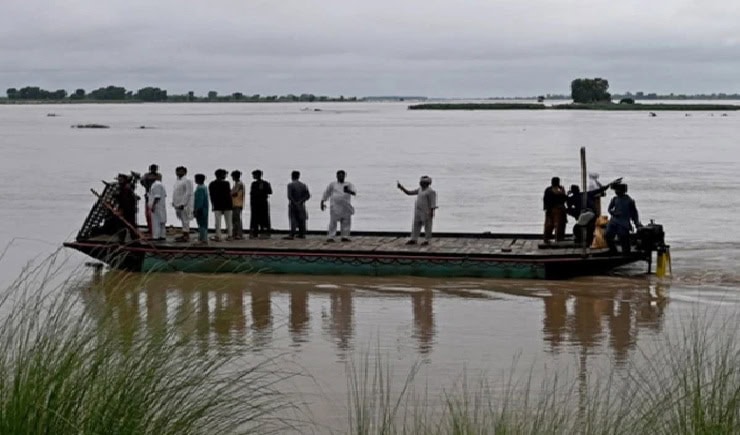
    Protective embankments inspected at Head Sidhnai, Mai Safura, Kund Sargana and Fazil Shah as Ravi and Chenab water levels remain under continuous surveillance Khanewal: Deputy Commissioner Khanewal Hena Arshad has issued a pre-emptive alert to all relevant departments, directing them to maintain complete operational preparedness for any possible flood emergency in the district. The alert comes as Punjab faces an evolving monsoon and river-flood situation. According to the latest official update, moderate flooding has been recorded in the River Chenab at Khanki, Qadirabad and Chiniot Bridge. Low-level flooding has also been reported at Trimmu on the Chenab and at Balloki and Sidhnai on the River Ravi. The Deputy Commissioner visited Head Sidhnai, the Mai Safura Bund Breaching Section, Kund Sargana and Fazil Shah Bund, where she inspected flood-protection infrastructure and reviewed emergency response arrangements. Officials of the Irrigation Department briefed her on the prevailing water situation in the Ravi and Chenab rivers, the structural strength of protective embankments, vulnerable riverine areas, evacuation planning and precautionary measures being taken to minimise possible losses. Additional Deputy Commissioner Revenue Fazal Abbas, Assistant Commissioner Kabirwala Muhammad Haroon and officers representing the Irrigation Department, Rescue 1122, Revenue Department and other concerned agencies accompanied the Deputy Commissioner during the inspection. At Head Sidhnai, Hena Arshad inspected the Mai Safura Bund Breaching Section, surrounding flood embankments and the railway bridge. She reviewed the condition of the protective infrastructure and the safety measures being implemented around vulnerable locations. The Deputy Commissioner directed the Irrigation Department, Kabirwala tehsil administration, Rescue 1122, Revenue Department and other agencies to remain fully alert and maintain uninterrupted coordination. She stressed that machinery, rescue boats, emergency equipment, personnel and transportation resources must remain available for immediate deployment. Any weakness detected in an embankment or protective structure should be repaired without delay, she added. Earlier, while chairing a flood-preparedness meeting at Head Sidhnai, the Deputy Commissioner said that the district administration had completed the necessary arrangements to respond effectively to a possible emergency. She ordered the immediate strengthening of flood embankments, removal of encroachments from waterways and vulnerable locations, and implementation of all remaining precautionary measures. During her visits to Kund Sargana and Fazil Shah Bund, Hena Arshad instructed officials to prepare for the timely and safe evacuation of residents from low-lying riverine settlements whenever water conditions require such action. She directed the administration to identify vulnerable populations in advance, maintain updated evacuation lists and ensure the availability of transport for families, livestock and essential belongings. The Deputy Commissioner also ordered that flood-relief camps and facilities established by the Health and Livestock departments remain fully operational. These camps must be prepared to provide shelter, medicines, drinking water, food, veterinary assistance and other essential services immediately after an emergency is declared. Punjab authorities have intensified flood monitoring across rivers, headworks and barrages. Drone surveillance has also been conducted at Head Sidhnai and other strategic locations to monitor water flows, riverbank erosion and possible incoming flood waves. The wider provincial situation remains sensitive. More than 4,300 residents have already been evacuated from vulnerable settlements along the Chenab in Chiniot district following an increase in water levels, illustrating the speed with which river conditions can affect downstream communities. The National Disaster Management Authority has also issued a weather advisory covering July 25 to July 30, warning of further monsoon activity and associated flooding hazards. Hena Arshad said water levels and river conditions across Khanewal district were being monitored continuously. She instructed all departments to remain vigilant and respond immediately to any rise in water levels, weakening of embankments or other emergency situation. “The protection of citizens’ lives, property and livestock is the district administration’s foremost priority,” the Deputy Commissioner said, reaffirming that negligence or delays in flood-preparedness measures would not be tolerated. Residents of low-lying areas near the Ravi, Head Sidhnai and adjoining riverine belts have been advised to remain attentive to official announcements, avoid approaching rivers and flood channels, and cooperate with the administration if precautionary evacuation becomes necessary. Citizens may contact Rescue 1122 during an immediate emergency or call the Provincial Disaster Management Authority’s disaster helpline 1129 to report flood-related risks and seek assistance.

  • |

    Oil prices fall over $4 after Trump halts planned Iran strikes

    Global oil prices recorded a significant decline after US President Donald Trump announced that the United States would halt its planned military strikes on Iran, easing concerns over a potential escalation in the Middle East and reducing fears of disruptions to global energy supplies. In international trading, crude oil prices fell by more than $4 per barrel as investors reacted positively to the announcement, leading to a broad sell-off in oil futures. Brent crude, the international benchmark for oil prices, dropped by $4.08 to settle at $83.85 per barrel. Meanwhile, US West Texas Intermediate (WTI) crude declined by $4.01, bringing its price down to $80.66 per barrel. Market analysts said the sharp decline reflected improving investor confidence after the reduction in geopolitical tensions between Washington and Tehran. The possibility of avoiding direct military confrontation eased concerns about supply disruptions from one of the world’s most strategically important oil-producing regions. The Middle East plays a critical role in global energy markets, and any signs of conflict involving Iran often trigger volatility in crude oil prices. Investors closely monitor developments in the region due to the importance of key shipping routes, including the Strait of Hormuz, through which a significant portion of the world’s oil exports passes. Last month, oil prices surged by more than 20 percent after renewed US military action against Iran and reports that Tehran-backed forces targeted several oil tankers near Oman. Those incidents heightened fears of supply interruptions, driving both Brent and WTI crude to their highest levels in months. With the latest announcement from President Trump, traders have shifted their focus toward the possibility of improved regional stability. However, energy market experts caution that oil prices are likely to remain volatile, as any renewed geopolitical tensions or disruptions to oil transportation routes could quickly reverse the recent decline.

  • | | |

    New CCTV footage surfaces in Mir Raza murder

    New CCTV footage has emerged in the investigation into the murder of Mir Raza Ali Khan, whose body was found in Karachi’s Gulistan-e-Jauhar area two days after he went missing. The footage shows Mir Raza taking a firearm out of a drawer inside his home and placing it in his vehicle before leaving. He is then seen returning to the kitchen shortly afterward. Another CCTV clip recorded at 4:38am shows Mir Raza walking alone near the area where his body was later discovered. According to police, Mir Raza went missing on July 28 after leaving his home in PECHS. Investigators said he departed at 4:09am in an online taxi and was later found dead in Gulistan-e-Jauhar. Police said the victim was shot in the chest and his body was recovered in a severely mutilated condition. Investigators also revealed that all of his social media accounts had been deactivated a day before his body was found. Authorities have sought Mir Raza’s mobile phone records and data of people who were in contact with him before his disappearance. Police are also examining information obtained from the telecom company as part of the ongoing investigation. The driver of the ride-hailing taxi used by Mir Raza has also been questioned. In his statement, the driver told investigators that he dropped the victim near his destination in Gulistan-e-Jauhar before leaving. Earlier, police recovered Mir Raza’s mobile phone and a pistol holster from the crime scene, which are now being examined as evidence. Mir Raza’s father said his son was due to marry on August 30 at Bait-ul-Mukarram Mosque in Gulshan-e-Iqbal. He said Mir Raza was excited about starting a new chapter of his life, making the tragedy even more heartbreaking for the family. Police said the investigation is continuing from multiple angles and that all available evidence, including CCTV footage, digital records and witness statements, is being analysed to identify those responsible for the killing.

  • | |

    Congo tightens grip on mineral exports with ban on…

    The Democratic Republic of Congo has prohibited exports of copper concentrate and cobalt concentrate, according to a government order reviewed on Thursday, marking the latest step in an ongoing push to force more mineral processing to happen inside the country and capture a larger share of the value generated by its mining sector. News of the ban sent benchmark three month copper prices on the London Metal Exchange up by as much as 1.8 percent to $14,369.50 a metric ton, the highest level since January 29, when the metal touched an all time peak of $14,527.50. Prices stood at $14,300 as of 0930 GMT following the report. Congo holds the position of the world’s largest cobalt supplier and ranks among the top sources of copper and other minerals critical to the global energy transition. The government is using that leverage to encourage the build out of domestic processing capacity rather than allowing raw or partially processed materials to leave the country. The order, dated June 29 and signed jointly by Mines Minister Louis Kabamba Watum, Foreign Trade Minister Julien Paluku Kahongya and Economy Minister Daniel Mukoko Samba, states plainly that exporting copper and cobalt concentrates is now prohibited. The prohibition took effect immediately, though the order allows for one year export waivers to be granted under unspecified strategic circumstances. The same order also establishes a new tax structure covering economically significant mining by products, with a three month transition period built in before the new rules take full effect. Officials said the export ban aims to push mining companies toward marketing or exporting higher value processed mineral products rather than raw concentrate. This marks the fourth time Congo has restricted concentrate exports, following similar bans imposed in 2013, 2019 and 2023, each of which included waivers in cases where domestic smelting capacity could not keep pace with output. The new order formally repeals the 2023 measure and its associated exemptions, replacing it with a broader regulatory framework governing both mineral exports and taxation of significant by products recovered during processing. Congo already exports the vast majority of its copper in refined form. During the first quarter of 2026, the country shipped 696,725 tons of copper cathodes, compared with just 53,926 tons of copper concentrate containing roughly 18,863 tons of copper metal, according to official figures. Over the same period, Congo exported 51,940 tons of cobalt hydroxide containing about 17,054 tons of cobalt metal. Christian Geraud Neema, a mining analyst with the nonprofit China Global South Project, said the new ban is unlikely to significantly disrupt most mining operators since the bulk of Congo’s copper and cobalt already undergoes domestic refining before export. He said the operation most likely to feel the impact is the Kamoa Kakula venture, jointly owned by Ivanhoe Mines, China’s Zijin Mining and the Congolese government, which still exports some volume of concentrate under existing exemptions. Neither Ivanhoe nor Zijin responded immediately to requests for comment, and the Congolese chamber of mines also did not respond. The newly introduced tax regime applies broadly across mineral categories, extending to trace and ultra trace minerals recovered during the refining process. These by products will be taxed using a 55 percent valuation coefficient, with royalties applied alongside those already charged on the primary mineral being extracted. The policy fits into a broader pattern across resource rich African nations seeking to move beyond raw material exports and capture more manufacturing and processing value domestically, a shift that has gained momentum as global demand for energy transition minerals like copper and cobalt continues to grow.

  • | |

    Punjab bans 8 stage actresses for one month over i…

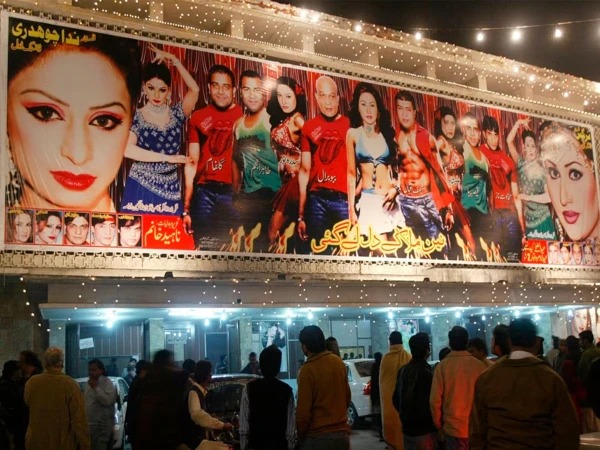
    The Punjab government has imposed a one-month ban on eight stage actresses following complaints and monitoring reports concerning inappropriate performances and gestures during theatre shows. According to a notification issued by the Punjab Information and Culture Department the action was taken on the basis of monitoring reports prepared by the Punjab Council of the Arts (PUCAR). The actresses affected by the ban are Mahi Rajput, Hina Sheikh, Malaika Shehzadi, Madiha Khan, Mehak Noor, Mano Multani, Raima Mehr and Hasna Jutt. They will not be permitted to perform in theatres during the one-month suspension period. PUCAR Director Mughis Bin Aziz said that monitoring of stage dramas was continuing across Punjab. He added that action was being taken against performers and productions found violating the applicable rules and regulations. According to the government notification, complaints regarding inappropriate acts and gestures during stage performances were investigated and found to be valid. The authorities subsequently decided to impose temporary performance restrictions on the eight actresses. The action comes amid increased government monitoring of stage dramas in Punjab. Authorities have been focusing on the quality of theatre productions, compliance with performance regulations and the prevention of content considered inappropriate under existing rules. A Punjab government spokesperson said that the measures were aimed at preventing dances gestures and other performances that violate established regulations or ethical standards. The Punjab bans 8 stage actresses decision highlights the government’s continued efforts to regulate theatre performances across the province. Officials have indicated that monitoring will continue and that further action may be taken if similar violations are identified. The one-month restriction applies specifically to theatre performances according to the notification. The latest action is expected to keep the debate over artistic expression, theatre regulation and government oversight of stage dramas in Punjab in the spotlight.

Leave a Reply

Your email address will not be published. Required fields are marked *