passengers foil bid
|

Passengers foil bid to crash plane, Israel says, after co-pilot stabs pilot

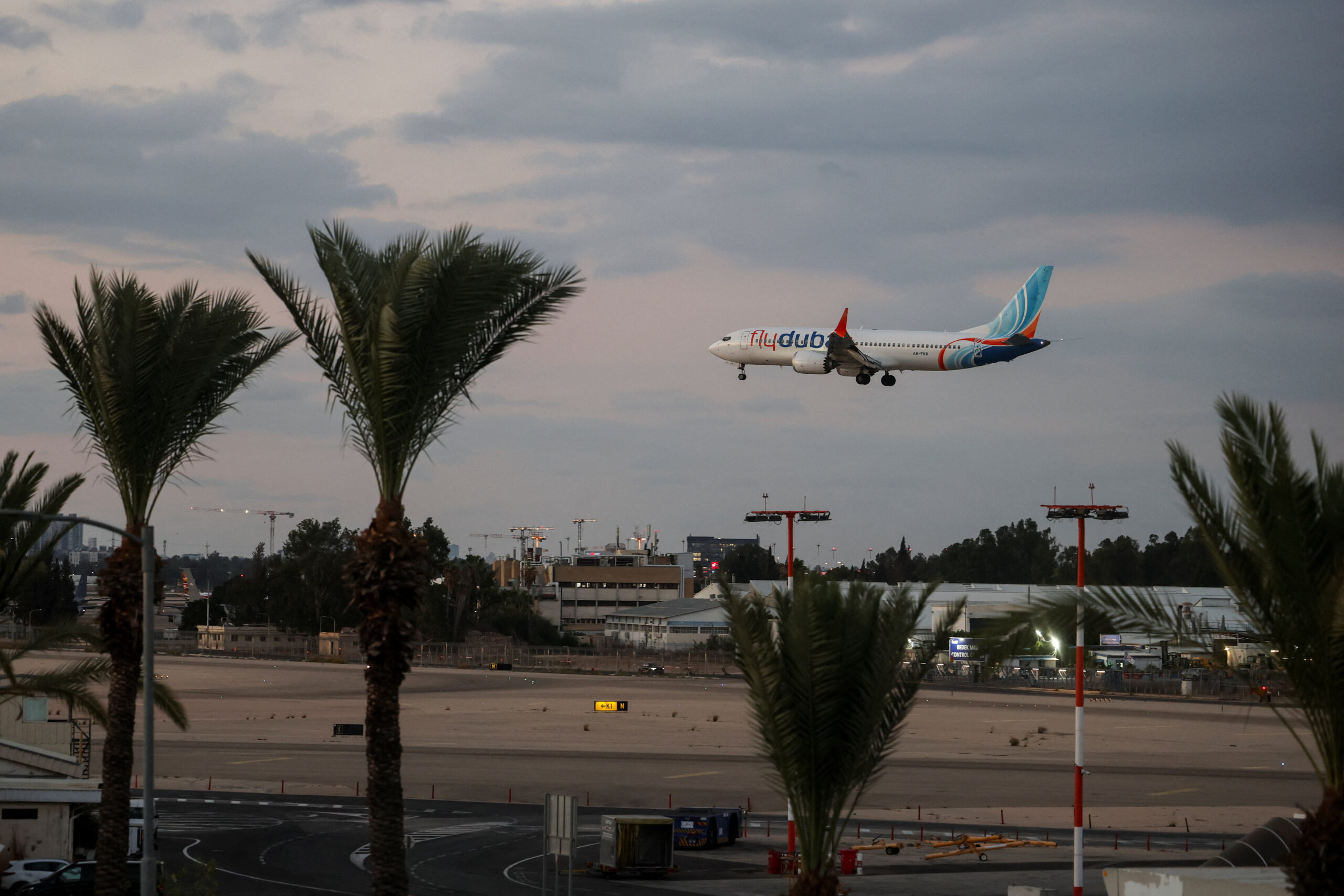
Passengers on a Flydubai flight reached Israel safely on Wednesday, September 30, after customers and crew foiled a co-pilot’s attempt to crash the aircraft, Israeli officials said, in a struggle that began when he stabbed the pilot and sent the jet plunging nearly 14,000 feet in less than 30 seconds.

Passengers and crew entered the cockpit, overpowered the co-pilot and enabled a second pair of flydubai pilots who were aboard the flight to land the jet safely in Tabuk, Saudi Arabia, Israeli officials said.

More than 10 hours later, the passengers arrived at Tel Aviv’s Ben Gurion Airport aboard a flydubai replacement aircraft, with several describing the episode as a miracle and recounting a frantic struggle to prevent a catastrophe.
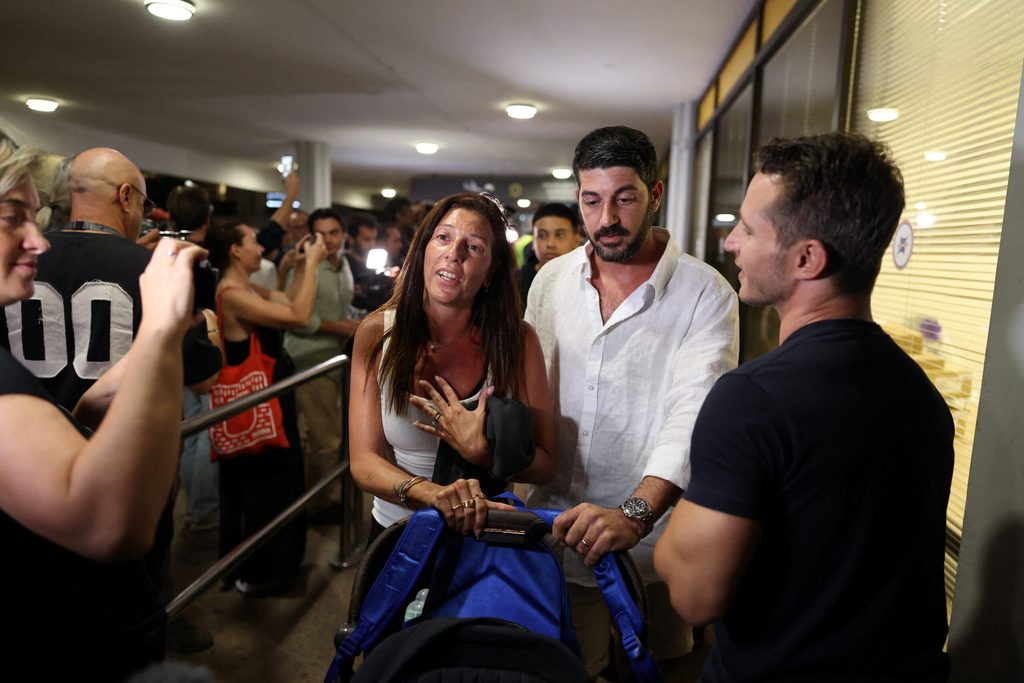
ORDEAL. Passengers who were on the FlyDubai aircraft bound for Israel from the United Arab Emirates, which was diverted to Saudi Arabia following an emergency signal, arrive at the Ben Gurion International Airport, in Lod, near Tel Aviv, Israel, September 30, 2026. Reuters

Israeli officials said the attacker’s motive aboard flight FZ1073 from Dubai to Tel Aviv remained under investigation. Israel and the United Arab Emirates, which includes Dubai, signed the Abraham Accords normalizing relations in 2020.

The incident sharpened concerns about global aviation security in a region scarred by years of conflict, prompting Israel to tighten checks on pilots flying into the country.

“I just can say that it was a miracle. It was awful, crazy, and we thank God that we survived it, we didn’t think we will make it but thank God we are in Israel. We are back home. And we are happy to see everyone here,” passenger Lital Shachaf said.

Israel’s ambulance service said a 51-year-old man was taken to an Israeli hospital to be treated for injuries to his upper body. The man was in a “mild condition,” it said.

Describing the event as “a serious security incident,” Prime Minister Benjamin Netanyahu said Saudi authorities would interrogate the co-pilot.

Flydubai said in a statement that the underlying reasons for the event remained unknown and warned against “premature speculation.”

An Israeli official identified the co-pilot as an Omani national. There was no immediate comment from Oman.

Israeli officials applauded the passengers, who they credited with avoiding a much more serious disaster.

Netanyahu said there were 174 people on board the flight from Dubai, most of them Israeli nationals.

US President Donald Trump said he spoke “at length” with Netanyahu on Wednesday about the incident. He proceeded to give reporters in the Oval Office a detailed account of what happened, adding: “This is the story that I heard — I don’t know if it’s true, but that’s the story that I got from Bibi (Netanyahu).”

‘Something you do without thinking’

A Netanyahu spokesperson told Reuters that the wounded captain, identified by the Israeli leader’s office as Smit Machchhar, an Indian national, was covered with blood on the floor when he managed to click the release to open the cockpit door.

Passengers who entered found the co-pilot bashing at the plane’s control panel, the spokesperson said.

“This is something you do without thinking, just running to save your daughter’s life, your family’s life,” said Asaf Rajuan, one of the passengers who helped restrain the attacker. He spoke with a forehead still bloodied from the struggle.

Netanyahu’s office released a video showing the prime minister at Ben Gurion Airport giving a hug to another passenger, Yaniv Hayun, who his office said “broke into” the cockpit.

“I see you and I see a lion – a big hero,” Netanyahu told the man, who was still wearing the blood-stained shirt he had on during the flight.

Flydubai operates daily return flights between Dubai and Tel Aviv, a route that is popular among Israeli nationals. The flight path normally uses airspace over Saudi Arabia and Jordan.

It is not the first time a flight between Israel and the UAE has landed in Saudi Arabia. A flydubai flight from Dubai to Tel Aviv made an emergency landing in Riyadh in September 2025 due to a medical incident, Israeli media reported at the time.

Saudi Arabia’s Tabuk airport, where the plane landed, said both pilots had been hospitalized after sustaining injuries.

The incident heightened security fears in Israel weeks before Israelis vote in the first election since the Hamas-led October 7, 2023, attacks, with Israel’s security figuring prominently in the campaigning.

Responding to the incident on X, far-right security minister Itamar Ben-Gvir wrote, “Terrorism is a devil with whom no agreement must be reached.”

Israel to tighten checks on pilots

Israeli media published conflicting reports on the incident, with some outlets reporting that a pilot had tried to crash the passenger plane in an alleged suicide attempt. Some Israeli media outlets initially identified the pilots as Omani and Emirati nationals, while others said they were Russian and Ukrainian.

“Every pilot that is going to be flying into Israel, we are going to know the pilots’ identities, know who they are, and do some type of security check,” Doron Spielman, a Netanyahu spokesperson, told Reuters.

Netanyahu met on Sunday with UAE President Sheikh Mohamed bin Zayed Al Nahyan during a rare visit to the Gulf country. Israel and the UAE have forged close security, military and economic ties since establishing diplomatic ties.

Israel provided the UAE earlier this year with Iron Dome air-defense systems and Israeli personnel to operate them, helping defend against Iranian attacks launched after Israel and the US began strikes on Iran.

The UAE government had yet to comment on the flydubai incident, while the Dubai state-owned airline said an “altercation” occurred in the cockpit and the flight subsequently diverted to Tabuk, where it landed safely. The UAE’s aviation regulator, the GCAA, said the flight “experienced a security incident that was brought under control.” – Rappler.com

Similar Posts

  • | | |

    CIA doubted Iran threat behind Trump plane switch

    WASHINGTON: US intelligence officials had doubts about the credibility of an alleged Iranian threat against President Donald Trump that triggered an extraordinary security operation during his departure from Türkiye last month, according to a Washington Post report. The revelation adds a new twist to the dramatic episode in which Trump was secretly moved from an aircraft at Ankara airport and flown to Britain aboard a smaller military jet while another aircraft was used as a decoy. The Washington Post, citing current and former US officials familiar with the intelligence, reported that CIA analysts did not consider information provided by Israel sufficiently compelling. The analysts reportedly communicated their reservations to officials in the Trump administration. The intelligence was described by one US official as Israeli-derived rather than US-generated and assessed with “low confidence”, according to the report. The CIA has declined to comment publicly. Despite the doubts, the US Secret Service decided that the potential danger justified extraordinary precautions. Trump’s security team has faced several serious incidents during his presidency and officials have stressed that they were unwilling to take unnecessary risks. The unusual operation unfolded after Trump attended the NATO summit in Ankara on July 8. According to reports, the president was initially expected to leave Türkiye aboard Air Force One. Instead, he was covertly transferred to a C-32A military aircraft through an airport catering truck. Trump and a small group of close aides then travelled to Britain’s Mildenhall air base, with fighter jets providing protection. Meanwhile, the regular presidential aircraft continued as part of a carefully planned deception. The operation has attracted considerable attention because it involved not only a change of aircraft but also secrecy from journalists and some senior officials travelling with the presidential delegation. The Washington Post reported that close Trump aides Dan Scavino, Natalie Harp and Walt Nauta accompanied him during the covert transfer, while no Cabinet officials did. The White House has defended the decision, saying Trump faces numerous threats, including threats linked to Iran, and that the Secret Service’s primary responsibility is protecting the president. Trump himself said the decision to use another plane was made by the Secret Service and that he followed its instructions. Reuters also reported that US officials considered the threat serious enough to warrant the covert aircraft switch. The intelligence dispute has nevertheless raised broader questions about the information shared between Israel and Washington. Some current and former US intelligence officials reportedly believe Israeli reporting can sometimes be intended not only to warn American leaders but also to influence policy decisions. The episode comes amid heightened tensions between Washington, Israel and Iran, making intelligence assessments particularly sensitive. It also highlights the difficult balance between acting quickly on potential threats and determining how reliable those threats actually are. For the Trump administration, the incident has now become more than a story about an unusual plane switch. It has raised questions about intelligence credibility, presidential security and the influence of foreign-provided information on US decision-making.

  • |

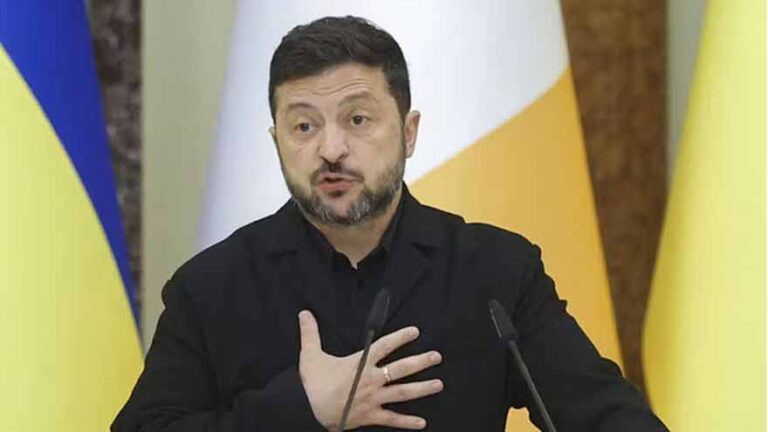
    Zelensky accuses Iran of direct role in Russia’s war against Ukraine

    Ukrainian President Volodymyr Zelensky has accused Iran of directly participating in the war against Ukraine through its continuous military support for Russia. Speaking on potential threats following a recent incident involving an Iranian vessel, Zelensky urged caution to prevent the opening of another front while stressing that Ukraine must remain prepared for all scenarios. He stated that Tehran became a direct participant by supplying Moscow with thousands of attack drones from the outset of the full-scale invasion and subsequently granting licences for local production. He added that both Iran and North Korea have effectively attacked Ukraine by supplying Russia with weaponry, including missiles, drones, and artillery ammunition. In response, Iranian Foreign Ministry spokesperson Ismail Baghaei rejected assertions that Tehran had sought negotiations with the United States to end hostilities, asserting that Iran will independently determine matters of war and peace. Baghaei added that Washington had initially expected an Iranian surrender within days of commencing attacks, yet months later, the United States continues to face severe challenges in the region.

  • | |

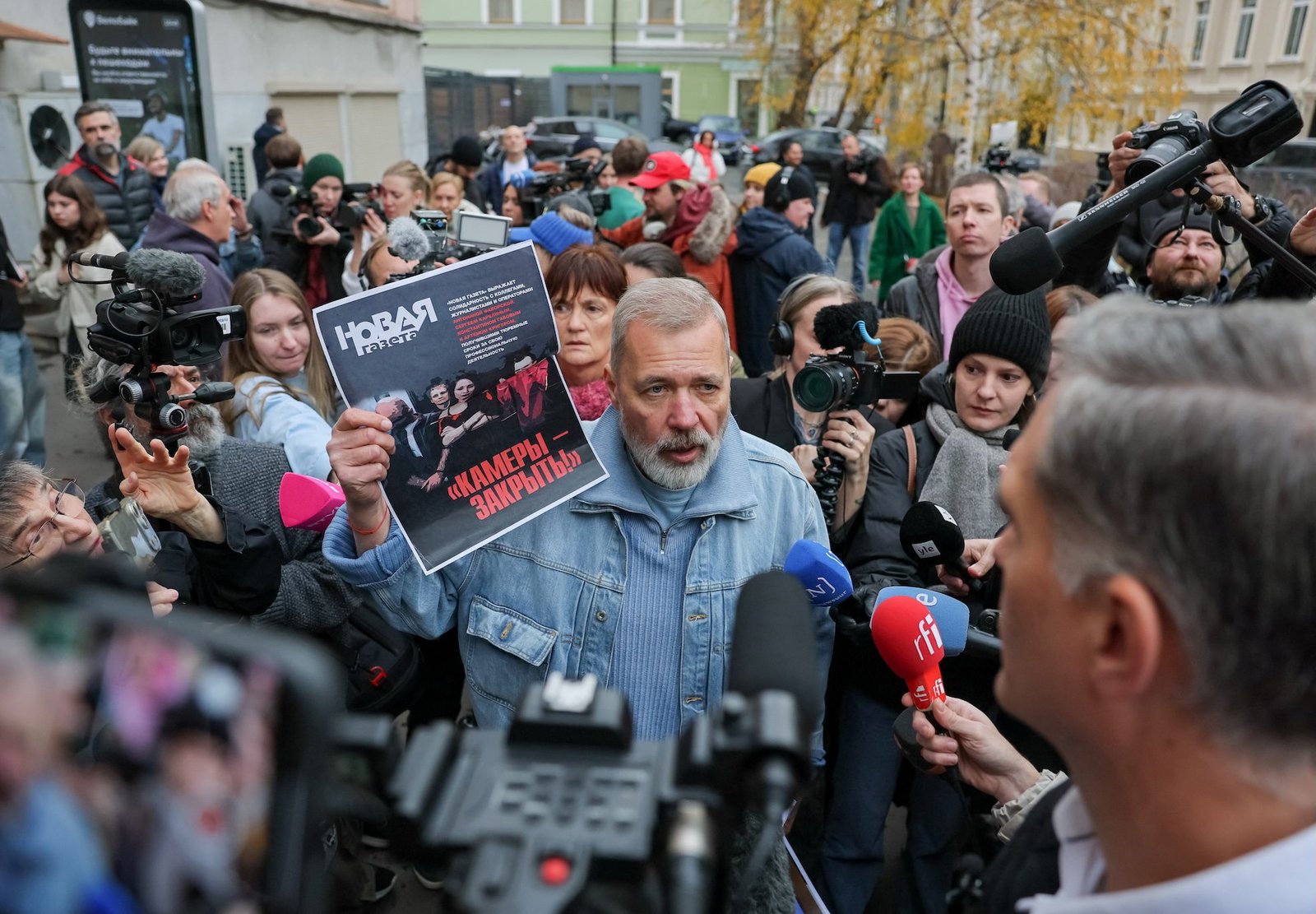
    Lights go out at Russia’s Novaya Gazeta, after years of defiant reporting

    ‘We are currently at a point where the section of the Russian constitution that guarantees political and civil rights has effectively ceased to function,’ says Novaya Gazeta co-founder Dmitry Muratov, a co-winner of the 2021 Nobel Peace Prize

  • |

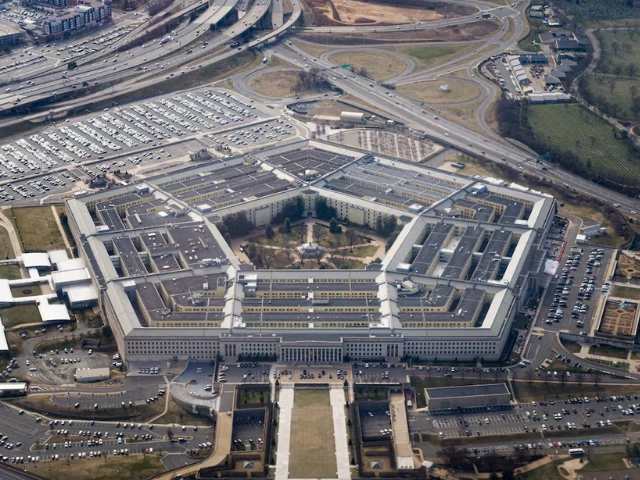
    CNN report says Pentagon delayed reporting US troop injuries during Iran conflict

    The Pentagon has been criticised for delaying the public release of information about US military casualties during the ongoing conflict with Iran, with a CNN report claiming that injury figures have often been disclosed days or even weeks after incidents occurred. According to the report, US Central Command initially provided regular updates on troop injuries during the early stages of the conflict but has since stopped routinely announcing non fatal casualties. As a result, the Defence Casualty Analysis System has become the main official source for casualty information, although its updates have reportedly lagged behind events. A Pentagon official told CNN that documenting military injuries can take several days or even weeks because cases must go through medical evaluations and administrative reviews before being entered into official records. The official maintained that the casualty database is updated regularly despite the delays. The report said that since the United States and Iran signed a memorandum of understanding in mid June, the database initially recorded one new military death and 14 wounded personnel. The fatality was identified as Navy Commander Gabriel Edwards, a helicopter pilot who was lost at sea in the Arabian Sea on July 1. CNN reported that casualty figures appeared to be added in batches rather than immediately after incidents. One injured Air Force member was reportedly listed in a July 13 update, while another update on July 17 included 10 wounded soldiers and three injured sailors. After CNN published its report, the casualty database was updated again on July 20 with four additional military deaths and 20 more wounded service members. Despite those updates, Pentagon spokesperson Sean Parnell said the official database still did not fully reflect the total number of injuries. In a statement posted on social media, he said nearly 100 US service members had been injured since July 7, adding that most suffered minor concussions. Parnell defended the Pentagon’s approach to releasing casualty information, arguing that providing immediate details about non fatal injuries could give valuable information to adversaries and potentially place more military personnel at risk. He also said the Pentagon and US Central Command have continued providing regular updates on military operations against Iran. According to Parnell, public statements by President Donald Trump and Defence Secretary Pete Hegseth have also kept the public informed about the objectives and progress of the campaign. The report also highlighted several recent attacks involving US forces in the region. An Iranian missile strike on Muwaffaq Salti Air Base in Jordan reportedly killed two American service members and left another missing. In a separate incident in northern Iraq, another US soldier died during the controlled destruction of a downed Iranian drone. US Central Command confirmed that one service member was injured during the Iraq operation. It also said four personnel who were treated in hospitals in Jordan following the airbase attack had been discharged after receiving medical care. Officials added that several other military personnel suffered minor injuries but were able to return to duty after medical evaluation. The latest report has renewed questions about the speed and transparency of casualty reporting during military operations, with critics arguing that delayed disclosures make it more difficult for the public to understand the human cost of the conflict.

  • | |

    Iran rejects Hormuz plan as US intercepts missiles

    WASHINGTON: Regional tensions intensified on Wednesday after Iran rejected Oman’s proposal for jointly managed shipping routes in the Strait of Hormuz, while the United States said it intercepted multiple Iranian ballistic missiles allegedly launched towards American forces in the Middle East. Iranian Deputy Foreign Minister Kazem Gharibabadi said Muscat had proposed dividing the Strait of Hormuz transit route equally between Iranian and Omani territorial waters. However, Tehran instead suggested that shipping passing through Iranian waters should remain under its control, while Oman would oversee only part of the route on its side. He warned that if Oman declined the proposal, the strategic waterway would remain closed. The Strait of Hormuz is one of the world’s busiest maritime corridors and a vital route for global energy exports, making any disruption a significant concern for international trade and regional security. Meanwhile, the US Central Command announced that its forces had intercepted several ballistic missiles launched by Iran in what Washington described as an attempted surprise attack on US military personnel stationed in the Middle East. Although the exact target was not disclosed, Iranian state media reported that the Islamic Revolutionary Guard Corps (IRGC) had fired missiles at a US military base and a Central Command facility in Jordan, claiming the strikes were retaliation for recent American actions against Iranian interests. US President Donald Trump said diplomatic contacts with Tehran had shown positive signs but warned that military action could resume if negotiations failed to produce results. Iran, however, denied reports suggesting it was preparing to restart direct talks with Washington. The conflict has also spilled into neighbouring countries. Jordan confirmed that its air defence systems intercepted five missiles entering its airspace early Wednesday, marking the third consecutive day of aerial threats against the kingdom. No casualties or property damage were reported. In response to the escalating crisis, Gulf nations intensified diplomatic coordination. Saudi Foreign Minister Prince Faisal bin Farhan held separate discussions with his counterparts from Qatar, Kuwait and Bahrain, with all sides stressing the importance of reducing regional tensions and ensuring freedom of navigation through the Strait of Hormuz and the Bab al-Mandeb Strait. The ministers also condemned attacks attributed to Iran and its allied armed groups. The Gulf Cooperation Council (GCC) strongly criticised repeated attacks on Saudi Arabia, describing them as a serious violation of the kingdom’s sovereignty and a threat to regional stability. GCC Secretary-General Jasem Mohamed AlBudaiwi reaffirmed the bloc’s full support for Saudi Arabia and urged stronger regional cooperation to prevent further escalation. The European Union also expressed concern over the deteriorating security situation. EU foreign policy chief Kaja Kallas discussed Gulf tensions with Iranian Foreign Minister Abbas Araghchi, calling for renewed diplomacy while also raising concerns over Iran’s military support for Russia and the temporary detention of two French diplomats in Tehran. China appealed for restraint, urging all parties to resolve disputes through dialogue while safeguarding freedom of navigation in international waterways. Beijing reiterated its support for peaceful solutions and respect for the sovereignty of regional states. Separately, Iran’s IRGC Navy announced that it had intercepted and halted three oil tankers in the Strait of Hormuz after the vessels allegedly ignored official warnings. Iranian authorities did not disclose the ships’ identities or provide further details regarding the alleged violations. Iran also rejected accusations linking it to projectiles fired at targets inside Saudi Arabia from other countries, insisting that attributing every attack on US interests in the region to Tehran was a serious miscalculation. The latest developments highlight growing instability across the Gulf, with military confrontations, diplomatic efforts and concerns over maritime security continuing to shape one of the world’s most sensitive geopolitical flashpoints.

Leave a Reply

Your email address will not be published. Required fields are marked *