pti changes venue
| |

PTI changes venue for August 5 rally in Peshawar

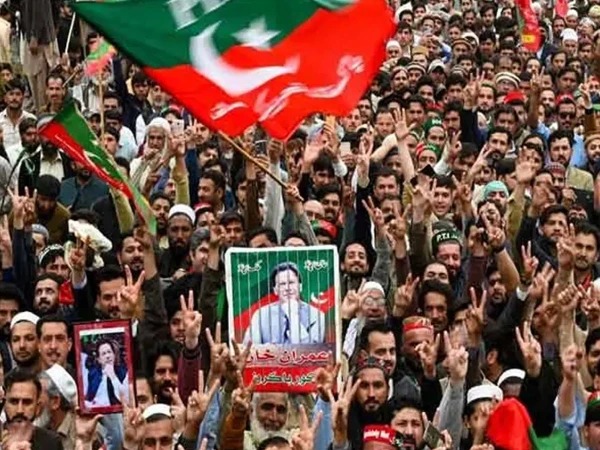
Peshawar: Pakistan Tehreek-e-Insaf (PTI) has changed the venue for its August 5 public rally, with party leaders announcing that the gathering will now take place at an open ground near the Peshawar Motorway instead of the previously planned location.

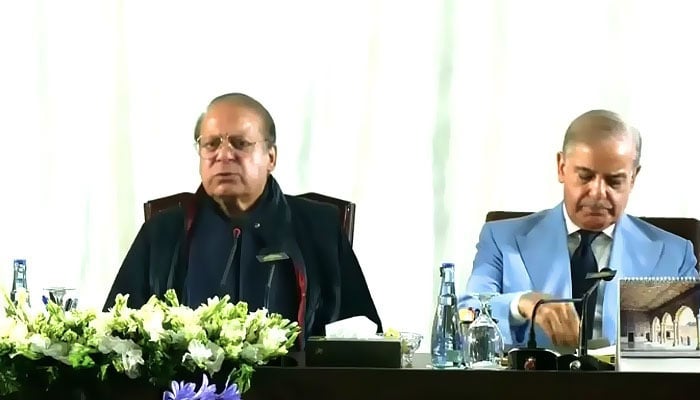
The decision was made during a PTI parliamentary party meeting held at the Chief Minister’s House in Peshawar. The meeting was chaired by Khyber Pakhtunkhwa Chief Minister Sualeh Afridi and attended by members of the National Assembly and the Provincial Assembly.

Addressing the meeting, Afridi said preparations for the rally were in full swing and responsibilities had been assigned to party lawmakers to ensure the event’s success. He described the August 5 rally as a “semi-final” and a decisive gathering, saying the party would present its future political strategy to the public.

According to the chief minister, the venue was shifted to an open ground near the Peshawar Motorway to improve public access and accommodate a larger number of participants.

Afridi also reviewed the party’s political efforts since October 15, 2025, stating that PTI had pursued constitutional and legal avenues to resolve political issues through dialogue. He said the party leadership had sought meetings with PTI founder Imran Khan through legal channels, including approaching the Islamabad High Court and the Supreme Court, but those efforts had not produced the desired outcome.

He reiterated that PTI remained committed to peaceful political activity and maintained that peaceful protest was the party’s final constitutional option. Afridi also called for better access to Imran Khan by his family, sisters, and personal doctors, while urging authorities to ensure he receives appropriate medical care.

The meeting, however, was not without internal disagreements. According to party sources, several lawmakers expressed concerns over the timing of the rally and suggested holding a workers’ convention before launching the movement. Some members argued that the main protest should be organized in Punjab rather than Khyber Pakhtunkhwa to increase political pressure on the federal government.

The reported differences led to a heated exchange during the meeting, with some dissatisfied lawmakers leaving before it concluded. Party sources said the chief minister assured members that their concerns would be addressed.

The August 5 rally is expected to be one of PTI’s most significant political events in recent months as the party seeks to outline its next phase of political action.

Similar Posts

  • | |

    LHC grants protective bail to Noreen Niazi

    The Lahore High Court (LHC) on Thursday granted one-week protective bail to Noreen Niazi, the sister of Pakistan Tehreek-e-Insaf (PTI) founder Imran Khan, in a case registered under the Prevention of Electronic Crimes Act (PECA). The court also restrained the National Cyber Crime Investigation Agency (NCCIA) from arresting her during this period. The relief was granted after Noreen filed a petition seeking protection from arrest. She informed the court that she intended to approach the relevant court for pre-arrest bail but feared that investigators could detain her before she had the opportunity to seek legal remedy. After hearing the arguments, Justice Sardar Akbar Dogar directed the NCCIA not to arrest Noreen for one week. The court also instructed her to appear before the competent court within the given time to seek further legal relief in accordance with the law. The case against Noreen was registered after authorities accused her of sharing content that allegedly contained false, offensive and inflammatory statements on social media. Investigators claimed the material was intended to spread misleading narratives and damage the reputation of state institutions. The allegations are linked to remarks she made during a podcast interview. In the interview, she discussed national security issues and made comments regarding regional political developments. Short video clips from the interview later circulated widely on social media, prompting authorities to launch an investigation. Following the viral circulation of the clips, the NCCIA initiated an inquiry and registered a formal case against her. The agency invoked provisions of the Prevention of Electronic Crimes Act along with relevant sections of the Pakistan Penal Code related to public mischief and criminal intimidation. Earlier this month, the NCCIA issued a notice directing Noreen to appear before its Cyber Crime Reporting Centre in Islamabad to record her statement. The notice warned that failure to appear before investigators could result in further legal action under applicable laws. During the hearing, Noreen’s legal counsel argued that she had no intention of avoiding the investigation and was willing to cooperate with authorities. However, the defence maintained that immediate protection was necessary to ensure she could exercise her legal right to seek pre-arrest bail without facing detention. The court accepted these arguments and granted temporary relief, preventing her arrest for one week while allowing her to pursue legal remedies before the appropriate forum. The latest court order does not dispose of the case or determine the merits of the allegations. Instead, it provides temporary protection until Noreen appears before the relevant court to seek further relief.

  • | | |

    Pakistan seeks stronger economic ties with Califor…

    Pakistan’s Ambassador to the United States Rizwan Saeed Sheikh has held a series of meetings with senior officials, business leaders and members of the Pakistani-American community during his visit to California. The ambassador discussed ways to expand economic and commercial cooperation between Pakistan and the US state. He said developing stronger economic, trade and educational links with California was among Pakistan’s key priorities. Sheikh highlighted the potential for cooperation in sectors including modern technology and agriculture. He said both sides should focus on creating more opportunities for investment, business partnerships and the exchange of expertise. The ambassador also engaged with representatives of the American business community and investors. He encouraged them to examine Pakistan’s growing investment potential and explore opportunities for launching business ventures in the country. Sheikh said stronger links between Pakistani and American businesses could help increase trade and create new avenues for economic cooperation. He also highlighted the importance of educational connections between Pakistan and California. According to the ambassador, greater interaction between educational institutions, professionals and technology sectors could contribute to knowledge sharing and long-term cooperation. During his meetings with Pakistani-Americans, Sheikh praised their contribution to strengthening relations between Pakistan and the United States. He said the community had played an important role in promoting cultural understanding, local trade and people-to-people contacts. The ambassador said Pakistani-Americans could further contribute by building stronger business and cultural connections between the two countries. The meetings were part of Pakistan’s efforts to deepen engagement with California’s government, business sector and Pakistani-American community.

  • | |

    Chinese Man Sentenced to 46 Years in Prison After Discovery of Massive Military Grade Weapons Cache in Pattaya

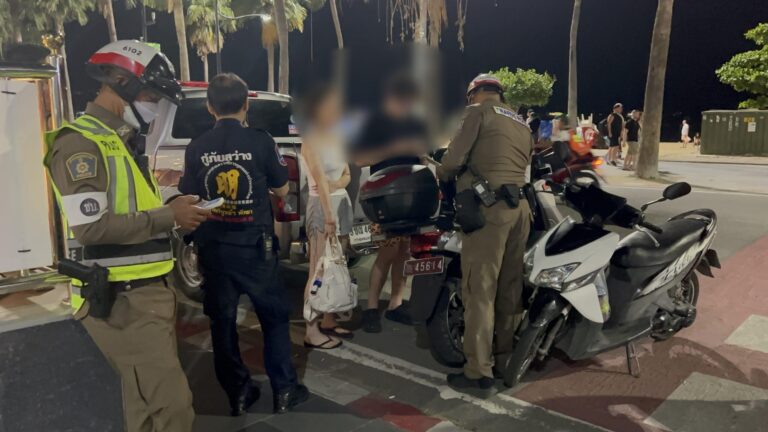
    PATTAYA, Thailand A 31-year-old Chinese national has been sentenced to 46 years in a Thai prison for the illegal possession of military-grade weapons, C4 explosives, an explosive vest, signal-jamming equipment, body armor, grenades, and other prohibited military hardware, the Pattaya Provincial Court ruled on August 4th, 2026. Mingchen Sun, 31, who holds Chinese, Dominica, and […]

  • |

    Pakistan posts Rs3.6tr primary surplus as fiscal position improves in FY2025-26

    ISLAMABAD: Pakistan closed the financial year 2025-26 with a primary budget surplus of around Rs3.6 trillion, marking the third consecutive year of a surplus and allowing the country to comfortably meet a key fiscal condition agreed with the International Monetary Fund (IMF). The improvement came despite the government falling short of its tax collection targets, with stronger petroleum levy receipts, tighter expenditure controls and lower-than-expected debt servicing costs helping offset the revenue shortfall. According to the latest fiscal operations data released by the Ministry of Finance, the unadjusted primary surplus reached Rs3.63 trillion, equivalent to 2.6% of the country’s gross domestic product (GDP). The figure was approximately Rs464 billion higher than the IMF’s target of Rs3.16 trillion. The primary balance is considered an important indicator under Pakistan’s IMF programme because it measures the government’s fiscal position before interest payments on public debt. The latest figures indicate that the government maintained fiscal discipline despite continued pressure on revenues and expenditure. Overall fiscal deficit below target Pakistan’s overall budget deficit, after accounting for provincial cash surpluses, stood at approximately Rs3.3 trillion during FY2025-26. This was around Rs1.7 trillion lower than the amount initially projected in the federal budget. The federal government’s own deficit was recorded at Rs4.8 trillion, also significantly below the budgeted level. The better-than-expected outcome was primarily attributed to lower interest payments, stronger petroleum levy receipts and restrained development expenditure. Interest payments were around Rs1.3 trillion below the amount originally allocated in the budget. The government also collected approximately Rs101 billion more than its petroleum levy target, while federal development spending remained Rs82 billion below the initially approved allocation. The fiscal improvement also contributed to a moderation in the growth of public debt. Public debt increased by around 7% during the year, bringing some relief after several years of double-digit debt expansion. Provinces narrowly miss IMF cash surplus target The four provincial governments collectively generated a cash surplus of around Rs1.45 trillion during the fiscal year. Although the amount fell marginally short of the IMF’s combined requirement, the shortfall was only around Rs14 billion. Punjab contributed the largest share, recording a cash surplus of approximately Rs914 billion. Sindh posted a surplus of around Rs350 billion, followed by Khyber-Pakhtunkhwa with Rs165 billion and Balochistan with approximately Rs21 billion. Provincial governments, meanwhile, performed slightly better on revenue collection. Their combined tax receipts exceeded the IMF condition by around Rs18 billion, with collections crossing Rs1.2 trillion. FBR misses tax target Despite the overall improvement in the fiscal position, tax collection remained a major area of concern. The Federal Board of Revenue collected approximately Rs13 trillion during FY2025-26, falling nearly Rs1 trillion short of the IMF’s revised target. FBR tax receipts increased by about 11% compared with the previous year. However, this increase was broadly in line with nominal GDP growth, indicating that the tax-to-GDP ratio remained largely unchanged at around 10.3%. The figures suggest that additional revenue expected from new taxation and enforcement measures did not fully materialise. The government had anticipated around Rs700 billion in additional revenue from such measures. Non-tax revenue also remained below expectations by approximately Rs63 billion. Total non-tax receipts stood close to Rs5.1 trillion, including around Rs2.4 trillion in profits transferred by the central bank. Petroleum levy becomes key revenue source A major contributor to the stronger fiscal outcome was the petroleum levy. Collections under the petroleum levy climbed to around Rs1.567 trillion, representing an increase of approximately 28% over the previous year. The amount was also Rs101 billion above the target agreed with the IMF. The additional collection effectively represented roughly 25 days of petroleum price relief at a levy rate of Rs80 per litre on petrol and high-speed diesel. For the current financial year, the government has committed to collecting approximately Rs1.7 trillion through the petroleum levy. Meeting this objective is expected to require maintaining the levy at around Rs80 per litre, subject to the applicable petroleum pricing mechanism and market conditions. Development spending remains restrained The government’s fiscal consolidation strategy also affected development expenditure. Federal development spending was recorded at around Rs918 billion, approximately Rs82 billion below the originally approved budget allocation. However, the amount was still around Rs100 billion higher than the subsequently revised allocation. The figures reflect the government’s efforts to contain expenditure and prioritise fiscal targets amid pressure from debt servicing and revenue mobilisation. Debt servicing costs fall Lower-than-expected debt servicing provided another significant boost to the government’s fiscal position. The Ministry of Finance reported that debt servicing remained around Rs6.95 trillion during the year, compared with the budgeted amount of approximately Rs8.2 trillion. The government attributed the savings to tight fiscal management, improved cash handling and the early retirement of around Rs1.9 trillion in domestic debt. These measures helped reduce domestic debt servicing costs by nearly Rs1.97 trillion compared with the original estimates. Statistical discrepancy highlighted The fiscal operations report also identified a statistical discrepancy of around Rs853 billion across the federal and provincial accounts. According to the Ministry of Finance, the discrepancy was linked largely to changes in cash balances and differences in the recording and reporting of financial data. The negative discrepancy indicated that cash inflows were higher than recorded outflows. At the federal level, the discrepancy stood at approximately Rs448 billion. The ministry attributed the difference mainly to changes in commercial bank deposits as well as variations in reporting and accounting adjustments involving the State Bank of Pakistan, FBR and Economic Affairs Division. Provincial accounts showed a combined statistical discrepancy of approximately Rs405 billion. Punjab accounted for around Rs266 billion, Khyber-Pakhtunkhwa Rs95 billion, Balochistan Rs72 billion and Sindh around Rs28 billion. The ministry said movements in commercial bank deposits were among the principal factors behind the provincial differences. IMF review ahead The improved fiscal performance is expected to strengthen Pakistan’s position ahead of the next IMF assessment. An IMF mission is expected to visit Islamabad in the third week of September to review Pakistan’s economic performance during the previous fiscal year. The mission is also expected to

  • |

    Democrats select Crowley, Flanagan as Republicans back Demuth in key state races

    Democratic socialist Francesca Hong and moderate David Crowley are locked in an extraordinarily tight contest for Wisconsin’s Democratic gubernatorial nomination, while Minnesota voters selected progressive Peggy Flanagan for the US Senate and Republican Lisa Demuth for governor. With 80 per cent of the votes counted in Wisconsin, Milwaukee County Executive David Crowley held a narrow lead of just a few hundred votes over Hong. The outcome remains too close to call in a race widely seen as a major test of progressive policy appeal in a crucial battleground state. Hong, a state representative and former chef, ran on a platform advocating for the abolition of Immigration and Customs Enforcement (ICE), a temporary moratorium on data centres, and increased corporate taxes. Her campaign faced late scrutiny over past social media posts concerning Thanksgiving, which she subsequently clarified. The victor of the Democratic primary will face Republican nominee US Representative Tom Tiffany in November. In Wisconsin’s 3rd Congressional District, Democrats selected Rebecca Cooke to challenge Trump-aligned Republican incumbent Derrick Van Orden. Cooke, a former small business owner and waitress who has out-fundraised Van Orden, secured backing from the Democratic Congressional Campaign Committee’s “Red to Blue” programme. Across the state line in Minnesota, Democratic voters chose Lieutenant Governor Peggy Flanagan as their US Senate nominee over moderate Representative Angie Craig. Flanagan, who campaigned on dismantling ICE, will seek the seat being vacated by retiring Democratic Senator Tina Smith. In Minnesota’s Republican gubernatorial primary, State House Speaker Lisa Demuth secured the nomination, defeating former MyPillow chief executive Mike Lindell despite his high-profile endorsement from Donald Trump. Demuth now advances to challenge Democratic nominee Senator Amy Klobuchar in the general election.

  • | |

    Gen Z group behind India’s cockroach protest…

    The Cockroach Janta Party, the youth movement that forced a top Indian minister to quit, says it has no plans yet to contest elections despite its growing influence among young voters. Abhijeet Dipke, the founder of the group, told a foreign news agency on Tuesday that the organization intends to stay focused on grassroots mobilization rather than rush into formal politics. The statement comes weeks after protests led by Dipke swept through Delhi and spread to other parts of the country, ultimately pressuring Prime Minister Narendra Modi’s education minister to step down. Speaking from his family home in Maharashtra, Dipke said the group wants to first understand what young Indians actually want before deciding its next move. He announced that supporters would gather for a two day meeting starting Wednesday to map out priorities for the movement going forward. “The purpose will be to form the agenda for the Cockroach Janta Party and discuss how we can take this social movement forward,” Dipke said, as well wishers arrived at his home carrying flowers and gifts. Dipke made clear that entering electoral politics is not on the table for now, though he left the door open for the future. He said he would only consider building a formal party if a clear majority of supporters pushed for it, and that any decision to contest elections would come later, guided by public sentiment rather than a fixed timeline. He argued that Indian politics does not currently need another party competing for power. Instead, he said, the country requires a broader public campaign aimed at restoring faith in institutions that have lost credibility among ordinary citizens. Dipke said the group’s immediate priority is to give voice to the frustrations of India’s youth, many of whom, in his view, no longer trust the country’s political class, judiciary or press. He emphasized the importance of listening directly to young people before setting any formal agenda, saying it was necessary to understand their actual concerns rather than assume them. Dipke made these comments while still recovering from typhoid, which he contracted during the weeks he spent camped out during the Delhi demonstrations. A hero’s welcome at home Following the 36 day protest, Dipke traveled back to his hometown of Chhatrapati Sambhajinagar, where hundreds of supporters lined up outside his home to greet him, many carrying flowers in celebration of the movement’s success. Dipke’s rise to prominence has been rapid. After returning to India in June from his studies in the United States, he became a household name almost overnight when his call to protest against leaked medical entrance exam papers pulled tens of thousands of young demonstrators onto the streets of the capital. The pressure campaign achieved a significant result on July 25, when Education Minister Dharmendra Pradhan resigned from his post. Authorities had attempted to disperse the crowds using tear gas and baton charges, but the demonstrations continued regardless. In the aftermath, the government announced tougher legal penalties for those involved in leaking exam papers and formed a committee to reassess the broader examination system. The stakes attached to these entrance exams are enormous for India’s youth. Millions of students spend years preparing for them, viewing a strong result as their surest route to stable, well paying careers and financial security for their families. Wary of political traps Dipke explained that he is avoiding a formal political launch partly out of concern that the government could use investigations or legal pressure to undermine the party’s leadership if it formalized too quickly. He also said he has no intention of aligning the movement with any existing political party, even as opposition figures in India have tried to capitalize on the rare momentum the protests created against Modi’s government. Some of that caution appears to draw on regional experience. In neighboring Bangladesh, a youth led party that emerged after mass protests ousted long time leader Sheikh Hasina in 2024 went on to perform poorly in this year’s elections, a result that may be shaping how Dipke approaches the question of formal politics in India. Political observers say the true test of whether young Indians’ frustration translates into votes will come in elections scheduled for next year in Uttar Pradesh, India’s most populous state, along with Punjab and Modi’s home state of Gujarat. A bigger risk for the ruling Bharatiya Janata Party could emerge in the 2029 general election if the Cockroach Janta Party evolves into a formal political force by then. Political analyst Amitabh Tiwari said the movement is unlikely to cause major damage to the BJP in upcoming state elections but could grow into a more serious factor by the time of the next general election. He added that if the group builds a party structure, continues championing youth causes and sustains its current momentum, it stands a real chance of attracting broader support. Security concerns following the protests remain high. More than a dozen police officers have been stationed outside Dipke’s family home after he received threats on social media once his profile surged following the initial call to protest in May, a period in which the Cockroach Janta Party’s Instagram following grew to 22 million within days. Dipke said his greatest worry is not for his own safety but for that of his parents. He expressed relief at being back home and said he trusts that government provided security will keep his family safe in the coming weeks. The episode adds to a growing pattern across South Asia, where youth led movements have increasingly forced political concessions from long entrenched governments, even when those movements stop short of transforming into electoral parties themselves.

Leave a Reply

Your email address will not be published. Required fields are marked *