chinese tourists clash
| | |

Chinese Tourists Clash with Police in Pattaya After Near-Miss at Crosswalk, Try to Flee and Crash into Official Vehicle

PATTAYA

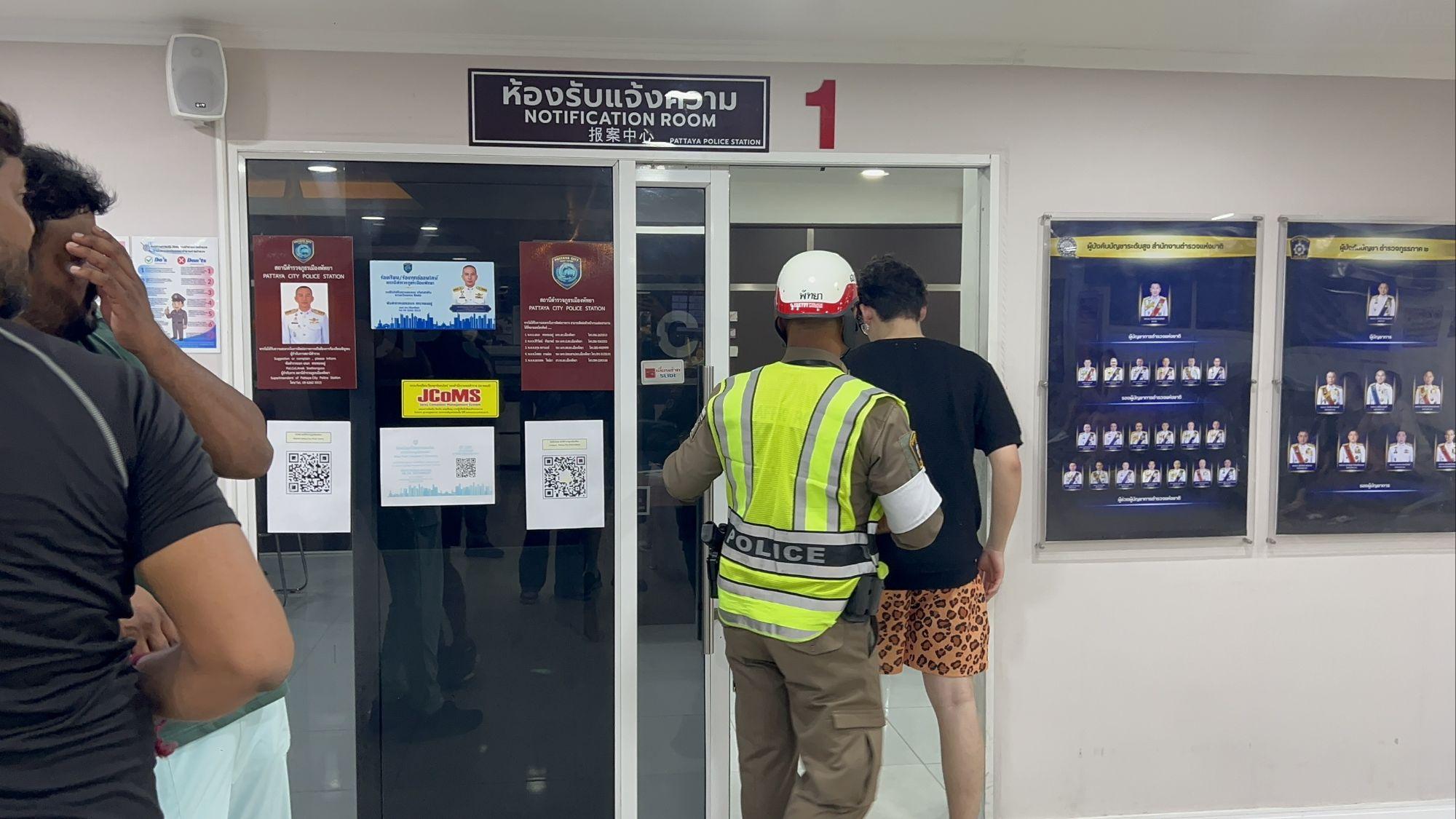
Chinese tourists riding a motorcycle without helmets nearly struck pedestrians at a crosswalk in front of the Pattaya City Police Station on Tuesday evening before arguing with officers and crashing into a parked government vehicle while attempting to flee, say Pattaya Police.

At approximately 8:30 p.m. on August 11th, 2026, Police Lieutenant Siwakorn Somsura, deputy traffic inspector at the Pattaya City Police Station, along with traffic officers, was enforcing traffic rules and assisting tourists crossing the road outside the station.

Officers spotted two Chinese tourists riding a motorcycle bearing Chonburi license plate 4กล 1115. Neither rider was wearing a helmet. The pair rode through the crosswalk area as pedestrians were crossing, nearly causing an accident.

Police stopped the motorcycle for inspection, requested the driver’s license, and issued a warning to exercise greater caution, particularly near crosswalks used by the public and tourists.

During the check, the tourists became agitated and argued with officers. One then attempted to ride away from the scene. In the process, the motorcycle clipped a parked official vehicle, damaging both the bike and the government car. Bystanders filmed the entire sequence, from the initial stop through the attempted escape and the collision.

Officers detained the driver and transferred him to investigators at the Pattaya City Police Station for legal action. Preliminary charges include riding a motorcycle without a helmet, driving without a license, and damaging government property. Further proceedings will follow in accordance with the law.

Similar Posts

  • | | | |

    Top National Thailand Stories From the Past Week: Bangkok Pub Fire Death Toll Reaches 34, and More

    Here is a look at the top NATIONAL Thailand stories, chosen by our Pattaya News/TPN National team, from last week, Monday, July 13th to Sunday, July 19th. They are not in any particular level of importance but are listed in the order of date of publication. A massive fire ripped through a well-known beer pub […]

  • | | |

    PSX ends week on negative note, KSE-100 loses near…

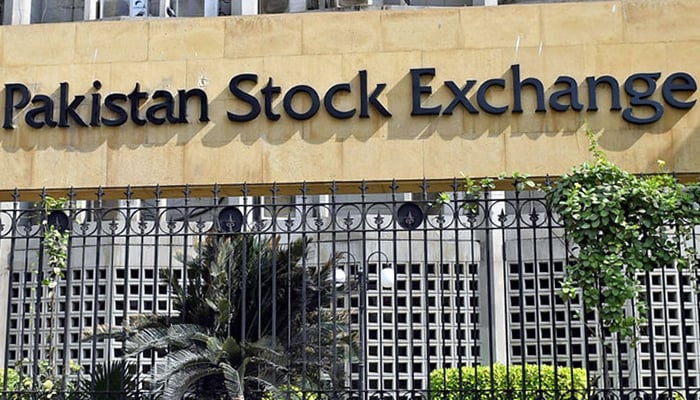
    The Pakistan Stock Exchange (PSX) witnessed a bearish trend during the outgoing business week, with the benchmark KSE-100 Index losing 2,938 points as investor sentiment remained under pressure. The KSE-100 Index closed the week at 177,166 points, compared with its previous level. During the week, the index fluctuated within a range of 5,048 points, reaching a high of 181,158 points and falling to a low of 176,110 points. Trading activity remained substantial throughout the week, with around 4.22 billion shares changing hands at a total value of approximately Rs205 billion. Meanwhile, the market’s overall capitalization declined by Rs247 billion during the week, settling at around Rs19.88 trillion. The weekly performance reflects continued volatility in the stock market as investors closely monitor domestic economic developments and regional geopolitical conditions. Earlier, Pakistan’s benchmark stock index opened on a positive note on Friday, with strong buying interest across major sectors pushing the KSE-100 Index more than 800 points higher in the early trading session. At around 9:19am, the KSE-100 Index was trading at 177,399.75 points, recording a gain of 807.99 points, or 0.46%, compared with the previous close. The early-session rally reflected renewed investor interest in several key sectors of the market. Automobile assemblers, cement companies, commercial banks, fertiliser manufacturers, oil marketing companies (OMCs) and refineries remained among the prominent areas attracting buying activity. Several index-heavy stocks also traded in positive territory, providing support to the benchmark. Shares of Attock Refinery Limited (ARL), Mari Energies Limited (MARI), Fauji Fertilizer Company (FFC), Habib Bank Limited (HBL), Meezan Bank Limited (MEBL), National Bank of Pakistan (NBP) and United Bank Limited (UBL) were among the notable gainers during the opening phase. The positive start comes a day after the Pakistan Stock Exchange witnessed a volatile trading session amid concerns over geopolitical developments and elevated international oil prices. On Thursday, the KSE-100 Index lost 254.59 points, or 0.14%, to settle at 176,591.77 points. Selling pressure in several heavyweight stocks outweighed selective buying and kept the market in negative territory by the close. Investors are now closely monitoring developments in global financial markets, particularly movements in bond yields, oil prices and international geopolitical conditions, which could influence capital flows and market sentiment. Global markets remain under pressure The positive opening at the PSX came against a mixed backdrop in Asian markets, where several major stock indices remained on track for weekly declines. Investor sentiment globally continued to be affected by rising government bond yields and uncertainty surrounding inflation and fiscal conditions. A diplomatic stalemate in the Gulf region also contributed to a rise in oil prices, with crude prices reaching their highest level in about a month. Higher oil prices have renewed concerns over inflation, particularly for economies that rely heavily on energy imports. For Pakistan, movements in international crude prices remain particularly important because they can affect the country’s import bill, exchange-rate pressures and domestic inflation expectations. In the United States, Treasury yields resumed their upward movement after a brief respite following an unexpected intervention by the US Treasury on Wednesday. US Treasury Secretary Scott Bessent has indicated that the government could potentially expand its purchases of US Treasuries. He has also raised the possibility of fiscal consolidation as authorities seek to address concerns surrounding the country’s growing budget deficit. However, market participants remain cautious about the prospects of significant fiscal adjustment. Analysts have questioned whether sufficient expenditure reductions can be achieved to meaningfully narrow a budget deficit exceeding 6% of US gross domestic product. The rising cost of servicing government debt is another concern. Interest payments alone are estimated to have reached around $1.2 trillion during the year, highlighting the pressure created by elevated borrowing costs. Higher yields pose challenge for equities The continued increase in bond yields has broader implications for international equity markets. Higher yields can increase borrowing costs for governments and businesses while making fixed-income investments relatively more attractive. The impact is particularly significant for technology companies that are undertaking substantial borrowing to finance investments in artificial intelligence infrastructure and other capital-intensive projects. At the same time, higher interest rates increase the discount rate applied to future corporate earnings, potentially putting pressure on equity valuations. Asian markets reflected some of these concerns on Friday. Japan’s Nikkei index declined around 0.8%, taking its losses for the week to approximately 4.4%. South Korean and Taiwanese stocks managed modest gains during the session but remained lower on a weekly basis. Meanwhile, MSCI’s broadest index of Asia-Pacific shares excluding Japan advanced around 0.5%, indicating some selective risk appetite despite continued uncertainty in global markets.


  • | |

    Diesel cut brings freight fare relief

    RAWALPINDI: Goods transport and long-distance public transport operators have lowered fares following a Rs32.63-per-litre reduction in diesel prices, offering temporary relief to passengers and businesses. The Goods Transport Federation announced a 10 per cent reduction in freight charges, while fares for long-distance routes to nearby areas have been cut by 5 per cent. The fare revision, however, has not extended to all local transport. Taxis, Qingqis and motorbike rickshaws have raised their fares by another 5 per cent after petrol prices increased by Rs3 per litre. The standard stop-to-stop fare remains Rs50. Freight charges have also been reduced significantly on major routes. The cost of transporting containers and trailers from Karachi to Rawalpindi has fallen by Rs50,000, while charges for containers, trailers and heavy vehicles travelling from Karachi to Peshawar have dropped from Rs800,000 to Rs750,000. Transport federations said the reduced fares would remain in effect for only 24 hours. They warned that any increase in petroleum prices expected later in the week would result in the fare cuts being withdrawn proportionately. They further said bookings made by Thursday evening for heavy vehicles, trailers and containers operating on routes including Karachi-Peshawar, Peshawar-Lahore, Karachi and Multan could be revised if fuel prices rise, with additional charges imposed accordingly.

  • | |

    SpaceX Falcon 9 rocket crashes into the moon after…

    A SpaceX Falcon 9 rocket’s upper stage has crashed into the Moon after becoming uncontrollable following the completion of its mission, drawing renewed attention to the growing challenge of space debris and the long-term sustainability of space exploration. According to reports, the approximately 4,000-kilogram upper stage was originally used to launch a lunar lander into space. After successfully completing its primary mission, the rocket stage remained in space but could no longer be actively controlled. Over time, its trajectory led to an inevitable collision with the Moon. The impact occurred with an estimated force comparable to nearly three tons of TNT, creating another artificial impact site on the lunar surface. While the collision was significant, experts stressed that it does not pose any immediate danger to Earth or its inhabitants. NASA has confirmed that the incident presents no direct threat to Earth. However, scientists say the event serves as a reminder of the increasing amount of human-made debris orbiting Earth and traveling through deep space. As the number of space missions continues to grow, properly managing retired rocket stages and other spacecraft components is becoming an increasingly important issue for the global space community. Space debris has become a major concern for space agencies and private companies alike, as abandoned rocket stages, inactive satellites, and fragments from previous missions can create risks for future spacecraft. Experts believe that stronger international cooperation and improved end-of-mission disposal strategies will be essential to reduce the accumulation of debris in Earth’s orbit and beyond. Researchers also noted that impacts on the Moon are not uncommon. Natural meteoroids frequently strike the lunar surface, leaving countless craters over billions of years. In addition, several spacecraft have intentionally or accidentally impacted the Moon during previous missions, making such events scientifically valuable in some cases. Although the Falcon 9 upper stage’s collision is unusual because it involved an uncontrolled commercial rocket component, experts emphasized that it should not be viewed as an immediate cause for alarm. Instead, they say it highlights the need for responsible space operations as exploration of the Moon and deep space accelerates. The incident underscores the growing importance of sustainable space practices, ensuring that future missions can continue safely while minimizing the long-term impact of space debris on both Earth and the wider space environment.

  • | |

    Sindh Cabinet approves toll tax for heavy commerci…

      The Sindh provincial cabinet, chaired by Chief Minister Syed Murad Ali Shah, has approved the imposition of a toll tax on heavy commercial vehicles using the Mehran Highway. The decision was made during a cabinet meeting as part of the provincial government’s broader strategy to establish a sustainable financial system for the maintenance and development of road infrastructure across Sindh. According to the cabinet’s decision, the toll tax will apply exclusively to heavy and commercial vehicles traveling on the 135-kilometer-long Mehran Highway. Private passenger vehicles will not be subject to the new toll under the current policy. Officials stated that commercial transport vehicles place greater pressure on road infrastructure due to their size and weight, making it appropriate for them to contribute to the highway’s maintenance through toll payments. During the meeting, cabinet members received a detailed briefing on the ongoing development of the Mehran Highway. Officials informed the cabinet that the project to expand the highway into a dual carriageway is currently underway at an estimated cost of Rs41 billion. The project is intended to improve road safety, increase transportation efficiency, reduce travel time, and accommodate the growing volume of traffic, particularly heavy commercial vehicles that regularly use the route for the movement of goods. The briefing also highlighted the expected financial benefits of the toll collection system. It was estimated that the toll tax would generate approximately Rs2.14 billion in annual gross revenue. After deducting operational and administrative expenses associated with collecting the toll, the government expects a net annual income of around Rs1.48 billion. These funds are intended to support the regular maintenance, repair, and future upgrading of the highway, ensuring that it remains in good condition for years to come. The cabinet further approved a schedule of toll charges based on different categories of vehicles. Under this system, toll rates will vary according to the type, size, and classification of each vehicle. Heavy trucks, trailers, buses, and other commercial transport vehicles will be charged according to predetermined rates. Officials explained that this category-based approach is designed to make the toll system fair and proportionate, with larger vehicles contributing more because of the greater wear and tear they cause to road infrastructure. In another significant administrative decision, the Sindh cabinet approved the restoration of the traditional name of the provincial department responsible for road construction and public infrastructure. The department, which had previously been renamed the Works and Services Department will once again be known as the Communication and Works Department. The government stated that the name change is intended to align Sindh’s administrative structure with that of the federal government and other provinces, where the department is commonly known by the same title. Speaking after the cabinet meeting, Chief Minister Syed Murad Ali Shah emphasized that the Sindh government is committed to introducing a self-sustaining financial model for the long-term maintenance of highways and road networks. He said that relying solely on government budget allocations is not sufficient to meet the increasing costs of maintaining modern transportation jobs infrastructure. According to him, the introduction of toll collection on major highways will provide a stable source of revenue that can be reinvested directly into road maintenance and improvement projects. The Chief Minister added that better roads are essential for economic growth, trade, and public safety. By ensuring a reliable funding mechanism for highway upkeep, the government aims to enhance transportation services, reduce infrastructure deterioration, and improve connectivity throughout the province. The approval of the toll tax and the continuation of the Mehran Highway expansion project represent important steps toward achieving these long-term development objectives while promoting a more efficient and financially sustainable road network in Sindh.

  • | |

    Govt strengthens monsoon response, fresh rainfall …

    ISLAMABAD: The federal government on Tuesday unveiled an enhanced  preparedness strategy, with senior ministers stressing that effective water regulation, stronger disaster management and coordinated planning are essential to reducing the impact of climate-related emergencies. The announcement came as authorities warned of another intense spell of monsoon rains expected to begin on July 29. According to the National Disaster Management Authority (NDMA), at least 107 people have lost their lives and 297 others have been injured since the current monsoon season started on June 26. Addressing a joint media briefing at the NDMA headquarters, Climate Change Minister Musadik Malik said Pakistan must move beyond the traditional approach of simply storing water and instead adopt a comprehensive system that regulates water supplies throughout the year. He noted that the government is implementing region-specific disaster management plans, recognising that the challenges faced by urban centres, agricultural areas and northern regions require different responses. Malik emphasised that efficient water management is vital for ensuring food security and sustaining agricultural production. He said dams should be used not only for storage but also for regulating water availability during critical farming seasons. He also called for improvements in water monitoring systems, infrastructure and building regulations, adding that close coordination with provincial governments would help minimise losses during natural disasters. National Food Security Minister Rana Tanveer Hussain highlighted the country’s growing need for additional water storage to address both floods and future shortages. He said major infrastructure projects, including the Diamer-Bhasha Dam, Mohmand Dam, Dasu project and Karachi’s K-IV water supply scheme, would significantly strengthen Pakistan’s water resources once completed. Finance Minister Muhammad Aurangzeb described climate change and rapid population growth as two of the country’s most pressing long-term challenges. He said Pakistan is now in a stronger financial position to respond to emergencies than it was during the devastating floods of 2022 and credited the NDMA’s National Emergencies Operation Centre (NEOC) for improving forecasting and disaster preparedness through advanced monitoring systems. Information Minister Attaullah Tarar said preparations for the monsoon season had begun months in advance under the directives of Prime Minister Shehbaz Sharif. He praised the NEOC’s early warning capabilities for helping reduce casualties and property damage by providing timely alerts through the media and the NDMA mobile application. Tarar also urged citizens to remain vigilant and follow official advisories as heavy rainfall continues across the country. Meanwhile, the flood situation remains concerning in several regions. Although water levels in the Chenab River have shown signs of improvement, low-level flooding continues along parts of the Indus River. Punjab and Khyber Pakhtunkhwa have recorded the highest number of casualties, with many deaths resulting from collapsing houses, electrocution and lightning strikes. Gilgit-Baltistan remains one of the hardest-hit areas, where flash floods, landslides and mudflows have caused widespread destruction. Disaster management authorities reported damage to 184 houses, the destruction of nine bridges and nearly eight kilometres of roads, while dozens of disaster incidents have been recorded across the region. The Pakistan Meteorological Department has warned that the approaching weather system could trigger widespread heavy rainfall, urban flooding, flash floods and rising river levels in Islamabad, Punjab, Khyber Pakhtunkhwa, Azad Jammu and Kashmir and Gilgit-Baltistan. Authorities say emergency response teams have been placed on alert as efforts continue to protect lives, infrastructure and communities during the ongoing monsoon season.

Leave a Reply

Your email address will not be published. Required fields are marked *