psx ends week
| | |

PSX ends week on negative note, KSE-100 loses near…

The Pakistan Stock Exchange (PSX) witnessed a bearish trend during the outgoing business week, with the benchmark KSE-100 Index losing 2,938 points as investor sentiment remained under pressure.

The KSE-100 Index closed the week at 177,166 points, compared with its previous level. During the week, the index fluctuated within a range of 5,048 points, reaching a high of 181,158 points and falling to a low of 176,110 points.

Trading activity remained substantial throughout the week, with around 4.22 billion shares changing hands at a total value of approximately Rs205 billion.

Meanwhile, the market’s overall capitalization declined by Rs247 billion during the week, settling at around Rs19.88 trillion.

The weekly performance reflects continued volatility in the stock market as investors closely monitor domestic economic developments and regional geopolitical conditions.

Earlier, Pakistan’s benchmark stock index opened on a positive note on Friday, with strong buying interest across major sectors pushing the KSE-100 Index more than 800 points higher in the early trading session.

At around 9:19am, the KSE-100 Index was trading at 177,399.75 points, recording a gain of 807.99 points, or 0.46%, compared with the previous close.

The early-session rally reflected renewed investor interest in several key sectors of the market. Automobile assemblers, cement companies, commercial banks, fertiliser manufacturers, oil marketing companies (OMCs) and refineries remained among the prominent areas attracting buying activity.

Several index-heavy stocks also traded in positive territory, providing support to the benchmark. Shares of Attock Refinery Limited (ARL), Mari Energies Limited (MARI), Fauji Fertilizer Company (FFC), Habib Bank Limited (HBL), Meezan Bank Limited (MEBL), National Bank of Pakistan (NBP) and United Bank Limited (UBL) were among the notable gainers during the opening phase.

The positive start comes a day after the Pakistan Stock Exchange witnessed a volatile trading session amid concerns over geopolitical developments and elevated international oil prices.

On Thursday, the KSE-100 Index lost 254.59 points, or 0.14%, to settle at 176,591.77 points. Selling pressure in several heavyweight stocks outweighed selective buying and kept the market in negative territory by the close.

Investors are now closely monitoring developments in global financial markets, particularly movements in bond yields, oil prices and international geopolitical conditions, which could influence capital flows and market sentiment.

Global markets remain under pressure

The positive opening at the PSX came against a mixed backdrop in Asian markets, where several major stock indices remained on track for weekly declines.

Investor sentiment globally continued to be affected by rising government bond yields and uncertainty surrounding inflation and fiscal conditions. A diplomatic stalemate in the Gulf region also contributed to a rise in oil prices, with crude prices reaching their highest level in about a month.

Higher oil prices have renewed concerns over inflation, particularly for economies that rely heavily on energy imports. For Pakistan, movements in international crude prices remain particularly important because they can affect the country’s import bill, exchange-rate pressures and domestic inflation expectations.

In the United States, Treasury yields resumed their upward movement after a brief respite following an unexpected intervention by the US Treasury on Wednesday.

US Treasury Secretary Scott Bessent has indicated that the government could potentially expand its purchases of US Treasuries. He has also raised the possibility of fiscal consolidation as authorities seek to address concerns surrounding the country’s growing budget deficit.

However, market participants remain cautious about the prospects of significant fiscal adjustment. Analysts have questioned whether sufficient expenditure reductions can be achieved to meaningfully narrow a budget deficit exceeding 6% of US gross domestic product.

The rising cost of servicing government debt is another concern. Interest payments alone are estimated to have reached around $1.2 trillion during the year, highlighting the pressure created by elevated borrowing costs.

Higher yields pose challenge for equities

The continued increase in bond yields has broader implications for international equity markets. Higher yields can increase borrowing costs for governments and businesses while making fixed-income investments relatively more attractive.

The impact is particularly significant for technology companies that are undertaking substantial borrowing to finance investments in artificial intelligence infrastructure and other capital-intensive projects.

At the same time, higher interest rates increase the discount rate applied to future corporate earnings, potentially putting pressure on equity valuations.

Asian markets reflected some of these concerns on Friday. Japan’s Nikkei index declined around 0.8%, taking its losses for the week to approximately 4.4%.

South Korean and Taiwanese stocks managed modest gains during the session but remained lower on a weekly basis.

Meanwhile, MSCI’s broadest index of Asia-Pacific shares excluding Japan advanced around 0.5%, indicating some selective risk appetite despite continued uncertainty in global markets.
Similar Posts

  • | |

    Iran issues fresh warnings as regional tensions es…

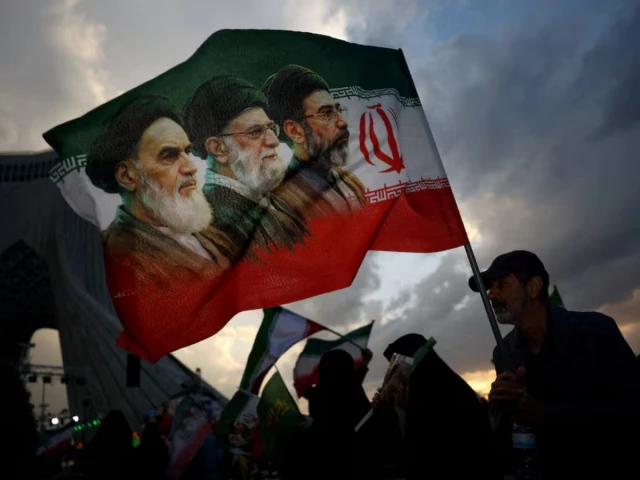
    Tensions across the Middle East intensified on Saturday as senior Iranian military and political officials issued strong warnings to the United States and its regional partners, while Kuwait reported intercepting drones it said were launched from Iran. Major General Abdollahi, commander of Iran’s Khatam al-Anbiya Central Headquarters, accused Washington of deliberately widening the regional conflict. In a statement shared on X and reported by Iranian state media, he alleged that the United States was pursuing a strategy aimed at expanding the war and increasing its influence across the Middle East. According to Abdollahi, the recent confrontation with Iran demonstrated that Washington was prepared to target the interests and resources of Muslim nations to achieve its objectives. He further claimed that the US was relying on the wealth, infrastructure, and strategic assets of regional countries to protect its military presence while reinforcing Israel’s security. The Iranian commander argued that the balance of power in the region had shifted in Iran’s favor, asserting that the United States and Israel failed to achieve their goals during the latest conflict. He also claimed they were now attempting to continue the confrontation through the territory of neighboring Muslim countries. Abdollahi urged regional governments to reconsider their cooperation with Washington, warning that nations acting as a “defensive shield” for the United States could eventually face the consequences of war. Separately, Iranian lawmaker Ebrahim Rezaei, a member of the parliament’s National Security Commission, warned that any future attack on Iran would have devastating consequences for the region. He claimed that such a conflict could reduce regional infrastructure to the “Stone Age” and cautioned against further military action. Meanwhile, Kuwait strongly condemned what it described as Iranian aggression after reporting drone attacks on key facilities. Kuwaiti authorities said their air defense systems detected and destroyed multiple hostile drones that entered the country’s airspace early Saturday. Officials stated that a government installation in northern Kuwait and civilian vehicles on Bubiyan Island sustained material damage from falling debris, although no casualties were reported. Kuwait’s Foreign Ministry described the attacks as a serious violation of the country’s sovereignty and said it reserved the right to take all necessary measures to protect its national security, interests, and critical infrastructure. Iran also warned that continued US maritime pressure could trigger broader consequences. Mohammad Bagher Zolghadr, secretary of Iran’s Supreme National Security Council, said ongoing American actions could ultimately lead to restrictions on the Strait of Hormuz and other strategic waterways, warning that such developments would have significant consequences for global energy markets and the wider economy. At the same time, Iranian Parliament Speaker Mohammad Bagher Ghalibaf declared that Iran had emerged victorious from the recent conflict but stressed that the country must strengthen its long-term stability and national resilience. He emphasized expanding the authority of Iran’s supreme leadership as a key step toward securing the country’s future. Elsewhere, maritime security concerns remained high. The UK Maritime Trade Operations (UKMTO) reported that a commercial tanker was struck by an unidentified projectile off the coast of Oman, damaging its engine room and leaving it temporarily unable to maneuver. Authorities are investigating the incident. In Yemen, the Houthi movement denied reports that it planned to charge commercial vessels for passage through the Bab al-Mandab Strait, insisting that its maritime transit services remain free. However, the group claimed that its blockade had already forced several Saudi oil tankers to reroute around Africa via the Cape of Good Hope, underscoring the continuing disruption to regional shipping routes.

  • | | | |

    Israeli forces arrest 14 Palestinians in West Bank…

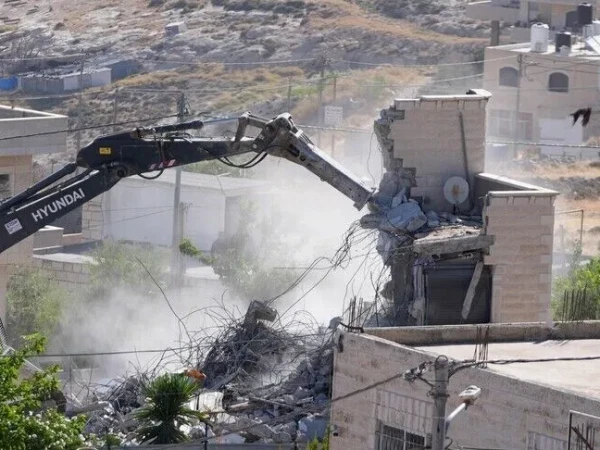
    RAMALLAH: Israeli forces detained at least 14 Palestinians, including a woman, during a series of military raids across the occupied West Bank on Tuesday, while three homes were also demolished, according to local sources. The latest arrests come as tensions continue to rise across the occupied territory, where Israeli military operations, arrests and settler violence have intensified in recent days. The raids targeted several locations, including Nablus, Jenin and Tulkarm, according to reports. Eight detained in Nablus In Nablus, Israeli forces entered the Ras al-Ain neighbourhood and stormed three buildings. Soldiers searched several homes before detaining eight Palestinians, including a woman, local sources said. The operation reportedly involved searches of residential properties, with residents subjected to questioning before the detainees were taken away. The raid was part of a wider military campaign across the northern West Bank, where Israeli forces have repeatedly carried out overnight and early-morning operations. Raids reported in Tubas and Jenin In Tubas province, Israeli troops entered the town of Tammun and remained there for several hours before withdrawing. No arrests were reported from the operation. Meanwhile, in the Jenin area, Israeli forces entered Al-Yamoun, where they arrested a former Palestinian prisoner from Jenin city. Another Palestinian was detained in Deir Ghazaleh, located northeast of Jenin, according to local sources. The arrests added to growing concerns over the continuing military pressure on Palestinian communities in the occupied West Bank. More arrests in Tulkarm Further arrests were reported in the Tulkarm area. Israeli forces detained a Palestinian customs police officer and a young man from Irtah, a suburb south of Tulkarm. Two other Palestinians were also arrested following raids and searches of homes in the village of Far’un. The latest operations come against a backdrop of escalating violence in the West Bank. Reuters reported this week that Palestinian residents have described mounting pressure from military raids and settler attacks, warning that the situation is approaching a breaking point. At the same time, reports of demolitions have added another layer to the tensions. Anadolu Agency reported that three Palestinian homes were demolished during the wider military campaign, with Israeli authorities citing claims related to construction permits. The developments are likely to fuel further concern over the security and humanitarian situation in the occupied West Bank, where repeated raids, arrests, demolitions and clashes have continued to affect Palestinian communities.

  • |

    Coalitional fallout as violence and electoral fraud claims mar Azad Kashmir elections

    A bitter clash between federal coalition partners has erupted over the Azad Jammu and Kashmir Legislative Assembly elections, following the death of a political worker and mutual allegations of voter fraud. The Pakistan Peoples Party (PPP) condemned the killing of 35-year-old party worker Mukhtar Younus during polling in Nikyal, Kotli. Addressing a joint press conference, Sindh Local Governments Minister Saeed Ghani directly blamed the Pakistan Muslim League-Nawaz (PML-N) candidate and supporters for the shooting, stating, “The way this election campaign was conducted, the result is that bullets are being fired today… Our workers are dying.” Ghani heavily criticised the Election Commission for failing to enforce code of conduct rules and accused the Punjab government of attempting to influence voters by promising public buses during the campaign. He also took aim at PML-N President Nawaz Sharif’s comparative statements regarding Sindh and Kashmir, asserting: “When you say ‘this is Kashmir, not Kashmore’ or ‘this is Mirpur, not Mirpur Khas’, you hurt the people of Sindh… Perhaps that is why people say the PML-N is not a national party but a Punjabi party.” Rejecting the accusations, Punjab Information Minister Azma Bokhari presented video footage alleging that a PML-N candidate discovered bags of pre-stamped ballot papers at the home of a PPP candidate in Kotli. Pointing out the contradiction, Bokhari remarked, “Yesterday they said they would not let rigging happen. Today they are rigging.” Defending her party’s track record, Bokhari argued that public transit is a basic necessity and noted that the promised buses for AJK had not yet begun operating. She maintained that voters in the Mirpur division were turning out despite boycott calls, seeking Punjab-style developmental projects such as electric buses, housing, and youth scholarships. Addressing queries regarding Nawaz Sharif’s interest in the region, Bokhari clarified that the former prime minister does not seek an official title, but simply wishes to offer development guidance to AJK due to his Kashmiri heritage.

  • | |

    Pakistan seeks $10b in US backstop facility

    Pakistan has formally requested a 10 billion dollar exchange stabilisation facility from the United States to boost its foreign exchange reserves and stabilise its economy, according to a source familiar with the development. The request, addressed to US Treasury Secretary Scott Bessent, seeks a Bilateral Exchange Stabilisation Support Facility with a maturity period of up to five years. This move follows Pakistan’s involvement in facilitating negotiations regarding the Iran war, an effort that elevated the country’s diplomatic standing and fueled expectations of economic support from Washington and international partners. If approved, the 10 billion dollar facility would help replenish Pakistan’s central bank reserves, reduce downward pressure on the rupee, and decrease dependency on multilateral lenders. It would also provide financial flexibility as Islamabad continues implementing strict fiscal and monetary measures mandated under its 7 billion dollar International Monetary Fund programme. These IMF-guided measures have required politically challenging tax hikes, spending cuts, and structural reforms to ensure fiscal discipline. Neither the Pakistani Ministry of Finance nor the US Treasury immediately responded to requests for comment regarding the proposal. US Exchange Stabilisation Facilities, typically administered through the Exchange Stabilisation Fund, are rare financial mechanisms that provide foreign governments with dollars, currency swaps, or guarantees. These backstops differ from the Federal Reserve’s permanent standing swap lines with major foreign central banks. A 2025 financial package provided to Argentina represented the first new exchange stabilisation facility granted to a foreign government since Uruguay in 2002, alongside Mexico’s long-standing swap agreement dating back to the 1940s. Pakistan narrowly avoided a debt default in 2023 by securing a 3 billion dollar IMF standby arrangement, which was later succeeded by the current 7 billion dollar Extended Fund Facility. However, its foreign reserves remain heavily dependent on official loans, debt rollovers, and financial deposits from bilateral partners like Saudi Arabia and China. This reliance leaves the country vulnerable to delays in IMF disbursements and shifts in bilateral support, as demonstrated in April when Pakistan repaid approximately 3.5 billion dollars to the United Arab Emirates, representing a fifth of its reserves, while receiving 3 billion dollars in fresh backing from Saudi Arabia. Despite these vulnerabilities, Pakistan’s central bank projected in January that its foreign exchange reserves could approach their 2021 historical high, reaching 20 billion dollars by the close of 2026. In April, rating agency Fitch noted that compliance with the IMF programme has enhanced Pakistan’s funding capacity, while rebuilt foreign exchange buffers offer a cushion against economic shocks stemming from Middle East instability. However, Fitch cautioned that escalating global energy costs and potential supply disruptions could rapidly erode these reserve buffers. Furthermore, foreign direct investment in Pakistan remains constrained due to recurring external account crises, policy shifts, security concerns, historical restrictions on profit repatriation, and a narrow export base. The nation’s credit rating remains firmly in speculative-grade territory, limiting access to international capital markets and keeping borrowing costs high. To navigate these economic pressures, Islamabad has sought deeper engagement with the Trump administration through various commercial and investment initiatives. These efforts include signing a stablecoin agreement for cross-border transactions with an affiliate of World Liberty Financial, advancing a memorandum of understanding to redevelop the Pakistan International Airlines-owned Roosevelt Hotel in New York with the US government, and encouraging US investment in the domestic mining sector, where the US Export-Import Bank announced 1.2 billion dollars in financing for the Reko Diq project.

  • |

    Iran cautions US against military action during regional diplomatic calls

    Iran has warned that it will respond firmly to any future military action by the United States, with Foreign Minister Abbas Araghchi delivering the message during separate conversations with senior officials from Pakistan, Turkiye and Saudi Arabia. The diplomatic outreach comes as tensions in the region remain high amid growing speculation about possible American military action against Iran. According to statements released through Iran’s Foreign Ministry, Araghchi held separate telephone discussions with Turkish Foreign Minister Hakan Fidan, Saudi Foreign Minister Prince Faisal bin Farhan Al Saud and Pakistan’s Field Marshal Asim Munir. During the conversations, he stressed that Iran would react decisively to what he described as any new act of aggression by the United States or its allies. He said Tehran would respond proportionately to any attack targeting the country’s territory or critical infrastructure. In his discussion with Turkish Foreign Minister Hakan Fidan, both sides reviewed the latest developments in regional diplomacy and ongoing negotiations related to the current crisis. Fidan later confirmed the conversation on social media, saying the two officials exchanged views on recent diplomatic efforts and the evolving regional situation. Araghchi also used his conversation with Saudi Foreign Minister Prince Faisal bin Farhan to repeat Iran’s warning that any military action by the United States, Israel or other regional actors would receive a strong and direct response. Iranian officials have consistently maintained that the country’s defence policy is based on responding to attacks with equal force rather than initiating conflict. Last week, Araghchi reinforced this position through a social media post, describing Iran’s defence strategy as an “eye for an eye” approach. He said any strike against Iranian infrastructure would be met with a comparable response, signalling that Tehran remains prepared to retaliate if its security is threatened. The latest statements come as reports continue to circulate about possible military planning in Washington. Michael Doran, a former senior official on Middle East affairs at the US National Security Council, said President Donald Trump is reportedly close to deciding whether to authorise a large scale military operation against Iran. Citing an Israeli official quoted by Israel’s Kan 12 television channel, Doran said the US military has reached its highest state of readiness, although no final decision has been made. Neither the White House nor the Pentagon has publicly confirmed the reports. However, the speculation has added to concerns that the already fragile security situation in the Middle East could worsen if diplomatic efforts fail. Regional governments have been closely monitoring developments, with many countries urging restraint and encouraging dialogue to prevent a wider conflict. Analysts say continued communication between Iran and neighbouring states reflects growing efforts to avoid further escalation while preparing for the possibility of increased military tensions. Iran has repeatedly said it prefers diplomacy but insists it will defend its territory and national interests if attacked. As uncertainty continues over Washington’s next move, the exchange of warnings and diplomatic contacts highlights the delicate balance facing the region, where any military confrontation could have far reaching consequences beyond Iran and the United States. Focused keyword:

  • | |

    Chinese suspects seek bail in organ trade case

    Three Chinese nationals arrested in a case involving the alleged illegal sale of human organs have approached the Islamabad High Court (IHC) seeking post-arrest bail. The bail petitions were heard by IHC Justice Arbab Muhammad Tahir. The petitioners include Li Gang Chai, Ping Fei Guo and Wang Bao. The three suspects are facing a case registered by the Federal Investigation Agency’s (FIA) Corporate Crime Circle. A trial court had earlier rejected their bail applications. Appearing on behalf of the petitioners, Barrister Yawar Qureshi requested the court to transfer the cases to another bench. He told the court that petitions involving similar circumstances were already pending before a different bench. The lawyer requested that the three cases also be transferred to the bench of Justice Muhammad Azam Khan. Justice Arbab Muhammad Tahir observed that Justice Muhammad Azam Khan was currently on summer vacation and transferring the cases could delay the proceedings by around a month. However, following the lawyer’s insistence, the court accepted the request for consideration of the bench change. The court directed that the case file be sent to the Chief Justice’s Office for a decision regarding the transfer of the petitions.

Leave a Reply

Your email address will not be published. Required fields are marked *