karachis 1st silent
| |

Karachi’s 1st silent mourning procession ends pe…

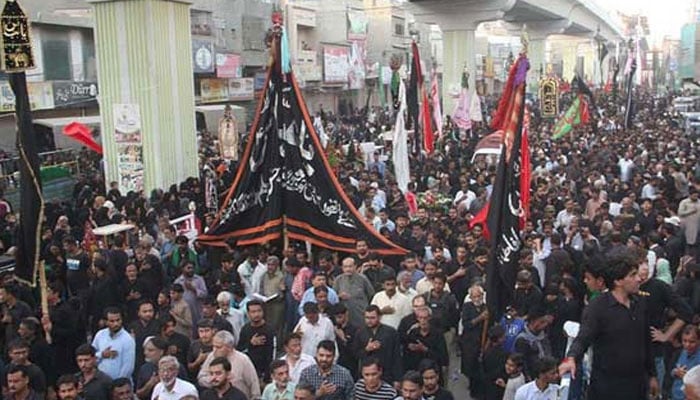
KARACHI: The first silent mourning procession in Karachi concluded at Hussainiya Iranian Kharadar after passing through its traditional route from Nishtar Park, with authorities enforcing strict security measures throughout the event.

A gathering was held at Nishtar Park before the procession began, where Allama Baqir Hussain Zaidi addressed the participants.

Police and Rangers personnel were deployed along the procession route, while several roads in the surrounding areas were temporarily closed to general traffic as part of the security arrangements. The affected roads were reopened after the procession passed through the areas.

Traffic police also remained on duty to manage congestion and guide motorists toward alternative routes.

Meanwhile, the second silent mourning procession is scheduled to begin from Rizvia Society in the afternoon and will conclude at Shah Najaf Imambargah on Martin Road.

Similar Posts

  • | |

    Water level rises in the Chenab river, flooding se…

      The Irrigation Department has reported a significant increase in the water flow of the Chenab River, raising concerns about flooding in nearby riverine areas. According to officials, the rising water level has already affected several low-lying settlements, forcing floodwater into residential and agricultural areas and creating difficulties for local communities. The department stated that the increase in the river’s discharge has caused water to spread into nearby villages located along the banks of the Chenab River. As a result, a protective embankment known as the Zamindara Bund in Jalalpur Pirwala Tehsil has been breached. The collapse of the embankment has allowed floodwater to move more rapidly into surrounding areas, increasing the risk to people, homes, livestock, and crops. According to the Irrigation Department, at least five villages have been submerged due to the rising floodwaters. Among the affected settlements are Basti Khuda Bakhsh, Basti Allah Rakha, and Basti Bakhsha, along with two other nearby villages. Residents in these areas are facing severe challenges as water continues to enter homes, farmland, and local roads. Many families are concerned about the safety of their property and the possibility of further flooding if water levels continue to rise. Officials have also reported that water levels have increased in the surroundings of Head Muhammad Wala Road and near Qasim Bela. These areas are being closely monitored as authorities assess the situation and evaluate the potential for additional flooding. The rise in water has affected transportation routes, making travel difficult for residents and increasing the need for precautionary measures. The Irrigation Department is keeping a close watch on the river’s flow and is expected to continue monitoring the situation in coordination with local administration and disaster management authorities. Residents living in vulnerable riverine areas have been advised to remain alert and follow official instructions. If water levels continue to increase, further evacuations and emergency measures may become necessary to ensure public safety. Flooding in the Chenab River region is a recurring challenge during the monsoon season, particularly when heavy rainfall upstream leads to a sudden increase in river discharge. Breaches in protective embankments can significantly worsen the situation by allowing water to spread rapidly into populated areas. Such incidents often result in damage to homes, agricultural land, and infrastructure, while also disrupting daily life and economic activities. Local authorities are expected to assess the extent of the damage once water levels stabilize. Relief efforts may include providing temporary shelter, food, clean drinking water, and medical assistance to affected families. The government and emergency response agencies are likely to continue monitoring weather conditions and river flows to reduce further risks. The situation remains under observation, and officials have urged residents in flood-prone areas to stay informed through official updates and cooperate with emergency responders. Authorities are working to minimize the impact of the flooding and ensure the safety of communities living along the Chenab River.

  • | | |

    Hezbollah slams Israel talks as ‘humiliation’

    Hezbollah Secretary-General Sheikh Naim Qassem has strongly criticized direct negotiations between Lebanon and Israel, describing the dialogue as a series of “concessions” that have failed to serve Lebanon’s national interests. Speaking during an Arbaeen commemoration in the Lebanese city of Baalbek, Qassem said the ongoing negotiations had brought “humiliation and repeated compromises” rather than meaningful progress. He urged Lebanese leaders to avoid external pressure and instead pursue policies that safeguard the country’s sovereignty. The Hezbollah chief also criticized President Joseph Aoun, claiming the president had failed to play a neutral and unifying role during the current political situation. Qassem argued that Lebanon’s leadership should engage in dialogue with domestic political forces rather than making concessions to achieve foreign policy objectives. He further claimed that Israeli attacks were halted only after a memorandum linked to efforts between Iran and the United States helped reduce tensions. According to Qassem, Lebanon’s political leadership would not achieve lasting stability by following policies influenced by outside powers. Meanwhile, Iranian President Masoud Pezeshkian reiterated that Iran remains committed to defending its territorial integrity but has no intention of expanding the ongoing conflict beyond its borders. Addressing a gathering in Tehran, Pezeshkian said Iran would continue protecting its national security while focusing on strengthening internal unity. He stressed that a united society would leave no opportunity for foreign interference or attempts to create divisions within the country. The latest statements come as uncertainty continues over possible diplomatic contacts between Iran and the United States. US President Donald Trump recently said discussions with Tehran were underway and described them as a final opportunity to reach an agreement. However, Iranian officials denied that any negotiations were currently taking place or that formal meetings had been scheduled. The conflicting statements have added to uncertainty over future diplomatic efforts to ease regional tensions. The regional situation has also affected global energy markets. Saudi energy giant Aramco reported a sharp rise in second-quarter earnings, saying higher oil prices and supply disruptions linked to the regional conflict significantly boosted its financial performance. The company said it maintained production despite challenging conditions across the region.

  • |

    Yash praises Kiara Advani’s dedication while filming Toxic

    Yash has praised Kiara Advani for her professionalism and dedication while working on Toxic: A Fairytale for Grown-Ups, revealing that he and director Geetu Mohandas became extremely protective of the actress during the demanding shoot. Speaking at the film’s audio launch in Mumbai on Thursday, Yash opened up about his experience working with Kiara, particularly during the period when she was pregnant. The actor admitted that he was initially concerned about whether she would be able to handle the physically demanding requirements of the project. According to Yash, his first conversation with Kiara gave him the impression that she was ready to take on the challenge. He recalled discussing a rain sequence with her and joking that it would be easy despite never having filmed one himself. However, once he witnessed the actual demands of the sequence, he realized just how challenging the production could be. Yash said Kiara remained completely committed to the project and continued to give her best even after becoming pregnant. Her dedication reportedly made a strong impression on everyone involved with the film. The actor also revealed that he and Geetu became particularly cautious about Kiara’s safety on set. He described the two of them as being like “bouncers and bodyguards,” constantly looking out for the actress and making sure she was taken care of while filming. Yash expressed his gratitude to Kiara for giving the project her full commitment, calling her contribution to the movie especially meaningful. His comments highlighted the close working relationship that developed between the cast and crew during the challenging production. Toxic marks Kiara’s first major release following her pregnancy. The actress had previously faced criticism over her appearance in intimate portions of the song “Tabaahi,” although the response became more positive following the release of the film’s trailer. Yash had also defended Kiara during the trailer launch in Bengaluru, acknowledging the pressures actors can face because of public expectations and criticism. He suggested that audiences and the industry are gradually moving toward a more progressive understanding of performers and their choices. Directed by Geetu Mohandas, Toxic: A Fairytale for Grown-Ups features an ensemble cast that includes Huma Qureshi, Rukmini Vasanth, Tara Sutaria and Nayanthara. The film is particularly anticipated because it marks Yash’s return to the big screen following the massive success of KGF Chapter 2. The upcoming project is expected to present Yash in a new avatar while combining action, drama and a darker fairytale-inspired world. With the film generating considerable attention ahead of its release, Yash’s praise for Kiara has further highlighted the dedication that went into its production. Toxic: A Fairytale for Grown-Ups is scheduled to release worldwide on August 26.

  • | | |

    Pezeshkian says Iran seeks peace, not wider conflict

    Iranian President Masoud Pezeshkian has said that Iran has no intention of prolonging the current conflict or expanding it beyond its existing scope. However, he made it clear that the country will continue to defend its sovereignty, territorial integrity and national interests against any threat. Speaking at a ceremony in Tehran, the president said Iran’s policy is based on protecting its borders while avoiding any unnecessary escalation. He stressed that the country does not seek war but will not hesitate to respond if its security or independence is challenged. Pezeshkian said maintaining national security is not only the responsibility of the armed forces but also depends on the unity and solidarity of the Iranian people. He urged citizens to set aside political and social differences and work together to strengthen the country during a difficult period. The president said internal unity is one of the strongest defenses against foreign interference. According to him, divisions within society can create opportunities for outside powers to influence domestic affairs. He added that a united nation is better equipped to face political, economic and security challenges. He emphasized the need to build a strong and stable society where people enjoy confidence in national institutions and where hostile elements cannot create unrest or weaken public trust. He said Iran must focus on strengthening its social fabric to prevent enemies from exploiting internal disagreements. Pezeshkian also called for greater national cooperation to overcome current challenges. He said every segment of society has a role to play in safeguarding the country’s future and preserving stability. The Iranian president reiterated that his government remains committed to protecting the country’s borders and national interests while pursuing policies that avoid a wider regional conflict. He said Iran’s priority is to maintain security, preserve national unity and prevent conditions that could lead to further instability.

  • |

    Pakistan, Kazakhstan agree to accelerate trade and agricultural cooperation

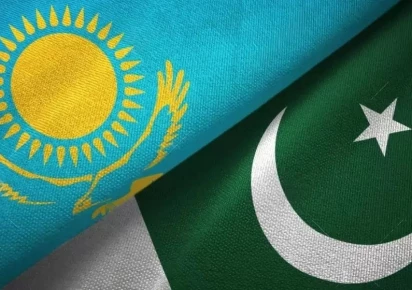
    ISLAMABAD: Pakistan and Kazakhstan have agreed to speed up the implementation of previously signed agreements and memorandums of understanding (MoUs), with both sides seeking to convert existing commitments into practical trade, investment and business opportunities. The understanding was reached during a meeting between Federal Minister for National Food Security and Research Rana Tanveer Hussain and Kazakhstan’s Ambassador to Pakistan Yerzhan Kistafin in Islamabad, where the two sides reviewed a broad range of issues related to agriculture, food security, connectivity, farm mechanisation and private-sector cooperation. According to the Ministry of National Food Security and Research, the meeting focused on identifying areas where bilateral cooperation could produce commercially viable projects and contribute to stronger economic relations between the two countries. Rana Tanveer Hussain said agriculture represented one of the most promising areas for expanding Pakistan-Kazakhstan relations, particularly given the potential for increased trade in agricultural commodities, machinery and technology. The minister stressed that bilateral agreements should move beyond formal commitments and result in concrete projects that could benefit businesses and farmers in both countries. He also called for closer coordination among government departments, research institutions, agricultural organisations and the private sector to facilitate investment and technology transfer. Joint agriculture working group to meet in Kazakhstan Pakistan and Kazakhstan also agreed to hold the next meeting of their Joint Working Group on Agriculture in Kazakhstan. The forum is expected to assess progress on previously identified areas of cooperation and explore additional opportunities in agricultural trade, food security, mechanisation and related fields. The proposed meeting is also expected to provide a platform for officials and private-sector representatives to discuss practical barriers to trade and develop proposals aimed at increasing agricultural exchanges between the two countries. Kazakhstan, meanwhile, showed interest in supplying wheat to Pakistan. Pakistani authorities agreed to examine the proposal while taking into account factors including the prevailing price, quality standards and reliability of supply. The development comes as Pakistan continues to explore ways to diversify its sources of food commodities and strengthen trade relationships with Central Asian economies. Pakistan seeks greater access for agricultural exports During the discussions, Pakistan highlighted the export potential of several agricultural products, including mangoes, guava, dates, bananas, potatoes and onions. The Pakistani side expressed interest in securing greater access for these products in Kazakhstan and other Central Asian markets. Improved market access, the officials noted, could create new opportunities for Pakistani growers, exporters and agribusinesses. The two sides also discussed the importance of improving transport and logistics infrastructure to support agricultural trade. Connectivity was identified as a critical factor in expanding commercial relations, particularly through proposed rail and regional transportation routes linking Central Asian countries with Pakistan. Better transport links could reduce freight and transit costs, improve the movement of perishable agricultural goods and provide businesses in both regions with access to new markets. Mechanisation offers new area of cooperation Agricultural mechanisation was also identified as an area with considerable potential for joint ventures and investment. Particular attention was given to affordable tractors and agricultural machinery that could be used by small and medium-sized farmers. Cooperation in this field could help improve farm productivity while creating opportunities for manufacturers and investors from both countries. The Pakistani side also emphasised the importance of exchanging agricultural technology and research expertise, saying stronger institutional links could support innovation and improve agricultural productivity. The minister underscored the need for closer engagement between research organisations, agricultural institutions and business communities so that technical cooperation could be translated into commercially sustainable ventures. Kyrgyzstan supports stronger Pakistan business ties Separately, Pakistan’s private sector has also taken steps to deepen economic engagement with another Central Asian country, Kyrgyzstan. Kyrgyzstan’s Chargé d’Affaires Aibek Tilebaliev held a meeting with Federation of Pakistan Chambers of Commerce and Industry (FPCCI) President Atif Ikram Sheikh, during which the two sides discussed bilateral trade, investment and direct business-to-business contacts. The participants agreed that stronger interaction between companies from Pakistan and Kyrgyzstan would be essential for expanding bilateral commerce and identifying new investment opportunities. Atif Ikram Sheikh welcomed the increasing high-level engagement between the two countries, saying that considerable potential existed to expand trade and investment but that greater efforts were needed to convert this potential into actual business activity. He suggested that a Pakistani business delegation could visit Kyrgyzstan under the FPCCI platform to explore commercial opportunities, establish direct contacts with local companies and develop partnerships in different sectors. Joint Business Council proposed A key outcome of the meeting was agreement to accelerate the establishment of a Joint Business Council between Pakistan and Kyrgyzstan. The proposed council is expected to provide a formal platform for representatives of the two countries’ business communities to discuss trade barriers, investment opportunities, market access and potential joint ventures. Both sides agreed to expedite the necessary steps for setting up the council. Sheikh also highlighted the importance of regional forums, particularly the Shanghai Cooperation Organisation (SCO), in facilitating greater economic integration among member states. He said the platform could be used more effectively to promote trade, investment and business-to-business cooperation across the region. Tilebaliev reaffirmed Kyrgyzstan’s interest in strengthening economic and commercial relations with Pakistan. He stressed that more frequent and direct interaction between business communities would be important for translating political goodwill into tangible economic gains. The parallel initiatives involving Kazakhstan and Kyrgyzstan reflect Pakistan’s broader efforts to deepen economic engagement with Central Asia. Improved connectivity, stronger private-sector links and greater agricultural and industrial cooperation could provide new avenues for Pakistani exporters while opening opportunities for investment and regional trade.

  • |

    Current Petroleum prices to remain unchanged until…

    The federal government has announced that current petroleum product prices will remain unchanged until July 27. According to sources from the Petroleum Division, petrol will continue to be sold at Rs335.18 per litre, while high-speed diesel will remain at Rs383.46 per litre. The price of kerosene oil has also been maintained at Rs301.14 per litre. This decision comes after the government introduced a daily fuel price revision mechanism on July 18 to reflect fluctuations in the international market. Since then, prices have seen multiple adjustments. On July 18, petrol became more expensive by Rs5.44 per litre and diesel by Rs31.05 per litre. Due to the closure of international markets, prices were revised on July 21, with petrol decreasing by Rs0.35 per litre while diesel increased by Rs5.71 per litre. Subsequent revisions saw petrol and diesel prices rise by Rs4.93 and Rs7.15 per litre on July 22, followed by further increases of Rs6.39 and Rs7.83 per litre on July 23. On July 24, petrol was hiked by Rs4.40 and diesel by Rs3.62 per litre. The latest decision to freeze prices until July 27 provides temporary relief to consumers after a series of increases driven by volatility in global oil markets. The daily price revision mechanism, introduced amid rising geopolitical tensions in the Middle East, aims to ensure timely adjustments to international market trends. However, the frequent changes have drawn criticism from dealers and consumers alike. The government has assured that it is monitoring the situation closely and will continue to make adjustments as needed to balance the impact on the economy and the public. The current freeze offers a brief respite before the next scheduled revision, with consumers hoping for stability in the coming days.

Leave a Reply

Your email address will not be published. Required fields are marked *