pti infighting deepens
| |

PTI infighting deepens as Raja, Yousafzai trade al…

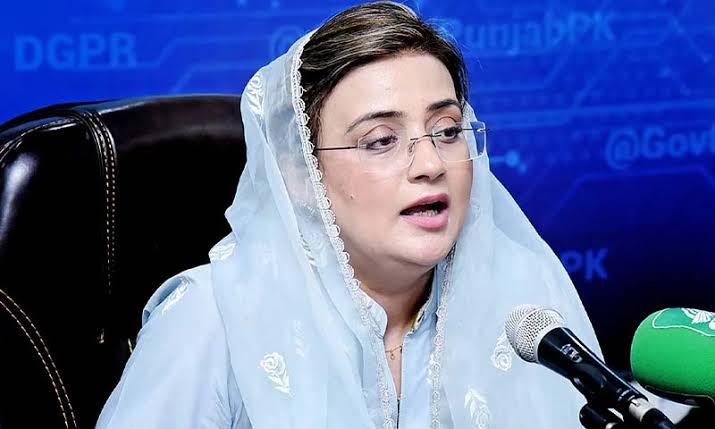
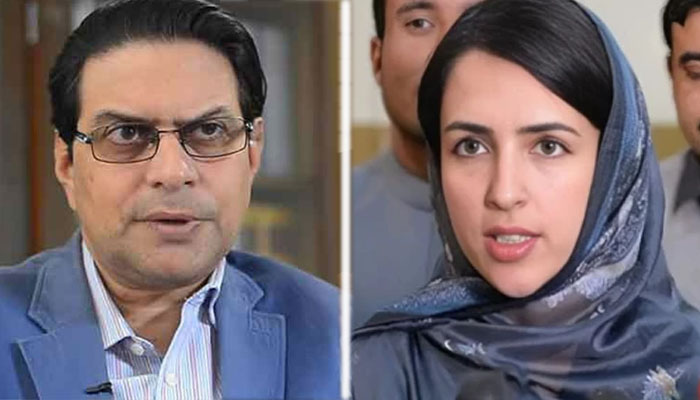
ISLAMABAD: Internal differences within the Pakistan Tehreek-e-Insaf (PTI) have intensified after a public dispute between central secretary-general Salman Akram Raja and party leader Mashal Yousafzai.

The disagreement revolves around allegations linked to party tickets and internal decision-making. Both leaders have exchanged strong statements, further highlighting tensions within the party.

Mashal Yousafzai had accused Salman Akram Raja of involvement in what she described as the sale of party tickets. Raja rejected the allegation and responded sharply.

Raja questioned the credibility of the accusation. He said those who could not afford even a small amount to pursue a legal case had resorted to making serious allegations against him.

He also questioned Yousafzai’s knowledge of the circumstances surrounding her Senate position. Raja said she did not know who had played a role in getting her elected to the Senate.

Raja further stated that decisions regarding Yousafzai had been made on the instructions of PTI founder Imran Khan.

He said he did not possess the authority to remove Yousafzai from the Senate. He added that not taking action against her at the party level was an act of leniency on his part.

Yousafzai rejected Raja’s claims and responded with allegations of her own.

She claimed that Raja had apologised to Imran Khan on one occasion but later resumed making public statements against her and others.

Yousafzai also challenged Raja to take action against her if he believed he had the authority to remove her from the party.

The dispute has attracted attention because both figures hold prominent positions within PTI circles. Their public exchange has brought internal disagreements into the open at a time when the party is already facing political and organisational challenges.

PTI worker Shandana Gulzar also joined the debate.

Gulzar accused Raja of making an incorrect statement about financial matters. She questioned the handling of funds allegedly received from the United States.

She asked where the millions of rupees allegedly coming from the US had gone. Gulzar suggested that disclosure of the facts could create serious problems for those involved.

The allegations made by the PTI figures have not been independently established. The dispute remains centred on competing claims made by the individuals involved.

The latest confrontation has nevertheless raised questions about internal discipline and decision-making within the party.
Similar Posts

  • Cyanide Detected in Autopsy of Deceased Channel 8 Anchor

    BANGKOK – An investigation has been launched into the death of Channel 8 news reporter Natthawut “Nass” Ponglangka after a forensic autopsy revealed lethal levels of cyanide in his body, dramatically overturning the initial presumption that he died of natural causes. Death penalty for alleged Thai serial killer ‘Am Cyanide’ The 35-year-old news anchor was […]

  • Cambodia Flies Over 250 Drones Across Thai Border, Violating Ceasefire

    BANGKOK – Cambodia has violated the ceasefire agreement reached just two days ago by flying more than 250 drones over multiple Thai border areas, the Royal Thai Army announced on Monday. Army spokesman Major General Winthai Suvaree stated that the incursions occurred on Sunday night and represent a serious provocation. Thailand–Cambodia Ceasefire Takes Effect, to […]

  • | | |

    AJK polling extended amid disruptions and security…

    Polling in the first phase of the Azad Jammu and Kashmir (AJK) Legislative Assembly elections was extended by one hour on Monday. Voting in Bhimber, Mirpur and Kotli continued until 6pm. The extension was announced as several polling stations faced disruptions and complaints. Political parties also raised concerns about alleged interference and security issues during the voting process. The first phase of the AJK elections covers all 13 constituencies of Mirpur Division. The division includes four seats in Mirpur, three in Bhimber and six in Kotli. More than 1.4 million registered voters are eligible to cast their votes in the first phase. Election authorities established 2,454 polling stations and 3,701 polling booths across the division. Around 22,000 election officials were assigned duties to manage the polling process. Security was also increased at polling stations across the region. The Pakistan Peoples Party (PPP) raised several complaints during the day. PPP AJK Election Cell in-charge Sardar Abdul Shakoor called on the Election Commission to take immediate notice of disruptions at polling stations. Polling at Station 108 in LA-13 Kotli-VI was reportedly suspended for around two hours. Shakoor said the interruption was affecting voters and preventing them from exercising their right to vote. He demanded that polling be restored immediately. He also called for an investigation into the reasons behind the suspension. The PPP also alleged interference at several polling stations in LA-8 Raj Mahal and LA-12 Charhoi. The party claimed that some PML-N supporters were attempting to influence the polling process. The allegations included the presence of armed individuals near some polling stations. The PPP demanded stronger security arrangements to protect voters, polling staff and election material. Another serious incident was reported in LA-9 Nikyal. A PPP worker was killed during an incident that the party linked to alleged intimidation and the display of weapons. PPP officials identified the deceased as 35-year-old Mukhtar Younus. The party demanded the immediate arrest of those responsible for the incident. Shakoor alleged that weapons had been displayed in the area before polling day. He claimed that timely action by the authorities could have prevented the situation from worsening. The PPP also accused the federal government of interfering in the AJK elections. PPP Secretary General Nadeem Afzal Chan demanded that federal officials and government machinery remain neutral during the electoral process. He said political parties should be allowed to compete without outside interference. Chan also raised concerns over alleged use of state resources during the election campaign. He called for development announcements and other government activities that could influence voters to be stopped during the election period. The PPP has established an election monitoring cell in Islamabad. Senior party leaders are monitoring polling-related complaints through the cell. The monitoring team is also maintaining contact with election officials, district administrations, candidates and party representatives. The PPP said the purpose of the cell was to monitor the election process and report any violations. Meanwhile, the Election Commission took action against two presiding officers in Kotli. The officials were accused of failing to report to their assigned polling stations. They allegedly went to a private residence instead. An FIR was registered against both officials. They were arrested and later suspended from service. Election authorities said strict action would be taken against officials who violate election rules. They also warned that negligence and irregularities in the polling process would not be tolerated. Security remained a major focus during polling. Authorities declared 1,965 polling stations sensitive or highly sensitive. More than 19,000 security personnel were deployed across Mirpur Division. The force included around 17,000 police personnel. Around 2,100 Army personnel were also kept on standby. They could be deployed as a backup force if the security situation deteriorated. Despite the complaints and isolated incidents, polling continued at most stations. In LA-1 Dadyal, voting began in a peaceful atmosphere. Security arrangements were strengthened around all polling stations in the constituency. More than 105,000 voters are registered in Dadyal. The constituency has 139 polling stations and 234 polling booths. The first phase of the elections is being held under a revised schedule. Polling in Muzaffarabad Division and the 12 refugee constituencies is scheduled for August 2. The final phase will be held in Poonch Division on August 10. A total of 288 candidates are contesting the 13 seats in Mirpur Division. Election authorities have urged candidates, workers and voters to maintain peace and follow the electoral code of conduct.

  • |

    Cameroonian President Paul Biya reshuffles military leadership amidst prolonged absence in Switzerland

    Cameroon’s 93-year-old President, Paul Biya, the world’s oldest sitting head of state, has enacted a strategic reshuffle of the country’s military leadership from abroad, issuing decrees to promote senior officers and appoint new commanders while remaining in Geneva, Switzerland. Among the key appointments, Biya promoted five colonels to the rank of brigadier general. Notably, Brigadier General Raymond Jean Charles Beko’o Abondo was reappointed to lead the elite Presidential Guard, an essential security unit responsible for the president’s personal protection that he has commanded since 2013. The administrative shifts coincide with growing domestic anxiety regarding Biya’s absence from Cameroon, which has extended to nearly two months following his departure on 7 June for what officials termed a “brief private stay”. Opponents and civil society groups have voiced concern over an institutional vacuum, noting that a newly created vice-presidential seat remains vacant and a promised cabinet overhaul has yet to materialise. Government representatives, including Communication Minister René Emmanuel Sadi, dismissed claims of administrative paralysis or health crises, maintaining that the president remains fully operational and continues to sign official decrees and financial agreements from abroad.

  • 19-Year-Old Russian Woman Escapes Suspected Scam Gang in Myanmar

    CHIANG RAI – A 19-year-old Russian woman made a desperate escape from Tachileik, Myanmar, into Thailand late on Sunday evening. She successfully fled across the border river from Tachileik, Myanmar, to escape severe physical abuse. The young victim is now resting safely under the protection of Thai authorities. According to Mae Sai Police, the woman […]

  • |

    Electricity tariff may rise by Rs2.50 per unit as July FCA pushes recovery above Rs34bn

    ISLAMABAD: Electricity consumers across Pakistan could face an additional burden of around Rs2.50 per unit as the government moves to recover more than Rs34 billion through the July 2026 monthly Fuel Charges Adjustment (FCA), according to sources. The proposed increase is expected to affect consumers of distribution companies (Discos) as well as K-Electric, with the final adjustment to be determined by the National Electric Power Regulatory Authority (Nepra) after reviewing the relevant power purchase and generation costs. Sources said the expected positive FCA for July has largely been driven by higher electricity consumption during the peak summer season and greater reliance on expensive generation sources. Among the key factors behind the anticipated increase are the use of liquefied natural gas (LNG) procured from the spot market and furnace oil to meet additional electricity requirements, particularly during periods of high demand. June FCA already approved The expected July adjustment comes after Nepra approved a positive FCA of Re0.7503 per unit for electricity consumed in June 2026. The adjustment was lower than the Rs1.20 per unit sought by the Central Power Purchasing Agency-Guaranteed (CPPA-G). Under the FCA mechanism, variations in fuel costs and other electricity generation and purchase-related expenses are passed on to consumers through periodic adjustments. For July, CPPA-G will submit its relevant claims to Nepra, which will examine the costs and determine the admissible adjustment before issuing separate decisions for the respective distribution companies. Multiple costs to be examined The regulator is expected to assess several components included in the FCA claim before determining the final amount recoverable from consumers. Separate adjustments will subsequently be calculated for each Disco after taking into account electricity purchased through CPPA-G, bilateral arrangements with small power producers and captive power producers, as well as electricity supplied under net-metering arrangements. The final impact on consumers could therefore vary depending on the individual power procurement mix and applicable tariff structure of each distribution company. Expensive generation raises concerns The expected tariff increase has emerged at a challenging time for Pakistan’s industrial sector, where electricity prices remain a major concern for manufacturers and exporters. Industrial consumers are already facing pressure from elevated production costs, while exporters are also dealing with uncertainty caused by deteriorating security and economic conditions in the Middle East. The latest FCA discussion has also brought the issue of partial-loading charges under scrutiny. During a recent hearing, Nepra raised questions over approximately Rs4.9 billion in partial-loading costs and asked CPPA-G to explain the reasons behind the additional expenditure and measures being considered to control it. Solar power changes demand pattern CPPA-G told the regulator that the partial-loading charges were not primarily the result of inefficient operation by power plants. Instead, the agency attributed the costs largely to changes in electricity consumption patterns caused by the rapid expansion of rooftop solar generation. According to CPPA-G, daytime demand from the national grid has declined as more consumers generate electricity through rooftop solar systems. Conventional power plants are consequently required to operate below their optimum capacity during solar-generation hours. However, demand rises again in the evening when solar generation falls, forcing grid-connected power plants to increase generation quickly. This change in the daily demand curve has created additional operational costs for the power system. The authority noted that partial-loading charges recorded in June 2026 were around Rs1 billion higher than the corresponding amount in June 2025, highlighting the growing financial impact of the changing electricity demand pattern. Plant shutdowns could increase costs The Independent System and Market Operator (ISMO) also informed the regulator that shutting down power plants during periods of lower demand would not necessarily provide a cheaper solution. According to ISMO, taking plants completely offline to avoid partial-loading charges could result in substantial start-up expenses when the units are required again to meet evening demand. The issue has therefore become increasingly important as the rapid growth of distributed solar generation continues to alter the traditional pattern of electricity consumption. Exporters seek cheaper fuel options Amir Sheikh, a prominent textile exporter, called for the removal of the levy imposed on high-speed diesel and furnace oil-related generation costs, arguing that furnace-oil-based power plants could offer an alternative to expensive RLNG-fired generation under certain circumstances. He maintained that allowing more flexible use of available generation sources could help reduce the overall cost of electricity, particularly during periods when LNG prices remain elevated. Sheikh also proposed a change in the way FCA-related surcharges are calculated. He suggested that the additional charges should be recovered on the basis of projected electricity consumption rather than only through the conventional mechanism, similar to the approach followed under quarterly tariff adjustments (QTA). Falling demand creates another challenge Another concern raised during the discussion was the continuing decline in electricity demand and its possible implications for future tariff adjustments. Rehan Javed highlighted the potential impact of lower electricity consumption on the power sector’s financial structure, particularly as fixed system costs are spread over a smaller volume of electricity sales. The Ministry of Energy’s Power Division, however, said the decline in demand was largely linked to the increasing number of consumers using net-metering facilities. The ministry maintained that although distributed solar generation was changing electricity consumption patterns, its impact on future quarterly tariff adjustments would not necessarily be as severe as feared by industrial consumers. Government seeks to avoid costly LNG purchases The Power Division further explained that electricity demand was being managed in a manner designed to reduce dependence on expensive RLNG spot-market cargoes. Officials said excessive reliance on spot LNG during the summer could significantly increase power generation costs and ultimately translate into higher electricity tariffs for consumers. The government is therefore attempting to balance electricity availability, fuel costs and demand management while dealing with the changing structure of Pakistan’s power market. If Nepra ultimately approves an FCA close to the expected Rs2.50 per unit, consumers could face another substantial increase in their electricity bills. The final adjustment, however, will depend on Nepra’s assessment of CPPA-G’s July claim and the costs deemed

Leave a Reply

Your email address will not be published. Required fields are marked *