pti rejects ajk
| |

PTI rejects AJK polls, demands probe into killings

ISLAMABAD: Pakistan Tehreek-e-Insaf (PTI) on Wednesday rejected the recently concluded Azad Jammu and Kashmir (AJK) elections, alleging that the electoral process lacked transparency and calling for an independent investigation into the killings and violence reported during the polls.

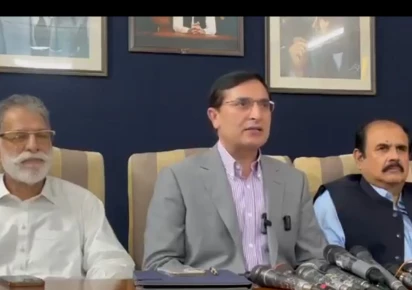
Addressing a joint press conference in Islamabad, PTI Chairman Barrister Gohar Ali Khan and former AJK prime minister Sardar Qayyum Niazi accused the authorities of suppressing public opinion and said the events surrounding the elections had damaged both democracy and the Kashmir cause.

Niazi said the people of Kashmir had a long history of supporting Pakistan and deserved to have their voices heard through a free and fair electoral process. He alleged that peaceful protesters had faced excessive force despite demonstrating without violence.

“They remained peaceful even while facing bullets and batons,” he said, adding that the government should have engaged in dialogue rather than confrontation.

Questioning the decision to conduct polling in three phases, Niazi argued that AJK’s relatively small population did not justify such an arrangement. He contrasted the process with Pakistan’s nationwide elections, saying the phased schedule had raised serious questions among voters.

PTI Chairman Gohar described the July 27 elections as “a fraud” and maintained that democracy could not function if citizens were prevented from expressing their views through peaceful protest. He said public grievances should be addressed through dialogue instead of force.

The PTI chief also criticised major political parties, accusing them of politicising the post-election situation instead of focusing on the concerns of the people. According to Gohar, the low voter turnout reflected growing public dissatisfaction with the existing political system.

He further claimed that the election results had failed to inspire public confidence and urged all stakeholders to prioritise transparency, accountability and democratic values.

Calling for an impartial inquiry, PTI demanded that those responsible for the reported killings and use of force be identified and held accountable. Party leaders said an independent investigation was necessary to establish the facts, ensure justice for affected families and restore public trust in democratic institutions.

The party concluded by urging authorities to avoid further escalation and resolve political disputes through dialogue, warning that prolonged instability in AJK could undermine both democratic credibility and Pakistan’s longstanding position on the Kashmir issue.

Similar Posts

  • | | |

    Shaheen Shah Afridi leaves Lanka Premier League du…

    Pakistan’s star fast bowler Shaheen Shah Afridi has returned home after leaving the Lanka Premier League (LPL) due to personal reasons. The left-arm pacer, who was representing the Kandy Royals in the tournament, departed from the event before its conclusion, ending his participation in the ongoing competition. During his time in the Lanka Premier League, Shaheen Afridi was also involved in a disagreement with his team management over his exclusion from the playing squad for a match on July 19. The incident reportedly created tension between the player and the franchise during the tournament. In the match against the Colombo Capitals, Shaheen Afridi was informed that he would be used as an impact player. However, his name was not included in the official team sheet submitted for the match. The omission reportedly upset the Pakistani fast bowler, who expressed his disappointment over the situation. The issue was later addressed after the Kandy Royals management apologized to Shaheen Afridi. Following the apology and discussions with the team officials, the fast bowler returned to action and participated in subsequent matches for the franchise. Despite the disagreement, Shaheen Afridi continued to contribute to his team’s campaign in the tournament. He played six matches in the Lanka Premier League and took seven wickets, demonstrating his effectiveness as one of the leading fast bowlers in the competition. Shaheen Afridi is regarded as one of Pakistan’s most important international cricketers and has established himself as a key figure in the national team’s bowling attack. Known for his pace, swing, and ability to take early wickets, he has represented Pakistan across all formats of international cricket and has earned recognition as one of the world’s top fast bowlers. His participation in overseas T20 leagues has provided him with valuable experience and exposure against international players. The Lanka Premier League was another opportunity for him to showcase his skills and maintain competitive form ahead of future international assignments. The Kandy Royals management’s decision to apologize after the team sheet controversy helped resolve the matter, allowing Shaheen Afridi to continue his involvement in the tournament. However, his early departure due to personal reasons means that he will no longer be available for the remaining matches of the league. The exact nature of the personal reasons behind Shaheen Afridi’s return to Pakistan has not been disclosed. His decision comes as part of his personal commitments, and there has been no official indication that his departure is related to any injury or cricketing issue. Fans and cricket analysts have closely followed Shaheen Afridi’s performances in the tournament, particularly because of his reputation as a match-winning bowler. His seven wickets in six matches highlighted his continued ability to perform at the highest level in franchise cricket. The Pakistan Cricket Board and supporters will now be hoping that Shaheen Afridi returns refreshed and prepared for upcoming international challenges. His fitness, form, and availability remain important factors for Pakistan’s future cricketing plans.

  • Bhumjaithai Secures Dominant Win, Anutin Poised to Continue as PM

    BANGKOK — The Bhumjaithai Party, led by incumbent Prime Minister Anutin Charnvirakul, has secured a commanding victory in Thailand’s general election, winning 194 parliamentary seats according to the latest unofficial tally released early Thursday. Bhumjaithai Projected as Leading Party With 92% of votes counted nationwide by 4:08 a.m. on February 9, preliminary results from the […]

  • | |

    How Gen Z turned India’s NEET protests into a vi…

    NEW DELHI: What began as a protest over alleged exam paper leaks in India has evolved into something far bigger—and far more digital. Instead of relying solely on slogans and marches, Generation Z is using memes, Instagram Reels, viral trends, and pop culture references to transform street demonstrations into a social media movement. The demonstrations, centered around alleged irregularities in the NEET medical entrance examination and concerns over transparency in recruitment and education, have continued for weeks at New Delhi’s Jantar Mantar, where students are demanding accountability and reforms. At the heart of the campaign is the Cockroach Janata Party (CJP), a youth-led movement that initially emerged after a sarcastic remark reportedly linked to India’s Chief Justice. What started as an online response quickly expanded into a broader campaign highlighting alleged examination leaks, recruitment irregularities, and calls for reforms in India’s education system. Protesters are demanding the resignation of Education Minister Dharmendra Pradhan and a comprehensive overhaul of the country’s examination process, arguing that repeated controversies have undermined students’ trust in competitive exams. Memes Become a Powerful Protest Tool Unlike traditional demonstrations, Gen Z participants are blending activism with internet culture. Viral memes, trending audio clips, and humorous videos have become powerful tools for spreading their message beyond protest sites. Rather than using conventional political messaging, young creators are adapting popular online formats to explain their frustrations in a way that resonates with millions of social media users. The strategy has helped the movement gain significant attention on platforms such as Instagram, where short-form videos often reach audiences much larger than traditional news coverage. ‘Get Ready With Me’—For a Protest One of the movement’s most recognizable trends is the adaptation of the viral “Get Ready With Me” (GRWM) format. Normally associated with makeup tutorials or fashion content, the videos now begin with captions such as, “Get ready with me to join the NEET paper leak protest.” Instead of cosmetics, creators show themselves preparing protest placards, packing water bottles, carrying first-aid kits, and heading to demonstration sites with friends. The creative twist has struck a chord with young viewers, turning ordinary protest preparations into relatable and widely shared content. Romance Trend Gets a Political Twist Another viral internet format, “Who Said I Love You First?”, has also been reimagined. Typically featuring playful romantic questions between couples, protesters have replaced the dialogue with sarcastic exchanges about exam leaks, government policies, and student frustrations. The humorous approach allows serious concerns to be communicated through entertaining content, making the videos highly shareable while keeping attention focused on the movement’s demands. Real Life Meets ‘Subway Surfers’ Perhaps the most eye-catching trend compares protesters running from police with the popular mobile game Subway Surfers. Several Instagram Reels feature demonstrators moving through streets while the game’s iconic background music plays, creating a humorous parallel between the game’s endless chase sequences and real-life protest scenes. For many young Indians who grew up playing the game, the comparison instantly resonated, helping the videos spread rapidly across social media. Digital Activism Enters a New Era Analysts say the movement highlights a broader shift in youth activism, where online engagement is becoming as influential as demonstrations on the ground. Memes, viral challenges, and short videos are no longer just entertainment—they have become tools for mobilizing support, shaping public conversations, and amplifying calls for change. Whether these creative online campaigns translate into policy reforms remains uncertain. But one thing is clear: Gen Z has rewritten the rules of modern protest, proving that in the age of social media, a viral meme can sometimes carry as much impact as a protest banner.

  • |

    PhD exams face explosive questions over quality

    A renewed debate over the reliability of PhD examinations has emerged following questions surrounding the doctoral thesis of Professor Jason Arday. Arday submitted his PhD thesis at Liverpool John Moores University in July 2015. The controversy resurfaced after Professor Richard Dawkins publicly questioned whether the thesis had been thoroughly examined. Other commentators have also raised concerns about its academic quality and allegations of plagiarism. The debate has now expanded beyond the individual case. It has prompted questions about how universities assess doctoral research and whether the existing system consistently maintains the required academic standards. A PhD normally represents several years of specialised research. A doctoral thesis can contain tens of thousands of words and often requires extensive academic reading and analysis. The assessment is generally carried out by two examiners. One is usually from the candidate’s university, while the other comes from an external institution. Critics argue that the workload involved in examining a thesis is not always matched by the financial compensation provided to examiners. Examiners are commonly paid a relatively modest fee for reviewing lengthy and complex research. This has raised concerns that some may not devote sufficient time to the process. There are also concerns about inconsistencies in examination decisions. Some candidates have reportedly failed their PhDs despite believing that their research met the required standard. Others have received a pass even when questions remained about the quality of their work. The appeal process can be particularly difficult for unsuccessful candidates. A failed PhD can mean years of research being lost. Students who finance their own studies can also face substantial financial losses. For those hoping to build academic careers, the consequences can be even more serious. Another issue is the selection of examiners. Supervisors often play a role in recommending academics to assess their students’ work. Critics say professional relationships within academia could potentially influence the choice of examiners or the assessment itself. Academic misconduct presents another challenge. Universities can spend considerable time investigating allegations of plagiarism and other forms of cheating. Lengthy investigations can involve hearings, appeals and administrative procedures. The discussion has also highlighted the subjective nature of academic assessment. Different examiners can sometimes reach different conclusions about the same research. In some cases, candidates who fail with one set of examiners may later receive a pass from another panel after an appeal. There is no suggestion that these concerns necessarily apply to Arday’s examination. The available debate does not establish whether his thesis met or failed to meet the required standard. However, the controversy has renewed calls for universities to examine their doctoral assessment systems. Questions include how examiners are selected, whether they receive adequate compensation, how thoroughly theses are reviewed and how allegations of academic misconduct are handled. The wider debate is therefore about more than one doctoral thesis. It raises fundamental questions about the credibility, consistency and accountability of the PhD examination process.

  • | |

    India’s Gen Z movement raises pressure on Mo…

    NEW DELHI: A growing youth-led protest movement is emerging as one of the most significant political challenges to Prime Minister Narendra Modi’s third term, with demonstrations spreading across parts of India over allegations of examination irregularities, unemployment and demands for greater government accountability. What began as an online campaign has evolved into a nationwide movement driven largely by Generation Z, reflecting mounting frustration among young Indians over limited job opportunities and concerns about the country’s education system. The movement, associated with the youth-led platform known as the “Cockroach Janata Party,” initially focused on alleged examination scandals but has since broadened into a wider campaign calling for institutional reforms and political accountability. Protesters are demanding the resignation of the country’s education minister and greater transparency in the recruitment and examination process. The demonstrations have gained further momentum following activist Sonam Wangchuk’s hunger strike and his reported forced relocation, developments that have intensified public debate and drawn fresh attention to the broader protest movement. According to international media reports, the unrest represents one of the strongest waves of public pressure faced by Modi’s government since it began its third consecutive term. Analysts say the protests highlight deeper concerns among young voters, particularly over unemployment, education and confidence in public institutions. Tensions escalated during a protest march toward Parliament, where demonstrators clashed with security forces. Official figures said at least 180 people were injured, including 118 police officers and 60 protesters, as authorities moved to disperse crowds. Mobile internet services were also suspended in several sensitive areas to prevent the spread of unrest. Observers say the movement’s rapid rise demonstrates the increasing influence of social media in mobilising young people. What started as a satirical online campaign quickly transformed into an organised street movement, giving voice to a generation that believes its economic and educational concerns have gone unanswered. Political analysts note that while the protests remain centred on education and employment, they could carry broader political implications if public dissatisfaction continues to grow. The government’s response in the coming weeks is expected to be closely watched, as it seeks to balance law and order with demands for reform. Although it remains uncertain how the movement will develop, the ongoing demonstrations underscore the growing political engagement of India’s younger generation and the challenges facing the Modi administration as it navigates rising public expectations during its third term in office.

  • | |

    Anti-polio drive to begin in 13 Balochistan distri…

    QUETTA: A targeted anti-polio vaccination campaign will begin on Monday across 62 high-risk union councils in 13 districts of Balochistan as health authorities intensify efforts to stop the spread of the poliovirus and protect children from lifelong disability. According to the Provincial Emergency Operations Centre (EOC), the campaign will cover 209,557 children under the age of five. Trained vaccination teams will visit homes and designated centres to administer oral polio vaccine free of charge. Officials said 862 mobile vaccination teams have been deployed to conduct the campaign. In addition, 61 fixed vaccination centres and 72 transit vaccination points have been established to ensure that children travelling with their families or living in hard-to-reach areas are not missed. The EOC said the campaign is focused on high-risk union councils where the threat of poliovirus transmission remains significant. Health authorities noted that the virus continues to circulate in some parts of the province, making regular vaccination campaigns essential to prevent new infections. Officials stressed that polio is an incurable disease that can cause permanent paralysis, but it is completely preventable through timely vaccination. They urged parents to cooperate with vaccination teams and ensure that every eligible child receives polio drops during the campaign. The EOC warned that every child who remains unvaccinated increases the risk of virus transmission within the community. Officials said even a small number of missed children can allow the virus to continue circulating and endanger other children. The campaign will be carried out in Barkhan, Dukki, Jaffarabad, Jhal Magsi, Loralai, Qila Saifullah, Nasirabad, Sherani, Sohbatpur, Usta Muhammad, Zhob, Ziarat and Mastung. Special arrangements have been made in these districts to achieve maximum vaccination coverage. Health authorities said supervisors and monitoring teams will oversee the campaign to ensure transparency, improve performance and address any operational challenges. Officials added that vaccination teams have been instructed to reach every household in the targeted areas.

Leave a Reply

Your email address will not be published. Required fields are marked *