punjab imposes 60day
| |

Punjab imposes 60-day ban on swimming in water bod…

The Punjab government has imposed a 60-day ban on swimming in dams, rivers, canals, ponds and lakes across the province.

The restriction has been introduced under Section 144 of the law. The Punjab Home Department issued a notification announcing the ban.

According to the notification, people will also be prohibited from bathing in rainwater accumulated on streets, roads and open areas.

The government has also restricted boating without official permission in the province. The ban applies to the water bodies covered under the notification.

Officials said the restrictions were imposed to protect human lives during the ongoing monsoon season.

Water levels have increased in several dams, rivers, canals, ponds and lakes across Punjab. Heavy rainfall has also created pools of standing water in different areas.

Authorities fear that entering these waters could increase the risk of drowning and other accidents. The government has therefore moved to prevent people from swimming or bathing in potentially dangerous locations.

The Home Department said the restrictions would remain in place for 60 days. Citizens have been advised to cooperate with the authorities and avoid entering rivers, canals, dams and other water bodies.

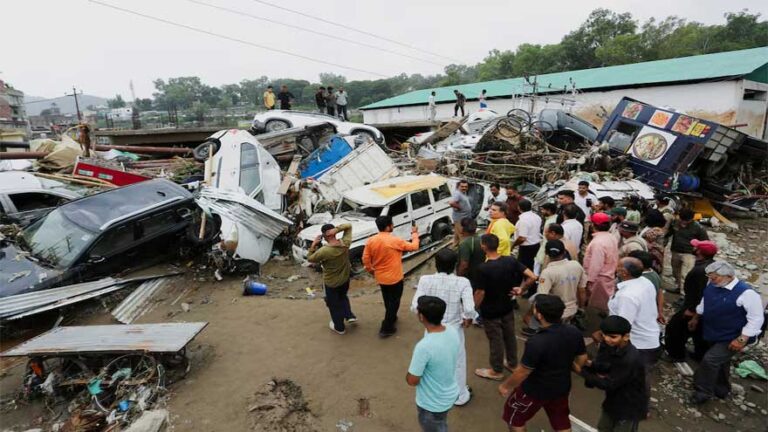
The ban comes as Punjab continues to experience monsoon rains. Several parts of the province have already faced heavy rainfall, flooding and rising water levels.

Officials have urged residents to remain cautious, particularly in areas where water levels are rising. People have also been advised to follow official warnings and avoid unnecessary activities near flooded areas.

Similar Posts

  • |

    Sabalenka targets strong comeback at Toronto Open

    TORONTO: World No. 1 Aryna Sabalenka is aiming to rediscover her best form as she begins her campaign at the WTA 1000 Canadian Open in Toronto, with the top ranking and momentum ahead of the US Open at stake. The Belarusian has enjoyed an outstanding hard-court season, winning 23 of her 24 matches on the surface in 2026. Her only defeat came against Elena Rybakina in the Australian Open final. Despite her dominance on hard courts, Sabalenka struggled to produce similar results during the clay and grass-court seasons. She was eliminated in the quarter-finals of the French Open before suffering a fourth-round exit at Wimbledon against Japan’s Naomi Osaka. The Toronto tournament could have a significant impact on the WTA rankings. Sabalenka risks losing the world No. 1 position if she fails to reach the round of 16 and Rybakina goes on to win the title. Although Sabalenka has never progressed beyond the semi-finals at the Canadian event, she believes she is mentally refreshed after taking a short break following Wimbledon. The 27-year-old spent several days on the Greek island of Mykonos before returning to training with renewed motivation. Speaking ahead of the tournament, Sabalenka said the time away from tennis allowed her to recover physically and mentally. She admitted that some adjustments made during the clay and grass seasons did not deliver the desired results but expressed confidence that returning to her usual approach would help her regain consistency. The tournament draw presents another tough challenge for the top seed. Sabalenka leads the upper half, which also features two-time champion Jessica Pegula, Amanda Anisimova and Poland’s Iga Swiatek, who is looking to bounce back after an early Wimbledon exit. Meanwhile, Elena Rybakina heads the bottom half of the draw alongside Coco Gauff, Naomi Osaka and newly crowned Wimbledon champion Linda Noskova. Noskova, who recently captured her maiden Grand Slam title, enters the tournament with growing confidence and could face rising Philippine star Alexandra Eala in the third round. Several notable players will miss the tournament. Wimbledon runner-up Karolina Muchova remains unavailable while recovering from minor surgery, while defending champion Victoria Mboko is also sidelined with the knee injury that forced her to withdraw from Wimbledon.

  • Thailand’s Fishing Industry Grinds to Halt as Diesel Shortages Bite

    BANGKOK — Thailand’s vital fishing industry is facing a severe crisis as diesel shortages and soaring prices force vessels to remain in port, with industry leaders warning that more than half of the country’s 9,000 fishing boats may be unable to operate. Pump Prices to Rise Starting Wednesday as Government Adjusts Fuel Subsidies Many fishing […]

  • | |

    Akbar Islam exposes reality of working with Sana Javed

    Sana Javed’s reputation within the Pakistani entertainment industry has been complicated for several years. Before her marriage to cricketer Shoaib Malik, a wave of allegations from colleagues and crew members described her as rude and difficult to work with on set, a controversy that temporarily cost her significant public goodwill. Following her marriage, she stepped away from acting for a period, and her return to screens in the ongoing drama Bas Tera Saath Ho has been watched closely by audiences curious about how the comeback would land. Now, a co-star from the same production has stepped forward to share his firsthand experience of working alongside her, and what he had to say runs contrary to the narrative that had built up around her. Akbar Islam, who plays a supportive neighbour uncle in Bas Tera Saath Ho, was asked directly about his experience working with Sana Javed and whether the stories about her difficult behaviour on set reflected the reality he had encountered. His response was thoughtful and contextual rather than simply defensive of the actress. He said that what people interpret as rudeness is not always what it appears to be. Actors, he explained, need to maintain a certain aura on set. A professional distance, a sense of presence and composure, is part of how performers protect the quality of the work and the integrity of their characters. What some people read as aloofness or arrogance may simply be an actor holding that professional boundary. He said this was the context in which he understood what had previously been said about Sana Javed, and about her co-star Farhan Saeed as well. As for his own experience working with them on Bas Tera Saath Ho, he described it plainly as a great one. He added that dynamics differ from set to set and production to production, suggesting that past accounts may have reflected specific circumstances rather than a fixed truth about either actor’s character. Sana Javed’s performance in Bas Tera Saath Ho has been receiving positive attention from viewers, marking a steady rehabilitation of her public image following the controversy that preceded her comeback. The drama itself has been well received, with Akbar Islam’s own performance drawing warm feedback from audiences who appreciate the warmth and depth he brings to his supporting role. His remarks offer a counterpoint to the accounts that once dominated the conversation about Sana Javed, framing the earlier criticism through the lens of professional behaviour rather than personal failing, and suggesting that the version of her colleagues have encountered during the filming of Bas Tera Saath Ho has been a different and more positive experience altogether.

  • |

    UK petrol theft hits £200,000 a day amid fuel price surge

    The sharp rise in fuel prices across the United Kingdom has triggered a significant increase in petrol theft, with filling stations now losing an estimated £200,000 worth of fuel every day, according to media reports. Petrol station operators have reported a growing number of “drive-off” incidents, where motorists fill their vehicles with fuel and leave without making payment. The trend has become increasingly common as higher fuel costs continue to put pressure on household budgets. Reports indicate that the overall financial impact of fuel theft has climbed by 48 percent following the recent surge in petrol and diesel prices. Retailers say the increase has added to the challenges already facing fuel station businesses, many of which are struggling with rising operating costs. The spike in fuel prices followed heightened tensions during the Iran conflict, when global oil markets experienced sharp volatility. During that period, the price of petrol reportedly increased by 27 pence per litre, while diesel prices rose by 37 pence per litre, making fuel significantly more expensive for consumers. Industry representatives warn that the consequences extend beyond financial losses. According to the Petrol Retailers Association (PRA), the rise in fuel prices has also been accompanied by an increase in abusive and aggressive behaviour directed at petrol station employees. Pump attendants have reportedly faced more verbal harassment and confrontations from frustrated customers. Fuel retailers are urging authorities to take stronger action against theft and improve security measures at filling stations. They also stress the need for greater protection for frontline staff, who are increasingly being exposed to difficult and sometimes dangerous situations while carrying out their duties.

  • |

    Heavy rains and floods leave 14 dead, thousands displaced in Southern India

    Heavy monsoon rains continued to wreak havoc across southern India, leaving at least 14 people dead and forcing thousands of residents to flee their homes as floods and landslides caused widespread destruction in the states of Kerala and Karnataka. According to local authorities, at least 11 people have lost their lives in rain-related incidents across Kerala since the weekend. The relentless downpours have inundated low-lying areas, damaged homes and roads, and disrupted daily life across several districts. State officials said nearly 7,700 residents have been evacuated from flood-prone areas and shifted to approximately 275 relief camps established across Kerala. Emergency response teams, including disaster management personnel and local volunteers, have been working around the clock to rescue stranded residents and provide food, shelter, and medical assistance. Kerala Chief Minister V. D. Satheesan is scheduled to hold a high-level meeting with district officials on Monday to assess the flood situation and review relief and rehabilitation measures. He stated that cleanup operations have already begun in several areas where floodwaters have started to recede, while authorities continue to monitor regions still at risk. The Kerala State Disaster Management Authority has warned that several parts of the state are expected to experience moderate rainfall accompanied by strong winds, raising concerns that conditions could worsen in vulnerable locations. Residents living near rivers, hillsides, and flood-prone areas have been advised to remain alert and follow official safety instructions. The severe weather has also disrupted education across Kerala. Numerous schools remained closed due to flooding and unsafe travel conditions, while the state government postponed a scheduled teacher recruitment examination to ensure the safety of candidates and staff. Meanwhile, neighboring Karnataka has also suffered significant damage from the monsoon. Heavy rainfall triggered a landslide on Saturday that claimed the lives of three members of the same family—a couple and their son—highlighting the growing threat posed by unstable hillsides during the rainy season. Meteorological officials have warned that monsoon activity is expected to remain active over parts of southern India in the coming days. Disaster management agencies are maintaining a high level of preparedness as rescue teams continue relief efforts and authorities closely monitor rivers, reservoirs, and landslide-prone regions. The annual monsoon season frequently brings heavy rainfall to southern India, but experts say increasingly intense weather events are placing greater pressure on infrastructure, emergency services, and vulnerable communities.

  • | |

    Raja Nasir Abbas condemns PIMS hospital tragedy, q…

    ISLAMABAD: Leader of the Opposition in the Senate Allama Raja Nasir Abbas has described the PIMS Hospital incident as an extremely painful and unbearable tragedy, expressing deep concern over the loss of lives and the suffering of affected families. Speaking to the media after arriving at the Pakistan Institute of Medical Sciences (PIMS), Raja Nasir Abbas criticized the government’s response to the incident and questioned whether removing a health secretary could be considered an adequate action in response to such a serious tragedy. He said that simply removing a senior health official would not address the underlying issues that led to the incident. According to him, the government must look beyond administrative changes and take practical measures to prevent similar incidents from occurring in the future. “Do you think that by removing one health secretary, you have done your job?” he questioned while speaking to the media. The Senate opposition leader also expressed sympathy for the families who lost their children in the incident. He asked people to imagine the pain and suffering of parents whose children were burned to death. “What must the parents whose children were burned to death have gone through?” he asked, while condemning what he described as the actions and handling of the situation by the authorities. Raja Nasir Abbas said that such incidents raise serious questions about the quality of public services and the government’s responsibility toward citizens. He stressed that people rely on state institutions for essential services, particularly healthcare and education, and expect these institutions to provide safe and reliable facilities. The opposition leader also drew a comparison between the public education and healthcare systems and the growing reliance on private institutions. He said that when government schools fail to meet people’s expectations, families are often forced to turn toward private educational institutions. Similarly, when people do not receive satisfactory treatment or adequate medical facilities at government hospitals, they are compelled to seek treatment from private hospitals. He argued that this trend places an additional financial burden on ordinary citizens, particularly families who cannot afford expensive private healthcare or education. Raja Nasir Abbas emphasized that government institutions should be strengthened so that citizens can receive essential services without having to depend on private alternatives. He suggested that authorities need to identify weaknesses within public-sector institutions and take effective steps to improve their performance. His comments came during his visit to PIMS, where he spoke about the incident and the concerns surrounding the hospital’s safety and management. The tragedy has prompted questions about safety arrangements, institutional accountability and the government’s responsibility for protecting patients and their families. The opposition leader’s remarks also highlighted the broader issue of public confidence in government institutions. When public hospitals fail to provide adequate care or safe facilities, people who cannot afford private treatment are particularly vulnerable. He called for greater accountability and better management of public-sector institutions, arguing that administrative decisions alone cannot resolve systemic problems. The incident has intensified debate over hospital safety and emergency preparedness, with calls for authorities to investigate what happened and determine whether negligence or shortcomings contributed to the tragedy. Raja Nasir Abbas maintained that the government must take meaningful measures rather than limiting its response to the removal of individual officials. He stressed that improving public hospitals and ensuring the safety of patients should remain a priority. He further expressed solidarity with the bereaved families and condemned the circumstances surrounding the deaths, saying that the suffering of parents who lost their children could not be ignored.

Leave a Reply

Your email address will not be published. Required fields are marked *