rising fuel costs

Rising Fuel Costs Force Fishing Fleets Across Thailand to Dock

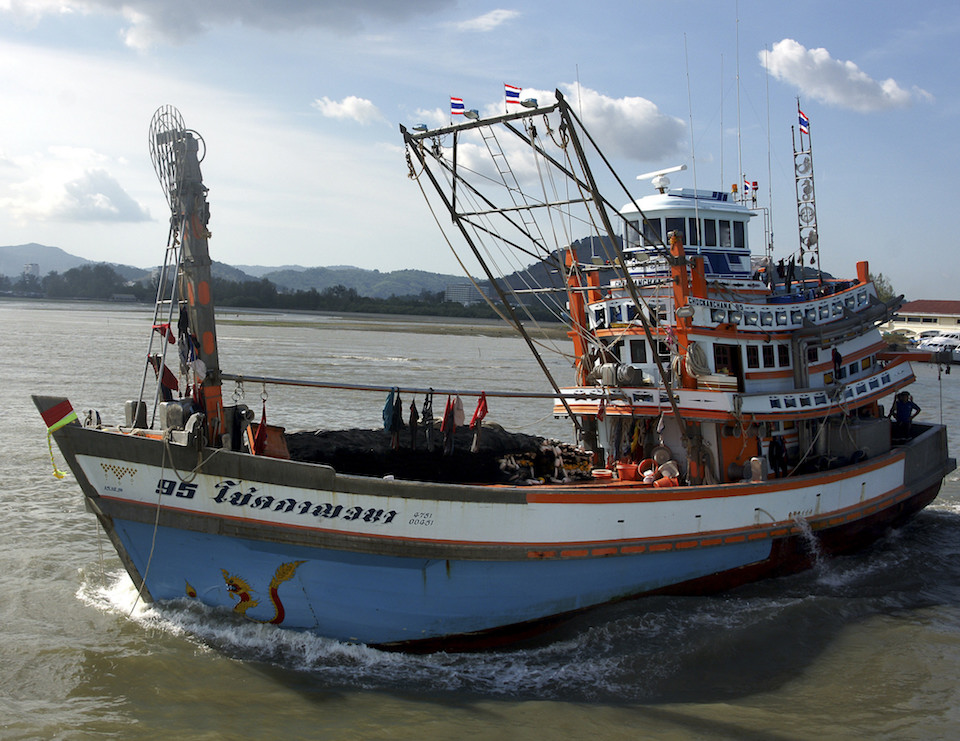
BANGKOK – Fishing fleets across Thailand are grinding to a halt as surging fuel prices and persistent shortages push operating costs beyond sustainable levels, threatening the livelihoods of thousands of fishermen and the stability of coastal economies.

Thailand’s Fishing Industry Grinds to Halt as Diesel Shortages Bite

Phubet Jantanimi, honorary adviser to the Purse Seine Fishery Association, said approximately 40 percent of the country’s 9,000 registered fishing vessels have already been forced to dock as operators struggle to absorb escalating expenses linked to “green oil”, the subsidised fuel designated for the fisheries sector.

“If oil prices continue to rise, all boats may have to dock because operators cannot absorb costs that have more than doubled,” he warned. Production costs have climbed to as much as 2 million baht per vessel per month, compared with approximately 1.5 million baht previously, squeezing operators already operating on thin margins.

Fuel prices for fisheries have risen sharply from 18–20 baht per litre to around 34 baht, with mounting concerns that prices could climb even higher. Fishing vessels typically consume between 1,000 and 10,000 litres of fuel per trip, depending on the distance traveled and the size of the operation, making them particularly vulnerable to price fluctuations.

Supply Shortages Compound Crisis

Mr Phubet highlighted a critical secondary issue: fishermen cannot reliably find fuel even when they are willing to pay the elevated prices. Suppliers have limited stock while petrol stations restrict sales, leaving vessels stranded at port. “Without operating, vessels risk damage,” he added, noting that prolonged inactivity can lead to mechanical deterioration and additional financial losses.

In Phuket, the crisis has already disrupted both large-scale commercial operators and small-scale fishing families, with widespread implications for the province’s seafood supply chain.

Somyot Wongboonyakul, president of the Phuket Fisheries Association, delivered a stark assessment of the industry’s prospects. “Large operators have already started docking their boats. If fuel remains above 30 baht per litre, the sector will not survive,” he said.

He illustrated the financial strain with a simple calculation: a pair of trawlers using approximately 40,000 litres of fuel each month would face an additional 400,000 baht in costs for every 10-baht increase per litre. “We are losing 300,000–400,000 baht a month if we go out,” he said, adding that weaker consumer demand has further limited the ability to pass on higher costs to buyers.

Small-Scale Fishermen Also Affected

Small-scale operators, who form the backbone of many coastal communities, are also under intense pressure. In the Na Kluea community of Chon Buri, local fishermen have begun suspending trips due to fuel shortages that make even short journeys economically unviable.

Somkid Jittakawan, a representative of small-scale fishermen, described the daily struggle: “When some petrol stations run out or close, we cannot refuel, forcing boats to stop temporarily.” Although many are still attempting to operate to maintain some income, rising costs are steadily eroding whatever margins remain.

Fishermen warned that a prolonged disruption could significantly reduce seafood supply across domestic markets, pushing prices higher for consumers already grappling with broader economic pressures. The cascading effects would extend from boat operators to fishmongers, market vendors, and ultimately to Thai households.

Calls for Government Intervention

Operators have called on the government to intervene urgently by capping fuel prices at sustainable levels and ensuring sufficient supply reaches fishing communities. Some have proposed reducing prices to 19–20 baht per litre and introducing support measures similar to past subsidy schemes that helped stabilize the industry during previous crises.

Thailand Allows 24-Hour Fuel Deliveries to Ease Nationwide Shortages

Without swift and decisive action, industry representatives warned that widespread shutdowns could follow, affecting not only the immediate livelihoods of fishing families but also the broader coastal economies that depend on a steady flow of seafood and related industries. For now, hundreds of vessels remain tied to docks across the country, their operators waiting for a resolution that has yet to arrive.

-Thailand News (TN)
Similar Posts

  • |

    NA Secretariat reports Rs8.6bn savings

    The National Assembly (NA) Secretariat expects significant savings from its Rs17 billion budget for the current fiscal year after implementing administrative and financial reforms over the past two years. According to a briefing by the NA Secretariat, the reforms have already generated Rs8.6 billion in savings against a combined allocation of Rs29 billion for the 2024-25 and 2025-26 fiscal years. The secretariat also abolished 302 posts, reducing its overall workforce by nearly 20%. A senior official said the secretariat expects further substantial savings from this year’s Rs17 billion allocation. The reforms have also changed the appointment process. The secretariat has replaced discretionary hiring powers with service procedures based on laws and rules. Officials say the move will improve transparency and reduce political pressure on the speaker when making appointments. The NA Secretariat’s progress comes as the federal government continues efforts to reduce the size of the civil service and control administrative spending. However, the government’s rightsizing drive has so far focused largely on gradual and limited measures. On Monday, Finance Minister Muhammad Aurangzeb chaired a meeting of the sub-committee on rightsizing to review progress and discuss ways to speed up the implementation of approved reforms. According to the Finance Ministry, Waves 1 to 4 of the rightsizing exercise have largely moved forward following cabinet approval. Recommendations for Waves 5 and 6 have also been prepared and shared with relevant authorities, while work on Waves 7 and 8 is underway.

  • Heartbreak in Pattaya: Ceremony Set for Farewell to Russian Siblings

    PATTAYA – The tight-knit community of Huay Yai in Chonburi is preparing for a truly heartbreaking farewell this week. Families and friends will soon gather to mourn five victims of a very shocking murder case. These victims include two young Russian siblings, Diana and Roman, alongside a local Thai family. The grieving mother of the […]

  • | |

    Polling begins in PS-30 Khairpur by-election

    Polling has begun for the by-election in Sindh Assembly constituency PS-30 Khairpur, where Pakistan Peoples Party (PPP) candidate Barrister Asfandyar Khan Khuhro is facing seven independent candidates. According to election officials, 254,980 voters are eligible to cast their ballots in the constituency. Authorities have established 164 polling stations across the constituency to facilitate voters and ensure a smooth electoral process. Security remains a major focus during the by-election. Officials have designated 64 polling stations as highly sensitive and 68 as sensitive due to security concerns. Around 2,500 police personnel have been deployed across the constituency to maintain law and order and protect voters, polling staff and election material. The election is taking place following the death of PPP lawmaker **Naeem Khuhro**, which left the PS-30 seat vacant. The PPP has fielded Barrister Asfandyar Khan Khuhro to retain the constituency, while seven independent candidates are also contesting the election. Voters will choose the next representative for the Sindh Assembly as polling continues under heightened security arrangements across Khairpur.

  • | |

    Imran Khan’s sister secures transit bail in cybe…

    The Peshawar High Court (PHC) on Monday granted transit pre-arrest bail to Noreen Niazi, sister of incarcerated Pakistan Tehreek-e-Insaf (PTI) founder Imran Khan, in a case registered under the Prevention of Electronic Crimes Act (Peca) 2016. The court directed Niazi to approach the relevant Islamabad court by August 20 for further legal proceedings. Her protective relief will remain effective until that date. Justice Arshad Ali heard Niazi’s petition. Her legal team included Ali Zaman, Amir Zeb and Barrister Sarwar Muzaffar Shah. The National Cyber Crime Investigation Agency (NCCIA) registered the case in Islamabad on July 27. Niazi has been accused of making allegedly derogatory and inflammatory remarks about state institutions during a podcast and in video clips later circulated on social media. Her lawyers rejected the allegations and maintained that she had been falsely implicated. They argued that the case was politically motivated and that the authorities had not presented substantial evidence linking her to the alleged offences. The defence further claimed that attempts were being made to arrest and harass Niazi. The lawyers said the statements cited in the case had been taken out of context and wrongly interpreted. In its order, the PHC observed that the request for transit bail deserved consideration. The court subsequently granted interim protection subject to bail bonds of Rs80,000 and two sureties. Niazi later spoke to reporters and said she became aware of the case after arriving in Peshawar. She claimed that remarks she had made privately were allegedly passed on to authorities and subsequently became the basis of the case. She also alleged that several cases had been registered against members of Imran Khan’s family. Niazi questioned the allegations against her, saying she had never visited Peshawar and therefore had no involvement in matters concerning the province. The case emerged after the NCCIA summoned Niazi on July 20 over allegations involving the dissemination of what the agency described as false, offensive and inflammatory content concerning state institutions. The action followed the circulation of a video interview in which Niazi discussed the Pakistan-India military confrontation of last year. She made allegations about the circumstances surrounding the conflict and questioned the motives behind it. She also made claims involving Indian Prime Minister Narendra Modi, Israel and US President Donald Trump.

  • Thai Cabinet Approves First Draft Of Strict New Deportation Regulations

    BANGKOK, Thailand — The Thai Cabinet has officially approved the first draft of new deportation regulations, marking a significant step toward tightening controls on illegal immigration and expediting the removal of foreign nationals who violate the law. The move aims to establish a clear, efficient legal framework for deportations, addressing previous gaps in administrative coordination. […]

  • | | |

    Weekly inflation hits 9.66% amid price surge

    ISLAMABAD: Pakistan’s weekly inflation increased during the latest reporting period as higher fuel and food prices pushed up the cost of living, according to the latest report released by the Pakistan Bureau of Statistics (PBS). The report showed that weekly inflation rose by 0.91%, while the country’s annual inflation rate reached 9.66%, indicating that prices of essential goods continue to remain under pressure despite declines in a few commodities. According to the Bureau of Statistics, prices of 22 essential commodities increased during the past week, while eight items became cheaper and 21 items recorded no change. The sharpest increase was recorded in petroleum products. High-speed diesel became 15.87% more expensive, while the price of petrol increased by 5.23%. The rise in fuel prices is expected to affect transportation costs and may also increase the prices of other goods in the coming weeks. Among food items, tomatoes recorded the highest increase, with prices rising 39.92% in just one week. Egg prices increased by 7.31%, adding to household food expenses. The report also showed that the price of liquefied petroleum gas (LPG) increased by 0.91%, while potatoes became 3.70% more expensive. Prices of garlic, beef and several other essential food items also registered increases during the week. Although inflation remained on the rise, consumers received limited relief in the prices of a few commodities. Chicken prices fell by 4.66%, making it one of the biggest weekly declines among food products. Bananas became 1.72% cheaper, while prices of sugar, rice and different varieties of pulses also recorded decreases. Economists say rising fuel prices are one of the major reasons behind the increase in weekly inflation because higher transportation and production costs often lead to price increases across various sectors of the economy. The latest inflation figures suggest that many households continue to face pressure from the rising cost of essential goods, particularly food and fuel. While price reductions in some commodities have provided modest relief, overall inflation remains elevated due to continued increases in several key household items.

Leave a Reply

Your email address will not be published. Required fields are marked *