royal thai army

Royal Thai Army Honors Fallen Heroes on Royal Thai Armed Forces Day

The Royal Thai Army held ceremonies to mark Royal Thai Army Day, honoring the sacrifices of ancestors and paying tribute to soldiers who gave their lives to protect the country.

Thai PM Honors Fallen Soldier, Reaffirms Support for Troops and Border Stability

On January 18, 2026, Royal Thai Army Commander-in-Chief Gen Pana Claewplodtook presided over religious rites and commemorative ceremonies honoring fallen heroes at Royal Thai Army Headquarters.

The program included four main ceremonies: worship at the Shrine of Phra Phrom, a wreath-laying at the Royal Thai Army Memorial Wall in remembrance of soldiers who died in the line of duty, including those lost along the Thai–Cambodian border, a royal homage at the equestrian statue of King Chulalongkorn, and a Buddhist merit-making ceremony at Army Headquarters.

During the wreath-laying ceremony, senior commanders paid respects to the fallen, accompanied by ceremonial bugle calls honoring the soldiers’ sacrifice for Thailand’s sovereignty, security, and peace. The Army Commander-in-Chief then led a royal homage ceremony for His Majesty King Chulalongkorn, followed by a Buddhist ceremony with the offering of funeral cloths and chanting to dedicate merit to the spirits of Thai warriors.

Following the ceremonies, the Army Commander-in-Chief visited Phramongkutklao Hospital to present care packages to soldiers wounded in combat along the Thai–Cambodian border.

January 18 is observed annually as Yutthahatthi Day, King Naresuan the Great Day, Royal Thai Army Day, and Royal Thai Armed Forces Day, commemorating King Naresuan’s historic defence of Thailand’s independence.

Eleventh Thai Soldier Loses Leg in Sisaket Landmine Blast

At 4:00 P.M., the Royal Thai Army held a parade and oath-taking ceremony before the regimental colors at the Cavalry Center in Saraburi Province, reaffirming discipline, readiness, and loyalty to the nation.

Source: NBT WORLD

Natthaphon Sangpolsit
NBT WORLD
Similar Posts

  • | | |

    Israeli rabbi sparks outrage with denial of Palest…

    JERUSALEM: An Israeli chief rabbi has sparked widespread controversy after reportedly denying the existence of the Palestinian people and asserting that Gaza and the occupied West Bank belong exclusively to Jews. Chief Rabbi David Yosef was quoted as saying that there was no Palestinian nation in the past and that Palestinians have no rights to the land. His reported remarks have drawn attention amid the continuing conflict in Gaza and growing international concern over the humanitarian situation. Yosef also reportedly claimed that Gaza and cities in the West Bank belong to Jews and suggested that Gaza would eventually be destroyed and populated by Jewish people. The comments come as Israeli military operations in Gaza continue, with Palestinian officials reporting further deaths and injuries. The conflict has caused widespread destruction, displacement and a severe humanitarian crisis. The remarks have also renewed scrutiny of developments in the occupied West Bank, where tensions between Palestinians and Israeli settlers remain high. According to reports, Palestinian residents and farmers in areas including Hebron have faced incidents involving Israeli settlers. One reported incident involved a Palestinian farmer’s donkey being tied to a vehicle and dragged, resulting in the animal’s death. The latest statements have added to concerns over rhetoric surrounding the future of Palestinian territories. Palestinian leaders and rights advocates have long opposed attempts to deny Palestinian national identity or rights, while the international community continues to debate the political future of Gaza and the West Bank. The comments also come as diplomatic efforts over the conflict remain under intense scrutiny. The humanitarian situation in Gaza has made the question of civilian protection and the future governance of the territory increasingly urgent. For Palestinians, statements denying their existence or connection to their homeland are particularly sensitive, coming after decades of conflict, displacement and political uncertainty. The controversy surrounding Yosef’s remarks is therefore likely to fuel further debate over Palestinian rights, Israeli settlement policies and the prospects for a lasting political settlement in the region.

  • | | |

    PM Shehbaz says Pak-Saudi-Turkiye defence pact is …

    Prime Minister Shehbaz Sharif has said the newly signed defence agreement between Pakistan, Saudi Arabia and Turkiye is strictly defensive in nature. He said the pact is not intended to promote aggression or create tensions in the region. The prime minister made the remarks while addressing a meeting of the federal cabinet on Monday. Pakistan, Saudi Arabia and Turkiye signed the Makkah Joint Defence Agreement on August 7 in Makkah. The agreement aims to strengthen cooperation among the three countries in the field of defence and security. Under the pact, an attack against any one of the three signatories would be treated as an attack against all three. The arrangement is intended to strengthen collective deterrence and improve coordination among the countries. PM Shehbaz said the main objective of the agreement was to promote peace, stability, progress and prosperity across the region. He stressed that the agreement should not be viewed as a preparation for military aggression. The prime minister described the pact as a source of strength for Pakistan, Saudi Arabia and Turkiye. He also said its benefits could extend to the wider Muslim world. Shehbaz Sharif congratulated Deputy Prime Minister Ishaq Dar and Chief of Defence Forces and Chief of Army Staff Field Marshal Asim Munir for their role in the agreement. He said discussions on stronger defence cooperation between the countries had continued for several years before the latest agreement was finalised. Pakistan and Saudi Arabia had already signed a Strategic Mutual Defence Agreement in September 2025. The prime minister said Pakistan and Turkiye had also maintained defence and security arrangements for decades. Shehbaz highlighted Pakistan’s long-standing defence cooperation with Saudi Arabia. He recalled that Pakistani personnel had served alongside Saudi forces in protecting the holy cities of Makkah and Madina. He said the latest trilateral agreement builds on those longstanding ties and provides a broader framework for cooperation. The agreement has also received attention across the Muslim world. The Organisation of Islamic Cooperation described it as an important strategic development. Several countries, including Kuwait, Bahrain and Somalia, have welcomed the agreement. Iran has also responded in a relatively positive tone. Tehran reiterated its preference for regional security arrangements based on cooperation among countries in the region. The agreement comes amid growing security concerns across the Middle East and wider region. Its signatories have presented the pact as a mechanism for collective defence rather than an offensive alliance. The Pakistani government has maintained that the arrangement is aimed at strengthening regional stability and protecting the sovereignty and security of its members.

  • Thai Opposition Prepares No-confidence Debate Amid Corruption Allegations

    BANGKOK, Thailand — The Thai opposition is actively preparing to launch a no-confidence debate against the government upon the reconvening of parliament, warning that a series of escalating corruption scandals could trigger severe political consequences for the ruling administration, the Bangkok Post reported. Anutin Charnvirakul Secures Second Term as Thailand’s 32nd Prime Minister Opposition leader […]

  • Pattaya Mystery Deepens: Arrest Warrants Issued for Two Men Over Missing Russian Siblings

    PATTAYA, Thailand – Thai police are currently intensifying their massive search operations for two missing Russian siblings in Chonburi province. The sudden and unexplained disappearance of these young tourists has sparked widespread concern among local community members. Law enforcement authorities are working around the clock to find any vital trace of their whereabouts. Diana Nazimova, […]

  • |

    Modi’s Education Minister quits as Indian yo…

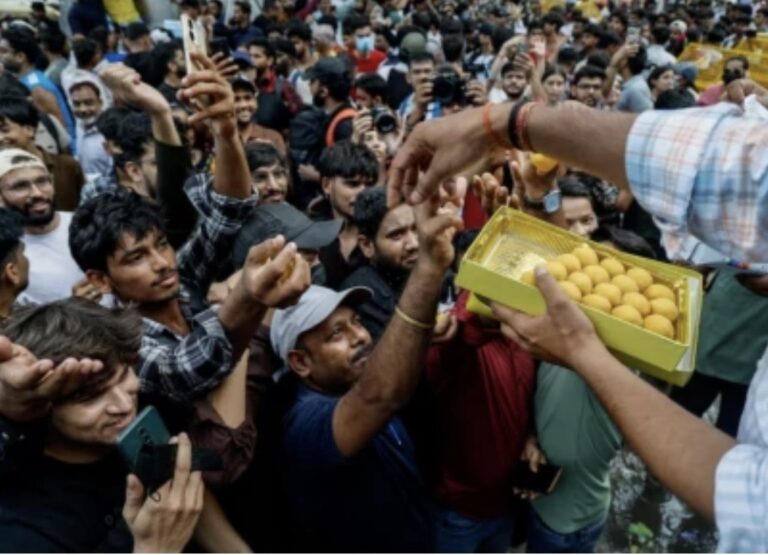
    Indian youth protesters called off weeks of demonstrations and celebrated in the streets on Saturday after Education Minister Dharmendra Pradhan resigned and Prime Minister Narendra Modi’s government bowed to demands including calls to fix a cheating-prone exam system. The worst political crisis of Modi’s third term had peaked this week when thousands of protesters marched on parliament, with police using tear gas to control them. Young voters form a critical base of Modi’s Bharatiya Janata Party. But youths calling themselves “cockroaches” had taken to the streets since late June, after national exam papers were leaked forcing a resit which affected 2 million students and galvanised anger about the lack of prospects for young Indians. The resignation of Pradhan, the students’ primary demand, came as a surprise because Modi’s government had refused to fix the exam system. Celebrations erupted at the Jantar Mantar protest site in the capital Delhi, with thousands of youngsters chanting victory slogans and dancing. The youth-led Cockroach Janta Party movement, which spearheaded the demonstrations, said it would end its protests. “We have done it,” said Abhijeet Dipke, CJP’s founder, to loud cheers at the site. Youngsters shouted “Jai Hind” as the national anthem played on loudspeakers and sweets were distributed. Roads around the central business district of Connaught Place near the protest site were shut amid celebrations and a swelling crowd of thousands of protesters. Delhi Metro rail stations in and around the area that were closed for much of four days this week were also opened. “Young generation is here. This is a win for the constitution,” protester Tluanga Ralte said, walking with a copy of the Indian constitution at the protest site after Pradhan’s resignation. “We are not a lazy generation.” Pradhan, 57, a senior member of Modi’s BJP and the son of a veteran party leader, had been education minister since 2021. He is only the second minister to resign following a scandal since Modi came to power in 2014. Pradhan said he resigned to prevent anti-national forces from exploiting the situation. His resignation marks a significant victory for the youth-led movement, which has highlighted the systemic failures in India’s education system and the broader challenges facing young people in the country. The protests and their resolution reflect the growing political consciousness and mobilisation of India’s youth, who are increasingly demanding accountability and transparency from their leaders. The government’s concession to the protesters’ demands signals a recognition of the power of youth activism in shaping the country’s political landscape. The movement, which began as a response to exam paper leaks, has grown into a broader critique of the government’s education policies and its approach to addressing the concerns of young Indians. The victory at Jantar Mantar has inspired other youth movements across the country, with activists hoping that this momentum will lead to further reforms. The resignation of Pradhan represents a turning point in the relationship between the government and the younger generation, offering a glimmer of hope for a more responsive and accountable governance system in India. The celebrations in Delhi serve as a reminder of the power of peaceful protest and the importance of listening to the voices of the youth, who are the future of the nation. The coming months will be critical in determining whether the government will follow through on its promises to fix the exam system and address the broader concerns of India’s young population. The youth-led movement has shown that collective action can bring about change, and its legacy is likely to inspire future generations to continue fighting for their rights and aspirations. The resignation of Pradhan is a significant milestone, but the journey towards a more equitable and just education system in India is far from over. The country’s youth remain hopeful that this victory will pave the way for meaningful reforms and a brighter future for all.

  • | |

    Pakistan mediates US-Iran talks over Hormuz crisis

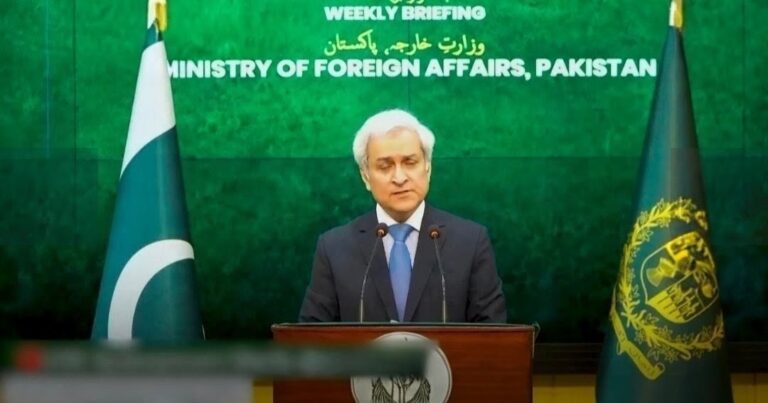
    Pakistan has confirmed that diplomatic negotiations between the United States and Iran remain active despite renewed military escalation across the Middle East, expressing hope that dialogue can prevent the conflict from spiraling into a wider regional crisis. Speaking at a weekly briefing in Islamabad, Foreign Office spokesperson Tahir Andrabi said negotiations were continuing with a particular focus on reducing tensions and addressing the growing dispute over the strategically vital Strait of Hormuz. “Negotiations between parties are ongoing, particularly on the Strait of Hormuz and to de-escalate,” Andrabi told reporters, emphasizing that Pakistan remains committed to promoting a peaceful resolution to the conflict. The spokesperson said Islamabad is working closely with all relevant parties to revive the Islamabad Memorandum of Understanding (MoU), an agreement aimed at creating a framework for technical discussions and confidence-building measures between Washington and Tehran. “We are doing our utmost to bring all parties back to the Islamabad MoU,” Andrabi said, adding that Pakistan is encouraging both sides to honor their commitments and continue technical-level talks despite recent hostilities. His remarks come as the region faces one of its most dangerous security crises in recent years. The United States has resumed large-scale military strikes on Iranian targets following missile attacks on American forces, while Iran has vowed further retaliation. The escalating conflict has raised fears over the security of the Strait of Hormuz, a key global shipping route through which a significant share of the world’s oil and liquefied natural gas supplies passes. Pakistan has consistently advocated diplomacy over military confrontation, warning that continued violence could threaten regional stability, disrupt global energy markets and increase the risk of a broader conflict involving additional countries. Analysts say Pakistan’s role as a mediator has become increasingly significant as communication channels between Washington and Tehran remain strained. While no breakthrough has yet been announced, officials believe sustained dialogue offers the best chance of easing tensions and preventing further escalation. With fighting continuing across the region, Islamabad has reiterated its support for peaceful negotiations, urging all parties to exercise restraint and prioritize diplomacy over confrontation in order to safeguard regional peace and international energy security.

Leave a Reply

Your email address will not be published. Required fields are marked *