salman rushdie attacker
|

Salman Rushdie attacker convicted on US federal terrorism charges

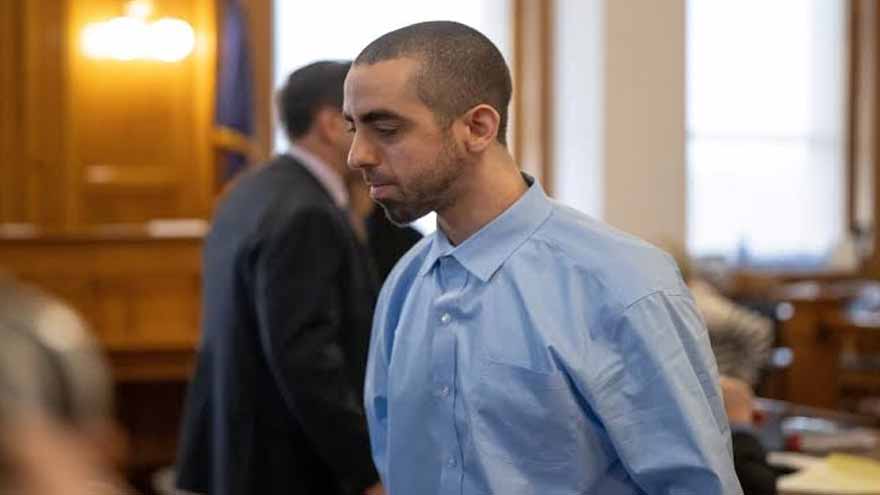
The man who stabbed renowned author Salman Rushdie during a public event in 2022 has been found guilty on multiple federal terrorism charges in the United States. The verdict marks another major legal milestone in a case that drew worldwide attention because of the long standing threats against the celebrated novelist.

A federal jury in Buffalo, New York, convicted 28 year old Hadi Matar after only a few hours of deliberation. Prosecutors argued that the attack was motivated by decades old calls for Rushdie’s death following the publication of his controversial novel The Satanic Verses. Matar was found guilty of attempting to provide material support to Hezbollah, engaging in terrorism across national borders, and providing support to terrorists.

Matar is already serving a 25 year prison sentence after being convicted in a New York state court for attempted murder. Following the federal conviction, he now faces the possibility of life imprisonment when he is sentenced in November.

The federal trial began last week and included testimony from Rushdie himself. The 79 year old author described the attack that left him with life changing injuries. The defence did not call Matar or any other witnesses to testify during the proceedings.

Rushdie has lived under threat since the publication of The Satanic Verses in 1988. The novel sparked widespread controversy in parts of the Muslim world, leading Iran’s then Supreme Leader Ayatollah Ruhollah Khomeini to issue a religious decree in 1989 calling for the author’s death. The fatwa also targeted people involved in publishing the book and led to violent attacks over the following years, including the killing of Japanese translator Hitoshi Igarashi in 1991.

Although the Iranian government later distanced itself from the fatwa, US prosecutors said it continued to receive support from Hezbollah leaders and was reaffirmed by Iran’s current Supreme Leader, Ayatollah Ali Khamenei.

During the trial, prosecutors presented evidence showing that Matar spent more than a year studying the fatwa before carrying out the attack. They argued that he deliberately planned the assault to carry out the religious decree against Rushdie.

The attack took place on August 12, 2022, while Rushdie was preparing to speak at the Chautauqua Institution, an educational and cultural centre in New York state. Matar rushed onto the stage and repeatedly stabbed the author before audience members intervened and restrained him until police arrived.

Rushdie suffered multiple stab wounds to his head, neck, chest, and hand. The injuries permanently blinded him in one eye and caused severe damage to several internal organs. Another man on stage was also injured during the incident.

Born in the United States and holding Lebanese citizenship, Matar had been living in New Jersey before the attack. His conviction in state court earlier resulted in a 25 year prison sentence, but the federal terrorism charges carry significantly harsher penalties.

Rushdie, who was born in India and later became a British and American citizen, spent many years under police protection after the fatwa was issued. He lived largely in hiding throughout the 1990s before gradually returning to public life and eventually settling in New York City.

The latest verdict closes another chapter in one of the most widely followed literary and terrorism related cases in recent history. It also reinforces the long lasting impact of threats that began nearly four decades ago over a work of fiction and continued to influence events many years later.
Similar Posts

  • |

    Spanish minister bids for top UN labour agency post amid US funding crisis

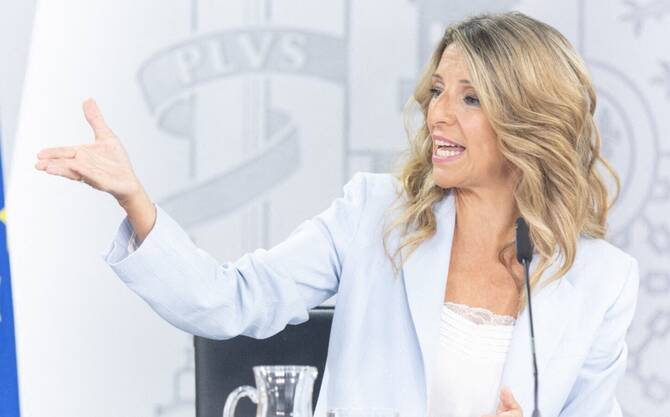
    Spain has officially nominated its Labour Minister and Second Deputy Prime Minister, Yolanda Díaz, to run for Director-General of the International Labour Organization (ILO). If elected, Díaz would become the first woman to lead the Geneva-based UN agency in its 107-year history. Díaz is set to challenge incumbent Director-General Gilbert Houngbo of Togo, who took office in 2022 as the first African leader of the ILO and is seeking re-election. Her candidacy comes as the agency faces a severe liquidity crisis, exacerbated by unpaid contributions from member states, most notably the United States, which owes 257 million Swiss francs ($315 million) in arrears and has outlined plans to halt funding for the upcoming fiscal year. The nomination highlights her domestic record of labor reforms and social dialogue in Spain, though analysts note her candidacy faces a diplomatic balancing act between securing European support and risking friction with the African diplomatic bloc. The election will take place in November 2026, with the winner’s five-year term beginning in October 2027.

  • | | |

    Health minister offers accountability after PIMS t…

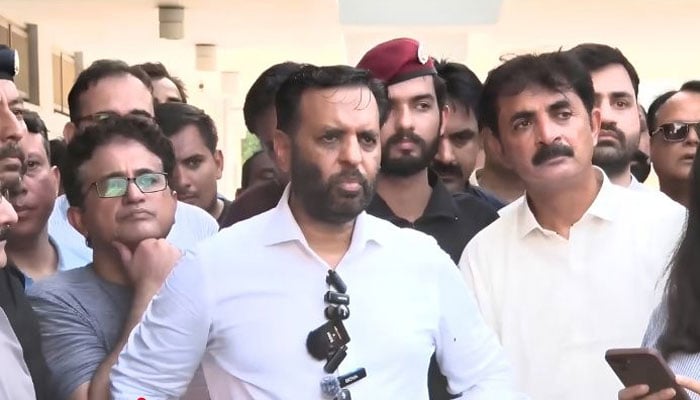
    ISLAMABAD: Federal Health Minister Mustafa Kamal has offered himself for accountability following the deaths of newborns in a fire at the Pakistan Institute of Medical Sciences (PIMS), as criticism over the tragedy intensified. Speaking to the media outside PIMS on Wednesday, Kamal said he had placed himself before Prime Minister Shehbaz Sharif for accountability and would accept whatever decision the premier makes. “I have presented myself before Prime Minister Shehbaz Sharif for accountability. He is my boss and will decide my fate,” the minister said. Kamal also assured that action would be taken against anyone found responsible for negligence or any other mistake linked to the incident. The minister said preliminary CCTV footage had provided investigators with an indication of how the fire started. According to him, the footage showed a spark near an air conditioner at around 6:38am. People were seen leaving the area shortly afterwards. He said the presence of oxygen in the ward caused the flames to intensify rapidly. Kamal maintained that the government would not conceal any information related to the incident and that those responsible would be dealt with according to the findings of the investigation. The minister faced protests and angry reactions from people gathered outside the hospital while speaking to reporters. The situation became tense, forcing him to leave the premises. The tragedy has triggered demands for a transparent investigation and accountability of all officials and staff whose actions or omissions may have contributed to the deaths. Pakistan Peoples Party (PPP) Senator Sherry Rehman also called for the health minister’s resignation, saying serious questions had emerged about emergency arrangements at the hospital. Rehman claimed that the emergency department’s door was locked after the fire and that people had to break windows to gain access. She also questioned the reported absence of doctors at the scene. The PPP senator said her party was not seeking to politicise the tragedy but had a responsibility to ask questions about the circumstances that led to the loss of newborn lives. “The minister responsible should resign,” Rehman said. Another senior PPP leader, Nayer Hussain Bokhari, said the Health Ministry must answer questions surrounding the incident. He argued that holding only a single secretary responsible would not be sufficient if the investigation identifies wider administrative failures. The incident has placed renewed focus on safety measures, emergency preparedness and accountability at major public hospitals. Authorities are expected to determine the exact cause of the fire and establish whether negligence, equipment failure or administrative shortcomings contributed to the deaths.

  • | |

    Mufti Muneeb-ur-Rehman criticizes Pakistan’s…

      Renowned Islamic scholar Mufti Muneeb-ur-Rehman has strongly criticized Pakistan’s judicial and economic systems, stating that a justice system that fails to deliver justice even after forty years cannot be considered a true system of justice but rather a system of oppression. He made these remarks while addressing a public ceremony in Karachi, where he spoke about the country’s pressing legal and economic challenges. During his speech, Mufti Muneeb-ur-Rehman expressed concern over the prolonged delays in the judicial process. He argued that when people have to wait decades for justice, the very purpose of the legal system is defeated. According to him, justice delayed for such an extended period effectively becomes justice denied, leaving citizens frustrated and deprived of their fundamental rights. He emphasized that a judicial system should provide timely and fair decisions so that public confidence in the rule of law remains intact. The scholar also urged those in positions of authority to focus on resolving Pakistan’s domestic problems instead of concentrating solely on international issues. He remarked that while government leaders often discuss and engage with global affairs, the country’s internal challenges require immediate attention. He specifically called upon policymakers and those holding power to prioritize the welfare of the people by addressing the nation’s economic difficulties. One of the major issues highlighted by Mufti Muneeb-ur-Rehman was the problem of Independent Power Producers (IPPs). He appealed to the government to find a practical and sustainable solution to the IPP issue, which has been widely debated due to its impact on electricity prices and the country’s financial stability. According to him, resolving this matter would help reduce the economic burden on both the government and ordinary citizens. Speaking about the national economy, Mufti Muneeb-ur-Rehman painted a concerning picture of Pakistan’s financial condition. He stated that after distributing the constitutionally allocated shares to the provinces and making payments on interest obligations, the federal government is left with very limited financial resources. This situation, he suggested, reflects the severity of the country’s fiscal challenges and highlights the urgent need for comprehensive economic reforms. He stressed that policymakers should adopt measures that promote financial stability, reduce unnecessary expenditures, and improve revenue generation without placing excessive burdens on the public. The event also featured an address by Maulana Bashir Farooqi, who criticized the government’s approach toward eliminating the interest-based financial system. He argued that the authorities are not demonstrating sufficient seriousness in transitioning toward an Islamic banking framework. According to him, meaningful reforms require not only policy changes but also practical steps to prepare financial institutions for such a transformation. Maulana Bashir Farooqi announced that his organization is willing to provide training for approximately 100,000 employees working in conventional banks. He explained that this initiative aims to equip banking professionals with the knowledge and skills necessary to operate within an interest-free Islamic banking system if the government decides to pursue such reforms. He maintained that the availability of trained professionals would facilitate a smoother transition and strengthen the implementation of Islamic financial principles in the country’s banking sector. The speeches delivered at the Karachi ceremony underscored concerns regarding Pakistan’s judicial efficiency, economic management, and financial policies. Both religious leaders called on the government to prioritize domestic reforms, strengthen public institutions, address long-standing economic challenges, and work toward a system that better serves the interests of the people.

  • |

    Xi backs Brazil against foreign interference in call with Lula

    Chinese President Xi Jinping expressed support for Brazil’s efforts to protect its sovereignty and resist foreign interference during a phone conversation with Brazilian President Luiz Inacio Lula da Silva, according to Chinese state media. The discussion took place just months before Brazil’s closely watched presidential election and against the backdrop of growing trade and diplomatic tensions with the United States. According to China’s Xinhua news agency, Xi praised Brazil’s role on the international stage and said Beijing values the country’s influence in global affairs. He stated that China supports Brazil in defending its independence, rejecting outside interference, and contributing to regional and international peace and stability. The phone call comes less than three months before Brazilians head to the polls in an election expected to be highly competitive. President Lula is seeking another term and faces a challenge from right wing candidate Flavio Bolsonaro, the son of former president Jair Bolsonaro. The Brazilian presidency said the two leaders also discussed strengthening economic cooperation. Both sides agreed on the importance of accelerating negotiations for a trade agreement between China and Mercosur, the South American trade bloc that includes Brazil, Argentina, Paraguay, and Uruguay. Such an agreement could expand trade opportunities between the region and the world’s second largest economy. During the conversation, which lasted more than an hour, Lula reaffirmed his commitment to expanding Brazil’s international trade network. He said his government is working to diversify export markets and reduce dependence on a limited number of trading partners, particularly as Brazil faces increased tariff pressure from the United States. Relations between Brasilia and Washington have become more strained in recent months. The United States introduced two additional rounds of tariffs on a range of Brazilian products this month, following a significant tariff increase imposed last year. The measures were linked to political tensions surrounding the legal case that resulted in former president Jair Bolsonaro being sentenced to prison over an alleged coup plot. Lula has strongly criticized the tariffs, arguing that they amount to political pressure during an election year. He has accused Washington of attempting to influence Brazil’s domestic affairs through economic measures, an allegation the United States has rejected. Diplomatic tensions have also surfaced over election related issues. According to diplomatic sources, Brazil recently refused entry visas for two American officials who planned to visit the country’s election authorities ahead of the October vote. The move reflected growing sensitivity within the Brazilian government over foreign involvement in electoral matters. Meanwhile, Flavio Bolsonaro has continued to question the reliability of Brazil’s electronic voting system despite repeated assurances from election officials that it is secure. His claims have echoed similar allegations made by US President Donald Trump regarding American elections, although no credible evidence has supported those accusations. While the Chinese government highlighted Xi’s support for Brazil in resisting external interference, the official statement released by the Brazilian presidency did not specifically mention that part of the discussion. Instead, it focused on economic cooperation and the importance of strengthening trade ties between Brazil, China, and the Mercosur bloc. The conversation underscores the increasingly close relationship between Beijing and Brasilia at a time when Brazil is balancing political challenges at home with shifting economic and diplomatic dynamics on the global stage.

  • | |

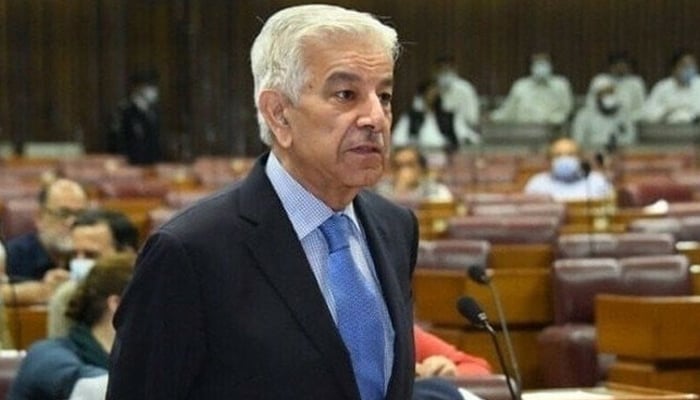
    Imran Khan is healthy, Khawaja Asif declares

    Defence Minister Khawaja Asif has said that former prime minister and PTI founder Imran Khan is in good health, adding that details of his medical condition will eventually be made public. Speaking during a session of the National Assembly, Asif said Imran’s sister had met him and could explain the former prime minister’s current health condition. He said Imran’s eye problem had gradually improved. However, he added that Imran was experiencing a minor blood pressure issue and was being given medication for it. Asif said it was inappropriate to turn Imran’s health into a political issue or give the matter a political colour. Referring to his own experience in prison, the defence minister said he had once been told that he required surgery for a hernia while he was incarcerated. He claimed that Imran had demanded a video at the time to verify whether the surgery was actually taking place. Asif said he still had that video. He added that Imran’s medical report should be reviewed by everyone concerned. “I say on oath that there is no serious issue with Imran Khan,” he said. The defence minister also referred to former prime minister Nawaz Sharif, saying he had undergone two surgeries around two months ago. Despite this, Asif said, discussions about Sharif’s platelet count still continued. Asif accused Imran of previously mocking Nawaz Sharif’s health problems, particularly his platelet count. He said there were hundreds of videos showing Imran making remarks about the issue. He further claimed that Imran had also mocked illnesses during rallies held in the United States, arguing that he had failed to recognise at the time that illness was a genuine matter. The defence minister also recalled the imprisonment of political leaders in the past. He said opposition leaders had been jailed while their colleagues continued attending parliamentary sessions without making threats or linking government business to their release.

Leave a Reply

Your email address will not be published. Required fields are marked *