senate questions ppra

Senate questions PPRA over ePADS security and transparency

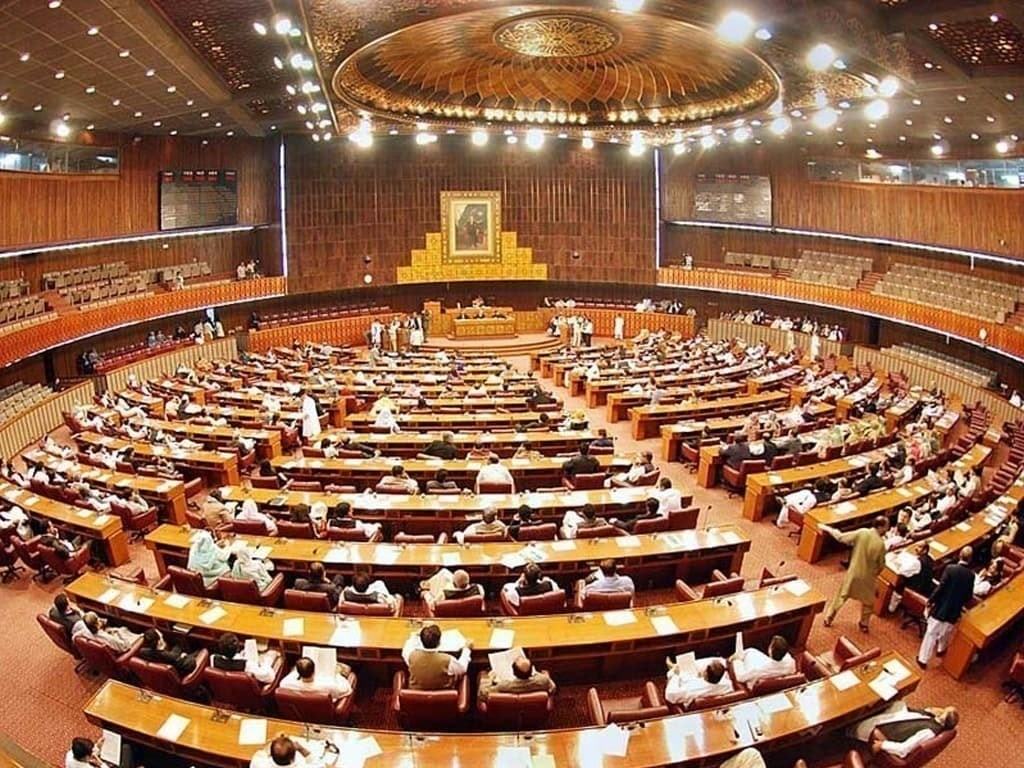
Islamabad: The Public Procurement Regulatory Authority (PPRA) came under Senate scrutiny as lawmakers raised concerns over transparency, cybersecurity and accountability in Pakistan’s public procurement system.

During a meeting of the Senate Standing Committee on Cabinet Secretariat, members questioned whether the country’s new digital procurement system was strong enough to protect government contracts, public money and sensitive information.

The committee, chaired by Senator Rana Mahmood ul Hassan, reviewed PPRA’s performance and examined reforms aimed at improving how government departments purchase goods and services.

The Managing Director of PPRA informed the committee that the Electronic Pakistan Acquisition and Disposal System, known as ePADS 2.0, has been introduced to make government procurement more transparent and reduce the chances of irregularities.

Officials said the digital system now covers the complete procurement process, starting from planning until the final award of contracts.

The committee was informed that Standard Bidding Documents have been added to the system to ensure all government departments follow the same procedures and prevent unauthorised changes in tender documents.

Officials also informed lawmakers that payments made outside the ePADS system are no longer accepted, making the process more controlled and financially accountable. However, committee members raised questions about the electronic procurement platform’s cybersecurity, data protection, and overall safety.

Lawmakers questioned how the system protects sensitive procurement information and whether Pakistan’s digital procurement framework matches international standards. The committee directed PPRA to provide a detailed briefing on the cybersecurity measures, encryption methods and data protection systems used in ePADS.

Members also asked PPRA to compare Pakistan’s cybersecurity practices with leading international procurement systems to identify areas where improvements are needed.

The committee stressed that a digital system can only succeed if it remains secure, reliable and protected from possible cyber threats. During the meeting, members also questioned the difference between manual and electronic procurement, the time required to complete procurement processes and the method used to select successful bidders.

PPRA officials explained that contracts are awarded through the Most Advantageous Bid evaluation system. Officials said the relevant government departments decide technical requirements and qualification standards according to procurement rules.

The committee was informed that complaints related to procurement decisions are handled through a formal grievance system before parties can approach courts or other legal forums.

The committee also discussed government procurement during emergency situations, especially the purchase of fuel and essential goods during changing conditions in the Middle East.

PPRA officials clarified that no special exemption was provided for emergency purchases. They informed the committee that existing Public Procurement Rule 21A already provides a legal method for urgent procurement during supply shortages or emergency requirements.

The committee also reviewed draft regulations for the disposal of public assets. Officials informed members that the Disposal of Public Assets Regulations 2026 have been prepared according to the updated procurement framework and ePADS requirements.

A special disposal module has also been developed within ePADS to ensure public assets are disposed of through a transparent process. The committee directed PPRA to continue improving procurement standards, expand vendor training across Pakistan and strengthen the overall digital procurement system.

Members said better procurement management is important because government spending directly affects public services and national development. The committee also expressed concern over the Islamabad Club Administrator’s absence during the meeting despite the session being held at the club.

Members recommended that Islamabad Club elections should be conducted according to rules and decided to raise the matter with the Prime Minister’s Office. The committee further expressed dissatisfaction over the National Vocational and Technical Training Commission’s failure to follow previous committee directives.

Members recommended referring the matter to the Privileges Committee and informing the Prime Minister about the issue.
Similar Posts

  • | |

    Sharjeel Memon turns to NCCIA over social media al…

    KARACHI: Senior Sindh Minister Sharjeel Inam Memon has approached the National Cyber Crime Investigation Agency (NCCIA) over what he described as a social media campaign aimed at damaging his reputation and that of his son, Rawal Memon. Memon filed a written complaint with the cybercrime agency on August 9, seeking an investigation into what he termed false, fabricated and malicious claims circulating online. The controversy centres on social media allegations linking Memon to a guesthouse in Gulistan-e-Jauhar, Karachi, where Mir Ali Raza was allegedly tortured and killed. Posts circulating on social media claimed that the property was owned by the Sindh minister. Taking notice of the allegations, Memon urged the NCCIA to investigate the matter and determine the facts behind the claims. He also expressed his willingness to cooperate fully with the authorities during the investigation. The minister’s complaint comes as scrutiny surrounding the Mir Ali Raza case continues to generate discussion on social media, with competing claims being circulated online.

  • | |

    Barrister Saif calls for new provinces, governance…

    PESHAWAR: Former Khyber Pakhtunkhwa Information Adviser Barrister Muhammad Ali Saif has called for the creation of additional administrative provinces, saying Pakistan needs major structural reforms to improve governance and public service delivery. In a statement issued on Sunday, Saif said the proposal to establish new provinces should be taken seriously, arguing that the existing administrative framework is no longer capable of addressing the growing needs of the population efficiently. He said discussions alone would not bring meaningful change and urged the federal government to move beyond proposals by initiating practical measures for administrative restructuring. According to him, governance can only improve if reforms are implemented instead of remaining limited to public debate. Saif maintained that decision-making authority is concentrated within a small section of the bureaucracy, which limits administrative efficiency and delays the resolution of public issues. He stressed that a more balanced distribution of powers would strengthen governance and improve accountability. He said Pakistan requires comprehensive administrative reforms that would transfer greater authority to lower levels of government. Establishing new provinces, he added, would bring the government closer to the people, improve access to public services and ensure faster responses to local challenges. The former adviser also highlighted the importance of an effective local government system, saying empowered local bodies are essential for addressing citizens’ problems at the grassroots level. He argued that decentralisation and stronger local institutions would enhance transparency, improve service delivery and promote sustainable development across the country.

  • | |

    US waives $20,000 visa bond for Pakistanis

    Pakistan has been excluded from the United States’ newly permanent visa bond programme, meaning Pakistani applicants will not be required to deposit a refundable financial guarantee of up to $20,000 when applying for certain US visitor visas. The United States has officially made its 2025 Visa Bond Pilot Program a permanent policy. Under the programme, nationals of selected countries applying for business or tourist visas must provide a refundable financial bond ranging from $10,000 to $20,000 as part of the visa application process. According to international reports, the revised policy increases the maximum refundable bond amount from $15,000 to $20,000 for eligible applicants from countries included in the programme. The list reportedly includes around 50 countries, including Bangladesh, Nepal, and several African nations. Pakistan is not included in the list of countries subject to the visa bond requirement. Afghanistan, India, and Iran are also excluded from the programme. As a result, Pakistani citizens applying for US visitor visas will continue to follow the standard visa application process without the additional refundable financial guarantee required under the permanent visa bond policy.

  • | |

    Monsoon fury raises flood risks across Pakistan, N…

    ISLAMABAD: Pakistan’s disaster management authorities have issued a fresh flood alert as intensified monsoon rains continue to push water levels higher in major rivers, raising concerns over flooding in several parts of the country. The National Disaster Management Authority (NDMA) said river flows are expected to increase significantly between August 2 and 4, urging citizens to avoid unnecessary travel to vulnerable areas and remain alert to changing weather conditions. According to the National Emergencies Operation Centre (NEOC), high flooding has been observed in the Lehri River at Head Gogi, while Nullah Palkhu near Wazirabad is experiencing medium-level flooding. The Indus River is currently witnessing low-level flooding at Kalabagh, Chashma, Guddu and Sukkur, while similar conditions have been reported at Head Nari on the Nari River. The NDMA warned that the Chenab River is likely to experience high water flows at Marala, with low to medium flooding anticipated at Khanki and Qadirabad. Water levels are also expected to rise in the Jhelum, Ravi and Kabul rivers and their tributaries as monsoon activity intensifies. Officials cautioned that streams connected to the Jhelum, Chenab and Ravi rivers could swell to medium or high levels. Meanwhile, water flows in the Ravi and Sutlej rivers will largely depend on releases from reservoirs across the border. The authority also expressed concern over the possibility of flash floods in the hill torrents of Dera Ghazi Khan and Rajanpur, as well as seasonal streams in central and southern Khyber Pakhtunkhwa and northern Balochistan. In addition, urban flooding and waterlogging remain a serious threat in several cities, including Rawalpindi, Jhelum, Gujranwala, Lahore, Faisalabad, Peshawar, Mardan, Nowshera, Hyderabad, Badin, Thatta and other parts of Sindh due to continued heavy rainfall. The NDMA advised residents to avoid crossing flooded roads and waterways, monitor weather updates before travelling, and follow safety instructions issued by local authorities. It also encouraged the public to use the official Pak NDMA Disaster Alert mobile application for real-time weather warnings and emergency information. Separately, the Prime Minister’s Emergency Response Committee (ERC) held its 10th consecutive daily review meeting to assess the country’s monsoon situation. The meeting, chaired virtually by Planning Minister Prof Ahsan Iqbal, brought together federal ministries, provincial governments, disaster management authorities and senior administrative officials. During the briefing, the NDMA presented the latest updates on weather conditions, casualties, infrastructure damage, rescue operations and rehabilitation efforts. Officials informed the committee that deputy commissioners in all high-risk districts had already been directed to remain fully prepared for any emergency. The committee was told that recent heavy rains had caused flooding in multiple regions, with coordinated rescue and relief operations continuing through federal, provincial and district authorities. Weather experts also forecast more rainfall across northern and central Pakistan in the coming days, while isolated showers are expected in southeastern Sindh. The NDMA highlighted that relief activities are being carried out with the support of both national and international humanitarian organisations. Officials further noted that most monsoon-related fatalities this season resulted from the collapse of unsafe and poorly constructed buildings, underscoring the need for stricter enforcement of building safety regulations and greater public awareness. The ERC commended the efforts of government institutions, provincial administrations, district authorities, the armed forces and rescue teams for their ongoing response. It directed all relevant departments to strengthen coordination, maintain maximum preparedness, accelerate relief and rehabilitation work, and take preventive measures to minimise the impact of future weather emergencies.

  • | |

    Punjab University Town-III project faces fresh scr…

    LAHORE: A Pakistan Muslim League-Nawaz (PML-N) lawmaker has submitted an adjournment motion in the Punjab Assembly, calling for a comprehensive investigation into alleged financial and administrative irregularities surrounding the Punjab University Town-III housing scheme. According to the motion submitted by MPA Raja Shaukat Aziz, the housing project was allegedly launched in 2017 by a Punjab University professor without fulfilling the required legal and regulatory formalities. It further claims that the professor entered into a development agreement with his own brother, who was appointed as the project’s developer despite the alleged absence of due legal procedures. The motion alleges that payments amounting to Rs2.70 billion were made to the developer. However, despite the release of funds, no significant development work was carried out at the project site, and plot holders have yet to receive possession of their plots. The document states that nearly 900 affected families have been waiting for justice for the past nine years, claiming they have suffered financial losses and uncertainty due to the stalled housing scheme. It further alleges that, despite repeated complaints, no effective legal action has been taken against those purportedly responsible. Seeking legislative intervention, Raja Shaukat Aziz has urged the Punjab Assembly to establish a special committee to investigate the Town-III project, determine responsibility for the alleged irregularities, and ensure appropriate legal action against those found accountable. The Punjab University Town-III housing scheme has previously remained under public and academic scrutiny over allegations of administrative and financial mismanagement. The latest move is expected to renew debate over accountability and transparency in public housing projects.

  • | |

    Flood defences shield Gujrat from monsoon

    The Water and Sanitation Agency (WASA) has credited pre-monsoon flood protection measures with preventing urban flooding in Gujrat during the recent spell of heavy rains. Managing Director WASA, Kashan Hafeez, said the city remained safe from potential flooding because of advance planning and the timely completion of key drainage projects before the arrival of the monsoon season. He said a three-kilometre-long protective drain constructed along Mehsam Mor and Fatehpur Road proved highly effective in managing the flow of rainwater. According to him, the project successfully diverted excess water away from residential and commercial areas, significantly reducing the risk of flooding. Kashan Hafeez said rainwater was redirected toward the Halsey Nullah through the newly developed drainage network. By channeling water into natural waterways, authorities were able to prevent water from accumulating in densely populated neighborhoods and major roads. He added that the drainage system functioned as planned despite heavy rainfall, allowing rainwater to flow smoothly without causing widespread disruption to daily life or damage to infrastructure. The WASA chief said the protective drainage network was developed under a Rs2 billion infrastructure project aimed at strengthening Gujrat’s flood management system. As part of the initiative, four major protective drains were constructed to improve stormwater disposal and enhance the city’s resilience against seasonal flooding. He said the successful performance of the project demonstrates the importance of proactive planning and investment in urban infrastructure. According to WASA, the newly built drainage system will continue to play a vital role in protecting Gujrat from future monsoon-related flooding and ensuring the safety of residents during periods of heavy rainfall.

Leave a Reply

Your email address will not be published. Required fields are marked *