sharjeel memon turns
| |

Sharjeel Memon turns to NCCIA over social media al…

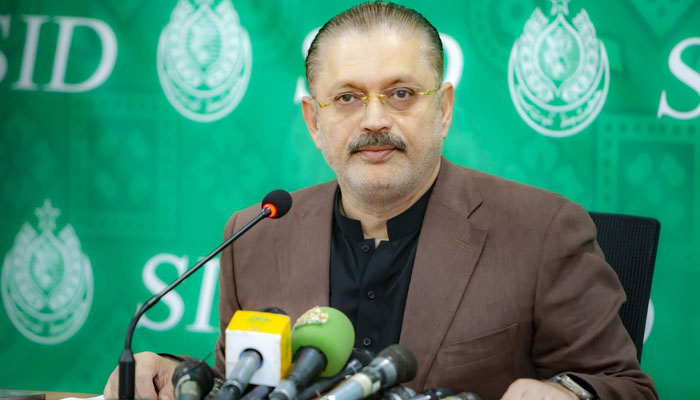
KARACHI: Senior Sindh Minister Sharjeel Inam Memon has approached the National Cyber Crime Investigation Agency (NCCIA) over what he described as a social media campaign aimed at damaging his reputation and that of his son, Rawal Memon.

Memon filed a written complaint with the cybercrime agency on August 9, seeking an investigation into what he termed false, fabricated and malicious claims circulating online.

The controversy centres on social media allegations linking Memon to a guesthouse in Gulistan-e-Jauhar, Karachi, where Mir Ali Raza was allegedly tortured and killed. Posts circulating on social media claimed that the property was owned by the Sindh minister.

Taking notice of the allegations, Memon urged the NCCIA to investigate the matter and determine the facts behind the claims. He also expressed his willingness to cooperate fully with the authorities during the investigation.

The minister’s complaint comes as scrutiny surrounding the Mir Ali Raza case continues to generate discussion on social media, with competing claims being circulated online.

Similar Posts

  • | |

    FIFA pushes ahead with controversial commercial investment plan despite opposition from UEFA and Concacaf

    FIFA has insisted that “nobody is selling football” whilst reaffirming its intention to proceed with a plan to sell minority stakes in its commercial operations to private investors, despite a fierce backlash from major regional governing bodies. UEFA voted to boycott future World Cups if the initiative moves forward, whilst Concacaf confirmed its 41 member associations also rejected the proposal put forward by FIFA president Gianni Infantino. Under the proposal, FIFA intends to establish a new commercial subsidiary, FIFA Forward Enterprise (FFE), to manage the commercial rights of major tournaments including the men’s World Cup. Private equity firm Thrive Eternal, founded by venture capitalist Joshua Kushner, is expected to lead the investor group purchasing a minority stake in the new entity, which carries an initial valuation of $20 billion. To secure the necessary 106 votes from FIFA’s 211 member associations, Infantino has offered an immediate $20 million payout to federations that back the proposal before a 19 September deadline. FIFA maintains the initiative will significantly increase development funding for smaller footballing nations without compromising the sport’s governance.

  • |

    FIA arrests two in Rs533m gold loan fraud case

    The Federal Investigation Agency (FIA) has arrested a bank cashier and an approved goldsmith in connection with an alleged fraud worth more than Rs533 million at a bank branch in Faisalabad district. According to the FIA, the alleged financial irregularities surfaced during an internal inspection of the bank’s gold financing scheme at its Mamoon Kanjan branch. Investigators discovered that 17 bags containing pledged gold had gone missing, while several other cases involved gold that turned out to be fake, underweight or otherwise failed to match the details recorded in the bank’s loan documents. The investigation found irregularities in 107 gold loan accounts, raising concerns about the handling and verification of gold pledged against loans. The bank estimates that the alleged fraud caused financial losses of more than Rs533.62 million. The FIA has registered a case against goldsmith Tahir Mahmood, cashier Muhammad Arshad and another suspect, Abdul Razzaq. Officials have arrested the cashier and the approved goldsmith as part of the ongoing investigation. Investigators are now examining the records of the affected loan accounts and the procedures followed while assessing and approving the pledged gold. The FIA said it would determine the involvement of other individuals during the course of the investigation. Authorities are also expected to examine whether the suspects acted alone or worked with others to remove pledged gold, substitute genuine gold with counterfeit or lower-weight items, and facilitate loans against inadequate collateral. The case highlights serious concerns about oversight and verification procedures within gold financing schemes, where banks provide loans against gold deposited as security. The FIA said further action would follow as investigators establish the full scope of the alleged fraud and identify any additional people involved.

  • PAAM opposes DRAP’s proposed alternative medicine rules 2026

    LAHORE: A covert gambit by the Drug Regulatory Authority of Pakistan (DRAP) to impose arbitrary regulations on the alternative medicine sector has been laid bare, sparking widespread outrage across the pharmaceutical industry. ​The regulatory body is accused of using an upcoming ‘Pak Health Expo’, organized by an association at a local hotel in Islamabad on August 12–13, as a smokescreen to push through controversial policies. Reliable sources revealed that the final draft of the highly contentious “Alternative Medicines Rules 2026” has already been finalized behind closed doors, completely bypassing key industry stakeholders. According to these sources, the draft has already been forwarded to the Law and Justice Division for formal vetting. Against this backdrop, the industry has termed DRAP’s sudden announcement of a “consultative session” at the expo issued on a mere 48-hour notice as a farcical exercise in paperwork, designed solely to create a false record of stakeholder consensus. Insiders further alleged that top DRAP officials had been cold-calling homeopathic and Unani pharmaceutical firms over the past several days, pressuring them to purchase expensive stalls worth hundreds of thousands of rupees at the private event. Following a widespread boycott of the expo by established manufacturers, DRAP reportedly engineered the controversial regulatory session within the event to corner the industry into participation. Reacting strongly to the development, Kashif Aslam Malik, Chairman of the Pakistan Association of Alternative Medicine (PAAM), categorically rejected DRAP’s maneuvers, stating that the leadership had anticipated the bureaucratic trap. ​”When the final draft has already been sent to the Law and Justice Division for vetting, this sudden drama of a consultative session at a private venue is nothing but an absolute mockery,” Malik questioned while speaking to journalists. The PAAM chairman emphasized that leaning on private event platforms to legitimize sensitive, sector-defining legislation is clear evidence of regulatory bad faith. He maintained that if DRAP were genuinely sincere about consultation, it would have convened an official, independent roundtable with all veteran associations where the actual draft could be scrutinized transparently. The PAAM leadership has announced that any back-door attempt to benefit a favored private group or to bulldoze industry-hostile clauses under the guise of an expo crowd will be resisted tooth and nail. Kashif Aslam ​Malik reiterated that this persistent bureaucratic high-handedness and regulatory blackmail are precisely why PAAM continues to spearhead the movement for a dedicated, independent federal ministry for alternative medicine. The association demands that policies governing traditional and alternative health sciences be framed by domain experts who understand the discipline, rather than traditional regulators.

  • |

    India alarmed by Pakistan-Saudi-Türkiye alliance

    The defence agreement between Pakistan, Saudi Arabia and Türkiye has emerged as a major strategic concern for India. The three countries signed the Makkah Joint Defence Agreement on August 7. Under the pact, an armed attack against any one of the three countries would be treated as an attack against all three. The agreement has attracted significant attention in New Delhi. Indian analysts are assessing its possible impact on the regional balance of power. An Indian media analysis recalled comments made by Indian Army Deputy Chief Lieutenant General Rahul R Singh in 2025. He had said that during the military confrontation between India and Pakistan in May, India faced several forms of support for Pakistan. The analysis claimed that Pakistan was directly involved in the conflict. It also alleged that China provided satellite information to Pakistan. Türkiye was accused of providing military assistance to Pakistan. The assistance reportedly included drones and other defence equipment. Saudi Arabia’s participation has now added another dimension to India’s concerns. Indian analysts fear that Riyadh could support Pakistan if another armed conflict breaks out between India and Pakistan. The concern comes despite India’s strong relations with Saudi Arabia. The two countries have extensive economic and strategic ties. India and Saudi Arabia cooperate in oil, trade, investment, security and cultural affairs. Their bilateral trade is estimated at around $43 billion. Saudi Arabia also remains an important supplier of crude oil to India. It reportedly meets around 14% of India’s crude oil requirements. Pakistan and Saudi Arabia also have a long history of defence cooperation. Pakistan has provided military training to Saudi forces. Pakistani military personnel have also been deployed in Saudi Arabia at different times. The Indian analysis claimed that Pakistan sent around 8,000 military personnel and 16 JF-17 fighter jets to Saudi Arabia during 2026. It also referred to reports about possible Pakistani drone support and Chinese-made air defence systems. These developments were reportedly linked to Saudi Arabia’s security concerns and attacks involving drones. The relationship between Pakistan and Türkiye has also expanded significantly in recent years. The two countries have increased cooperation in defence technology and military production. Pakistan has acquired Turkish-made warships and other defence equipment. Türkiye has also supported the modernisation of Pakistan’s naval capabilities. The two countries are also cooperating in the field of unmanned aerial systems. Pakistan has acquired Turkish Bayraktar Akıncı drones. Both sides have discussed and worked on expanding cooperation in drone technology. Türkiye’s KAAN stealth fighter has also attracted interest from Pakistan. However, no final purchase agreement for the aircraft has been confirmed.

  • | | |

    Pakistan stock exchange slides over 1,100 points 

      KARACHI: The Pakistan Stock Exchange (PSX) experienced a volatile trading session on Tuesday as strong gains recorded in early trading quickly disappeared, with the benchmark KSE-100 Index ending the day more than 1,100 points lower. Widespread profit-taking in major sectors, combined with cautious investor sentiment influenced by global market uncertainty, weighed heavily on the market. The benchmark KSE-100 Index initially climbed to an intraday high of 178,768.83 points, reflecting optimism among investors during the opening hours. However, the momentum proved short-lived as selling pressure gradually intensified across the market. By the close of trading, the index had fallen to 177,083.22 points, registering a decline of 1,116.80 points, or 0.63%, after touching an intraday low of 177,043.10 points. Market participants attributed the sharp reversal to extensive profit-booking in several heavyweight sectors. Commercial banks, oil and gas exploration companies, cement manufacturers, investment firms, and fertiliser stocks all came under significant selling pressure, dragging the benchmark index into negative territory despite its promising start. Investor confidence also remained subdued due to mixed developments in international financial markets. Asian stock markets traded without a clear direction as investors balanced encouraging corporate earnings from the United States against continuing geopolitical tensions. At the same time, international oil prices climbed by more than two percent as uncertainty surrounding diplomatic efforts to ease tensions between the United States and Iran persisted. Concerns over potential disruptions to global oil supplies through major shipping routes also contributed to market caution. Commenting on the day’s performance, Ahmed Sheraz, an equity trader at KTrade Securities, said the KSE-100 Index remained under pressure throughout the session because the market lacked fresh positive catalysts capable of sustaining its recent upward momentum. According to him, the absence of encouraging economic or corporate developments prompted investors to lock in profits after recent gains. Sheraz noted that selling activity was widespread across key sectors, particularly banking, oil and gas, cement, investment companies, and fertilisers. He added that despite Brent crude oil trading between $84 and $86 per barrel, investors largely preferred to stay on the sidelines while waiting for stronger economic indicators and corporate earnings announcements before making new investment decisions. Looking ahead, Sheraz believes the stock market is likely to remain highly sensitive to news flow. Upcoming corporate earnings reports, macroeconomic indicators, and foreign investment activity are expected to play a decisive role in shaping market sentiment over the coming weeks. He also identified the 176,500 to 177,000-point range as an important technical support level for the benchmark index, suggesting that maintaining this level could help stabilise the market. Trading activity slowed compared with the previous session. Total market volume declined to 711.2 million shares, down from 785.3 million shares recorded on Monday. Meanwhile, the total value of traded shares stood at Rs25.8 billion. A total of 495 companiesparticipated in trading during the session. Among them, 161 stocks closed higher, 295 stocks ended in negative territory, while 39 stocks remained unchanged. Pakistan International Bulk Terminal emerged as the session’s most actively traded stock, with approximately 89.8 million shares changing hands. The company’s share price declined by Rs0.34, closing the session at Rs16.74.

  • | |

    Babar Azam explains Pakistan’s defeat against We…

    Pakistan captain Babar Azam admitted his side’s batting collapse was the decisive factor in their 90‑run defeat to West Indies in the opening Test at the Brian Lara Cricket Academy. Chasing 211, Pakistan were bowled out for just 120, handing the hosts a 1‑0 lead in the two‑match series. Speaking after the match, Azam said Pakistan had shown fight over the first three days but failed to deliver with the bat when it mattered. “As a batting unit, we weren’t up to the mark. We kept losing wickets in quick succession, and our batting let us down,” he reflected. He dismissed suggestions that the pitch was to blame, noting that while the surface offered movement with the new ball, it remained playable. “West Indies bowled very well and used the conditions brilliantly. By the fourth day, the ball was keeping low and bouncing unevenly. We weren’t able to build partnerships, and that’s why we lost,” he explained. Azam highlighted the absence of opener Shan Masood, who is sidelined with a fractured finger, as a setback but stressed that other batters must take responsibility. “Yes, Shan’s injury affected us, but when you’re facing the new ball you have to survive the first 20 overs and build partnerships. We couldn’t do that,” he said. Despite the loss, Azam remained optimistic about Pakistan’s chances in the second Test. “We’ll sit together and discuss these things. While the result didn’t go our way, we can certainly address our mistakes. We’ll do our best to correct them and ensure we improve going forward,” he added.

Leave a Reply

Your email address will not be published. Required fields are marked *