sheheryar munawars shorts
|

Sheheryar Munawar’s shorts become a hot topic on social media

Sheheryar Munawar is among Pakistan’s most admired actors, known for his successful television dramas, films, and growing career as a producer. Over the years, he has built a strong reputation not only for his performances but also for taking on creative roles behind the camera. His latest production, Dar e Nijaat, recently premiered on ARY Digital, marking another important milestone in his journey in the entertainment industry. While celebrating the launch of the drama, the actor has also been enjoying a vacation in Spain alongside his wife, actress and model Maheen Siddiqui.

The couple has been sharing glimpses of their European getaway with fans through social media. Their travel pictures feature beautiful streets, scenic locations, and relaxed moments together as they explore Spain during the summer season. Like many parts of Europe, Spain has been experiencing extremely high temperatures, and both Sheheryar and Maheen have been dressing in lightweight summer outfits suitable for the weather.

One set of photos, however, quickly became the center of online discussion. In the pictures, Sheheryar was seen wearing a bright red short-sleeved shirt paired with matching shorts. While the actor appeared comfortable and confident in his outfit, the length of the shorts became a talking point among social media users.

Maheen Siddiqui appeared to appreciate her husband’s fashion choice, and the couple looked happy and relaxed during their holiday. Fans also admired the chemistry between the newlyweds, with many leaving heart emojis and positive comments praising their vacation photos.

However, not everyone reacted positively to Sheheryar’s look. Several social media users criticized the outfit, saying they felt the shorts were too short. Although many agreed that the actor looked stylish overall, they questioned his choice of clothing and shared mixed opinions in the comments section.

Some users wrote that the outfit did not suit his personality, while others expressed that they preferred seeing him in more traditional or classic styles. A few comments were particularly harsh, with one person writing that the shorts looked inappropriate. Another social media user questioned the fashion choice altogether, while others simply stated that they did not like the overall appearance.

Despite the criticism, many fans defended Sheheryar, pointing out that he was on vacation in Europe during peak summer and wearing clothing appropriate for the hot weather. Supporters argued that celebrities should be free to wear whatever makes them comfortable, especially while enjoying personal time away from work.

As is often the case with celebrity fashion, opinions remained divided. While some social media users criticized the outfit, others appreciated Sheheryar’s confidence and believed the discussion over his clothing was unnecessary. The debate once again highlighted how public figures often receive intense scrutiny over even the smallest aspects of their personal style.

For now, Sheheryar Munawar and Maheen Siddiqui continue to enjoy their holiday, sharing memorable moments with fans while balancing professional success and married life. The actor’s latest production continues to receive attention, proving that both his work and his personal life remain of great interest to audiences.

Similar Posts

  • |

    ‘Ramayana: Part One’ finally gets official release date

    The makers of one of the year’s most anticipated films have finally locked in a release date. Sony Pictures confirmed on X that the epic will hit theatres soon. Directed by Nitesh Tiwari, the film stars Ranbir Kapoor, Sai Pallavi and Yash in lead roles. It’s set to release on November 6, 2026, just two days ahead of Diwali. Produced by Namit Malhotra, the project is being released as a two-part film. While Part One arrives this November, Part Two isn’t expected until around Diwali 2027, though an exact date is yet to be revealed. Ranbir Kapoor recently opened up to The Direct about the difficulty of adapting the sprawling epic into just two films. He admitted that doing justice to the story in such a limited format wasn’t easy. The 43-year-old actor explained that a story as vast as Ramayana would typically need far more room to be told properly. He said condensing it into two parts posed a genuine creative challenge. Kapoor also pushed back against the idea that the story required reinterpretation for today’s audiences. He said the text has endured for roughly 4,000 years, offering timeless lessons on courage, forgiveness, compassion and the battle between good and evil. He added that Lord Rama has remained a moral guide for millions of people across generations. For Kapoor, the story’s themes still resonate strongly without needing modern updates. The film’s trailer, released in July, opens with Yash’s Ravana declaring dominion over all three worlds before triggering widespread chaos. That destruction prompts Lord Vishnu to take the form of Ram to restore balance. The story then follows Ram’s journey through childhood, battles with demons, and his marriage to Sita, before he is sent into 14 years of exile. Sita and Lakshman choose to accompany him during that period. The narrative eventually shifts toward Sita’s abduction by Ravana, setting up the climactic battle that follows. With the release date now locked, anticipation for the film’s arrival is only expected to grow.

  • | |

    Justice Babar Sattar vacates government residence …

      Justice Babar Sattar, who has been transferred to the Peshawar High Court, has vacated his official government residence in Islamabad following a notice issued by the registrar of the Islamabad High Court. According to sources, Justice Babar Sattar vacated the government residence two days ago after returning from his judicial holidays. The development came after the relevant authorities formally cancelled the allotment of the residence and directed him to vacate the property within the specified period. The Estate Office had cancelled the allotment of the house on July 3. Subsequently, the registrar of the Islamabad High Court issued a notice instructing Justice Babar Sattar to vacate the official residence within 30 days. Sources said that Justice Babar Sattar complied with the notice and vacated the residence after completing his judicial holidays. The house has now been cleared following the cancellation of its allotment. Justice Babar Sattar had been serving at the Islamabad High Court before being transferred to the Peshawar High Court. His transfer meant that the official residence allotted to him in Islamabad was no longer required under the same arrangement. The cancellation of the residence was carried out by the Estate Office on July 3. The subsequent notice from the Islamabad High Court registrar formally communicated the requirement to vacate the property within 30 days. According to sources familiar with the matter, Justice Babar Sattar left the government residence after his return from judicial leave. He reportedly vacated the house two days before the latest development was reported. Government residences are allotted to public officials according to applicable rules and are generally linked to their official postings and responsibilities. When an officer or judge is transferred to another jurisdiction, the relevant authorities may review or cancel the allotment of the official residence in accordance with the applicable regulations. In this case, the cancellation by the Estate Office was followed by the registrar’s notice, giving Justice Babar Sattar a 30-day period to vacate the premises. The residence has now been vacated, bringing the matter concerning the Islamabad government house to a close. Justice Babar Sattar’s transfer to the Peshawar High Court forms part of the judicial changes involving judges of the superior courts. Following the transfer, his official responsibilities are now associated with the Peshawar High Court rather than the Islamabad High Court. The latest development is limited to the vacation of the government residence and follows the formal cancellation of its allotment. According to sources, Justice Babar Sattar complied with the directions and vacated the property without waiting for the full 30-day period to expire. The sequence of events began with the Estate Office cancelling the house allotment on July 3. The Islamabad High Court registrar subsequently issued a notice requiring the residence to be vacated within 30 days. Justice Babar Sattar then vacated the house shortly after returning from judicial holidays. The development highlights the administrative consequences that can follow the transfer of a judge from one high court to another, particularly regarding official facilities and government accommodations. With the residence now vacated, the government property can be dealt with by the relevant authorities according to the applicable rules and future allotment requirements.

  • | |

    Russia blasts Japan over Putin’s Kuril visit

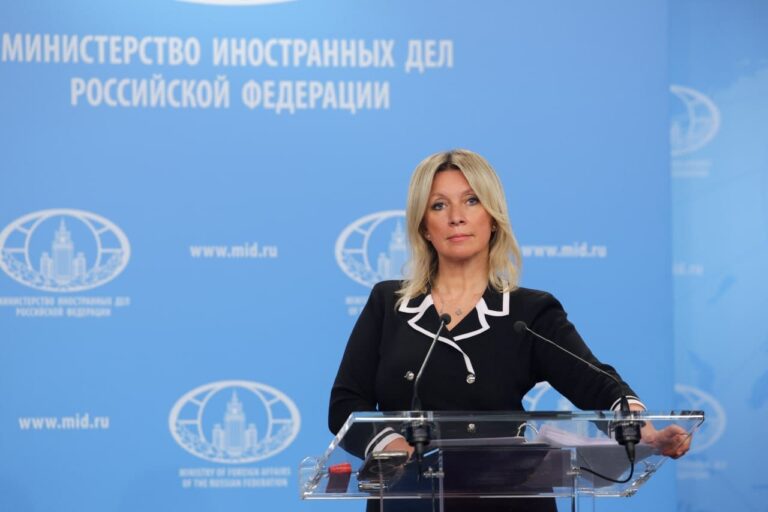
    MOSCOW: Russia has strongly condemned recent remarks by Japanese Prime Minister Sanae Takaichi and Foreign Minister Toshimitsu Motegi concerning President Vladimir Putin’s visit to Iturup Island. Russian Foreign Ministry spokeswoman Maria Zakharova described Tokyo’s criticism as unacceptable and rejected Japan’s objections to Putin visiting the island, which Moscow considers part of Russian territory. Zakharova accused senior Japanese officials of attempting to dictate where the Russian president could travel within his own country. She said Moscow regarded the Japanese statements as politically motivated and legally invalid, arguing that Russia’s sovereignty over the southern Kuril Islands was not open to question. The dispute over the islands remains one of the most sensitive issues in Russia-Japan relations. Japan refers to the southern islands as the Northern Territories and maintains its own claim over them. Zakharova said Tokyo’s current approach reflected what she called an increasingly hostile policy towards Russia. She criticised Japan for joining Western sanctions against Moscow and for providing political, military and technical support to Ukraine. According to the Russian spokeswoman, these policies have seriously damaged bilateral relations that had been developed over decades. She also accused Japan of undermining international legal principles while attempting to lecture Moscow on international law and the future of bilateral relations. Zakharova further argued that Japan’s policies did not serve the interests of its own population or contribute to regional stability. Moscow maintains that the southern Kuril Islands became part of the Soviet Union following the Second World War and argues that their status was established through post-war agreements. The Russian official also accused Tokyo of reviving what she described as revisionist and revanchist narratives. She warned that such rhetoric could have wider consequences for peace and security across the Asia-Pacific region. Russia said the latest Japanese statements risked further damaging already strained relations between the two countries and ran counter to broader regional efforts to promote stability, cooperation and peace.

  • | |

    Japan’s 7.1 quake injures 50, cuts power to 40,0…

    A powerful 7.1-magnitude earthquake jolted Japan’s southern Kumamoto prefecture on Tuesday, leaving at least 50 people injured, disrupting transport and cutting electricity to around 40,000 homes as authorities warned residents to remain alert for aftershocks. The earthquake struck Kyushu, Japan’s southwestern main island, at a depth of about 10 kilometres, according to the Japan Meteorological Agency (JMA). The tremor reached the highest level of 7 on Japan’s seismic intensity scale in parts of Kumamoto, underlining the strength of the shaking. The powerful tremor damaged roads, bridges and buildings, while transport services across the affected region were thrown into disruption. Rail services, including high-speed trains, were suspended, while Kumamoto airport also temporarily closed its runway. The earthquake also triggered an emergency response across Kyushu. Authorities urged more than 150,000 residents to evacuate as officials assessed damage and monitored the situation. Reports said a fire and explosion occurred at a shopping mall, while a goods train was derailed during the chaos. For residents, the immediate concern was not only the first powerful jolt but the possibility of more shaking. Japanese authorities issued warnings over potential aftershocks and landslides, urging people in affected areas to remain cautious and follow official instructions. A tsunami warning was also issued after the earthquake, with authorities warning of waves of up to one metre along parts of the Ariake and Yatsushiro seas. The warning was later lifted after no significant tsunami activity was observed. Despite the widespread disruption, there were no reports of irregularities at nuclear power plants in the affected region, providing some relief as authorities continued their assessment. The earthquake has also drawn attention because Kumamoto has experienced devastating seismic activity before. The region was badly hit by a major earthquake sequence in 2016, which caused extensive destruction and hundreds of deaths. Japan is among the world’s most earthquake-prone countries, making disaster preparedness a central part of everyday life. Yet the latest tremor again demonstrated how quickly a powerful earthquake can disrupt communities, transport networks and essential services. With rescue and assessment operations continuing, authorities are now focused on helping those injured, restoring electricity and transport, and preparing residents for potentially dangerous aftershocks.

  • |

    China evacuates tourists from Jiuzhaigou after mudslides and heavy rain

    Chinese authorities evacuated tourists from the famous Jiuzhaigou National Park on Monday after heavy rainfall triggered mudslides, forcing the temporary closure of parts of the UNESCO World Heritage site. The emergency came as the country issued its highest level warning for flash floods following widespread destruction caused by Typhoon Noul. Located in Sichuan province, Jiuzhaigou is one of China’s most popular tourist destinations, known for its crystal clear blue, green, and purple lakes, snow covered mountains, dense forests, and spectacular waterfalls. Every year, the scenic park attracts millions of visitors from around the world. State broadcaster CCTV reported that several major attractions inside the park had been closed to protect public safety while emergency teams evacuated stranded visitors. Authorities said the operation was carried out in an orderly manner and that tourists were being moved to safe locations. Local officials announced that sections of the Rize Valley above Arrow Bamboo Lake, including the lake itself, along with the entire Zechawa Valley, would remain closed until conditions improve. They said the restrictions were necessary because of the high risk of additional mudslides and unstable ground caused by continuous rainfall. The closures followed the impact of Typhoon Noul, the strongest storm to strike China this year. The typhoon brought torrential rain across southern and central regions, increasing the danger of flooding and landslides in several provinces. China’s Ministry of Water Resources and the China Meteorological Administration jointly issued a red alert for flash floods covering parts of Jiangxi, Hunan, Guangdong, Sichuan, Shaanxi, Gansu, and southeastern Xinjiang. A red warning is the country’s highest emergency level and indicates an extremely high risk of severe flooding. Mountainous areas across China are especially vulnerable during the summer rainy season. Steep slopes, river valleys, and saturated soil often combine to trigger landslides and mudslides after prolonged rainfall. This month’s severe weather has already caused a series of deadly disasters in different parts of the country. In Chongqing, a major landslide triggered by heavy rain killed at least 11 people, while around 50 others remain missing as rescue teams continue search operations. In Gansu province, another landslide in Tanchang county claimed at least 21 lives. Separate flash floods struck a scenic camping area in Weiyuan county, killing 10 tourists and injuring 23 others. In another incident, five people lost their lives after a house was buried beneath collapsing loess soil in Shanxi province. Emergency workers have been responding to multiple disasters as extreme weather continues to affect large parts of the country. China has now entered its annual peak flood control period, which runs from the middle of July to the middle of August. This is traditionally the time when the country experiences its heaviest rainfall and greatest flood risks. Weather experts have warned that rainfall is expected to become even more frequent and intense in the coming weeks. Forecasts suggest that northern China could receive between 20 and 50 percent more rainfall than average, raising concerns about further flooding, landslides, and disruptions to transportation and tourism. Authorities have urged residents and travelers to closely follow weather updates and avoid areas vulnerable to natural disasters as emergency teams remain on high alert.

  • | | | |

    Iran says Pakistan-Turkey-Saudi pact not aimed at Tehran

    Iran has said it has no reason to believe that the new security agreement between Pakistan, Turkey and Saudi Arabia is aimed against Tehran. Iranian Foreign Ministry spokesperson Esmaeil Baghaei said the agreement should not be viewed as a direct threat to Iran. He said the new regional security arrangement reflects a broader change in how countries in the Middle East are approaching their security needs. Baghaei said regional states are increasingly recognising that the United States cannot guarantee long-term security in the region. He also accused Washington of contributing to instability in the Middle East. He said regional security arrangements could help strengthen stability if they take into account the political and historical realities of the region. He also called for such arrangements to be broad and inclusive. Baghaei said Iran would not resume direct negotiations with the United States while Washington continues to violate an interim agreement between the two sides. Iran has also linked the reopening of the Strait of Hormuz to several demands from Washington. Iranian Foreign Minister Abbas Araghchi said Tehran and Oman were close to finalising an agreement on new shipping routes through the strategic waterway. He said the agreement was in its final stages. However, Araghchi stressed that an agreement with Oman would not automatically lead to the reopening of the strait. He said the United States would first need to meet several conditions set by Tehran. Iran is demanding compensation for damage caused by US attacks. It is also calling for an end to US military threats and sanctions against Iran. Iran has further demanded an end to attacks against its regional allies. Other demands include the removal of restrictions on Iranian shipping and the release of frozen Iranian assets. The Strait of Hormuz is a major international route for oil and gas shipments. Its prolonged closure has raised concerns over global energy supplies and shipping. Iran and the United States are currently not holding direct talks. Tehran says it will not enter direct negotiations while Washington continues to breach the interim agreement reached earlier this year. Messages between the two countries are being exchanged through intermediaries. Iran has also made a major change in its national security leadership. Former Revolutionary Guards commander Mohsen Rezaei has been appointed secretary of the Supreme National Security Council. Rezaei replaces Mohammad Bagher Zolghadr, who had been appointed to the position in March. No official reason was given for the change. The move, however, comes at a sensitive time for Iran as tensions with the United States and Israel remain high. Rezaei, 71, is a senior figure in Iran’s political and security establishment. He led the Islamic Revolutionary Guard Corps from 1981 to 1997. He served during much of the Iran-Iraq war. He later spent more than two decades as secretary of Iran’s Expediency Discernment Council. Rezaei also served as vice president for economic affairs from 2021 to 2023 under former President Ebrahim Raisi. Iran’s Supreme Leader Mojtaba Khamenei has also appointed Rezaei as his representative on the Supreme National Security Council. Zolghadr has been appointed as Khamenei’s political adviser. The Supreme National Security Council coordinates Iran’s security and foreign policy. It includes senior military, intelligence and government officials. Meanwhile, differences between the United States and Israel are reportedly growing over military operations across the region. Israeli broadcaster Channel 13 reported that Washington is pushing Israel to move toward ending fighting on three fronts. These include Gaza, Lebanon and Iran. US Central Command chief Admiral Brad Cooper reportedly conveyed the message during a visit to Israel. Washington wants progress toward reducing military operations and closing the three active fronts. Israeli officials, however, have indicated that they want to maintain freedom to act against Iran. Israeli military officials reportedly told their US counterparts that Israel intends to retain the ability to strike Iran if Tehran continues developing its nuclear programme or rebuilding its ballistic missile capabilities. Washington is also pushing for further Israeli withdrawals from positions in southern Lebanon. In Gaza, the United States is seeking progress toward a broader settlement. It is also supporting the deployment of a multinational force in the territory. Israeli security officials have reportedly objected to some US demands. These include reducing military operations and targeted killings in Gaza. The developments point to growing differences between Washington and Tel Aviv over how to manage conflicts involving Iran, Lebanon and Gaza. At the same time, the United States appears to be adopting a more cautious approach toward Iran. Tehran, however, continues to link the reopening of the Strait of Hormuz to major concessions from Washington.

Leave a Reply

Your email address will not be published. Required fields are marked *