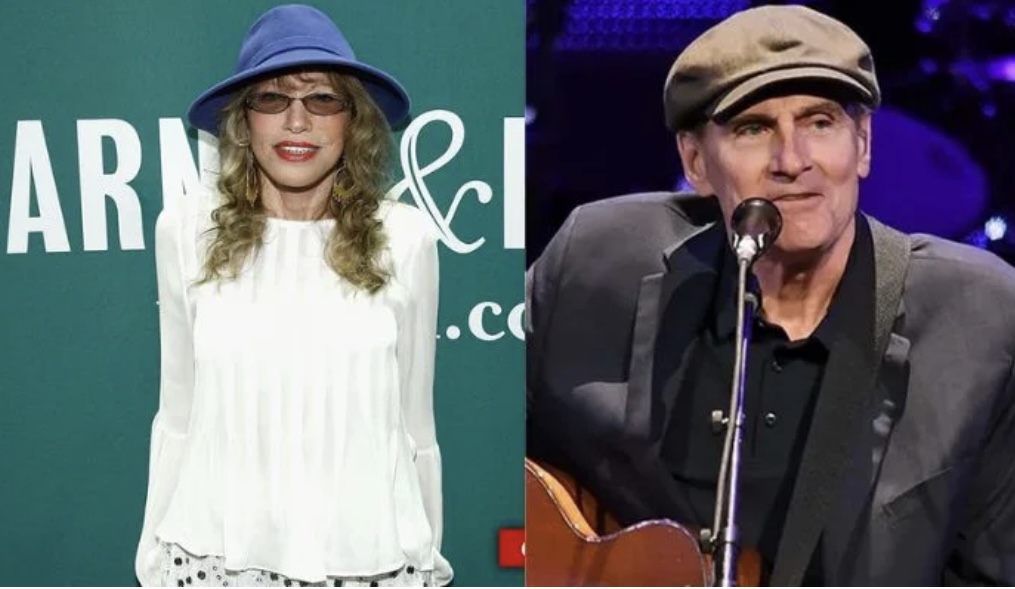
sophie turner names
| |

Sophie Turner names fan-favorite hair color from h…

Sophie Turner is looking back at the many hair colors she has worn throughout her career, revealing which shade gets the most positive reaction from fans.

The 30-year-old actress became internationally famous as Sansa Stark on Game of Thrones, a role that transformed her career and made her auburn-red hair one of her most recognizable features. Turner began dyeing her naturally blonde hair red at just 13 after landing the role in 2009. Since then, she has experimented with several different shades, including platinum blonde, auburn and brunette. (People.com⁠)

From natural blonde to Sansa’s signature red

Turner’s hair transformation was closely connected to her Game of Thrones journey. Her natural blonde hair had to be changed to an auburn-red shade for Sansa, creating a look that audiences quickly associated with the character.

Over the years, Turner has spoken positively about the red color because of what it represents in her career. In a previous interview, she explained that the shade was especially meaningful because it was the first major hair transformation she experienced for a professional role. She also associated red hair with the strong characters she had played. (Allure⁠)

However, red is no longer the only color connected to Turner. She has repeatedly returned to blonde, experimented with darker shades and even appeared as a brunette for her upcoming role as Lara Croft in Amazon’s Tomb Raider series. (People.com⁠)

Blonde gets the biggest reaction

In a recent interview with The Sydney Morning Herald, Turner reflected on how people respond to her different hair eras.

According to the actress, blonde has received the most positive reactions. Red, meanwhile, can create strong reactions but does not generate them as consistently. She also explained that brunette hair can make her feel more anonymous because people are less likely to recognize her.

The comments show how dramatically hair color can influence the way Turner is perceived. After spending much of her teenage years and early adulthood associated with Sansa’s red hair, returning to blonde has offered her a different sense of identity.

A career defined by transformation

Turner’s changing hair colors have become a visual timeline of her career. From the red-haired Sansa Stark to her blonde looks and latest brunette transformation, each era has accompanied a different stage of her professional life.

While fans may have their own favorite shade, Turner’s latest comments make one thing clear: blonde currently wins when it comes to the most positive public reaction.

Similar Posts

  • Thai Gripen and F-16 Jets Strike Cambodian Military Targets Ahead of Ceasefire

    BANGKOK – Thai Air Force Gripen and F-16 fighter jets carried out a joint airstrike on Cambodian military targets on the morning of December 27, just hours before a scheduled ceasefire was set to take effect along the border. The operation targeted a weapons depot and military bases on Phnom Dong Rak hill in Cambodia’s […]

  • | |

    Israel rejects Trump’s 15-point Gaza plan

    Israeli Prime Minister Benjamin Netanyahu has rejected US President Donald Trump’s proposed 15-point plan for Gaza, insisting that Israel will not withdraw its forces until Hamas is fully and genuinely disarmed. Netanyahu made the statement during a cabinet meeting on Sunday. He said Israel would not accept any arrangement that allows Hamas to retain its weapons while Israeli troops are required to leave Gaza. “Israel rejects the 15-point document,” Netanyahu said, adding that the Israeli military would continue operating against threats to its forces and citizens. The dispute has created another obstacle for Trump’s efforts to establish a lasting ceasefire and political settlement in Gaza. Trump’s Board of Peace had previously announced that an agreement had been reached on the complete disarmament of Hamas and other armed groups operating in the territory. Hamas, however, has linked the handover of its heavy weapons to wider conditions. The group has demanded an end to Israeli military operations and a withdrawal of Israeli forces from Gaza. Netanyahu said disarmament must take place before any Israeli military withdrawal. He rejected the possibility of what he described as a symbolic or “fictitious” disarmament process. The Israeli premier said his government was discussing the next steps with US officials. He indicated that some American proposals were acceptable to Israel, while others remained unacceptable. “We know how to stand our ground on these matters,” Netanyahu said. The disagreement represents a major challenge for Trump’s Gaza initiative, which was presented as a framework for ending the conflict and creating conditions for reconstruction. The proposed plan includes the disarmament of Hamas, a phased Israeli military withdrawal and the rebuilding of Gaza. It also envisages the creation of an international Board of Peace to oversee implementation of the agreement. Hamas had previously signalled support for aspects of the disarmament framework. However, the group has maintained that weapons cannot simply be surrendered while Israeli forces remain in Gaza and military operations continue. Israel, meanwhile, has continued military strikes in Gaza despite the initial ceasefire agreement reached last October. Netanyahu is also facing political pressure at home. His far-right coalition partners have strongly opposed concessions that could allow Hamas to remain armed or secure a significant Israeli withdrawal. National Security Minister Itamar Ben Gvir has rejected the proposed framework and called it unacceptable. With Israeli elections approaching, Netanyahu faces pressure from both domestic allies and international partners. Any major concession on Gaza could create tensions within his governing coalition. The latest rejection therefore puts Trump’s peace initiative under renewed pressure. The central disagreement remains over the sequence of events: Hamas wants Israeli forces to withdraw and military action to end before completing disarmament, while Israel insists that Hamas must first surrender its weapons.

  • | | | | |

    Iran displays wreckage of US, Israeli aircraft in …

    Iran’s Islamic Revolutionary Guard Corps (IRGC) has put the wreckage of US and Israeli aircraft on public display, offering a dramatic glimpse of the military hardware Tehran says was destroyed during the recent war. Images released by Iranian state-linked media show sections of aircraft arranged as part of an exhibition, including what has been identified as the remains of a US F-15 fighter jet. The display reportedly includes the aircraft’s ejection seat, canopy and part of its tail. The exhibition appears designed not only to showcase recovered wreckage but also to underline Iran’s claims about the effectiveness of its air-defence capabilities during the conflict. The appearance of the F-15 debris is particularly significant. Recent reporting has identified the wreckage as belonging to an F-15E Strike Eagle, while Iranian authorities have presented it as evidence of a successful engagement against US airpower. However, claims surrounding aircraft losses have been contested throughout the conflict. In earlier incidents, Iranian officials announced that US aircraft had been destroyed, while American officials disputed some of the claims. Independent identification of battlefield wreckage has also sometimes proved difficult. Iranian forces have previously showcased captured or downed US military equipment as symbols of resistance. A similar exhibition in Tehran in 2019 displayed wreckage of a US Global Hawk drone claimed to have been shot down by Iran. The latest display comes after Iran also claimed on July 30 that three US F-35 fighter jets had been destroyed at Jordan’s Al Azraq airbase. That claim has not been independently established. By placing the aircraft remnants on display, Tehran is turning battlefield debris into a powerful political and military message—one intended to demonstrate that even advanced American and Israeli aircraft can be targeted during wartime. The exhibition is likely to fuel further debate over the scale of aircraft losses during the conflict and the competing narratives presented by Iran, the US and Israel.

  • |

    Pakistan’s trade deficit surges 25% to nearly $4 billion in July 

    ISLAMABAD: Pakistan’s trade deficit expanded sharply during the first month of the new fiscal year, reaching nearly $4 billion in July, as a strong rise in imports continued to outpace export growth, highlighting persistent weaknesses in the country’s external sector despite a series of incentives announced for exporters. According to the latest figures released by the Pakistan Bureau of Statistics (PBS), the country’s trade deficit widened to $3.95 billion in July 2026, compared to $3.16 billion recorded during the same month last year. The deficit increased by approximately $794 million, representing an annual rise of 25.2%. The widening gap was primarily driven by a substantial increase in imports, which climbed to $6.9 billion from $5.8 billion in July 2025. This reflects an increase of more than $1 billion, or 18% year-on-year, indicating stronger demand for imported goods and raw materials. Exports Show Growth but Remain Below Key Milestone While Pakistan’s exports registered positive growth, they once again failed to cross the important $3 billion monthly mark. Exports reached $2.94 billion, falling short of the milestone by around $61 million. On an annual basis, exports increased by 9.5%, adding nearly $256 million compared to July last year. Although the improvement reflects steady recovery in overseas shipments, analysts believe the pace remains insufficient to counter the rapid expansion in imports. Exports had crossed the $3 billion threshold in January 2026, touching approximately $3.05 billion, but the country has been unable to maintain that level in the months that followed. Tariff Reforms Under Scrutiny The latest trade figures have renewed debate over Pakistan’s tariff liberalisation policy, introduced under broader economic reforms supported by international financial institutions, including the World Bank and the International Monetary Fund (IMF). The government has gradually lowered tariff barriers to increase competition and integrate Pakistan more closely into global markets. However, economists argue that the economy was opened before domestic industries were provided with sufficient support to compete effectively. Business leaders have repeatedly pointed out that exporters continue to face high energy prices, elevated financing costs, tax-related uncertainties and exchange rate volatility, all of which reduce their competitiveness in international markets. Earlier projections by the World Bank had suggested that tariff reforms would increase exports by 14% while limiting import growth to around 7%. However, the latest figures suggest imports have grown much faster than anticipated, while export gains have remained comparatively modest. Government Rolls Out Fresh Export Incentives To strengthen export performance, the federal government has announced a series of financial support measures during the current fiscal year. In the federal budget, Prime Minister Shehbaz Sharif reduced the minimum and advance tax on exporters to 1.25% and abolished the 10% super tax on export earnings in an effort to improve liquidity and encourage investment in export-oriented industries. More recently, the government approved a Rs98 billion export support package aimed at improving competitiveness and increasing foreign exchange earnings. Under the revised Export Finance Scheme (E-EFS), exporters will be able to obtain six-month working capital loans at an interest rate of 8.5%, with the government absorbing 5 percentage points of the financing cost. The subsidy for this component alone is estimated at Rs58 billion during the current fiscal year. ECC Approves New Financing Facilities The Economic Coordination Committee (ECC) has also expanded access to concessional financing by increasing the ceiling of the existing short-term financing portfolio from Rs1 trillion to Rs1.5 trillion. In addition, the committee approved the launch of a new Long-Term Growth Financing Facility, allowing exporters to access loans at an interest rate of 2% for the first two years, followed by a fixed 5% rate for the subsequent eight years. The government has also introduced a performance-based rebate scheme, effective from July 1, 2026, with an estimated annual allocation of Rs15 billion. Under the programme, exporters recording annual export growth of up to 10% over the previous year will receive a rebate equal to 1% of the incremental export value, while exporters achieving growth exceeding 10% will qualify for a 2% rebate on additional exports. Long-Term Challenges Persist Despite successive incentive packages introduced over several decades, Pakistan continues to struggle with achieving sustained export-led growth. Industry observers note that no single Pakistani exporter has generated $1 billion in annual export earnings, underscoring the structural challenges facing the country’s export sector. These challenges include limited product diversification, low industrial productivity, rising production costs, inconsistent policy implementation and insufficient value addition. Monthly Performance Offers Some Relief On a month-on-month basis, the trade data presented a more encouraging picture. Exports increased by 31% in July compared to June, rising by approximately $697 million, while imports remained largely unchanged at around $6.9 billion. As a result, the monthly trade deficit narrowed by nearly 15%, or around $709 million, compared with the previous month.

  • | |

    Camp Rock 3: Demi Lovato and the Jonas Brothers ar…

    The Camp Rock reunion fans have been waiting for is officially happening. Demi Lovato is returning to the beloved Disney franchise as Mitchie Torres in Camp Rock 3, bringing a nostalgic surprise to the upcoming third installment. Disney confirmed that Lovato will reprise her original role in a cameo appearance. The singer and actress, now 33, was previously announced as an executive producer on the movie, but her on-screen return had remained unconfirmed until now. (TheWrap⁠) Mitchie Torres makes a comeback Lovato first played Mitchie in the original Camp Rock in 2008. The character became one of the most recognizable figures in the Disney Channel musical franchise, following her journey as a talented young musician navigating friendships, confidence and life at the music camp. She returned for Camp Rock 2: The Final Jam in 2010, and her surprise appearance in the new movie creates a full-circle moment for longtime fans. While Lovato’s role is reportedly limited to a cameo, her presence connects the new story with the earlier films and the generation that grew up watching them. Maria Canals-Barrera is also returning as Connie Torres, Mitchie’s mother. (People.com⁠) The Jonas Brothers return as Connect 3 Kevin, Joe and Nick Jonas are also back for Camp Rock 3. The brothers once again play Connect 3, the fictional band featured in the franchise. The new story takes place years after the events of Camp Rock 2. Connect 3 is preparing for a reunion tour and begins searching for a new opening act. Their journey brings them back to Camp Rock, where a new generation of young performers competes for the opportunity. The film introduces new stars including Liamani Segura as Sage and Malachi Barton as Fletch, alongside other young performers. (People.com⁠) A new generation meets an old favorite The return of Lovato and the Jonas Brothers allows Camp Rock 3 to combine nostalgia with a fresh cast and new music. Disney has described the project as an opportunity to introduce the franchise to a new generation while giving longtime viewers a chance to reconnect with familiar characters. The movie is set to premiere on Disney Channel on August 13, with Disney+ streaming beginning August 14. (EW.com⁠) For fans who remember Mitchie, Shane and Connect 3 from the original movies, Lovato’s return is a particularly exciting surprise. More than a decade after the second film, Camp Rock is officially opening its doors again.

  • | | |

    Video of Sunil Dutt’s ancestral home in Pakistan…

    A video showcasing the ancestral home of legendary Bollywood actor Sunil Dutt in Pakistan’s Jhelum district has gone viral on social media, attracting widespread attention from audiences in both Pakistan and India. The video was shared by Pakistani social media influencer Sameel Atif, who visited the historic house located in the village of Khord in Jhelum. According to the video, the property is the childhood home of Sunil Dutt, who was born as Balraj Dutt before the partition of British India in 1947. Following the video’s circulation, many social media users tagged Bollywood actor Sanjay Dutt, Sunil Dutt’s son, encouraging him to visit the family’s ancestral home and reconnect with his roots. The video has generated thousands of comments highlighting the shared cultural and historical ties between the two neighbouring countries. Reports state that Sunil Dutt spent his early years in the village before his family migrated to India during Partition. He later became one of Bollywood’s most respected actors and went on to serve as a member of the Indian Parliament. The story is further connected to Sanjay Dutt’s mother, legendary actress Nargis Dutt, whose family roots trace back to Rawalpindi. As a result, both of Sanjay Dutt’s parents had ancestral links to regions that are now part of Pakistan. In his social media post, Sameel Atif claimed that Sunil Dutt visited his ancestral village years after Partition. According to the post, the veteran actor requested the current owners of the house to preserve its original structure so that future generations could remember their shared history and heritage. This account has been widely shared online, though it reflects the information presented in the post. The viral video also includes a past interview in which Sanjay Dutt recalled his father’s emotional attachment to his birthplace. He said that whenever Sunil Dutt felt nostalgic, he would express a desire to return to what he considered his real home in Jhelum rather than Mumbai. Sanjay Dutt has also reportedly expressed a wish to visit Pakistan one day to see his father’s ancestral village and experience the place that held such deep emotional significance for him. The video has resonated with viewers on both sides of the border, many describing it as a reminder of shared history, cultural heritage, and enduring human connections beyond political boundaries. https://www.instagram.com/sameelatiff/reel/Dbs49YvKl5w/

Leave a Reply

Your email address will not be published. Required fields are marked *