hivpositive children pakistan
| |

HIV-positive children in Pakistan reach 7,500

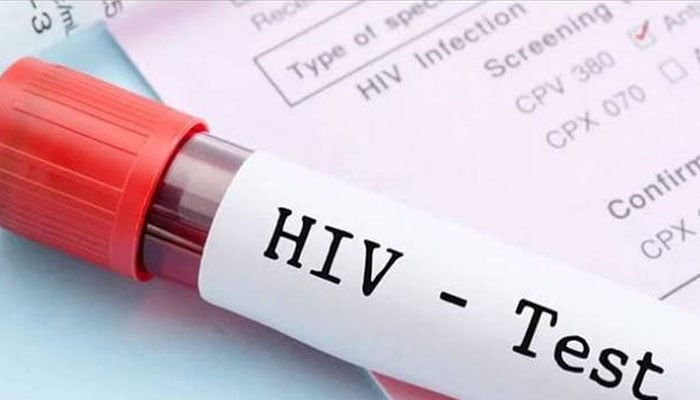
The number of children living with HIV in Pakistan has risen to approximately 7,500, according to the latest figures released by the federal Ministry of Health. The data highlights the growing need for improved healthcare, nutrition, and long-term support for affected children across the country.

Official statistics show that around 62,000 HIV patients are currently receiving treatment in Pakistan. Children account for nearly 12 percent of all registered patients, reflecting the significant impact of the disease on younger age groups.

According to the ministry, Sindh has emerged as the province with the highest number of HIV-positive children. Nearly 4,200 children infected with the virus have been registered in the province, making it the country’s largest concentration of pediatric HIV cases.

In response to the situation, the federal government has sought nutritional assistance from UNICEF, the World Food Programme (WFP), the World Health Organization (WHO), and Nutrition International. The support is aimed at improving the health and nutritional status of children living with HIV.

Authorities said a special program has been planned to provide nutritional supplements to HIV-positive children. Those suffering from severe malnutrition will receive therapeutic food along with continuous medical monitoring to improve their overall health and treatment outcomes.

The government also plans to provide guidance to parents and caregivers on meeting the nutritional needs of children living with HIV. Health experts believe that proper nutrition plays a critical role in strengthening immunity and supporting the effectiveness of treatment.

Medical experts said children infected with HIV require 10 to 20 percent more energy and protein than healthy children of the same age. They stressed that addressing malnutrition can significantly improve recovery, enhance the effectiveness of treatment, and help HIV-positive children lead healthier lives.

Similar Posts

  • Thailand Braces For Severe Weather

    BANGKOK, Thailand — The Thai Meteorological Department has issued severe weather warnings, forecasting very heavy rainfall across the northern and upper northeastern regions of the country, which carries a high risk of flash flooding and dangerous water runoff in several provinces. Meteorological Department Issues Storm Alert For Multiple Regions The department reported on Sunday that […]

  • | |

    More provinces or better governance? In Sindh, div…

    “Start With Punjab”: Saeed Sarbazi Calls for Pilot Model Karachi: Once again, the demand for new administrative units and provinces has been sparked — this time from within the government itself. Interior Minister Mohsin Naqvi’s recent statement has reignited the debate, raising questions about governance, service delivery, and political intent. Coming at a time when the current setup is widely described as a “hybrid system,” Naqvi is seen by many as representing the other partner in that arrangement. His call therefore carries weight beyond routine political rhetoric, forcing both parliament and the public to ask: is this about bringing the state closer to the people, or about redrawing Pakistan’s political map? MQM-P Backs Demand: “Engine of Pakistan’s Economy” The debate found immediate backing from MQM-Pakistan, which has once again strongly supported the idea of separating Karachi from Sindh. The party argues that the city, which generates the bulk of Pakistan’s revenue, should have control over its own resources so that what is earned in Karachi is spent on Karachi. Calling it the “engine of the entire Pakistan economy,” MQM-P maintains that an independent administrative setup for the metropolis is the only way to fix its decades-old issues of infrastructure, water, transport and governance. Sindh Government Rejects: “Dangerous Precedent” However, the Sindh government has strongly opposed the idea. Provincial leaders and ministers like Sharjeel Memon, Saeed Ghani and Nasir Hussain argue that carving out Karachi from Sindh will only deepen existing fault lines and promote hate and division among communities. They maintain that Karachi is an integral part of Sindh’s history, culture, and economy, and that separating it administratively would set a dangerous precedent for the federation. For them, the solution lies in better governance and resource allocation within the existing provincial structure, not in division. PML-N Opposition: “Will Never Be Approved” The Pakistan Muslim League-Nawaz has also come out in opposition to the proposal. A senior PML-N minister and veteran politician, Rana Sanaullah, Special Assistant to the Prime Minister on Political Affairs, stated in a TV talk show that any legislation aimed at dividing provinces into units would “never be approved” in the National Assembly. He also asserted that such proposals were never discussed in cabinet or in parliament. The party argues that such moves risk destabilizing national harmony, and that the focus should remain on strengthening local government systems within provinces rather than redrawing administrative boundaries. MQM-P Counter: Parliamentary Precedent Cited Commenting on PML-N’s remarks, MQM-Pakistan head Mustafa Kamal fired back, saying those who want to reorganize Pakistan into smaller administrative units have the political strength to do so. He argued whether the 26th or 27th amendment bills were discussed in cabinet before they were floated for approval in parliament. He disclosed that both the bills were presented on the day of passing and were passed unanimously even before discussion. “If a bill for new provinces is brought to the floor of the National Assembly, it would be passed — just as the 26th and 27th constitutional amendments were,” Kamal said. His statement signals MQM-P’s confidence that with the right backing, even a contentious legislative move can sail through parliament. Saeed Sarbazi’s Expert View: Ill-timed Debate, Governance Needed, Not Division Talking to this correspondent, senior journalist, news editor at a reputable daily and former president of the Karachi Press Club, Saeed Sarbazi said raising such a subject at this critical stage was ill-timed. With the country going through a severe economic meltdown amid the Iran-US conflict, he argued, separating Karachi from Sindh would not serve any purpose. Sarbazi pointed out a key administrative fact: “More than 65 percent of Karachi belongs to cantonment areas. So blaming the Sindh government for the state of 34 percent of the infrastructure is not fair.” For him, the debate distracts from the real issue of joint responsibility and better coordination between all stakeholders. Federal Responsibility: Revenue vs Investment Gap Sarbazi, a seasoned union worker turned leader, also highlighted the federal government’s obligations in the debate. “If Karachi is mini Pakistan, where the country’s most important ports are located and the entire Pakistan benefits from its structure and institutions, then it is obligatory on the Federal government to provide monetary support,” he stated. He cited the example of the National Highway M9 — a key CPEC project — which still remains a single lane in parts despite years of promises. “Till to-date the federal government has not completed the double lane highway,” Sarbazi said, arguing that Karachi generates the most revenue but gets the least direct federal investment in return. “Start With Punjab”: A Pilot Model Suggested by Sarbazi The former KPC president further added that the discussion should not be limited to Sindh alone. “Punjab Assembly has already passed a resolution to divide Punjab into South and Central Punjab,” Sarbazi noted. “If those who aspire to see how administrative units will function and become a model, then it should start from Punjab. If it presents a good governance model, then perhaps Sindh will follow.” His remarks suggest that instead of confrontation, a pilot model in Punjab could set the tone for the rest of the country. Power Politics and PPP’s Role in Sindh Saeed Sarbazi, who holds the unprecedented record of being elected unopposed along with his entire panel to the Karachi Press Club, stated that such tactics of creating more administrative units are often ignited by power corridors as a tool for arm-twisting political parties. “Though democratically elected governments have flaws, these can only be corrected through good governance,” he said. “Such arm-twisting only brings political instability in Pakistan.” Sarbazi emphasized that the role of the Pakistan Peoples Party in the Sindh government should not be underplayed. “It is serious about improving infrastructure in the province — by providing people with good transport, water at their doorstep, and by improving the sewage and drainage system.” The Way Forward: Merits, Concerns, and Alternatives As the debate over new provinces resurfaces, both merits and concerns demand attention. Proponents argue that smaller administrative units

  • |

    Police seek more time in medical student harassmen…

      MIRPUR KHAS:Police have asked a local court for additional time to submit the final challan in the case involving the alleged suicide of a female student at a private medical college in Mirpur Khas. The request came during a hearing before the Judicial Magistrate, where the investigation team sought more time to complete the remaining legal formalities. Investigation team head and SSP Suhai Aziz told the court that police were still waiting for the forensic examination report of the deceased student’s mobile phone. Police say the phone’s forensic findings could provide important evidence for the investigation, particularly regarding the circumstances surrounding the student’s death and the allegations of harassment. The court accepted the police request and adjourned the hearing until August 15, when investigators are expected to provide an update on the progress of the case and the submission of the final challan. The student died by suicide on April 10, allegedly after facing harassment at the private medical college. Following the incident, police registered a case against five people, including the college principal and a lecturer. The lecturer remains in police custody in connection with the case, while the other suspects have secured bail from the court. The case has drawn attention because of allegations that harassment contributed to the student’s death. Investigators are now waiting for the forensic report before finalising the challan and presenting the complete findings before the court. The court’s next hearing on August 15 is expected to clarify whether police will submit the final challan or seek further time to complete the investigation.

  • |

    IRI, NACTA team up to promote sectarian harmony

    Islamabad: The Islamic Research Institute (IRI) of the International Islamic University Islamabad (IIUI) and the National Counter Terrorism Authority (NACTA) have joined hands to combat violent extremism, promote inter-sectarian harmony and strengthen peacebuilding efforts across Pakistan. The two institutions signed a Memorandum of Understanding (MoU) on Friday at a ceremony attended by senior officials. Professor Dr Ahmed Saad Alahmed, Acting Rector and President of IIUI, and Mr Jawad Ahmad Dogar, PSP, National Coordinator of NACTA, signed the agreement on behalf of their respective organisations. The MoU follows several months of consultations and meetings between the two sides. The discussions identified areas for cooperation and established a long-term framework for joint initiatives. Both institutions also nominated focal persons to coordinate the partnership, while the draft agreement went through legal review before receiving final approval. Speaking at the ceremony, Professor Dr Ahmed Saad Alahmed highlighted the importance of cooperation between universities and national institutions in addressing major social challenges. He said universities have a key role in producing credible research, encouraging balanced religious discourse and providing practical policy recommendations that support national unity and social cohesion. Mr Jawad Ahmad Dogar described IRI as one of Pakistan’s leading centres for Islamic scholarship and policy research. He said the partnership would combine academic expertise with practical national experience to develop initiatives that promote tolerance and help prevent violent extremism. The collaboration has already produced its first major initiative. On July 9, 2026, IRI and NACTA jointly organised a pilot seminar titled **“Inter-Sectarian Harmony: Past Efforts and Future Roadmap.”** The event brought together scholars, policymakers, religious leaders and practitioners to discuss ways to improve sectarian understanding and develop lasting mechanisms for religious harmony. The two institutions are now preparing a major joint programme for August 2026, which will focus on academic dialogue, policy engagement and community outreach. The partnership also supports the government’s broader policy to establish Countering Violent Extremism (CVE) Centres at higher education institutions across the country. Under the MoU, IRI and NACTA will work together on research, training workshops, educational resources and capacity-building programmes to help universities establish and effectively operate CVE Centres. The agreement also covers joint research projects, policy studies, conferences, seminars, faculty development, curriculum support, publications and other capacity-building activities. The two sides will continue to engage researchers, policymakers, religious scholars, educators and practitioners to address emerging threats of violent extremism through research-based strategies. IRI reaffirmed its commitment to providing a national platform for Islamic scholarship and policy research, while NACTA expressed its resolve to strengthen cooperation with academic institutions to help build a peaceful, inclusive and resilient Pakistan.

  • | |

    NCCIA arrests 3 in crackdown on cyber harassment, …

    LAHORE: Pakistan’s National Cyber Crime Investigation Agency (NCCIA) has arrested three men in separate operations in Lahore and Multan as part of a crackdown on cyber harassment, blackmail, threats and the misuse of personal data online, officials said. The operations were carried out on the directions of Director NCCIA Punjab Muhammad Ali Wasim, officials said. In Lahore, the NCCIA arrested Azeem Jafri, son of Syed Altaf Hussain Shah and a resident of Faisalabad, in connection with an online harassment and defamation complaint. Investigators said the suspect had been using online platforms to harass and defame complainant Syed Muzaffar Iqbal Zehrazai. A mobile phone was recovered from the suspect during the operation. The investigation is being conducted by Sub-Inspector Rai Shakeel Ahmed. In Multan, the agency carried out two separate operations and arrested Jamshed Mahmood Khan and Sajjad Sarwar. Jamshed Mahmood Khan was arrested from Gulgasht Gol Bagh Park in Multan. Investigators said he was involved in sharing objectionable data belonging to a woman through WhatsApp, issuing threats and blackmailing her. No recovery was made from the suspect. In a separate operation, NCCIA officials arrested Sajjad Sarwar in Dera Ghazi Khan. Investigators said he was involved in sharing objectionable data of a woman through WhatsApp, threatening her and blackmailing her. A mobile phone containing WhatsApp-related material was recovered from him. Director NCCIA Punjab Muhammad Ali Wasim said the agency would continue taking action against individuals using cyberspace for harassment, blackmail, threats and violations of privacy. He directed NCCIA teams to further strengthen investigations and enforcement against cybercrime and ensure effective protection of citizens’ privacy and digital rights.

  • | |

    Sophie Turner names fan-favorite hair color from h…

    Sophie Turner is looking back at the many hair colors she has worn throughout her career, revealing which shade gets the most positive reaction from fans. The 30-year-old actress became internationally famous as Sansa Stark on Game of Thrones, a role that transformed her career and made her auburn-red hair one of her most recognizable features. Turner began dyeing her naturally blonde hair red at just 13 after landing the role in 2009. Since then, she has experimented with several different shades, including platinum blonde, auburn and brunette. (People.com⁠) From natural blonde to Sansa’s signature red Turner’s hair transformation was closely connected to her Game of Thrones journey. Her natural blonde hair had to be changed to an auburn-red shade for Sansa, creating a look that audiences quickly associated with the character. Over the years, Turner has spoken positively about the red color because of what it represents in her career. In a previous interview, she explained that the shade was especially meaningful because it was the first major hair transformation she experienced for a professional role. She also associated red hair with the strong characters she had played. (Allure⁠) However, red is no longer the only color connected to Turner. She has repeatedly returned to blonde, experimented with darker shades and even appeared as a brunette for her upcoming role as Lara Croft in Amazon’s Tomb Raider series. (People.com⁠) Blonde gets the biggest reaction In a recent interview with The Sydney Morning Herald, Turner reflected on how people respond to her different hair eras. According to the actress, blonde has received the most positive reactions. Red, meanwhile, can create strong reactions but does not generate them as consistently. She also explained that brunette hair can make her feel more anonymous because people are less likely to recognize her. The comments show how dramatically hair color can influence the way Turner is perceived. After spending much of her teenage years and early adulthood associated with Sansa’s red hair, returning to blonde has offered her a different sense of identity. A career defined by transformation Turner’s changing hair colors have become a visual timeline of her career. From the red-haired Sansa Stark to her blonde looks and latest brunette transformation, each era has accompanied a different stage of her professional life. While fans may have their own favorite shade, Turner’s latest comments make one thing clear: blonde currently wins when it comes to the most positive public reaction.

Leave a Reply

Your email address will not be published. Required fields are marked *