least people killed
|

At least 64 people killed in Spain as 2 high-speed trains collide

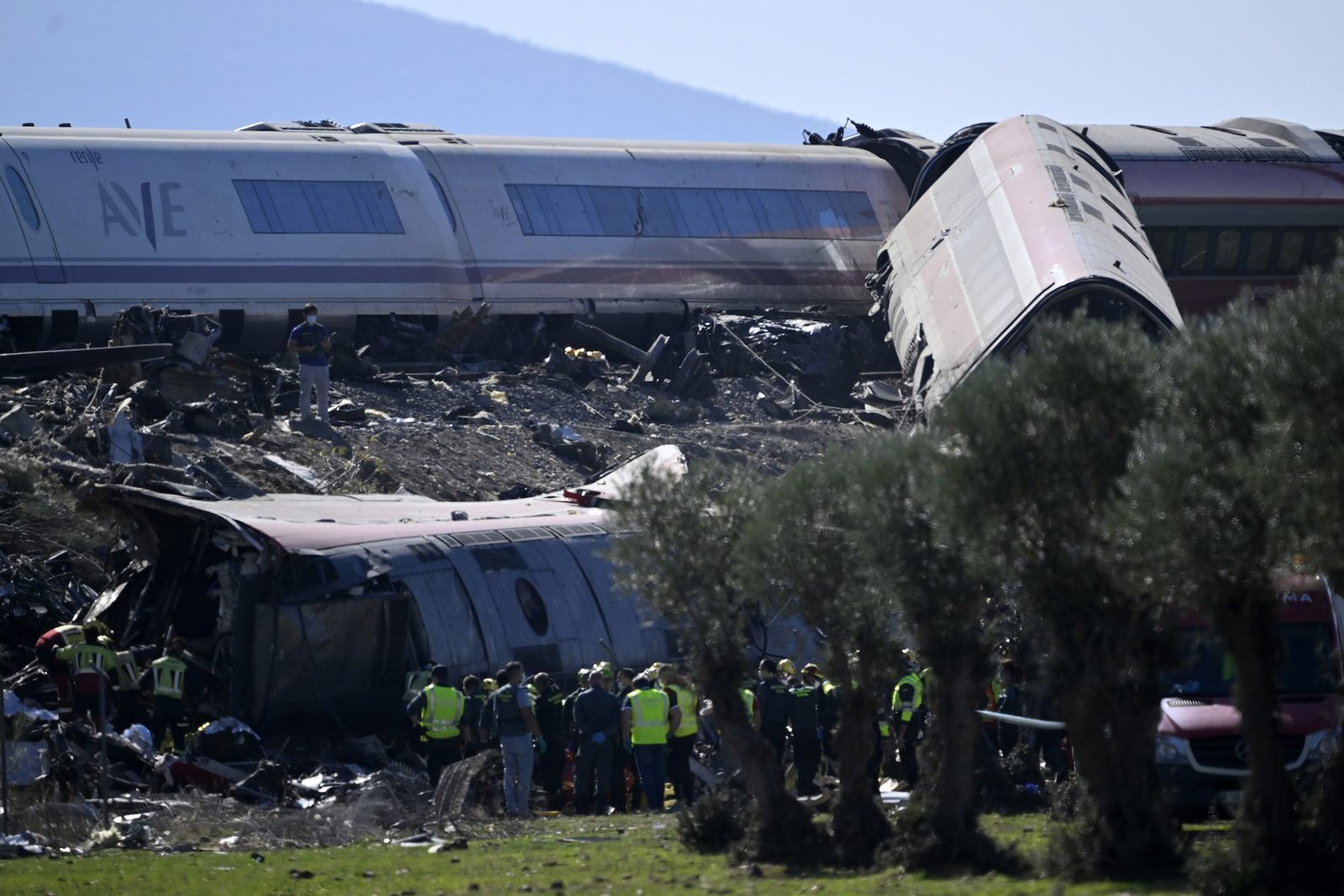
URDA, Spain – Rescue workers in Spain on Wednesday, October 28, were scouring the wreckage for more bodies at the crash scene where at least 64 people were killed when two high-speed trains collided, in the second deadly railway accident in the country this year.

Evacuated passengers streamed along a road near the scene, some splattered with blood or with their wounds bandaged, others wheeling suitcases and being given water by volunteers who said it had been donated from neighboring towns.

Hundreds of ambulances, funeral home vans and helicopters were parked next to a train with several carriages sitting on an elevated section of track while twisted metal, broken panels and wreckage could be seen strewn across an embankment beneath the line where at least three carriages had plunged.

Miguel, a passenger traveling with several colleagues in the rear car of one of the trains, described to COPE radio the moment of the accident.

“We heard a massive roar, a truly enormous thud that went on for 10 seconds, as if the train were about to derail. Through the right-hand window, we could see a wrecked train,” he said.

A person briefed on the disaster said a train operated by private consortium Iryo stopped near Toledo on orders from infrastructure manager ADIF due to a signal fault.

A train operated by Renfe then struck the stationary train at high speed, causing several carriages of both trains to derail, the person said.

Renfe said in a statement that after a being authorized to continue its journey, its train had crashed into the Iryo train that had remained stationary “for reasons we don’t know.”

“The Renfe train continued on its way as instructed, and a collision occurred. The exact sequence of events, the traffic conditions and the circumstances of the impact will have to be established by the investigation,” Renfe said.

There was no immediate response to a Reuters request for comment from Iryo or Adif. – Rappler.com

Similar Posts

  • | | |

    Global oil prices drop 12% in three days, Pakistan…

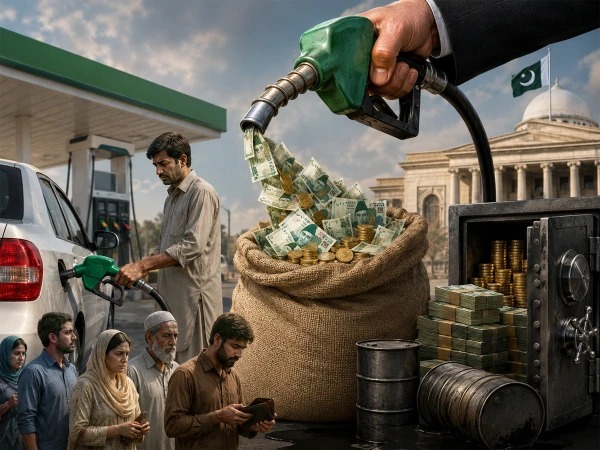
    Pakistani consumers have yet to benefit from a sharp decline in global oil prices, despite international petroleum markets recording a fall of up to 12% over the past three days. The continued high fuel prices have added to the financial burden on households already struggling with rising inflation. Over the last 12 days, fuel prices in Pakistan have increased significantly, with diesel becoming Rs. 65.08 per litre more expensive and petrol rising by Rs. 25.10 per litre. The increases followed the federal government’s decision on July 17 to introduce a daily fuel price adjustment mechanism in line with international market trends. On July 17, petrol was priced at Rs. 310.71 per litre, while high-speed diesel was available at Rs. 323.30 per litre. As of July 29, petrol is being sold at Rs. 335.81 per litre, whereas diesel has climbed to Rs. 388.38 per litre, marking one of the steepest short-term increases in recent years. Although consumers witnessed two minor reductions in petrol prices during this period, the relief was limited. Petrol prices were cut by Rs. 0.35 per litre on July 21 and by Rs. 1.00 per litre on July 27. Diesel prices, however, have not been reduced since the daily pricing mechanism came into effect. International oil markets experienced a sustained upward trend after July 17, contributing to higher domestic fuel prices. However, between July 25 and July 28, global petroleum prices fell sharply, with reports indicating a decline of approximately 12% across major international benchmarks. Despite this significant drop in global prices, Pakistani consumers have not yet received any corresponding reduction at the pump. The absence of immediate relief has sparked concerns among motorists and businesses, particularly those heavily dependent on transportation and logistics, where fuel costs directly affect operating expenses. Economists note that lower international oil prices, if sustained, could create room for a reduction in domestic fuel prices in the coming days. Any adjustment, however, will depend on several factors, including exchange rate movements, government taxes and levies, freight costs, and the pricing formula adopted by the authorities. With inflation continuing to squeeze household budgets, many consumers are hoping the recent decline in global oil prices will soon translate into lower petrol and diesel prices in Pakistan, easing transportation costs and reducing pressure on the overall cost of living.

  • |

    Trump says US will maintain control of Strait of Hormuz 

      US President Donald Trump has said American forces are likely to remain in control of the strategically important Strait of Hormuz, as tensions between Washington and Tehran continue to rise and efforts to revive a temporary peace agreement show little progress. In a post on his Truth Social platform on Wednesday, Trump claimed that the United States has “total control” over the waterway and suggested that Washington intends to maintain its presence there. He described the ongoing naval blockade as a “wall of steel” and said Iran had no effective means of challenging it. Trump also claimed that Iran’s military strength had been severely weakened, alleging that the Islamic Revolutionary Guard Corps had been “decimated.” He further described Iran’s economy as collapsing, pointing to high inflation and accusing Tehran of relying on rhetoric rather than meaningful action. However, an Iranian source said there had been no progress in efforts to restore an interim agreement reached in June. The agreement had called for an immediate halt to military operations and provided a 60-day period, which could be extended by mutual agreement, for both sides to negotiate a longer-term settlement. The arrangement quickly deteriorated. Trump later declared the agreement over, while Iran described it as suspended. Tehran has accused Washington of failing to meet its commitments, including lifting restrictions on Iranian ports and releasing frozen Iranian financial assets. The United States, meanwhile, has accused Iran of failing to reopen the Strait of Hormuz. The Iranian source said mediators were discussing the possibility of Washington returning to the interim agreement and establishing a timetable for fulfilling its commitments, but no progress had been made. Tensions have increased further following fresh attacks on shipping in the region. The Strait of Hormuz, located between Iran and Oman, is one of the world’s most important energy routes and previously carried around one-fifth of global oil and liquefied natural gas supplies. Concerns over disruptions have contributed to a sharp rise in oil prices since the conflict began. Shipping traffic through the strait also dropped significantly. Data showed that only eight vessels were tracked passing through the waterway on Tuesday, the lowest daily figure in about a week. Ship operators have increasingly avoided the route because of security concerns. Additional attacks were reported at other major maritime chokepoints. In the Bab el-Mandeb Strait at the southern end of the Red Sea, four crew members were reportedly killed when an Iran-backed Houthi attack targeted a small cargo vessel. Two Yemeni rescuers were also reported killed. The US military separately said an American Navy helicopter fired two missiles to disable the steering system of a Panama-flagged cargo ship. US Central Command said the vessel had ignored repeated warnings and violated the naval blockade of Iranian ports. Maritime sources said the ship was struck near Pakistan while travelling toward the Gulf of Oman. The latest attacks have increased concerns about global energy supplies. Brent crude prices continued to rise, while investors reacted to growing uncertainty over the possibility of a quick end to the conflict. Iran has warned that the Strait of Hormuz will remain closed unless Washington accepts its conditions for ending the war. At the same time, Trump has continued to alternate between threatening further escalation and suggesting that a peace agreement could be reached soon. With military tensions, attacks on commercial shipping and diplomatic disagreements continuing, prospects for a swift resolution appear increasingly uncertain.

  • | | |

    Imran Khan breaks silence on gender stereotypes, feminism and Bollywood’s portrayal of men

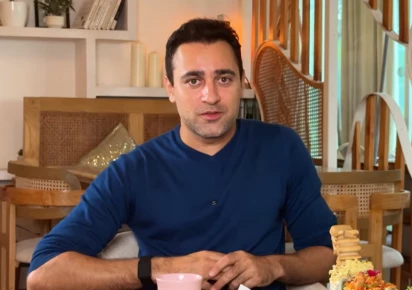
      Ahead of his much-anticipated return to the big screen, Indian actor Imran Khan has spoken candidly about gender stereotypes, feminism, masculinity, fatherhood and the influence cinema can have on social attitudes. In a recent conversation, the actor explained that his growing concern over the way gender-based assumptions have become part of everyday discussions played an important role in shaping his decision to speak more openly about these issues. Khan said he had become increasingly interested in examining the expectations society places on both men and women. According to him, certain assumptions about how people should behave based on their gender have become so common that they are often expressed without being questioned. The actor said he felt a personal responsibility to contribute to conversations surrounding these issues. Rather than remaining a passive observer, he wanted to use his public platform to encourage people to reconsider ideas that have gradually become normalised in society. Khan also discussed the relationship between feminism and conversations about men’s rights. He argued that debates surrounding both subjects can sometimes become trapped within the same stereotypes they are attempting to challenge. In his view, some men who criticise feminism for being problematic may fail to recognise that their own arguments can be influenced by patriarchal thinking or ideas associated with toxic masculinity. For Khan, feminism should not be understood as an attempt to marginalise men or exclude anyone from the conversation. He stressed that discussions about feminism and masculinity should ultimately focus on equality and creating a society in which people are not restricted by traditional gender expectations. The actor also turned his attention to the portrayal of men in Indian cinema, particularly characters who struggle to cope with romantic rejection. Khan argued that Bollywood has repeatedly presented emotionally immature male characters in a sympathetic manner, often encouraging audiences to overlook their problematic behaviour because the characters are experiencing heartbreak. He criticised films in which a male protagonist responds to rejection with anger, obsession or inappropriate behaviour, while the narrative continues to portray him as a victim deserving sympathy. According to Khan, these stories can unintentionally normalise unhealthy emotional responses and send the wrong message about relationships and masculinity. Khan suggested that cinema has a significant cultural influence and therefore filmmakers should consider how their characters and storylines may shape public perceptions. Instead of constantly justifying problematic behaviour through a character’s emotional pain, films could present more mature and realistic portrayals of men dealing with rejection, relationships and vulnerability. His comments come as he prepares to make his return to acting after a prolonged break from the industry. Khan’s decision to step away from films had kept him largely out of the public eye, making his comeback a significant moment for fans who have followed his career. Now, as he prepares to return to the screen, Khan appears interested not only in acting but also in engaging with wider social conversations. His recent remarks reflect his desire to use his experiences and public platform to question established ideas about gender, relationships and masculinity. With his comeback approaching, audiences will be watching closely to see whether Khan’s renewed presence in cinema also brings a different perspective to the kinds of stories and characters he chooses to be part of.

  • |

    UK rejects E1 settlement plan

    LONDON: British Foreign Secretary Ed Miliband has strongly opposed Israel’s plan to invite tenders for the construction of 1,200 new homes under the controversial E1 settlement project, warning that the move could seriously undermine prospects for a future Palestinian state and the two-state solution. The British government has urged Israel to immediately withdraw the E1 plan, cancel the construction tenders and halt the expansion of Israeli settlements in the occupied West Bank. A UK government spokesperson said Israeli settlement activity violates international law and remains a major obstacle to achieving lasting peace in the region. The government stressed that continued settlement expansion could further weaken efforts to establish a viable and geographically connected Palestinian state. Miliband said Britain would continue to strongly support a two-state solution, arguing that it offers the best path toward lasting peace, security and stability for both Palestinians and Israelis. The E1 area, located east of Jerusalem in the occupied West Bank, has long been a sensitive issue because large-scale settlement development there could divide Palestinian communities and complicate the possibility of creating a contiguous Palestinian state. The British government’s latest warning comes amid continued international concern over settlement expansion in the occupied Palestinian territories and its potential impact on future peace negotiations.

  • |

    West Bank village mourns lost harvest as violence halts annual fig festival

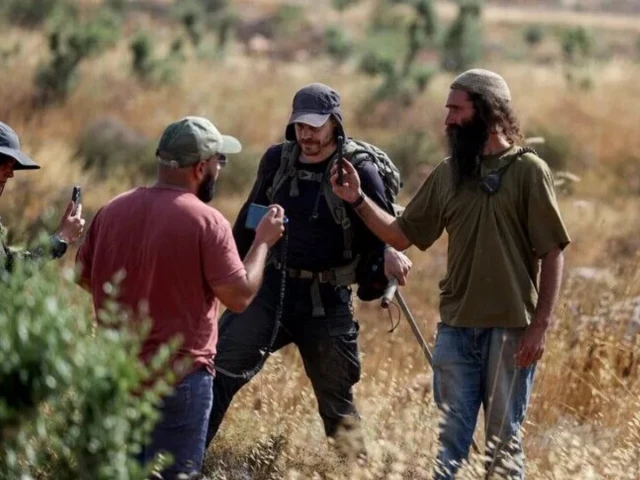
    The Palestinian village of Tel in the northern occupied West Bank should have been celebrating one of its busiest and most cherished times of the year. Residents had spent weeks preparing for the annual fig harvest and a festival expected to attract visitors from across the region. Instead, the village has been left grieving after a deadly confrontation forced organizers to cancel the event and replaced the festive atmosphere with mourning. The violence erupted after an attack involving Israeli settlers last week. The clashes that followed resulted in the deaths of four Palestinians and two Israeli settlers, leaving the community in shock. Black flags now hang where festival decorations were meant to be displayed, while many orchards remain out of reach because of an increased Israeli military presence and ongoing restrictions in the area. Tel village council head Walid Zaidan said the tragedy has deeply affected the community of around 7,000 people. According to him, the village has lost its usual energy and sense of joy after the deaths of four young residents in a single day. He said the emotional impact is visible throughout the village, where families continue to cope with grief and uncertainty. Zaidan said residents had not been seeking confrontation but were trying to protect their homes after repeated attacks by Israeli settlers. He recalled an earlier incident in which the home of a local resident, Sohaib Ramadan, was set on fire. The family managed to escape only moments before the house was completely destroyed. He said many villagers feared another similar attack and went out to defend their neighborhood when violence broke out again. The damage has extended beyond the loss of life. Zaidan said Israeli bulldozers entered farmland and cleared large sections of agricultural land. Initial estimates suggest that around 2,000 dunams, or roughly 500 acres, have been affected. Local officials have been unable to inspect the full extent of the destruction because access to the area remains restricted by Israeli forces and settlers. Residents also claim that a new settlement outpost is being established on the land. At the same time, Israeli forces have carried out arrests and questioned dozens of Palestinians in the village, adding to growing tensions. For the people of Tel, farming is more than an economic activity. Fig trees, olive groves and prickly pear plants have long been central to the village’s identity and way of life. Tel is known throughout the occupied West Bank for producing several varieties of figs, drawing visitors each harvest season to buy fresh fruit and locally made products. Plans for a three day festival featuring figs, dairy products, cheeses and other local goods were abandoned after the violence. Farmers who own nearby livestock and poultry farms have also struggled to reach their animals because roads remain blocked, raising concerns about the welfare of their livestock. Local resident Omar Ishtayeh said the village has depended on agriculture for generations, but increasing restrictions and repeated settler attacks have made farming more difficult. He said orchards that once represented prosperity now reflect the hardships facing local families. With the fig season already underway, many farmers fear the fruit will spoil before they are able to safely return to their land. Palestinian officials argue that the events in Tel are part of a wider rise in settler violence across the occupied West Bank. According to the Palestinian Colonisation and Wall Resistance Commission, thousands of attacks targeting Palestinians and their property were recorded during the first half of 2026. These incidents included assaults on civilians, arson attacks, damage to farmland, restrictions on access to agricultural areas and the expansion of settlement outposts. The United Nations considers Israeli settlements in the occupied Palestinian territories illegal under international law. Palestinians say the continued expansion of settlements is reducing hopes for the creation of an independent Palestinian state and making everyday life increasingly difficult for communities that rely on their land for survival.

  • |

    Air India appoints CEO amid mounting financial losses

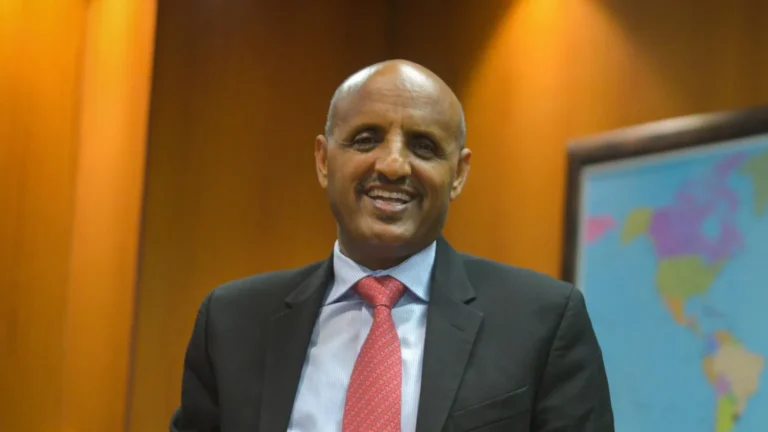
    Air India has appointed former Ethiopian Airlines chief Tewolde Gebremariam as its new chief executive officer, entrusting him with leading the airline through a challenging period marked by financial losses, operational setbacks and heightened safety concerns. Gebremariam succeeds Campbell Wilson, who stepped down in April after overseeing the airline’s initial restructuring following its acquisition by the Tata Group in 2022. The Air India board unanimously selected Gebremariam after an extensive global search, citing his leadership experience and strong operational record. During more than a decade at Ethiopian Airlines, he expanded the carrier’s fleet significantly and helped transform it into one of Africa’s leading and most profitable airlines. His appointment comes at a difficult time for Air India, which continues to recover from last year’s fatal Ahmedabad–London plane crash that claimed 260 lives. The airline is also dealing with mounting financial pressure after reporting a record loss of nearly $2.3 billion and reducing a significant portion of its international operations. In recent months, Air India has faced several operational disruptions, including flight delays, route adjustments and unexpected diversions. The broader aviation industry in India has also been affected by higher operating costs, aircraft delivery delays, disrupted international routes and stricter regulatory oversight. Industry analysts believe Gebremariam’s experience managing Ethiopian Airlines through the Boeing 737 Max crisis and the Covid-19 pandemic could prove valuable as Air India works to restore public confidence. Experts say his immediate priorities will include strengthening safety standards, improving employee morale, modernising the airline’s fleet, expanding its network and returning the carrier to long-term profitability.

Leave a Reply

Your email address will not be published. Required fields are marked *