supreme court upholds
| |

Supreme Court upholds death sentence in woman’s …

The Supreme Court has issued a landmark ruling concerning women’s rights, declaring that a woman’s right to seek khula (judicial divorce) is a constitutional right and that violence against a woman exercising this right amounts to an attack on the Constitution.

A three-member bench of the Supreme Court dismissed the jail petition filed by convict Waseem Abbas and upheld his death sentence.

Justice Muhammad Hashim Khan Kakar authored the four-page detailed judgment.

According to the judgment, women are fully protected under Articles 9, 14 and 25 of the Constitution, which guarantee their security, dignity and equal rights.

The court said that anyone who uses violence against a woman seeking khula would face the full force of the law. It observed that killing a woman for exercising her legal right is an act of brutality and open defiance of the law.

The Supreme Court further ruled that a convict involved in a cold-blooded and planned murder does not deserve any concession.

The judgment also clarified that the testimony of relatives cannot automatically be rejected in cases involving crimes committed within the privacy of a home.

The court said forensic evidence recovered from the crime scene provided conclusive evidence against the accused. The forensic examination established a match between the recovered bullet casings and the pistol linked to the crime.

The Supreme Court found no legal or factual flaw in the decisions of the lower courts and upheld the death sentence awarded to Waseem Abbas.

According to the case record, Waseem Abbas shot and killed his former wife, Shehnaz Bibi, on October 11, 2020.

She had obtained a legal khula decree from a family court before the incident.

The convict allegedly entered the woman’s home and killed her around 48 hours after she obtained the decree.

A trial court subsequently sentenced Abbas to death and awarded him 10 years in prison.

The Lahore High Court later upheld the death sentence.

Similar Posts

  • | |

    FCC issues written verdict in 50-year-old land dis…

    Pakistan’s Federal Constitutional Court has issued a detailed written judgment in a land dispute that has remained unresolved for nearly five decades. The ruling addresses a long-standing legal conflict over land ownership and tenancy rights, overturning previous decisions and restoring the legal status of the land as it existed before 1996. The court declared the 2008 judgment of the Lahore High Court null and void. It also set aside the orders issued by the Federal Land Commissioner in 1996, ruling that those decisions were not legally sustainable. The verdict marks a significant development in one of the country’s oldest land-related legal disputes. Chief Justice Aminuddin Khan authored the 25-page judgment, outlining the legal reasoning behind the court’s decision. The ruling carefully reviewed the history of the case, the relevant land laws, and the constitutional principles governing property rights and administrative authority. According to the judgment, the legal status of the disputed land has been restored to what it was before the Federal Land Commissioner’s 1996 orders. The court held that the rights of tenant farmers, commonly referred to as muzareen, must remain protected in accordance with the Land Regulations of 1972. These regulations were introduced to safeguard the lawful rights of tenants and regulate land that had been taken into government custody. The court emphasized that once land disputes have been finally decided through due legal process, they cannot be reopened or reconsidered without a valid legal basis. The judgment stated that the principle of finality in judicial decisions is essential for maintaining certainty and stability in the legal system. The ruling explained that under the 1972 Land Regulations, various pieces of land had been taken into government possession. Decisions regarding those acquisitions had already attained final legal status after being decided by the competent authorities and courts. However, in 1996, approximately twenty years after those decisions had become final, the Federal Land Commissioner declared the earlier government acquisition orders invalid. The Constitutional Court held that the commissioner lacked the legal authority to reopen and overturn matters that had already reached finality under the law. The judgment also noted that the Lahore High Court, in its 2008 decision, had upheld the Federal Land Commissioner’s orders. After reviewing the legal record, the Constitutional Court concluded that the High Court’s decision was based on an incorrect interpretation of the law and therefore could not be allowed to stand. By restoring the pre-1996 legal position, the court reaffirmed the protection of tenant farmers’ rights under the 1972 regulations while reinforcing the importance of respecting final judicial and administrative decisions. Legal experts believe the ruling could influence the resolution of similar land disputes involving historical claims and government-acquired property. The case was heard by the Federal Constitutional Court following the enactment of the 27th Constitutional Amendment, under which the matter came within the jurisdiction of the newly established court. The judgment is expected to serve as an important legal precedent for future constitutional and land-related cases, particularly those involving administrative powers, property rights, and the principle that finalized legal disputes should not be reopened without lawful justification.

  • | | | |

    Iran’s supreme leader Mojtaba Khamenei names Bag…

    TEHRAN: Iran’s Supreme Leader Ayatollah Mojtaba Khamenei has reshuffled two key positions in the country’s security and political establishment, appointing Mohammad Bagher Zolghadr as his political adviser and former Islamic Revolutionary Guard Corps (IRGC) commander Mohsen Rezaei as his representative on the Supreme National Security Council (SNSC). The appointments were announced through messages attributed to Khamenei on social media on Sunday, according to reports, placing two veteran figures with extensive military and political experience in prominent roles at a sensitive moment for Tehran. In his message to Zolghadr, Khamenei cited his “valuable experience” while appointing him as a political adviser. Zolghadr has held several senior positions in Iran’s security establishment and previously served as secretary of the SNSC. The move follows Zolghadr’s departure from the council’s top administrative position. Reports said Rezaei has been appointed to replace him as secretary of the powerful security body, while also serving as Khamenei’s representative on the council. Rezaei is a veteran figure in Iran’s political and military establishment. He served as commander of the IRGC for much of the Iran-Iraq war era and has held a range of senior political positions. He has also previously run for Iran’s presidency. The latest appointments are drawing attention because the SNSC plays a central role in coordinating Iran’s defence, security and foreign-policy decisions. Although the council is formally chaired by President Masoud Pezeshkian, its work brings together senior political, military and security institutions. The timing of the reshuffle is particularly significant as Iran faces continuing pressure over regional security and negotiations surrounding the Strait of Hormuz. Recent diplomatic efforts have focused on arrangements for shipping through the strategically important waterway, making changes within Tehran’s security leadership especially closely watched. Both Zolghadr and Rezaei are associated with Iran’s security establishment and have extensive experience in military affairs. Analysts are therefore likely to watch closely for any indication that the appointments could affect Tehran’s approach to negotiations, regional security or relations with the United States. The reshuffle also strengthens the role of figures with longstanding links to the IRGC within the leadership structure. Rezaei had already served as a military adviser to Mojtaba Khamenei before taking on the latest assignment. For Zolghadr, the new position keeps him within the senior leadership circle despite his exit from the SNSC secretaryship. His experience in security and political affairs could allow him to continue playing a role in shaping policy from the Supreme Leader’s office. The appointments come at a critical time for Iran, with international attention focused on Tehran’s security posture and the future of the Strait of Hormuz. Whether the changes represent a broader adjustment in Iran’s negotiating strategy remains to be seen, but the elevation of two experienced security figures is likely to keep Tehran’s next moves under close scrutiny.

  • |

    Noor Bukhari concerned over Moammar Rana’s health crisis

    Noor Bukhari, a well-known former Pakistani film actress and model, has expressed concern over the deteriorating health of veteran actor Moammar Rana, saying she feels deeply saddened by his current condition and believes he needs strong support from his family. Noor began her acting career at a very young age and entered the Pakistani film industry when she was just 14. Over the years, she appeared in numerous successful films and worked with some of the biggest stars of her generation. Her notable projects include Mujhe Chaand Chahiye, Ghar Kab Aao Ge, Uff Yeh Larkiyan, and Main Noor Ka Parastaar Hoon. Alongside acting, she also explored other areas of the entertainment industry, including film direction, music videos and television commercials. The actress also remained in the spotlight because of her personal life and multiple marriages. In recent years, she made a major change in her lifestyle after leaving showbiz and turning towards Islam. She later remarried Aun Chaudhary, the father of her daughter, and has since focused much of her attention on her family and children. Recently, Noor appeared as a guest on Ambreen Fatima’s YouTube talk show, where she spoke openly about Moammar Rana and the concerns surrounding his health and reported alcohol addiction. While discussing the veteran actor, Noor described him as a good-hearted person and said she felt emotional after seeing some of his recent videos circulating on social media. She revealed that watching his reels had brought tears to her eyes because she could not understand how he had reached his current situation. Noor emphasized that Moammar Rana had always been regarded as a major star in the Pakistani film industry. According to her, audiences had seen him at the height of his career and would continue to remember him as a superstar. She expressed sadness that fans were now seeing him in a very different condition. The former actress also highlighted the importance of family support during difficult periods. She suggested that Moammar Rana’s wife and family should play a stronger role in helping him overcome his struggles. Noor said she was not certain about how much support he currently receives from his family, but believed that having loved ones around can make a significant difference when someone is going through a difficult phase. She further expressed her view that the actor may also be dealing with emotional or mental distress, adding another dimension to the concerns surrounding his well-being. Noor’s comments have drawn attention because of her personal experience in the Pakistani entertainment industry and her long-standing association with many prominent film personalities. Her remarks also reflect growing concern among fans over Moammar Rana’s current health and lifestyle. The veteran actor remains a respected name in Pakistani cinema, and Noor’s comments have once again sparked discussion about the importance of family, emotional support and care for public figures facing personal challenges.

  • |

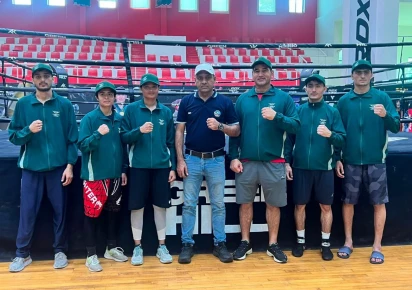
    Pak boxing team ready for Commonwealth Games

    A five-member Pakistan boxing squad has arrived in Glasgow to participate in the Commonwealth Games, with national sports officials expressing confidence in the athletes’ preparation following months of intense training. ​The national contingent, accompanied by team officials and Pakistan Olympic Association (POA) Secretary General Haji Khalid Mahmood Chaudhry, will represent the country across five distinct weight divisions. The squad features three male and two female boxers who have earned their selection through top domestic performances. ​In the men’s categories, Samama Rehman will enter the ring in the 55kg division, Qudrat Ullah will compete in the 60kg event, and Afzal Khan Pathan will feature in the 65kg division. The women’s squad features Malaika Zahid in the 54kg category and Fatima Zahra representing the nation in the 60kg division. ​Maj. Irfan Younis has been appointed as team manager, while Muhammad Nisar Khan of the Pakistan Army will serve as head coach for the tournament. Pakistan Boxing Federation (PBF) President Col. (R) Nasir Ijaz Tung highlighted the extensive preparation undergone by the athletes, voicing optimistic expectations for the squad: ​”Our boxers have undergone comprehensive training and preparation leading up to this major competition. We are confident that they possess the skill and determination to deliver strong performances and make the nation proud on the international stage.” ​The boxing events are scheduled to run from July 23 to August 2, drawing top talent from across participating Commonwealth nations. Pakistan holds a proud competitive tradition in international boxing, and team officials believe the mix of emerging talent and dedicated coaching will yield positive results despite stiff international competition.

  • |

    Zelensky alleges Russia shared satellite intelligence with Iran to target US bases

    Ukrainian President Volodymyr Zelensky has accused Russia of helping Iran identify US military positions in the Gulf by providing satellite intelligence, adding another layer of tension to the already strained relationship between Moscow, Tehran, and Kyiv. His remarks come as Ukraine and Iran exchange fresh accusations following an attack on an Iranian vessel in the Caspian Sea. In a statement shared on social media, Zelensky claimed that Ukraine had observed increased Russian satellite monitoring of Gulf countries and American military installations since the beginning of July. According to him, the satellite images were later used by Iran, with a noticeable connection between the timing of the surveillance and Iranian attacks. He alleged that the imagery was gathered before strikes to assist with planning and then again afterward to evaluate the extent of the damage. While Zelensky did not release evidence to support the claim, he insisted the pattern was clear and significant. The allegations surfaced shortly after Ukraine announced a series of long range military operations in the Caspian Sea. Zelensky said Ukrainian forces had successfully struck vessels carrying military cargo linked to Iran as well as a warship. Ukrainian intelligence later stated that drones had targeted sanctioned cargo ships allegedly involved in transporting military equipment between Iran and Russia. The operation marked one of Kyiv’s most direct actions against assets connected to Tehran and reflected Ukraine’s growing willingness to challenge countries it believes are supporting Russia’s war effort. Iran reacted strongly to the reported strikes. The Iranian Foreign Ministry summoned Ukraine’s senior diplomat in Tehran to protest what it described as a hostile and unlawful attack. Iranian officials said one sailor was killed and several others were injured when a commercial vessel exploded following the strike. The ministry rejected any suggestion that Iran had played a role in the war between Russia and Ukraine and insisted the country had remained outside the conflict. Iranian Foreign Minister Abbas Araghchi also condemned the attack, describing it as a serious violation of the United Nations Charter. He claimed the operation had been carried out to advance Israeli interests and accused Kyiv of trying to draw Europe deeper into the regional conflict. Araghchi said he had discussed the matter with European Union foreign policy chief Kaja Kallas and Russian Foreign Minister Sergei Lavrov, warning that Iran would not allow the incident to pass without a response. Zelensky’s latest accusations regarding Russian support for Iran are not entirely new. Earlier reports citing US officials claimed that Moscow had shared intelligence with Tehran about American military positions in the Middle East during the recent conflict involving Iran and the United States. Those reports also suggested that China could have played a supporting role, although no public evidence has confirmed those claims. The issue has also created mixed messages within the US government. During a congressional hearing, US Defence Secretary Pete Hegseth acknowledged that Russia and China were helping Iran in different ways. He said there was clear cooperation among American rivals but declined to discuss the full extent of that support, arguing that the details should remain classified for security reasons. Only days later, however, President Donald Trump publicly disagreed with that assessment. Writing on his Truth Social platform, Trump said he did not believe Russia or China had assisted Iran. He stated that both Russian President Vladimir Putin and Chinese President Xi Jinping had assured him they were not involved in supporting Iranian military operations. Despite those conflicting views, Zelensky maintained that Russian satellite activity offered direct evidence of cooperation. He specifically pointed to satellite surveillance conducted on July 19 and 20, claiming Russian satellites closely monitored four air bases used by the United States in Bahrain, Jordan, and Kuwait. According to the Ukrainian leader, the timing of those observations raised serious concerns about Russia’s role in helping Iran monitor American military assets in the region.

  • |

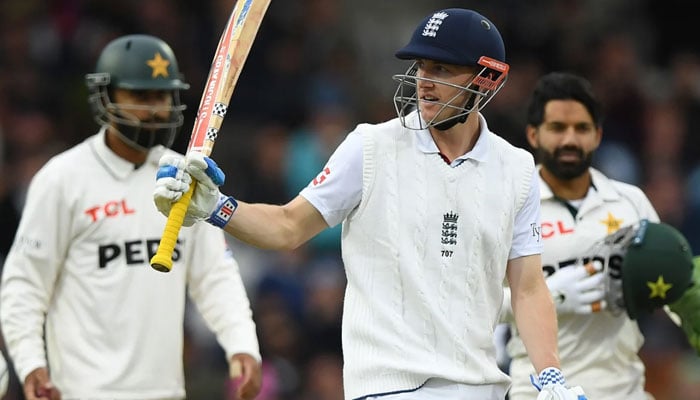
    Pakistan eye changes for Lord’s Test after heavy defeat

    LONDON: Pakistan are considering changes to their playing XI for the second Test against England at Lord’s after a heavy defeat in Leeds exposed several weaknesses in the visitors’ lineup. The second Test of the series is scheduled to begin on August 27, with Pakistan’s team management expected to finalise the playing XI after assessing conditions in London. Pakistan suffered a disappointing start to the series, losing the opening Test by an innings and 103 runs. The result has prompted the management to consider adjustments as the team looks to bounce back at the home of cricket. One of the major possibilities is a rest for wicketkeeper-batter Mohammad Rizwan. His potential absence would open the door for another player to take responsibility behind the stumps while allowing the team management to refresh its batting combination. The biggest question, however, surrounds Babar Azam. The former Pakistan captain missed the first Test because of a finger injury, but team management remains hopeful that he will recover in time to return for the Lord’s match. If Babar is declared fit, Azan Awais is reportedly likely to make way. His return would provide Pakistan with considerable experience in the middle order at a crucial stage of the series. Bowling plans could also change according to the conditions at Lord’s. Sources indicate that Pakistan may consider playing two spinners if the pitch and weather point towards a slower, drier contest. The management is also reportedly considering young fast bowler Ubaid Shah because of his extra pace. His ability to generate speed could provide Pakistan with a different attacking option against England’s strong batting lineup. The conditions in London are expected to differ from those encountered in Leeds. Reports suggest a relatively dry and potentially flat surface could be prepared, increasing the possibility of a match in which batting becomes easier as the game progresses. For Pakistan, the Lord’s Test is more than another fixture in the series. After being comprehensively beaten in Leeds, they need a strong response to regain confidence and keep the series alive. England, meanwhile, will enter the match with momentum and will be confident of repeating their dominant performance. Pakistan’s final XI could therefore prove crucial as they attempt to turn the tide at one of cricket’s most historic venues.

Leave a Reply

Your email address will not be published. Required fields are marked *