
#Art #culture #slower #aging

  • Obsession with cannibalism as the metaphor for love

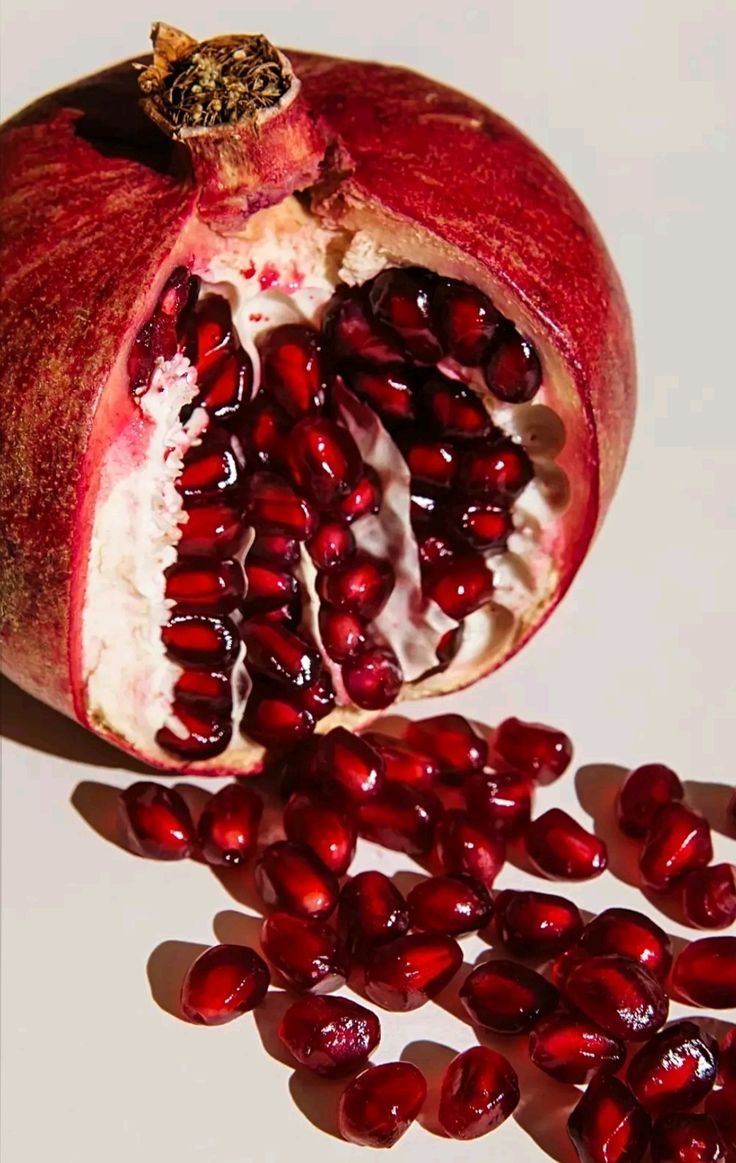
     Social media ecosystems have turned toward a darker trope to articulate the depths of romantic obsession: cannibalism. Curated mood boards are featuring imagery of raw meat, overripe pomegranates, and bloodied lovers. Viral poetry is explicitly framing consumption as intimacy. The internet has revitalized an ancient literary standard. But why has this unsettling imagery captured the imagination of so many digital creators today? If you scroll through modern aesthetic feeds, you will quickly encounter a redundant visual language centered on bodily devotion. The imagery often combines classical romance with motifs of physical destruction and ingestion. Visual art depicting lovers covered in blood or blurring the boundary between violence and affection. Photographs of bruised, overripe red fruits, notably pomegranates, bursting open. Mostly, the graphics are serving as vivid stand-ins for human flesh and emotion. Stills from cinematic works featuring vampires and monsters. The act of biting or feeding is inextricably linked to passion. Images of cuts of raw meat juxtaposed against soft, romantic lighting. Verse that frames complete surrender as allowing oneself to be digested, bitten, or absorbed by a partner. A prime example of this sentiment comes from writer Azra T.’s poem ‘Fruit’: Peel your heart like a pomegranate. Offer it to him, palms outwards. Say ‘eat.’ Watch him come away stained red by you. You’re in his teeth. He’ll kiss you with that mouth. The poem depicts the core ethos of this aesthetic. Total self-offering, emotional vulnerability pushed to its absolute physical extreme, and a desire to permanently mark and be integrated into the person you love. The surge of cannibalism-as-love content feels distinctly accustomed to the melodrama of internet subcultures. However, it is far from a contemporary invention. The urge to frame love as an act of consumption has deep historical and cultural roots.  Why Is the Metaphor Resonating Now? This world is driven by digital interactions and transactional relationships. So, the urge to consume and be consumed represents a longing for absolute vulnerability. When someone invokes cannibalism in a romantic context, they aren’t expressing a literal desire for violence. Instead, they are grasping for a metaphor extreme enough to convey a few core human desires. To be ingested is to become a part of someone else forever. Their body will be physically reshaped by your presence. Traditional closeness still leaves a physical boundary between two individuals. Consumption erases that barrier entirely. Two become one in the most literal sense conceivable. Giving up oneself entirely to be possessed by another is the ultimate gesture of trust. Ultimately, the rise of the cannibalism-as-love highlights an overwhelming power of affection. By reaching for the extreme, internet culture finds a way to express what ordinary romantic language fails to capture. A devotion so grand, so terrifying, and so profound that it borders on the appetite.  

  • | |

    Multimedia pioneer Cao Fei captures the human heart

    Among contemporary Asian creators, Beijing-based multimedia artist Cao Fei stands out as a defining narrative voice. Working across video, virtual reality, installation, and photography, her globally acclaimed career centers on a simple yet profound premise: amidst the whirlwind of rapid industrial advancement, hyper-capitalism, and sweeping technological change, art must always return to the core of the human condition. Born in 1978 in Guangzhou, Cao Fei grew up on the frontlines of staggering societal evolution. Watching the countryside surrender to megacities, factory complexes, and high-tech infrastructure gave her a unique point on the modern world. Rather than viewing this rapid transition with nostalgia or pessimism, her works connect reality and imaginative fantasy. A hallmark of Cao’s career is her fascination with the workplace, particularly automated logistics hubs and manufacturing floors. In iconic pieces like Whose Utopia and Asia One, she embeds her cameras inside functioning industrial facilities from textile plants to highly automated e-commerce distribution centers. Yet, instead of focusing solely on the cold efficiency of machinery or output metrics, she shifts her lens toward the individual laborers maneuvering through these vast, mechanized systems. Her films document the quiet desires, personal dreams, and unspoken emotional bonds of workers who navigate a world increasingly driven by algorithms and quotas. Parallel to her exploration of physical industry, Cao Fei has consistently operated on the cutting edge of digital frontiers. Long before the concept of the metaverse entered mainstream vocabulary, she was constructing RMB City within online platforms like Second Life, exploring how virtual avatars allow people to seek identity, escape, and community in digital environments. Her projects often feature young people engaging in subcultures like cosplay, stepping out of suburban construction sites and into elaborate alter egos. For Cao, these virtual realms are not merely frivolous distractions; they represent vital spaces of self-expression where individuals reclaim agency against the pressure of uniform urban life. Despite her focus on futuristic landscapes, automated networks, and virtual platforms, Cao Fei maintains that rootedness in heritage remains essential. Traditional culture, memory, and personal history act as indispensable anchors in a world constantly shifting beneath our feet. Whether reflecting on regional Cantonese roots, exploring local neighborhood history in Beijing, or depicting surreal futures, her work grounds high-tech environments in real human memory and emotion.   Ultimately, Cao Fei’s artistic vision offers a thoughtful, multi-layered reflection on modern life. By balancing documentation with surreal storytelling, her art reminds us that no matter how complex our machines, algorithms, or cities become, the central narrative of our time remains fundamentally human.

  • | | |

    Omar Musa secures 2026 Miles Franklin Award with Fierceland

    Omar Musa has been named the winner of the prestigious 2026 Miles Franklin Literary Award for his novel, Fierceland. Recognized as Australia’s most celebrated literary prize, the award honors novels of the highest literary merit that explore Australian life in all its phases. Musa’s victory highlights a powerful shift in the country’s literary landscape, celebrating a work that fearlessly confronts historical legacies while weaving together rich cultural folklore. Deconstructing Colonial Narrative Frameworks At the core of Fierceland lies an ambitious, multi-layered critique of Joseph Conrad’s classic 1899 novella, Heart of Darkness. Where Conrad’s seminal text depicted the non-Western world through a lens of exoticism, peril, and foreign mystery, Musa flips the narrative on its head. He reclaims the riverlands and lush rainforest environments not as places of terrifying obscurity, but as vibrant ecosystems steeped in history, memory, and indigenous knowledge. The True “Darkness” Musa confronted the colonial storytelling. In fact, he challenges readers to examine how Western literature has historically framed non-Western landscapes and their people. Fierceland presents the journey inward as a descent into moral decay. This journey is an essential process of unlearning, confrontation and reclamation. The novel demonstrates that the darkness lies within the unchecked impulses of imperial exploitation. It also compels the reader to not surrender to the historical erasure. The Role of Spectral Presence and Cultural Folklore Ghosts and supernatural forces drift consistently throughout the narrative of Fierceland. These forces serve as both literal story elements and profound allegorical symbols. Rather than functioning purely as horror tropes, these spectral figures act as guardians of history and physical manifestations of unhealed wounds. Musa attributes this atmospheric depth to his upbringing and heritage. He reflects on the influence of his family and heritage. Musa noted that ghost stories are deeply woven into the fabric of Malaysian culture. Growing up, he listened to his father recount haunting tales from his homeland. He developed an early appreciation for oral traditions where the living and spiritual realms continually intersect. In Fierceland, these inherited myths explore themes of displacement, grief, and ancestral connection.  These myths gave a voice to forgotten histories that refuse to remain buried. A Multidisciplinary Voice in Modern Storytelling Musa’s background is of an acclaimed spoken-word poet, hip-hop artist, and woodcut printmaker. His own roots shine brightly throughout the pages of Fierceland. The prose is defined by a rhythmic, visceral cadence that reflects his poetic mastery. His ability to blend social commentary with lyricism creates a sensory reading experience.   Winning the 2026 Miles Franklin Literary Award positions Musa as one of the most compelling voices. The judging panel has recognized the evolving nature of Australian literature. Fierceland stands as a testament to the power of reclaiming narrative agency. The novel proves that when old myths are critically dissected, extraordinary stories can emerge.