|

Tehran and Muscat near maritime route agreement

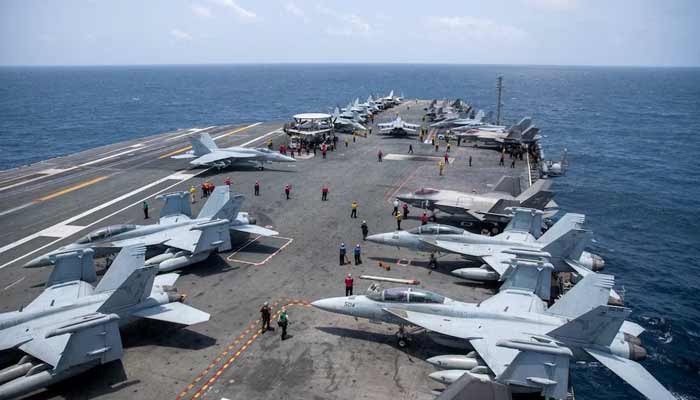
Diplomatic attempts to restore stability to one of the world’s most vital energy corridors have reached a critical juncture. Iranian officials confirmed on Saturday. Tehran and Muscat are on the verge of finalizing a bilateral accord to establish a temporary shipping traffic scheme through the Strait of Hormuz. However, Iranian leadership made clear that signing the bilateral agreement with Oman will not lead to an immediate unblocking of the maritime bottleneck.

Speaking on the technical negotiations, Iranian Foreign Minister Abbas Araqchi stated that talks regarding a revised passage framework with Oman are very close to completion. Total resumption of commercial transit remains contingent on broader geopolitical demands. Chief among Tehran’s requirements is financial restitution from Washington for damage incurred during the five-month regional military escalation that began in late February. An explicit end to American naval blockades targeting Iranian harbors.

The current conflict trace back to late February 2026. The time following joint strikes by American and Israeli forces against Iranian targets. Subsequent hostilities severely disrupted commercial navigation which historically accommodates twenty percent of global petroleum and natural gas shipments.

In Washington, senior administration officials signaled cautious optimism over the ongoing discussions between the neighboring Gulf nations. A U.S. official indicated that the White House anticipates a formal pact between Iran and Oman shortly, noting that once a verifiably secure mechanism for unhindered merchant shipping is announced, the United States stands ready to lift its naval blockade against Iranian ports.

Despite the encouraging diplomatic signals regarding traffic management, military rhetoric and actions on the water demonstrate that significant friction remains. Statements released by Iran’s Islamic Revolutionary Guard Corps (IRGC) emphasized that political prerequisites set for the United States operate independently of the maritime route negotiations with Oman. According to IRGC spokesman Hossein Mohebbi, the physical opening of the shipping lanes to international traffic will only occur after Washington agrees to Iran’s broader security conditions and ceases interference in regional affairs.

Compounding the volatility, maritime safety concerns flared anew on Saturday when the United Arab Emirates reported that a missile strike had hit a commercial tanker linked to its national oil company while navigating the strait. Although no casualties were reported onboard, the incident highlights the fragile security landscape even as diplomats work to establish temporary transit corridors.


The proposed bilateral framework aims to replace the prior international traffic separation system with a updated protocol, temporarily managing maritime movement while complex legal and technical standards are finalized. Yet, as Tehran leverages its geographic posture over the waterway to press for broader economic and security guarantees, international observers remain attentive to whether technical shipping agreements can effectively de-escalate the wider confrontation.
Similar Posts

  • | | |

    Iran vows to continue strikes as regional tensions rise

    Iran’s Supreme National Security Council Secretary Mohammad Bagher Zolghadr said Saturday that Iranian forces would continue their attacks until they defeat their enemies and take what he called revenge for the deaths of innocent children in Minab and Lamerd. State news agency IRNA quoted Zolghadr as saying Iran would also seek retribution for the US-Israeli war and the killing of schoolchildren. Iranian authorities say an attack on a girls’ school in Minab caused the highest number of casualties, killing 168 people and injuring 95, most of them children. Meanwhile, Iranian Foreign Minister Abbas Araghchi said there was no military solution to the growing conflict between Saudi Arabia and Houthi rebels in Yemen. In an interview with the state-run Iran Daily, Araghchi called for dialogue to address tensions involving Yemen, the Bab al-Mandab Strait and other regional disputes. Iranian Foreign Ministry spokesman Esmaeil Baghaei also accused the European Union of hypocrisy over its criticism of Iran’s human rights record. Responding to EU foreign policy chief Kaja Kallas, Baghaei alleged that European support for military actions against Iran contradicted the bloc’s stated commitment to human rights. He also accused the EU of failing to condemn attacks that Iran says have targeted civilians and critical infrastructure. Iranian authorities reported no new US strikes overnight into Saturday, marking a pause after nearly two weeks of attacks. Health Ministry spokesman Hossein Kermanpour described the night as peaceful. According to Iranian figures, the conflict has killed more than 3,400 people in Iran, while casualties have also been reported in Israel and other countries across the region. In a separate development, Egypt’s foreign minister held talks with his Iranian and Omani counterparts on efforts to reduce regional tensions and strengthen maritime security.

  • | | | |

    Israeli raids, settlement plans deepen West Bank t…

    RAMALLAH: Tensions across the occupied West Bank intensified on Monday as Israeli forces reportedly destroyed water pipelines, detained Palestinians and ordered families to leave their homes ahead of a planned demolition. While a new settlement plan near Jerusalem raised fresh concerns over the expansion of Israeli settlements. The latest developments have added to growing pressure on Palestinian communities already facing restrictions on movement, damage to agricultural land and disruptions to basic services. Palestinian human rights activist Aref Daraghmeh said Israeli forces destroyed water pipelines in the Atouf and Ras al-Ahmar areas of Tubas governorate. The areas, located in the northern Jordan Valley, have experienced repeated military operations in recent months. According to Daraghmeh, agricultural land has been cleared, water networks damaged and artesian wells filled in, causing significant losses for farmers who depend on the land and water supplies for their livelihoods. The destruction of water infrastructure has particular significance in the Jordan Valley, where Palestinian farming communities rely heavily on limited water resources. Brothers detained during raid In another operation in the northern Jordan Valley, Israeli forces detained two Palestinian brothers in the Ein al-Hilweh area, according to local sources cited by Anadolu. Meanwhile, Israeli troops raided the village of Tell, southwest of Nablus, and ordered residents to leave several homes ahead of the planned demolition of a house belonging to Palestinian Farouq Ramadan. Ramadan was killed on July 24 during an attack in the village, according to Palestinian sources. They said he had disarmed and killed one of the attackers before being shot dead. Three other members of his family were also killed and four Palestinians were injured during the incident, the sources said. Near Ramallah, agricultural land east of Jaljaliya village was also set on fire, Palestinian official news agency Wafa reported. Palestinian civil defence crews later brought the blaze under control. Village council head Osama Nazmi said an Israeli outpost had been established in the area about a year ago and that Palestinian homes belonging to residents from nearby Al-Mazraa Al-Sharqiya had subsequently been seized. New settlement plan raises alarm At the same time, Palestinian officials said Israel had advanced plans for a new settlement containing approximately 650 housing units south of Jerusalem. The Palestinian Jerusalem Governorate said Israel’s District Planning and Building Committee had deposited the plan for the proposed “Nofei Rachel” settlement. The project would cover approximately 27 dunams, or 6.7 acres, near Palestinian homes, according to the governorate. Palestinian authorities warned that the consequences would extend beyond the construction of the housing units, arguing that the development could affect Palestinian movement, urban growth and the ability of local communities to expand. They described the plan as part of a broader Israeli policy of expanding settlements and restricting Palestinian development. Israeli rights organisation Ir Amim separately said Israel had advanced three major settlement projects involving more than 3,400 housing units in East Jerusalem in recent weeks. The developments have renewed international concerns about settlement expansion. The United Nations and most countries regard Israeli settlements established in territory occupied since 1967 as illegal under international law. Critics say continued settlement construction threatens the possibility of establishing a viable Palestinian state alongside Israel. West Bank caught in wider conflict The latest events come as the Israeli-Palestinian conflict continues to reverberate across the region. According to figures cited by Palestinian authorities, violence in the West Bank has intensified alongside the wider war that began after the October 2023 Hamas attack on Israel. The situation has also drawn attention to the issue of Palestinian remains held by Israel. Report: Israel holds 1,700 Palestinian bodies Israel is holding the remains of around 1,700 Palestinians for possible use in future exchanges, Israeli newspaper Haaretz reported, citing two unnamed sources familiar with recent discussions within Israel’s security establishment. According to the report, Shin Bet chief David Zini supports retaining the bodies in case Israeli citizens are captured or disappear in the future. The Israeli military is also reportedly supportive of the position. Haaretz reported that most of the remains are believed to belong to Palestinians from Gaza who participated in the October 7, 2023 attack on Israel or subsequent fighting. However, the newspaper also reported that some of the bodies belong to Palestinians who were not involved in combat. The issue has raised legal questions inside Israel. Legal experts cited by Haaretz questioned whether authorities have the power to retain the remains of Palestinians who have not been proven to have taken part in fighting. The Palestinian National Campaign for the Retrieval of Martyrs’ Bodies and Disclosure of the Fate of the Missing said in October 2025 that Israel was holding around 1,500 bodies of Palestinians from Gaza at the Sde Teiman military facility in southern Israel. A crisis extending beyond borders The developments in the West Bank are unfolding against the backdrop of the devastating Gaza conflict. Palestinian health authorities say tens of thousands of Palestinians have been killed and injured since October 2023, while much of Gaza’s infrastructure has been destroyed or severely damaged. The reported destruction of water pipelines in the West Bank, the proposed settlement expansion and the continued disputes over Palestinian remains highlight how the conflict affects not only major political centres but also ordinary families, farmers and communities. For Palestinians living in areas such as Tubas, Nablus and the outskirts of Jerusalem, the immediate concerns are often deeply personal: access to water, the safety of their homes, the ability to farm their land and the uncertainty of what another military raid may bring. As settlement plans move forward and military operations continue, hopes for a reduction in tensions remain overshadowed by developments that are reshaping the landscape of the occupied West Bank.

  • | | |

    Iran says Pakistan ties gaining greater importance

    TEHRAN: Iran has described its relationship with Pakistan as increasingly important, saying Islamabad has played a significant role as a mediator since the outbreak of the regional conflict. Iranian Foreign Ministry spokesperson Esmaeil Baghaei said the two neighbouring countries were maintaining close diplomatic contacts. He also confirmed that Iranian Foreign Minister Abbas Araghchi and Parliament Speaker Mohammad Bagher Ghalibaf had been invited to visit Islamabad. Baghaei said the two officials would travel to Pakistan at a suitable time. He did not announce a specific date for the visit. He described reciprocal visits between the two countries as a natural part of their growing bilateral relationship. The Iranian official also played down concerns that the recently signed defence agreement between Pakistan, Saudi Arabia and Turkiye was aimed at Tehran. Pakistan, Saudi Arabia and Turkiye signed the Makkah Joint Defence Agreement on August 7. The agreement seeks to strengthen collective defence cooperation and provides for a joint response if any member comes under attack. Baghaei said Tehran did not consider the agreement a direct threat to Iran. He said regional countries were increasingly seeking security arrangements based on their own regional realities rather than relying entirely on external powers. He maintained that regional cooperation could contribute to stability if such arrangements remained inclusive and focused on preventing conflict. Baghaei also said Iran was not prepared to resume direct negotiations with the United States while Tehran believed Washington was violating an interim agreement. The Iranian government has also linked the reopening of the Strait of Hormuz to a number of demands. These include compensation for damage caused during the conflict and an end to the US naval blockade of Iranian ports. Meanwhile, Iran and Oman are continuing discussions on arrangements for commercial shipping through the Strait of Hormuz. Baghaei said the talks were progressing in a constructive manner. He said the two sides had reached an understanding on a proposed map for shipping traffic and were working on several technical details. According to the Iranian official, the proposed arrangement would establish mechanisms for safer maritime movement. It would also address environmental protection and maritime crimes. He stressed that the discussions with Oman were focused on ensuring safe international shipping and were separate from broader political disputes. Baghaei nevertheless reiterated that Tehran would not allow the full reopening of the strategic waterway unless its conditions concerning Washington were addressed. In a separate development, Iran has appointed former Islamic Revolutionary Guard Corps commander Mohsen Rezaei to a senior position in the Supreme National Security Council. Rezaei has replaced Mohammad Baqer Zolqadr as secretary of the body responsible for coordinating Iran’s security and foreign policy. No official reason was immediately given for the change. It also remains unclear whether the appointment will lead to any major shift in Iran’s security policy. Rezaei, 71, commanded the Revolutionary Guards from 1981 to 1997. He later served for more than two decades as secretary of Iran’s Expediency Discernment Council and also held the position of vice president for economic affairs. Iran’s Supreme National Security Council brings together senior military, intelligence and government officials. It is formally chaired by the president, while the supreme leader retains ultimate authority over major state matters. A separate decree appointed Rezaei as the supreme leader’s representative on the council. Zolqadr was instead named as a political adviser. The developments come as Iran faces heightened regional tensions and continues efforts to manage its relations with neighbouring countries and major international powers.

  • | | | |

    Israeli settlers torch two mosques in West Bank as…

    WEST BANK: Two mosques were set ablaze in the occupied West Bank overnight, Palestinian officials said on Sunday, in the latest escalation of violence that has sharply raised tensions across the territory. The attacks targeted a mosque under construction in Qusra, south of Nablus, and another mosque in the village of Kour, near Tulkarm. The incidents came only days after a deadly confrontation in the nearby village of Tal that left four Palestinians and two Israelis dead. In Qusra, Mayor Abdel Azim Wadi said settlers set fire to the mosque’s entrance and damaged parts of its stonework. Hebrew graffiti, including the word “revenge,” was reportedly sprayed across the walls. The Israeli military said troops were sent to the area after receiving reports of the fire. According to the army, the suspected attackers had already fled when soldiers arrived. Israeli police were expected to collect evidence and investigate the incident. The second attack took place in Kour, where Palestinian officials said a mosque was set alight and racist slogans were written on its walls. Worshippers and local residents managed to prevent the fire from causing further destruction, according to reports. The mosque attacks have added another disturbing chapter to a widening cycle of violence in the West Bank, where clashes, arson attacks and raids have intensified since the Gaza war began in October 2023. The latest incidents also follow a deadly confrontation in Tal on Friday, where four Palestinians and two Israelis were killed. The aftermath has triggered further arrests, raids and attacks in surrounding Palestinian communities. With tensions already running high, the torching of places of worship has raised fresh fears that the latest violence could fuel further retaliation and deepen an already volatile situation across the occupied territory.

  • | |

    Trump halts Iran strike, pushes for deal

    US President Donald Trump has announced that he is postponing plans for a new military strike against Iran, saying he is giving diplomacy another opportunity to resolve tensions over Tehran’s nuclear programme and restore navigation through the Strait of Hormuz. In a statement posted on his social media platform, Trump said Iran, along with other countries in the Middle East, had requested additional time to finalize an agreement aimed at reopening the strategic waterway and addressing international concerns over Iran’s nuclear activities. Trump said he had agreed to suspend military action for the time being, provided that negotiations lead to a rapid and meaningful agreement. He added that the decision was made in the interest of regional stability, global security and the future prosperity of Iran. He also claimed that Israel supports the diplomatic approach, although Israeli officials had not publicly commented on the statement. Despite the temporary pause, tensions remain high across the region. Iranian officials warned that any military action by the United States or its allies would trigger an immediate and decisive response. Tehran maintained that it would defend its sovereignty against any form of aggression. Iranian Foreign Minister Abbas Araqchi held separate telephone conversations with senior officials from Pakistan, Türkiye and Saudi Arabia to discuss the rapidly evolving regional situation. During the talks, he warned that any attack on Iran would have serious consequences for regional peace and stability. Araqchi also stressed that Iran would respond proportionately if the United States, Israel or any regional country participated in military action against Iranian territory. The discussions focused on preventing further escalation and encouraging diplomatic efforts to avoid a wider conflict. Meanwhile, Saudi Crown Prince Mohammed bin Salman also held talks with President Trump to seek clarification on Washington’s plans regarding Iran. Although officials confirmed that the conversation took place, no further details were released. Iranian media affiliated with the country’s security establishment warned that attacks on Iran’s energy infrastructure could result in retaliatory strikes against oil and gas facilities across the Gulf region. The warning has heightened concerns among energy producers and international markets. President Trump acknowledged that negotiations remain difficult and admitted that his confidence in reaching an agreement has weakened. However, he said his administration continues to pursue diplomatic engagement before considering further military action. Senior US officials remain involved in efforts to secure a negotiated settlement. The conflict has already had a significant impact on global energy markets. Fighting between US, Israeli and Iranian forces has disrupted regional stability and increased uncertainty over international oil supplies. The Strait of Hormuz remains one of the world’s most important shipping routes for crude oil exports. Continued security threats have reduced commercial shipping through the passage, raising concerns over global energy supplies and increasing pressure on oil prices. Analysts say prolonged instability in the Gulf could further affect international markets if diplomatic efforts fail. Rising oil prices have already placed additional economic pressure on many countries dependent on imported energy. Regional security concerns have also expanded beyond the Strait of Hormuz. Maritime authorities reported separate incidents involving commercial vessels near Oman, including damage to a tanker after it was struck by an unidentified projectile. Another vessel reported a nearby explosion but escaped without damage.

Leave a Reply

Your email address will not be published. Required fields are marked *