thai airways raise

Thai Airways to Raise Fuel Surcharges by Nearly 100%

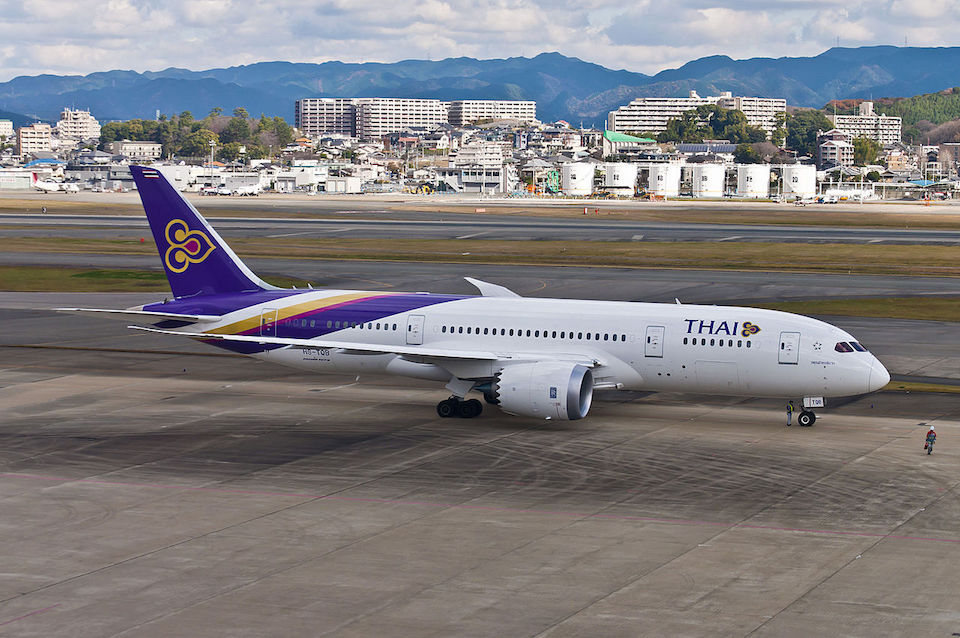
BANGKOK — Thai Airways International has announced it will nearly double its fuel surcharges on international routes, citing a “fuel crisis” driven by the intensifying conflict in the Middle East, which has sent aviation fuel prices skyrocketing by two to three times compared with pre-conflict levels.

Thai Airways to Cut Multiple Domestic and International Flights in May as Fuel Costs Bite

The move, described by the airline as unavoidable, reflects the harsh reality of global fuel markets in 2026. Data indicates that oil prices have jumped from approximately 80perbarreltomorethan80perbarreltomorethan240 per barrel, with no immediate prospect of relief. Jet A-1 aviation fuel, the lifeblood of commercial aviation, has followed the same trajectory, leaving airlines around the world scrambling to adjust their cost structures.

Fuel is a major cost in airline operations, accounting for as much as 30 percent of each flight. The sharp increase in fuel prices has made it necessary for Thai Airways to revise its surcharge rates to reflect the real situation, the airline said in an announcement. For passengers, the impact is stark: fuel surcharges will increase by nearly 100 percent, meaning travellers will have to pay about twice as much as they currently do on many routes.

Examples of the new surcharges illustrate the scale of the increase. On the Bangkok–Milan and Bangkok–London routes, economy class surcharges will rise from 9,990 baht to 19,070 baht, while business class surcharges will jump from 18,680 baht to 35,750 baht. On regional routes such as Bangkok–Narita and Bangkok–Seoul, economy surcharges will increase from 5,540 baht to 10,630 baht, with business class rising from 8,120 baht to 15,530 baht.

Even shorter routes have not been spared. On the Bangkok–Yangon route, economy surcharges will rise from 1,780 baht to 3,390 baht, while business class will increase from 2,580 baht to 4,930 baht. On the Bangkok–Beijing and Bangkok–Delhi routes, economy surcharges will climb from 4,580 baht to 8,760 baht, with business class rising from 6,440 baht to 12,130 baht.

For travellers planning trips after the new rates take effect, timing is everything. Thai Airways has confirmed that the new fuel surcharge rates will apply to tickets issued from Friday, May 1, 2026, onwards. Passengers holding tickets issued by Thursday, April 30, 2026, will still receive the existing rates, even if their travel date falls after May 1. The distinction between ticket issuance date and travel date offers a narrow window for passengers to book at current rates before the May 1 deadline.

The crisis has not only affected air ticket prices. During April, Thai Airways also had to reduce the number of flights and cancel some domestic and international routes to cope with continually rising costs. The airline’s network has been trimmed, with frequencies cut on routes to Tokyo, Beijing, Shanghai, Seoul, Taipei, Hong Kong, Kaohsiung, Hyderabad, Mumbai, Istanbul, Frankfurt, Munich, Copenhagen, Oslo and Stockholm, among others. What remains of the schedule is now more expensive to fly.

Energy Minister: No Fuel Crisis for Thailand Despite Mideast War

For passengers, the new surcharges mean that international travel from Thailand has suddenly become significantly more costly. For Thai Airways, the surcharge increase is a survival mechanism, a way to keep planes in the air when fuel costs threaten to make each flight a money-losing proposition. And for the global aviation industry, the message is clear: as long as the Middle East burns, airfares will follow suit. The new surcharges take effect Friday. Passengers who can book before then would be wise to do so. After that, the sky just got a lot more expensive.

-Thailand News (TN)

Similar Posts

  • Bhumjaithai Secures Dominant Win, Anutin Poised to Continue as PM

    BANGKOK — The Bhumjaithai Party, led by incumbent Prime Minister Anutin Charnvirakul, has secured a commanding victory in Thailand’s general election, winning 194 parliamentary seats according to the latest unofficial tally released early Thursday. Bhumjaithai Projected as Leading Party With 92% of votes counted nationwide by 4:08 a.m. on February 9, preliminary results from the […]

  • | |

    Sohail Afridi fires warning over Imran Khan’s sa…

    PTI leader and Khyber Pakhtunkhwa Chief Minister Sohail Afridi has said that the party does not want any harm to befall its founder, Imran Khan. Speaking at a press conference alongside other PTI leaders, Afridi said there was no alternative to resisting what he described as a “fake government”. He warned that young people were increasingly frustrated about their future and would come out of their homes on September 27. Afridi said PTI leaders had repeatedly sought a meeting with Imran Khan but had received no positive response. He said Khan’s family members were non-political and that both his family and lawyers were willing to give assurances that no political press conference would be held after the meeting. The chief minister also expressed concern about Khan’s health. He said the party wanted him to receive proper medical treatment and warned that PTI workers would stage a sit-in outside the Supreme Court if they were not allowed to meet him. Afridi reiterated that the party did not want Imran Khan to suffer any harm. He said PTI’s political struggle was centred around its founder and that his supporters would continue to raise their concerns over his treatment. Speaking on the occasion, PTI leader Salman Akram Raja said Imran Khan’s health was currently the party’s most important concern. Raja said no further interference with Khan’s health would be tolerated. He also indicated that the political campaign being planned by the party would continue and would not be stopped. He criticised the government and alleged that PTI supporters were being treated unfairly. He said the party would continue its political struggle against what he called an imposed government.

  • King Charles and Queen Camilla make dramatic TARDI…

      King Charles III and Queen Camilla delighted spectators with a memorable and theatrical entrance at the opening ceremony of the Glasgow 2026 Commonwealth Games, arriving in the iconic Doctor Who TARDIS in a tribute to Scotland’s rich cultural heritage and one of Britain’s most beloved television series. Before the official ceremony began, members of the Royal Family met Glasgow 2026’s official mascot, Finnie, as well as several Baton Bearers who played a key role in carrying the Commonwealth Games baton across member nations and territories. Joining the King and Queen was the Duke of Edinburgh, who greeted participants and posed for photographs ahead of the event. The royal arrival became one of the evening’s biggest highlights as King Charles and Queen Camilla symbolically “travelled” from Balmoral Castle in the Scottish Highlands to Glasgow’s OVO Hydro Arena inside the famous blue police box known worldwide as the TARDIS. The dramatic entrance was met with loud applause from thousands of spectators gathered for the ceremony. Upon stepping out of the TARDIS, the King and Queen were welcomed by Olympic cycling legend Sir Chris Hoy and Scottish actor Greg McHugh, who both participated in the opening celebrations. The creative performance blended elements of Scottish culture with entertainment, setting the tone for an evening dedicated to celebrating the nation’s history, creativity, and sporting spirit. The TARDIS featured during the ceremony carried special significance beyond its connection to the long-running television series. Its design is based on a real Scottish police box created in 1929 by architect Gilbert Mackenzie Trench. Organizers included the famous time machine as a tribute to Scotland’s contribution to popular culture and innovation. Sir Chris Hoy, who was involved in piloting the TARDIS during the performance, later described the experience of sharing the stage with King Charles as unforgettable and surreal. He said it was an extraordinary moment to participate in such a unique celebration alongside the monarch. The royal entrance also drew comparisons with one of Britain’s most iconic Olympic moments. It echoed Queen Elizabeth II’s surprise appearance alongside actor Daniel Craig, portraying James Bond, during the opening ceremony of the London 2012 Olympic Games. That memorable sequence became one of the most talked-about moments in Olympic history, and King Charles’ TARDIS arrival paid tribute to that tradition of blending royalty with British popular culture. Following their arrival, King Charles and Queen Camilla took their seats in the royal box to watch the vibrant opening ceremony. The event featured music, dance, comedy, and performances from well-known Scottish entertainers, including wrestler Grado, who appeared wearing a giant teacake costume. Glasgow 2026 mascot Finnie also entertained the crowd throughout the celebrations, adding colour and energy to the occasion. The Glasgow 2026 Commonwealth Games officially bring together more than 3,000 athletes representing 74 nations and territories. Over the next 11 days, competitors will participate in a wide range of sporting events while celebrating friendship, diversity, and excellence across the Commonwealth. As Head of the Commonwealth, King Charles formally declared the XXIII Commonwealth Games open, marking the official start of the international sporting event. His declaration concluded a spectacular opening ceremony that celebrated Scotland’s culture, creativity, and warm hospitality while launching one of the world’s most prestigious multi-sport competitions.

  • Cambodia Pushes for Immediate Ceasefire as Border Talks Resume

    BANGKOK – Cambodian Defence Minister Tea Seiha has formally called for an immediate end to hostilities and full implementation of existing ceasefire agreements in a letter to his Thai counterpart. The proposal, dated December 22, urges a return to the terms of the Kuala Lumpur ceasefire agreement signed on July 26 and the Joint Declaration […]

  • | | |

    Pakistan imposes new restrictions on foreign media

    Pakistani authorities have exposed regulatory measures governing foreign media operations in the country. The strategy has triggered an alarm among press freedom advocates, legal observers, and media personnel. Under the newly issued Foreign Media Facilitation Guidelines, journalists representing international organizations will no longer be permitted to travel or cover news events outside three major metropolitan hubs without explicit prior authorization from the government. The regulations come at a delicate juncture marked by escalating political instability, public demonstrations, and security crackdowns across key regions including recent demonstrations connected to heightened tensions in Kashmir and subsequent enforcement actions in urban centers like Lahore. Critics argue that by constraining the scope of international newsgathering precisely when accurate coverage is most vital, the state risks deepening information voids and exacerbating the spread of unverified claims. Key Requirements of the New Media Framework Administered through the External Publicity Wing of Pakistan’s Ministry of Information, the updated regulatory policy establishes procedural hurdles for international news agencies. Foreign correspondents, local staff, contributors, and freelance journalists working for international outlets must secure an official No Objection Certificate (NOC) before traveling to conduct reporting assignments outside Islamabad, Karachi, and Lahore. Regions requiring prior approval now explicitly cover all provincial territories, sensitive border zones, and Pakistan-administered Kashmir. The framework provides no defined processing timeframe for NOC applications, leaving reporting teams facing unpredictable delays and potential administrative holds. The Ministry reserves the authority to suspend or revoke official media accreditation if reporting is judged to run counter to the country’s national sovereignty, ideology, or public safety phrasing that legal analysts describe as intentionally open-ended. Backlash from Analysts and Rights Groups The enactment of these guidelines has drawn sharp rebuke from political commentators, civil society organizations, and international press watchdogs, who view the move as part of a systematic contraction of independent journalism within the country. Former senator and political commentator Mustafa Nawaz Khokhar highlighted the grave consequences of curtailing foreign news organizations, warning that restricting legitimate press operations ultimately undermines public trust. These guidelines are tantamount to choking international media in an increasingly shrinking space, Khokhar noted, emphasizing the vital role global news outlets play when local media environments face structural pressure. The public looks at the international media for independent reporting. Placing restrictions simply creates more room for disinformation and the spread of fake news.   Rights groups including the Pakistan Federal Union of Journalists (PFUJ) and international watchdogs have echoed these concerns. They’re pointing out that advance the requirement of government permission for routine reporting effectively grants authorities veto power over what news reaches the global audience. Broader Context of Press Freedom in Pakistan Pakistan’s media environment has historically operated in a complex space balancing constitutional guarantees of free speech against national security laws. However, media analysts note that state oversight of both traditional print/broadcast journalism and online digital spaces has tightened significantly in recent years. The introduction of the new foreign media guidelines coincides with broader legislative shifts aimed at regulating online speech and social media platforms. Observers express concern that administrative barriers, combined with strict digital laws, could leave remote or politically sensitive areas completely cut off from independent news coverage. By limiting foreign journalists’ mobility primarily to the capital and two largest economic centers, field reporting from rural regions, border zones, and conflict-affected territories will become exceptionally difficult to conduct legally. Implications for International Coverage As international newsrooms adapt to the new framework, news gathering strategies across South Asia are likely to face operational friction. Bureau chiefs and correspondents report that unpredictable NOC processing times make time-sensitive breaking news coverage outside major cities nearly impossible to guarantee.   Without direct on-the-ground access for independent journalists, global news consumers may increasingly have to rely on official statements or unverified social media updates during crises. For a country navigating complex domestic politics and delicate international relations, press freedom advocates warn that restricting the lens through which the world views Pakistan could backfire, isolating the nation’s political discourse and fostering an environment where misinformation thrives unchecked.

  • | |

    Dar urges SCO action against Afghan terrorism

    Deputy Prime Minister and Foreign Minister Ishaq Dar has called on member states of the Shanghai Cooperation Organisation (SCO) to strengthen regional cooperation against terrorism, saying lasting peace and economic development cannot be achieved unless militant groups operating from Afghan territory are effectively eliminated. Addressing the SCO Council of Foreign Ministers’ meeting, Dar said Pakistan remains committed to regional peace and wants to see Afghanistan emerge as a peaceful, stable, regionally connected and economically prosperous country. He said a secure Afghanistan would benefit not only Pakistan but all SCO member states and the wider region. The foreign minister described terrorism originating from Afghan territory as one of the most serious security challenges facing Pakistan. He said militant organisations continue to use Afghan soil for recruitment, training and planning attacks, creating persistent threats to regional stability. Dar said Pakistan has suffered heavily from terrorism in recent years. According to him, more than 560 Pakistanis have lost their lives in over 2,000 terrorist incidents since the beginning of this year. He added that investigations into several attacks had also identified the involvement of Afghan nationals. He urged the SCO to play a more active role in addressing the security situation and called on the Afghan authorities to honour their international commitments against terrorism. He stressed that no country’s territory should be allowed to serve as a base for militant activities targeting neighbouring states. Speaking about the SCO, Dar said the organisation has developed into one of the region’s most important platforms for cooperation over the past 25 years. He noted that it now promotes collaboration not only in security but also in trade, economic development, connectivity, culture and regional stability. Looking ahead, Dar said the organisation should place greater emphasis on digital development, technological cooperation, innovation and energy security to meet future regional challenges and promote sustainable economic growth among member states. Turning to the Middle East, Dar reiterated Pakistan’s position that dialogue, diplomacy and mutual respect remain the only effective means of resolving international disputes. He said peaceful negotiations are essential for achieving lasting regional peace and preventing further conflict. He also highlighted Pakistan’s diplomatic efforts in facilitating dialogue between the United States and Iran. Dar said Pakistan played an important role in encouraging direct engagement between the two countries, leading to the signing of the Islamabad Memorandum of Understanding earlier this year. He described the agreement as a significant diplomatic achievement and encouraged the international community to build on the progress made through continued negotiations. On the sidelines of the SCO meeting, Dar held separate meetings with Kyrgyz President Sadyr Japarov and Chinese Foreign Minister Wang Yi. The discussions focused on strengthening bilateral relations, enhancing regional cooperation and expanding collaboration through multilateral organisations. During his meeting with Wang Yi, both leaders reviewed Pakistan-China relations and exchanged views on regional developments. The Chinese foreign minister appreciated Pakistan’s diplomatic efforts to promote regional peace and extended best wishes for Pakistan’s upcoming chairmanship of the SCO for 2026-27.

Leave a Reply

Your email address will not be published. Required fields are marked *