thailand marks queen

Thailand Marks Queen Suthida’s Birthday With National Holiday And Traditional Ceremonies

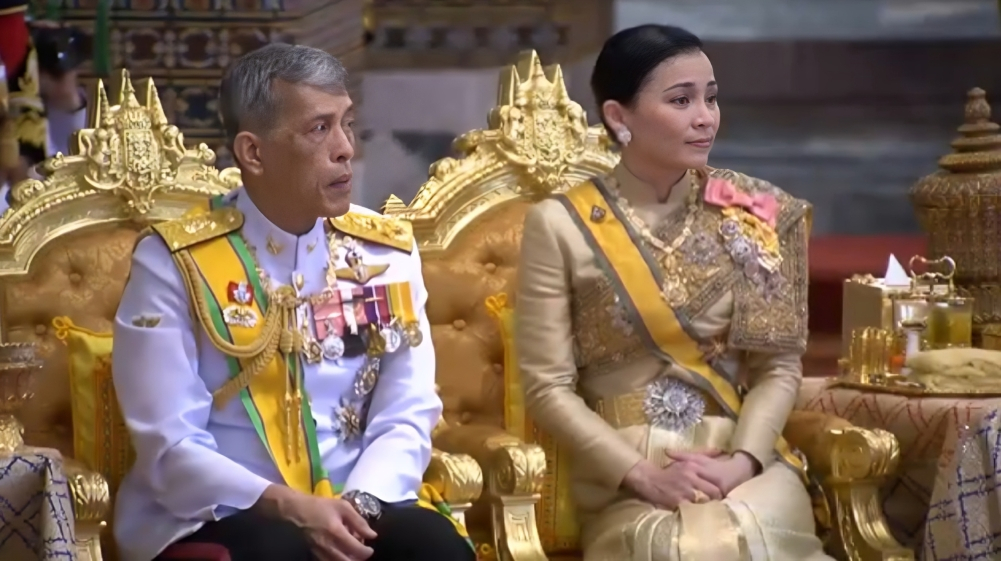
BANGKOK, Thailand — Thailand is observing the birthday of Her Majesty Queen Suthida Bajrasudhabimalalakshana today, June 3, marking the occasion with nationwide celebrations, traditional merit-making ceremonies, and an official public holiday.

Queen Suthida and Olympic Champion Kipchoge Headline Successful Amazing Thailand Marathon

As a recognized national holiday, government offices, banks, and many private businesses are closed across the kingdom to allow citizens to participate in the commemorations. Thai communities and royal embassies worldwide are hosting traditional observances, including merit-making ceremonies, almsgiving to monks, and candle-lighting events to honor the Queen. Across the country, the public and various organizations are paying their respects by signing well-wishes books, both in person at designated locations and through official online platforms.

Her Majesty Queen Suthida was born in 1978 in Hat Yai, Songkhla Province, in southern Thailand. She pursued her higher education in the capital, graduating from Assumption University in Bangkok with a bachelor’s degree in communication arts.

Before ascending to her current royal duties, the Queen built a diverse professional background in both the private sector and the military. She began her early career in aviation, working as a flight attendant for Japan Airlines (JAL) from 2000 to 2003, before joining Thai Airways, where she served from 2003 to 2008.

Transitioning to military and royal service, she underwent rigorous training and served as an operation staff officer at the Royal Guard Unit. She also served as a member of the King’s bodyguard prior to her marriage to King Maha Vajiralongkorn, demonstrating a long-standing commitment to national service and the monarchy.

The celebration of the Queen’s birthday is a significant event in the Thai calendar, reflecting the deep reverence the public holds for the monarchy. The day is characterized by a blend of official state ceremonies and grassroots community activities, highlighting the cultural and spiritual traditions of the nation.

Pope Francis Meets King Maha Vajiralongkorn, Queen Suthida

Authorities have ensured that essential services remain operational despite the widespread closures, and public transportation is running to accommodate citizens traveling to temples and ceremonial sites. Security measures have been heightened around the Grand Palace and other key royal residences to ensure the safety and smooth execution of the day’s events.

-Thailand News (TN)

Similar Posts

  • | |

    KP CM launches mobilisation campaign for September…

    PESHAWAR: Khyber Pakhtunkhwa Chief Minister Muhammad Sohail Afridi has launched a province-wide street mobilisation campaign from Khyber district ahead of the September 27 long march. Addressing a rally in Khyber, Afridi said the campaign had formally begun from the historic Bab-e-Khyber and would continue across the country before culminating in Islamabad. The movement has been given the name “Long March Bil-Qist — A Long March for Justice.” According to the chief minister, its stated objectives include seeking the release of PTI founder Imran Khan through constitutional and peaceful means, demanding equal application of the law and calling for accountability for those responsible for alleged injustice and oppression. Afridi urged young people across Pakistan to participate in the September 27 march, saying the youth had an important role in determining the country’s political future. He said the mobilisation launched in Khyber would gradually be expanded to other parts of the country and continue until the movement achieved its declared objectives. The chief minister praised residents of Khyber for their participation in the campaign. He said rally participants had travelled around 30 kilometres while demonstrating enthusiasm and commitment to the movement. Afridi claimed that preparations were under way to mobilise two million people for the September 27 march. He said more than 100,000 participants from Khyber district alone were expected to join the Islamabad-bound movement. He also claimed that membership of the campaign seeking Imran Khan’s release had reached 520,000, with Punjab currently having the largest number of members. The chief minister expressed confidence that large numbers of people from different parts of Pakistan would participate in the march. Speaking about the role of young people, Afridi said frustration with the existing political and governance system was growing among the younger generation. He called on the youth to remain determined despite political and other challenges. He argued that if young people demonstrated their strength and determination collectively, the movement could become a major political force. Afridi also criticised those he accused of contributing to Imran Khan’s imprisonment, weakening democratic institutions and affecting the country’s governance system. He maintained that the movement would remain peaceful and constitutional while pursuing its political demands. The chief minister described September 27 as a potentially significant day for Pakistan, saying participants would seek to influence the country’s political direction and play a role in determining its future.

  • | | |

    Grand Yadgar-i-Fatah unveiled ahead of Independenc…

    The Yadgar-i-Fatah monument, built to honour Pakistan’s martyrs and commemorate the state-designated “Marka-i-Haq,” was inaugurated in Islamabad on Thursday night. President Asif Ali Zardari and Prime Minister Shehbaz Sharif jointly inaugurated the monument on the eve of Pakistan’s 80th Independence Day. Chief of Defence Forces and Chief of Army Staff Field Marshal Asim Munir, Chief of Air Staff Air Marshal Zaheer Ahmad Babar Sidhu and Chief of Naval Staff Admiral Naveed Ashraf attended the ceremony. The president and prime minister, along with the military leadership, stood respectfully as the national anthem was played by a military band. The ceremony began with the recitation of the Holy Quran. A video highlighting the concept, construction and development of the monument was also screened for the guests. A large contingent of personnel from the armed forces, paramilitary forces and police presented a guard of honour. The display was accompanied by a military band and reflected the participation of Pakistan’s security institutions in the national ceremony. The event was attended by senior military officers, federal ministers, political leaders, diplomats and other high-ranking officials. The Speaker of the National Assembly, Chairman Senate, Defence Minister, Foreign Minister and Punjab Chief Minister Maryam Nawaz were among those present. Governors of Punjab and Khyber Pakhtunkhwa also attended. Police contingents from Azad Jammu and Kashmir and Gilgit-Baltistan participated in the ceremony. Units representing Punjab, Sindh, Balochistan and Khyber Pakhtunkhwa were also part of the event. The monument commemorates Pakistan’s military confrontation with India in May. According to the Pakistani state narrative, the conflict began after the April 22 Pahalgam attack and culminated in Operation Bunyanum Marsoos before a ceasefire was reached between the two countries on May 10. Pakistan has referred to the episode as “Marka-i-Haq,” or the “Battle of Truth.” The inauguration brought together the country’s political and military leadership and carried a strong message of national unity and patriotism.

  • | | |

    PM Shehbaz orders urgent flood relief nationwide

    Prime Minister Shehbaz Sharif has directed the National Disaster Management Authority (NDMA) to intensify relief efforts and ensure maximum assistance for people affected by ongoing monsoon rains and floods. The prime minister issued the instructions during a meeting with NDMA Chairman Lieutenant General Inam Haider Malik in Islamabad on Saturday. He ordered authorities to utilise all available resources to support flood-hit communities and provide immediate relief to those facing difficult conditions. Shehbaz also stressed close coordination between the NDMA, provincial governments and Provincial Disaster Management Authorities (PDMAs) to ensure relief operations remain effective and reach affected populations without delay. During the meeting, the NDMA chairman briefed the prime minister on the latest weather conditions and the flood situation resulting from heavy monsoon rainfall. He also provided an update on relief operations and ongoing measures to rehabilitate people displaced or affected by the flooding. According to the briefing, federal authorities are supporting relief activities in Khyber Pakhtunkhwa, Gilgit-Baltistan and Azad Jammu and Kashmir. Rescue and assistance operations in these areas will continue with the cooperation of the federal government. The prime minister also praised the NDMA’s use of artificial intelligence and modern technology at the National Emergencies Operation Centre, saying advanced systems could strengthen disaster monitoring and response. The latest figures show the growing impact of monsoon-related incidents across the country. The NDMA reported that at least 155 people have died and 460 others have been injured in rain-related incidents between June 26 and August 14. Pakistan’s monsoon season generally lasts from June to September and plays an important role in replenishing water resources. However, intense rainfall can also cause flash floods, river flooding, landslides and displacement, particularly in vulnerable communities. The situation could remain challenging in the coming days. The Flood Forecasting Division of the Pakistan Meteorological Department has warned of possible high-level flooding in storm-water channels connected to the Chenab and Ravi rivers between August 15 and 21 as water levels continue to rise.

  • | |

    Delay in NOC stalls NADRA counter at Pakistan Emba…

    A proposed NADRA counter at the Pakistan Embassy in Tokyo, expected to benefit nearly 30,000 to 35,000 Pakistanis living in Japan, has remained stalled for the past three to four months due to delays in the issuance of a No Objection Certificate (NOC), despite receiving formal approval from NADRA. According to official documents, NADRA granted in-principle approval for the establishment of the counter on April 22, 2026, and requested the relevant authorities to issue the required NOC without delay. The documents stated that the counter would become operational immediately after the NOC is issued. The delay has prevented the project from moving forward, leaving thousands of overseas Pakistanis in Japan facing continued difficulties in accessing essential identity and registration services. Sources said the initiative was made possible through the persistent efforts of Overseas Pakistanis Foundation (OPF) Chairman Syed Qamar Raza Shah. During his visit to Japan in April, he met members of the Pakistani community, listened to their concerns, and identified the absence of NADRA services as one of their most pressing issues. After returning to Pakistan, Shah reportedly pursued the matter with the relevant departments and raised it at senior government levels, resulting in NADRA’s formal approval for establishing the counter at the embassy. Under the approved plan, NADRA agreed to provide biometric machines, fingerprint devices, cameras, technical support, and staff training. The Pakistan Embassy in Tokyo is responsible for providing office space, computers, internet connectivity, furniture, and other administrative facilities. Officials said all technical and administrative arrangements have already been finalised. However, the project remains on hold because the required NOC has yet to be issued by the concerned ministry. As a result, Pakistani nationals living in Japan continue to face significant challenges in obtaining or renewing national identity cards, completing family registration, biometric verification, and accessing other NADRA-related services. Members of the Pakistani community in Japan have praised Syed Qamar Raza Shah for his efforts, saying the project would likely not have reached the approval stage without his personal involvement. They urged the relevant authorities to demonstrate the same commitment by removing the remaining administrative hurdles and ensuring that the approved project is implemented without further delay. The community has also appealed to Prime Minister Shehbaz Sharif and Deputy Prime Minister Senator Ishaq Dar to personally intervene and direct the concerned authorities to issue the pending NOC so that the NADRA counter can be established at the Pakistan Embassy in Tokyo as soon as possible, providing long-awaited relief to thousands of overseas Pakistanis.

  • | |

    Gen Z group behind India’s cockroach protest…

    The Cockroach Janta Party, the youth movement that forced a top Indian minister to quit, says it has no plans yet to contest elections despite its growing influence among young voters. Abhijeet Dipke, the founder of the group, told a foreign news agency on Tuesday that the organization intends to stay focused on grassroots mobilization rather than rush into formal politics. The statement comes weeks after protests led by Dipke swept through Delhi and spread to other parts of the country, ultimately pressuring Prime Minister Narendra Modi’s education minister to step down. Speaking from his family home in Maharashtra, Dipke said the group wants to first understand what young Indians actually want before deciding its next move. He announced that supporters would gather for a two day meeting starting Wednesday to map out priorities for the movement going forward. “The purpose will be to form the agenda for the Cockroach Janta Party and discuss how we can take this social movement forward,” Dipke said, as well wishers arrived at his home carrying flowers and gifts. Dipke made clear that entering electoral politics is not on the table for now, though he left the door open for the future. He said he would only consider building a formal party if a clear majority of supporters pushed for it, and that any decision to contest elections would come later, guided by public sentiment rather than a fixed timeline. He argued that Indian politics does not currently need another party competing for power. Instead, he said, the country requires a broader public campaign aimed at restoring faith in institutions that have lost credibility among ordinary citizens. Dipke said the group’s immediate priority is to give voice to the frustrations of India’s youth, many of whom, in his view, no longer trust the country’s political class, judiciary or press. He emphasized the importance of listening directly to young people before setting any formal agenda, saying it was necessary to understand their actual concerns rather than assume them. Dipke made these comments while still recovering from typhoid, which he contracted during the weeks he spent camped out during the Delhi demonstrations. A hero’s welcome at home Following the 36 day protest, Dipke traveled back to his hometown of Chhatrapati Sambhajinagar, where hundreds of supporters lined up outside his home to greet him, many carrying flowers in celebration of the movement’s success. Dipke’s rise to prominence has been rapid. After returning to India in June from his studies in the United States, he became a household name almost overnight when his call to protest against leaked medical entrance exam papers pulled tens of thousands of young demonstrators onto the streets of the capital. The pressure campaign achieved a significant result on July 25, when Education Minister Dharmendra Pradhan resigned from his post. Authorities had attempted to disperse the crowds using tear gas and baton charges, but the demonstrations continued regardless. In the aftermath, the government announced tougher legal penalties for those involved in leaking exam papers and formed a committee to reassess the broader examination system. The stakes attached to these entrance exams are enormous for India’s youth. Millions of students spend years preparing for them, viewing a strong result as their surest route to stable, well paying careers and financial security for their families. Wary of political traps Dipke explained that he is avoiding a formal political launch partly out of concern that the government could use investigations or legal pressure to undermine the party’s leadership if it formalized too quickly. He also said he has no intention of aligning the movement with any existing political party, even as opposition figures in India have tried to capitalize on the rare momentum the protests created against Modi’s government. Some of that caution appears to draw on regional experience. In neighboring Bangladesh, a youth led party that emerged after mass protests ousted long time leader Sheikh Hasina in 2024 went on to perform poorly in this year’s elections, a result that may be shaping how Dipke approaches the question of formal politics in India. Political observers say the true test of whether young Indians’ frustration translates into votes will come in elections scheduled for next year in Uttar Pradesh, India’s most populous state, along with Punjab and Modi’s home state of Gujarat. A bigger risk for the ruling Bharatiya Janata Party could emerge in the 2029 general election if the Cockroach Janta Party evolves into a formal political force by then. Political analyst Amitabh Tiwari said the movement is unlikely to cause major damage to the BJP in upcoming state elections but could grow into a more serious factor by the time of the next general election. He added that if the group builds a party structure, continues championing youth causes and sustains its current momentum, it stands a real chance of attracting broader support. Security concerns following the protests remain high. More than a dozen police officers have been stationed outside Dipke’s family home after he received threats on social media once his profile surged following the initial call to protest in May, a period in which the Cockroach Janta Party’s Instagram following grew to 22 million within days. Dipke said his greatest worry is not for his own safety but for that of his parents. He expressed relief at being back home and said he trusts that government provided security will keep his family safe in the coming weeks. The episode adds to a growing pattern across South Asia, where youth led movements have increasingly forced political concessions from long entrenched governments, even when those movements stop short of transforming into electoral parties themselves.

  • | |

    Pakistan stands firmly with Saudi Arabia: PM

    Prime Minister Shehbaz Sharif has reaffirmed Pakistan’s full support for Saudi Arabia during a telephone conversation with Saudi Crown Prince Mohammed bin Salman. The two leaders discussed the regional security situation, recent developments in the Middle East and the importance of maintaining peace and stability. During the conversation, the prime minister strongly condemned the recent Houthi attacks on Saudi oil tankers in the Red Sea. He described the attacks as unacceptable and said they were a clear violation of international law. He added that such actions pose a serious threat to international maritime security, commercial shipping and the free movement of global trade. Shehbaz Sharif said attacks targeting commercial vessels not only endanger regional stability but also threaten the global economy by disrupting vital shipping routes. He stressed that the international community must work together to ensure the safety of maritime trade and prevent further escalation in the region. The prime minister reaffirmed Pakistan’s complete solidarity with Saudi Arabia. He said he, Field Marshal Syed Asim Munir and the people of Pakistan stand firmly with the Saudi leadership and the brotherly people of the Kingdom during this challenging period. He emphasized that Pakistan fully supports Saudi Arabia’s efforts to safeguard its security and territorial integrity. Shehbaz Sharif also reiterated Pakistan’s unwavering commitment to the sovereignty, independence and prosperity of Saudi Arabia. He said the deep-rooted relationship between Islamabad and Riyadh is based on shared faith, mutual respect and decades of close cooperation in political, economic and security matters. Saudi Crown Prince Mohammed bin Salman thanked Pakistan for its consistent support and appreciated the strong brotherly ties between the two countries. He acknowledged Pakistan’s continued commitment to regional peace and stability. The prime minister conveyed his best wishes to King Salman bin Abdulaziz, Custodian of the Two Holy Mosques, and expressed hope for his continued good health and well-being. Shehbaz Sharif also stressed that Pakistan would continue cooperating with Saudi Arabia and the international community to promote peace, security and stability across the Middle East. He emphasized the importance of ensuring uninterrupted maritime traffic through the Red Sea and the Strait of Hormuz, saying these waterways are critical for global trade, energy supplies and international economic stability.

Leave a Reply

Your email address will not be published. Required fields are marked *