thailand prepares halve

Thailand Prepares To Halve Visa-free Stay For Tourists From 60 To 30 Days

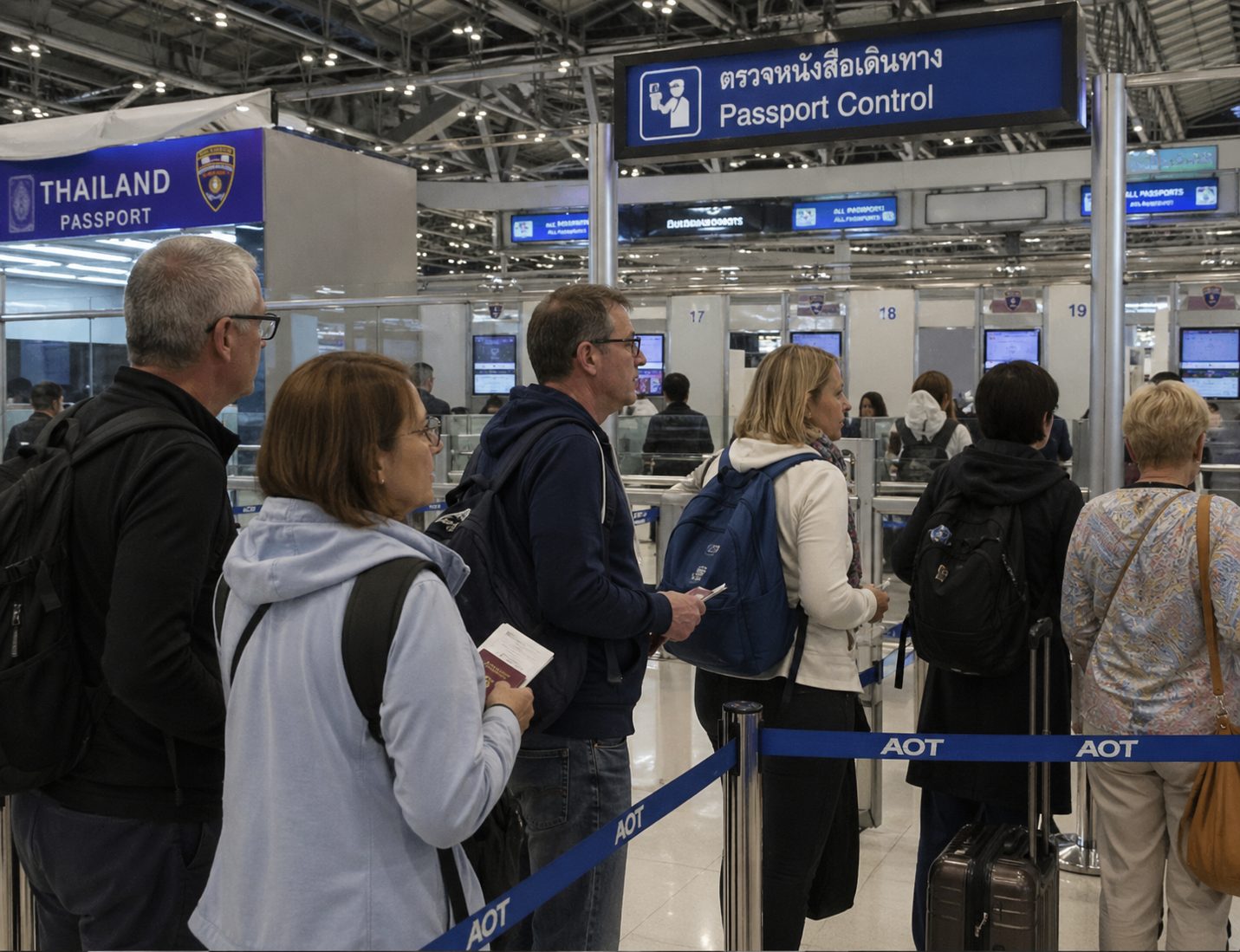
BANGKOK, Thailand — Thailand’s Foreign Minister Sihasak Phuangketkaew has signaled that the government is moving forward with a proposal to reduce the visa-free entry period for foreign tourists from 60 days to 30 days, citing concerns about misuse of the current arrangement and the need to strengthen border security and immigration oversight.

Thailand Launches Crackdown on Unruly Tourists, Warning of Visa Revocation and Deportation

Speaking to reporters on Tuesday, Minister Sihasak indicated that he expects minimal opposition to the proposed change, noting that a comprehensive interagency visa committee—chaired by the Ministry of Foreign Affairs and including representatives from immigration, tourism, security, and labor authorities—has already reviewed the measure. “We believe the current 60-day visa-free stay, with one available 30-day extension, may be excessive and could allow individuals with non-tourism intentions to exploit the system,” he stated.

The proposal, which was initially prepared during the first administration of Prime Minister Anutin Charnvirakul but postponed due to the national election, is now being accelerated by the Ministry of Foreign Affairs. Before implementation, the Cabinet Secretariat must consult with relevant agencies, though Minister Sihasak expressed confidence that the process would proceed smoothly given the broad consensus within the coordinating committee.

The current visa-free policy, expanded in July 2024 to attract post-pandemic tourism, has faced mounting scrutiny from authorities and local communities in popular destinations. Officials argue that the extended stay period, while beneficial for legitimate travelers, has inadvertently facilitated activities beyond tourism, including unauthorized employment, long-term residence without proper visas, and illegal business ownership through Thai nominee arrangements.

“Residents in places like Koh Samui and Koh Phangan have raised legitimate concerns about the impact of relaxed visa conditions on local economies and community integrity,” Minister Sihasak noted. “Our review is about ensuring that Thailand’s openness to visitors is balanced with effective oversight and protection of national interests.”

Beyond the visa-free duration, authorities are also conducting a broader assessment of Thailand’s visa framework, which currently includes numerous categories designed to attract specific groups such as experts, retirees, digital nomads, and investors. Minister Sihasak acknowledged that while many of these measures were introduced with positive intentions—to promote soft power, attract talent, or stimulate economic activity—the proliferation of visa types may have exceeded practical necessity. “We must reassess whether all these categories remain justified and whether some could be consolidated for greater clarity and efficiency,” he explained.

When asked about the timeline for concluding the visa review, the minister emphasized that the immediate priority is the visa-free scheme for tourists. He also addressed speculation that recent incidents involving Chinese nationals had prompted the policy reassessment, insisting that preparations for the review predated those events. “This is not about targeting any specific nationality,” Minister Sihasak affirmed. “Thailand welcomes visitors from all countries. Our focus is on activities that may pose problems or threaten national security, regardless of who engages in them.”

Under the proposed changes, tourist visas would provide a duration deemed appropriate for typical travel purposes, which the minister suggested should not exceed 30 days for visa-free entry. Authorities would also strengthen screening measures at ports of entry to better verify visitors’ intentions and ensure compliance with visa conditions. “We are not discriminating against any nationality,” he reiterated. “However, we must be strict with those who engage in undesirable activities, especially those linked to security concerns.”

The tourism industry, which contributes significantly to Thailand’s economy, has expressed cautious support for measures that enhance security while maintaining accessibility. “Thailand’s success as a destination depends on visitors feeling welcome and safe,” said a spokesperson for the Tourism Authority of Thailand. “We trust that any policy adjustments will be carefully calibrated to protect both our communities and our reputation as a hospitable destination.”

Immigration experts note that many countries periodically review visa policies to adapt to evolving security challenges, migration patterns, and economic priorities. Thailand’s approach—emphasizing interagency coordination and evidence-based assessment—aligns with international best practices for managing border security in an era of increased global mobility.

For travelers planning visits to Thailand, officials recommend staying informed about entry requirements through official government channels and ensuring that documentation accurately reflects the purpose and duration of their stay. The Royal Thai Police and Immigration Bureau continue to operate multilingual assistance services to support visitors with questions or concerns.

Thailand To Tighten Visa-Free Rules, Slashing Eligible Countries From 93 to 57

As the proposal advances through cabinet consultation, authorities have appealed to the public and media to rely on verified information from official sources rather than speculation. Further updates regarding the visa-free policy review, potential consolidation of visa categories, and implementation timelines are expected as the government proceeds with its assessment.

-Thailand News (TN)

Similar Posts

  • | |

    Dallas conference backs UN-led Kashmir settlement

    DALLAS: A conference in Dallas, Texas, has called for a peaceful and lasting settlement of the Kashmir dispute in accordance with relevant United Nations resolutions. The conference was organised by Friends of Kashmir to mark the anniversary of India’s 2019 decision to revoke the special constitutional status of Jammu and Kashmir. Members of the Pakistani and Kashmiri diaspora, community leaders and representatives of Sikhs for Justice attended the event. Pakistan’s Consul General in Houston, Aftab Chaudhry, was the chief guest. Friends of Kashmir International Chairperson Ghazala Habib presided over the gathering. Speakers expressed solidarity with the people of Indian Illegally Occupied Jammu and Kashmir (IIOJK). They also voiced concerns about the situation in the region following the revocation of Article 370 and Article 35A. Addressing the participants, Chaudhry said Pakistan would continue providing diplomatic, political and moral support to the Kashmiri people. He said India’s decision to revoke the region’s special status had added further complexity to the long-running Kashmir dispute. Ghazala Habib urged the international community to pay greater attention to the concerns and rights of Kashmiris. She also highlighted cooperation between Kashmiri and Sikh communities in raising issues related to justice and human rights. Other speakers, including Aftab Siddiqui, Syed Fayaz Hasan, Ghulam Jahangra and Dr Fareeha Qazi, called for stronger international efforts to address the Kashmir dispute through peaceful means. Gurvinder Singh, who represented the Sikh community, stressed the importance of involving younger generations in campaigns focused on justice and human rights. At the conclusion of the conference, participants adopted a resolution calling for an internationally supported and peaceful settlement of the Kashmir issue in line with relevant UN resolutions. The resolution also urged the international community to help protect the fundamental rights of the Kashmiri people and maintain attention on the disputed region.

  • Thailand’s First Successful Kidney Transplant Using Robotic-Assisted Surgery Marks Medical Milestone

    BANGKOK — Rajavithi Hospital has become the first in Thailand to successfully complete a kidney transplant using robotic-assisted surgery, a breakthrough that marks a milestone in high-precision medical treatment and promises to reduce patient pain while improving post-operative quality of life. Chiang Mai Surgeons Make History with Thailand’s First Twin Liver Transplant Dr. Nattapong Wongwiwat, […]

  • |

    US fuel opens a capitalist crack in Cuba

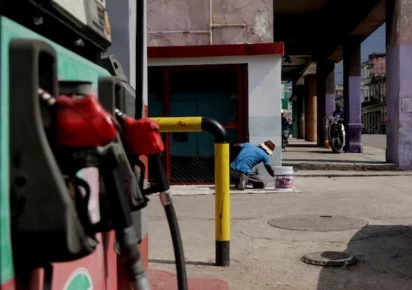
    HAVANA: Gasoline selling for as much as $38 a gallon, diesel advertised on social media and fuel stored inside cramped apartments are offering an unusual glimpse of private enterprise in communist Cuba, where the energy sector has long remained firmly under state control. A US policy allowing American companies to export fuel to private Cuban businesses has triggered an unexpected transformation. As Cuba struggles with shortages, blackouts and a weakened public transport system, imported fuel is creating a growing private market — while also exposing a sharp divide between those who can afford it and millions who cannot. The change follows the collapse of Cuba’s traditional fuel supplies from Venezuela and Mexico after the United States removed Venezuelan President Nicolas Maduro in January. With sanctions discouraging tankers from sailing toward the island, fuel shortages have increasingly affected transport, hospitals, schools and other essential services. Under an exception to Washington’s oil restrictions, however, private Cuban restaurants, retailers, taxi operators and other businesses have been allowed to import fuel. The impact has been striking. Between February and May, around 900,000 barrels of US fuel entered Cuba — enough to meet only about nine days of the country’s energy requirements. Yet those relatively small shipments have helped create a new network of legal wholesalers, private buyers and illegal resellers. Gasoline becomes a luxury For ordinary Cubans, the new fuel market has often brought frustration rather than relief. On a July afternoon in Havana, 53-year-old Amarilis Sanchez waited for hours at a bus stop after attending her daughter’s birthday celebration. Public buses, which normally cost only two pesos, were unreliable. Nearby, taxi drivers offered rides in vintage cars, but one driver quoted Sanchez 1,000 pesos for the journey — roughly 500 times the price of a bus ride. Unable to afford it, Sanchez considered spending the night at her daughter’s home and trying again for a bus the following day. Her experience illustrates how Cuba’s fuel crisis is creating two very different realities: one for people with access to private vehicles and imported fuel, and another for those dependent on the country’s struggling public transport network. Black-market gasoline prices reportedly reached $10 per litre, or about $38 per gallon, during the spring before falling as imports increased. Social media fuels a new market The emerging trade is increasingly visible online. WhatsApp groups and Facebook pages advertise gasoline and diesel, while some sellers store fuel in apartments and small shops despite the dangers posed by fire, explosions and toxic fumes. At one Havana convenience store, a shopkeeper reportedly kept around a dozen 20-litre fuel containers in a backroom, selling gasoline for approximately $5 per litre. Private companies are also moving into the newly emerging legal wholesale market. By late July, almost 200 Cuban businesses had received permission to distribute fuel wholesale to other private companies. One company, A Granel, advertises diesel through social media and charges $2.50 per litre for a 940-litre tank. The promotion reportedly features a model walking through a warehouse of diesel containers while Daddy Yankee’s famous song Gasolina plays in the background — an unusually flashy image for a country where the energy industry has historically been dominated by the state. Are Cuban gas stations next? The transformation could go further. Cuban lawmakers approved a broad package of economic reforms in June aimed at opening the energy sector to private and foreign investment. Prime Minister Manuel Marrero Cruz later announced that Cuba had approved its first foreign investment project focused on importing and selling fuel, although he did not name the company. The reforms have raised the possibility that private operators could eventually take control of some of Cuba’s familiar state-run Cupet petrol stations. For now, however, retail fuel sales remain largely under state control. Some state-owned stations are storing imported fuel but can distribute it only to vehicles belonging to authorised private businesses. Cuban authorities have defended the reforms while rejecting the idea that they represent a move toward large-scale privatisation. President Miguel Diaz-Canel has accused Washington of imposing a “genocidal siege” on Cuba and said economic changes were not being introduced to satisfy the United States. A lifeline with a heavy price The new fuel market has helped prevent some businesses from shutting down completely. During recent power outages, restaurants and shops with generators powered by imported fuel remained illuminated while much of Havana was plunged into darkness. But experts warn that the emerging system could deepen inequality. With the average government salary reportedly around $10 a month, imported gasoline remains unaffordable for most of Cuba’s roughly nine million residents. Cuban sociologist Mayra Espina said the limited fuel supplies had helped prevent “complete paralysis” but warned that the benefits were overwhelmingly concentrated among those able to pay. The result is an extraordinary contradiction: a small opening toward private enterprise is helping Cuba keep parts of its economy running, while simultaneously making access to basic mobility and energy increasingly dependent on wealth. For a country that has spent decades keeping fuel firmly within the state system, Cuba’s new gasoline economy may therefore prove to be more than a temporary response to shortage. It could become an early test of how far Havana is prepared to let capitalism into one of its most tightly controlled sectors.

  • | | | |

    Why Lahore sinks whenever it rains in the city? 

    The rain on July 22 almost sank most parts of Defence Housing Authority. Those low-lying areas of the city were also under water. And this happened as the city was lashed with 343 millimetres of rain for two days, according to the Provincial Disaster Management Authority (PDMA). That spell has gone and when you are reading these lines, the city is undergoing a second rain spell. Pakistan’s Meteorological Department has issued a fresh weather advisory, warning that another active monsoon spell is expected from July 29 to August 5 across much of the country. The department said rain, wind and thundershowers, along with scattered heavy to very heavy rainfall, may trigger urban flooding, flash floods and landslides in vulnerable areas. This will keep the residents of low-lying areas, mainly of Lahore’s south, and DHA on the toe. Reacting to this advisory, environmental activist Rafay Alam explained why cities like Lahore keep flooding every monsoon season, and what is really behind the crisis. He said the Met Department had already notified that rain would continue for two days and people were warned in advance that urban flooding would take place, not just in Lahore, but in several cities across Punjab, including Gujranwala and Sialkot. He then pointed to last year’s floods for comparison. “Those floods were caused by heavy rains in the northern areas of the country, which caused rivers to swell,” he said. On top of that, India had released water from the Pong Dam and Bhakra Dam. He said a gate at the Madhopur headworks also broke, causing water levels in the Ravi river to rise sharply. Alam said the situation today is different. The flooding happening now is not caused by river floods or dam releases. Instead, it is simply due to heavy rainfall occurring within Pakistan itself. He said that if people read the Met Department’s advisory carefully, the heaviest rain in the coming days is expected in the northern areas once again, not directly over Lahore. He advised people to check whether they live in low lying or high lying areas, since this makes a big difference during heavy rain. However, he said that the real issue lies in the sheer intensity of rainfall being recorded now. “Some areas have received around 150 millimetres of rain within just a few hours,” he said. He added that 20 or 30 years ago, when the drainage systems and infrastructure in these areas were built, climate change was never part of the planning. Nobody at that time imagined that such intense rainfall could happen within just a few hours. As a result, the old infrastructure simply cannot handle the kind of rain Pakistan is now experiencing. Dr Farid A Malik, a resident of Defence Phase 5, witnessed the entire flood attack first hand. He said that when he was growing up in the 1950s, 1960s and 1970s, rainwater never used to stand in Lahore. At that time, he said, the city was much smaller and the population was far lower, yet even then, the city did not face standing water after rainfall the way it does today. “Whenever the rain would stop, we children used to go out on our bicycles looking for standing water, just for fun. And there were really only two places where water would collect. One was near Shahdara, and another was near the Do Moriya Pul area close to the railway station. That area of Shahdara was a low lying area,” he said. He recalled that in the 1970s, when Zulfiqar Ali Bhutto’s government came into power, and the People’s Party had a lot of support from that area of Lahore at the time, the government promised that they would install pumps in Shahdara and set up a proper system to drain the water out. And they actually did this. Heavy duty pumps were installed in Shahdara, and they used to successfully drain the water out. Dr Farid said the sewerage system Lahore has today simply cannot handle rainwater, because the amount of water that comes with heavy rain is very large, and the system does not have the capacity to handle that much water. He explained there are two separate problems here. First, the underground sewerage system is not cleaned properly. The pipes, whether four feet wide or six feet wide, have become clogged with scaling inside them over time. So even though a pipe might be four or six feet in diameter, the actual open space left for water to pass through has shrunk down to just one or two feet, meaning the whole system does not flow properly. Second, even if the sewerage system was clean, it still cannot handle rainwater on top of regular sewage. For this reason, Lahore used to have separate storm drains, called nalas in Urdu, which carried rainwater away separately into the Ravi river. Because of this separate system, rainwater never used to accumulate in the city. He said this has changed because storm drains have been blocked, either through neglect or construction on top of them. “An entire market has been built on top of a storm drain along Hall Road,” he said, adding that similar encroachment has happened along the Ravi river itself. Last year, water that should have gone into the river ended up flowing into housing societies instead. Dr Farid also pointed out that when Lahore had open drains instead of an underground sewerage system, the drainage actually worked better. Since the city moved underground, cleaning has become irregular, flow has suffered, and pumping stations work only some of the time. He said Lahore’s expansion added to the problem, since new areas were given sewerage systems but no proper storm drain network for rainwater. DHA, he said, expanded in phases over the years without any master plan covering how sewage and rainwater would both be managed. Speaking about his own neighbourhood, Dr Farid said there is a pumping station near the Sui Gas Society area of Defence that pumps sewage water

  • | |

    Lahore police bar women from stations after sunset

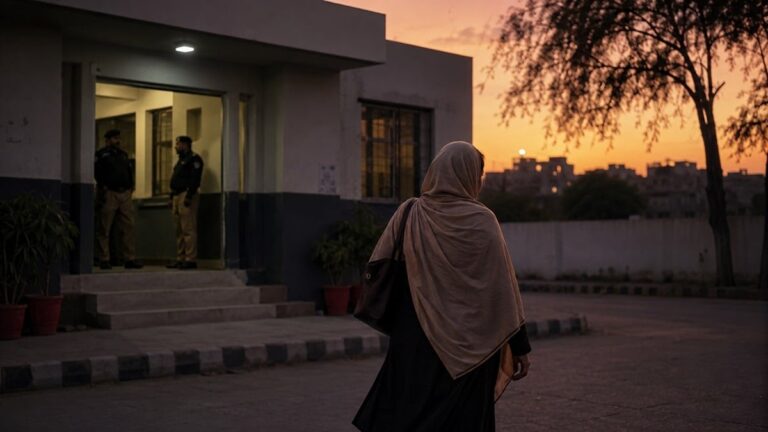
    Lahore Police have directed that no woman should remain at any police station after sunset, introducing a new measure that officials say is aimed at ensuring the safety and dignity of women. The directive was issued by Deputy Inspector General (DIG) Operations Muhammad Faisal Kamran during a crime review meeting with officers of the City Division. He instructed police personnel to treat women with respect and ensure that female complainants as well as women taken into custody are not kept at police stations after Maghrib. According to the directive, police officers must adopt procedures that protect women’s privacy and dignity while dealing with complaints or investigations. The decision comes in the wake of growing concerns over crimes against women and follows the arrest of a Lahore police Assistant Sub-Inspector (ASI) accused of sexually assaulting a 19-year-old woman with a mental health condition. According to police, the woman had left her home and did not return for several hours. Her family later learned from a local resident that a plain-clothes police officer had taken her away on a motorcycle. The victim later alleged that the officer took her to another location and sexually assaulted her. Following the allegations, police registered a case against the accused officer. DIG Investigation Syed Zeeshan Raza ordered an immediate and transparent investigation, directing investigators to proceed strictly on merit. The incident also led to disciplinary action within the police department, with 78 police officials reportedly suspended as authorities launched an internal review of the case. While police officials say the new directive is intended to safeguard women, some critics argue that restricting women’s presence at police stations does not address the root problem. They contend that law enforcement agencies should instead focus on ensuring police stations remain safe and accessible for women at all hours.

  • | | |

    Polling continues in second phase of AJK elections

    Voting is underway in the second phase of the Azad Jammu and Kashmir (AJK) Legislative Assembly elections, with polling taking place for nine constituencies in Muzaffarabad Division and 12 refugee constituencies located across different parts of Pakistan. Polling began at 8:00am and will continue without interruption until 5:00pm. Election authorities have urged voters to reach their designated polling stations before the closing time to cast their ballots. Extensive security arrangements have been made to ensure peaceful polling throughout the election process. Officials said 1,483 polling stations have been established across Muzaffarabad Division, while election staff and security personnel have been deployed to maintain law and order. The second phase is considered an important stage of the AJK elections, as thousands of voters are participating in the selection of representatives for the Legislative Assembly. Alongside the nine seats in Muzaffarabad Division, polling is also being held for 12 refugee constituencies representing Kashmiri refugees residing in various cities across Pakistan. These include six Jammu seats and six Kashmir Valley seats. In Karachi, polling is being conducted for LA-34 (Jammu-I) and LA-40 (Kashmir Valley-I). Election officials have established 34 polling stations to facilitate voters in the city. According to election authorities, 698 registered voters are eligible to vote in the Jammu-I constituency in Karachi, while the Kashmir Valley-I constituency has 4,200 registered voters. Polling is also in progress for three refugee constituencies in Rawalpindi and Islamabad, including LA-43 (Valley-IV), LA-44 (Valley-V) and LA-39 (Jammu-VI). Election officials said 12 candidates are contesting LA-43, while eight candidates are in the race for LA-44. A total of 14 candidates are contesting the LA-39 constituency. LA-43 has 3,346 registered voters, including more than 1,600 women voters. LA-44 has 6,996 registered voters, including 3,294 women, while nearly 37,000 voters are registered in LA-39, making it one of the largest refugee constituencies in the current election phase. To facilitate voting, the District Election Commission has established 10 polling stations for LA-43, 27 polling stations for LA-44 and 155 polling stations for LA-39. Election officials said polling is continuing under strict security, with law enforcement agencies deployed at polling stations and sensitive locations to ensure a peaceful voting environment. Authorities are closely monitoring the electoral process and have urged political workers and voters to follow election rules.

Leave a Reply

Your email address will not be published. Required fields are marked *