exorbitant cost numbness

The Exorbitant Cost Of Numbness

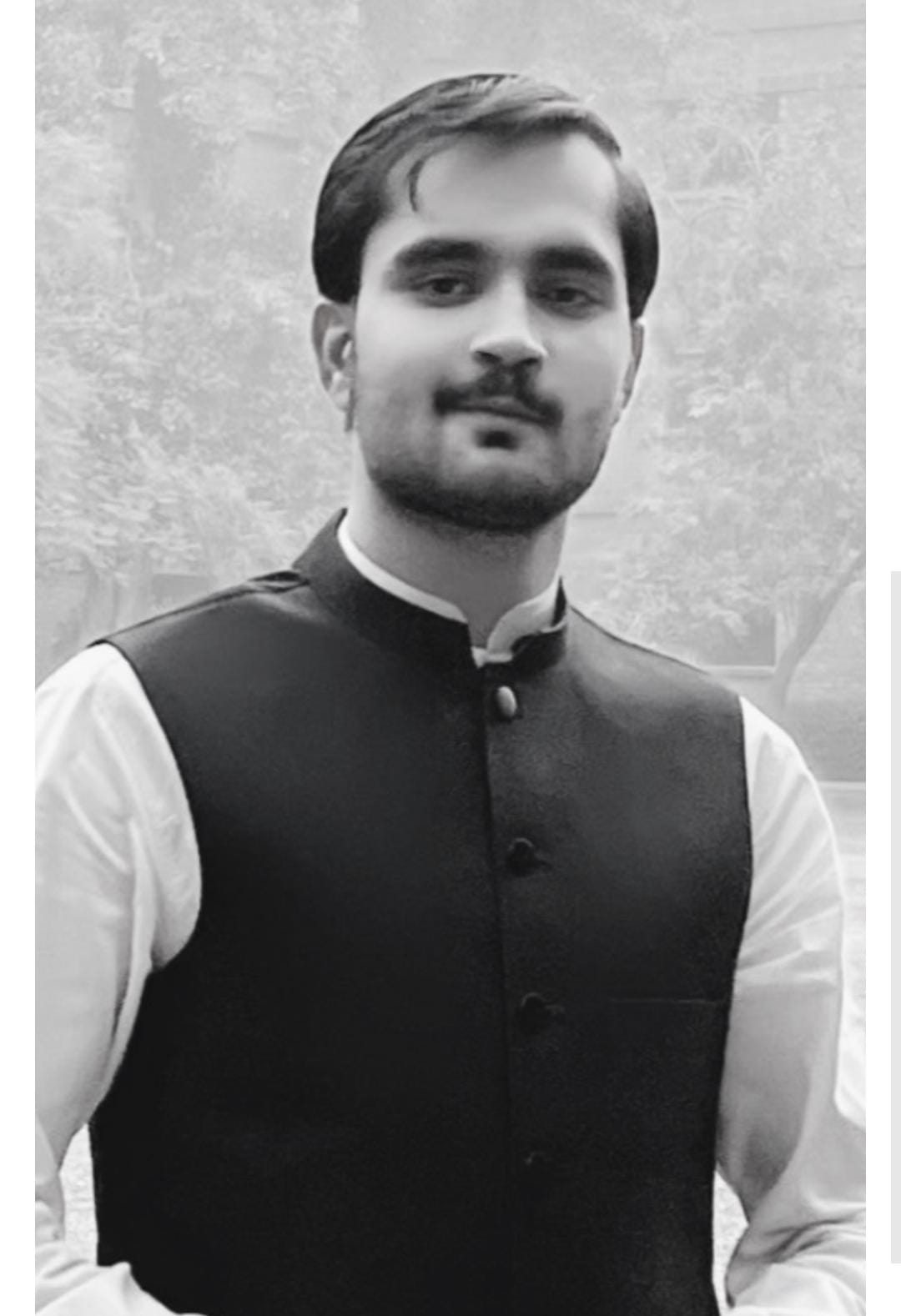
By Hamza

Bio: The author is a student at LUMS from Quetta, Baluchistan, majoring in political science.

Cobwebs clung to the corners. Old things lay strewn across the floor. Musty air permeated the room, heavy with a dense smell. And there lay Muntaha, old enough to shoulder a schoolbag, yet young enough to trust that the world outside would not betray her. A seven-year-old child assaulted, raped, and murdered.

Was it an aberration, a crime so atrocious that it crossed the bounds of abomination—liable to be dismissed as the work of a depraved mind? Facts offer an utterly different story. Eighteen-month-old Aizal recently met the same fate. Mir Raza, a young IBA graduate and a thriving businessman with a promising life stretching before him, was robbed of his life; his post-mortem examination revealed traces of acid and marks of torture that his body bore.

Different names. Different stories. Yet testifying to the same grim pattern that recurs persistently. And perhaps more distressing is our habituation to it: another story breaks, headlines saturate social media feeds, condolences arrive, vacuous promises follow, and eventually, the outrage subsides.

Until it happens again.

With each gruelling episode, our emotional responses are sapped. That which once transfixed us with horror now hardly unsettles us. The gravity does not diminish; we resign ourselves to the dismal reality. What’s even more disturbing is the gradual erosion of our capacity to acutely realise the weight of these atrocities.

This phenomenon ought not to be labelled as apathy. Apathy is much simpler: it is the vacancy of feeling. What we are experiencing is something far more pernicious: a gradual distortion of our senses, recalibrating what we consider shocking. We are undergoing an unconscious normalisation and readjustment to realities that are far from normal. Accustomed to darkness, we watch the very conception of light wither away.

We do not cease to care. We require more to feel the same empathy and gravitas that were once instantly evoked.

The implications of this shifting baseline are dire. Now for a story to break through, it requires something more heart-rending. It must involve fire, a child, acid, or a lynching to pierce through the noise—although briefly. We have not become cruel; our threshold has changed, filtering out and grading horrors on a curve. And the worst part? We scarcely realise the higher standard that we establish. There is a peculiar cruelty that this readjustment entails. No one consents to feel less over a murdered child, an acid attack, or a sexual assault. It unfolds and creeps in us in increments: one story, one headline, one brutality, one brief sigh. Until the sum of it all is a society that can read about Aizal, Muntaha, and Mir Raza in a single sitting, with its emotional faculties completely exhausted. The prevailing emotion changes from fury to fatigue.

What we are surrendering, with each successive case, is not compassion; it is accountability. Accountability when it matters the most, until the headlines fade away from our feeds, the case is buried in the docket, and the victim is swallowed by history—before another name appears to draw another sigh of grief. A society that, though unconsciously, decides to exist beside crimes instead of demanding a reckoning for the culpable is perpetually doomed to remain rife with them because the ability to feel, to question, and to compel accountability has been effectively degraded.

The outcome of it all is not that we will turn a blind eye to the horrors; we will grieve—briefly, outrageously, sincerely, and uselessly. Our grief will remain precisely in the same fashion but will fail to prevent such abhorrent acts because the mechanism that might have translated outrage into tangible outcome has been rendered inoperative through the desensitising monotony of repetition.

The result? A society that has stopped reacting meaningfully. Brief outcry coupled with a hollow response results in a late, defanged, or no outcome at all. The perpetrators, who may have been deterred by the consequences, now have less to dread. Thus, further crime is bred, and its miscreants emboldened.

Desensitization is a distinct peril from the crimes that breed it in the first place. It consistently curtails the cost of crime for everyone still capable of inflicting it. When the very alarm that stirs our conscience has been paralysed, a subtle message is whispered that another child, another toddler, or another youth awaits the same fate as Muntaha, Aizal, or Mir Raza.

 

Similar Posts

  • Before We Map New Provinces: Replacing Colonial Bu…

    For eighteen years, I have made a quiet, sometimes lonely case: that technology, not more paperwork and more offices, is the only honest path to good governance in Pakistan. I did not arrive at this conviction from a textbook. I arrived at it from a desk inside the Planning Commission, watching a system that was designed — on paper — to deliver development, and instead delivered delay, opacity, and grievance. Anyone who has sat through the sanctioning of a Public Sector Development Program (PSDP) project knows the ritual. The feasibility study is glowing. The PC-1 is approved with confident projections. Committees nod. Funds are released. And then the project disappears into the machinery of provincial implementation, where oversight thins out and accountability evaporates. What was promised on paper and what is delivered on the ground are, more often than not, two entirely different stories. I watched this happen again and again, and each time the gap between sanction and delivery was not explained by a shortage of money or expertise. It was explained by bureaucracy — a system built not to serve citizens but to preserve itself. This is not an abstract observation. It is the root of a very real and very dangerous problem. A significant part of the unrest we see in Balochistan, in Azad Jammu and Kashmir, and in Khyber Pakhtunkhwa is not simply about resources or geography. It is about the absence of transparency and the absence of governance that people can see, question, and trust. When a citizen cannot find out where a development fund went, when a project sanctioned in Islamabad never materializes as promised in a district headquarters, when the only visible authority is a bureaucrat with a stamp and a discretionary signature, resentment grows. People do not rebel against distance from the capital. They rebel against being governed by a system that treats them as subjects to be managed rather than citizens to be served. And here is the tragedy that too few are willing to name plainly: the bureaucratic architecture we still operate under was never designed to serve the governed. It was designed by the British Raj to control a colonized population — to extract revenue, maintain order, and ensure that authority always flowed downward from a distant center, never upward from the people. Files, layers of clearance, and the personal discretion of an officer were features of a colonial control system, not instruments of democratic accountability. We inherited that machinery at independence and, astonishingly, kept it largely intact. The tool built to pacify a colony has been repurposed, with barely a redesign, to govern a republic. It should trouble us deeply that a structure engineered to keep a colonized people in check is now one of the principal reasons that Pakistan’s most marginalized regions distrust their own government. So when the conversation turns, as it periodically does, to creating new administrative units — carving out new divisions, new districts, new tiers of provincial machinery — as the answer to Balochistan’s or KPK’s grievances, I feel obligated to push back, loudly. Before we draw a single new administrative boundary, we must confront the core disease, not multiply its symptoms. New units will not dilute bureaucratic power; they will replicate it. Every new administrative tier is another office, another set of discretionary signatures, another opportunity for the same colonial-era logic of gatekeeping to entrench itself further. For the aggrieved citizen in Turbat or Muzaffarabad or Bannu, a new secretariat is not relief. It is simply a new address for the same unaccountable authority. We would be handing the bureaucracy — an institution that has shown a consistent instinct for self-preservation — more territory to govern, not less power to abuse. Real relief requires shrinking the space in which discretion operates unchecked, not expanding the number of desks where it can be exercised. This is precisely why the moment for AI-enabled local governance has arrived, and why Pakistan can no longer afford to treat it as a distant aspiration. Around the world, and notably across India, urban local bodies and municipalities are moving beyond basic digitization toward what might be called algorithms of accountability — systems purpose-built to increase transparency, limit human discretion where it invites abuse, and protect citizen data. These frameworks generally rest on a few consistent pillars: ensuring that automated public decisions on things like welfare disbursement or tax assessment can be audited and challenged rather than buried in a file; protecting citizen data through clear legal safeguards; requiring any private vendor supplying government technology to disclose how its systems work; and actively checking automated tools for bias against marginalized communities. The Indian experience offers concrete, transferable lessons. Municipal bodies in cities like Delhi and Bengaluru now use satellite imagery and mapping systems to flag unauthorized construction and property tax discrepancies — but critically, they pair this with a human-verification step, so an algorithm’s flag is only ever an advisory alert, not a final punishment, creating a documented trail a citizen can actually contest. States such as Telangana and Maharashtra have deployed multilingual citizen chatbots to handle civic complaints, built with data-masking safeguards that strip personal information before it ever touches a broader system. Smart-city command centers in Surat and Pune operate under strict data retention rules, so surveillance footage is automatically deleted unless tied to an active investigation, preventing the machinery from becoming a permanent surveillance state. And where facial-recognition attendance systems have been used to track municipal staff, unions pushed successfully for dispute mechanisms so that a technical glitch never costs a worker their wages. None of these systems eliminate human judgment. What they eliminate is unaccountable, invisible, discretionary human judgment — the exact currency the colonial bureaucracy was built to trade in. That is the reform Pakistan needs at the local government level: not another administrative layer, but a transparent, auditable, citizen-facing system that makes it structurally difficult for a project to vanish between sanction and delivery, and structurally easy for a citizen in the

  • The Transferability Paradox: Skills, Borders and t…

    We often speak of professional skills as though they were assets that can be packed into a suitcase and carried effortlessly across borders. In reality, skills do not all travel in the same way. A computer language remains a computer language whether one works in Pakistan, Singapore, the United Kingdom or the United States. Engineering principles, mathematics, manufacturing techniques and many scientific disciplines retain much of their relevance regardless of geography. The environment may change, but the fundamental language of the profession remains largely intact. The situation becomes more complicated with professions that operate within national regulatory and institutional frameworks. Accounting principles may be broadly understood internationally, but taxation, reporting requirements and corporate regulations can differ substantially between jurisdictions. The same is true of law and medicine. A lawyer who has spent decades mastering one country’s legal system cannot simply assume that the same statutes, procedures and precedents apply elsewhere. A doctor may possess years of clinical experience yet still be required to pass examinations and satisfy licensing requirements before being permitted to practise in another country. The knowledge has not disappeared. What has changed is the framework within which that knowledge is recognised and allowed to operate. This distinction is important because we sometimes confuse the transferability of skills with the transferability of credentials. They are not the same thing. A seasoned CFO does not forget how to evaluate risk, allocate capital, establish financial controls or understand a balance sheet upon crossing an international border. A doctor does not lose diagnostic ability at immigration, nor does a lawyer suddenly lose the capacity for legal reasoning. Yet the receiving country’s institutions may place conditions on recognising those abilities. What is being restricted is often not the skill itself, but the right, opportunity or credibility required to exercise it. For C suite professionals, however, there is another layer to the problem. As people rise through organisations, their professional value increasingly consists of much more than technical competence. Over twenty or thirty years, an executive accumulates reputation, relationships, cultural understanding, institutional knowledge and credibility. He or she learns how decisions are actually made, which relationships matter, how regulators think, how capital moves and how to navigate the unwritten rules of a particular business environment. This social and institutional capital can become as important as the technical skills that originally built the career. Crossing a border can dramatically alter the value of that accumulated capital. A CEO, CFO or senior executive who is well known and respected in one country may arrive in another market where few people recognise the organisations he or she worked for, understand the scale of previous responsibilities or appreciate the complexity of the environment in which those responsibilities were exercised. The person has not become less capable, but the ecosystem that validated that capability has been left behind. This is perhaps one of the least discussed dilemmas of international mobility at senior levels. The higher one climbs within a particular ecosystem, the more deeply one’s professional identity may become connected with that ecosystem. A young engineer may be assessed largely on technical competence and therefore move relatively easily between markets. A senior executive is assessed on a much broader collection of attributes, many of which are difficult to demonstrate on a CV. Reputation, networks, judgement and influence cannot always be exported as easily as qualifications. Then there is the uncomfortable issue of regional bias. Professional experience is not always evaluated purely on merit. Employers and institutions can consciously or unconsciously attach different values to experience depending on where it was acquired. A senior position in one part of the world may not automatically be regarded as equivalent to a similar position in another. Accent, nationality, familiarity with local business culture and perceptions about the sophistication of the previous market can all affect how a professional is judged. Regulation can create a formal wall, while perception can create an invisible one. Perhaps professional capital should therefore be thought of in three forms. There is skill capital, meaning what a person actually knows and can do. There is credential capital, meaning what institutions formally recognise or permit that person to do. Finally, there is social capital, meaning the network of people and institutions that know, trust and are prepared to place responsibility in that person’s hands. Skill capital can often travel. Credential capital may require rebuilding. Social capital can sometimes have to be recreated almost from the beginning. This brings me to the question that I find much harder to answer. If a country’s most capable professionals conclude that their talents will produce greater opportunities elsewhere, should they leave? Or should they remain and use their abilities, experience and influence to improve the environment that is encouraging them to leave in the first place? There is an obvious argument for mobility. A professional has a responsibility to his or her own life and family and cannot reasonably be expected to sacrifice decades waiting for institutions to improve. Talent naturally seeks environments where it can grow, where merit is recognised and where opportunities allow ability to compound. If those conditions exist elsewhere, moving may be entirely rational. Yet there is an equally uncomfortable consequence. When capable professionals, entrepreneurs, academics and executives continually leave weaker institutional environments for stronger ones, the countries they leave behind lose precisely the human capital that might have helped strengthen those institutions. Weak systems cause talent to leave, and the departure of talent can make those systems even harder to improve. We then arrive at something resembling the old question of the chicken and the egg. Do strong institutions create successful people, or do successful people create strong institutions? Do countries first need better systems to retain talent, or must talented people remain long enough to build those systems? If everyone waits for the environment to improve before contributing to it, who creates the improvement? But if individuals spend their lives fighting systems that are resistant to change, what happens to their own potential? Perhaps the

  • Empty Classrooms, Digital Classrooms: Reimagining …

    By Engineer Arshad Hameed Abbasi, International Energy, Climate Change and Water Security Practitioner and Engineer Idrees Abbasi, Former Consultant, World Bank,  and Mr. Amjad Butt, Writer; Secretary General, Murree Literary Council, resident of [address].    There is a particular kind of grief in watching an institution outlive its usefulness while still drawing a salary, still cutting ribbons, still issuing degrees that mean less each year they are printed. That is where Pakistan’s higher education system stands today, and it is time someone said so plainly: the paradigm has already shifted, quietly, without anyone in Islamabad’s marble offices noticing. It shifted on YouTube, on TED, on edX and Udemy and Khan Academy, in a thousand free lecture halls that never asked a single Pakistani student for tuition, a hostel fee, or four years of their life. The only people who have not caught up are the ones still running the old one. There is a particular kind of grief in watching an institution outlive its usefulness while still drawing a salary, still cutting ribbons, still issuing degrees that mean less each year they are printed. That is where Pakistan’s higher education system stands today, and it is time someone said so plainly: the paradigm has already shifted, quietly, without anyone in Islamabad’s marble offices noticing. It shifted on YouTube, on TED, on edX and Udemy and Khan Academy, in a thousand free lecture halls that never asked a single Pakistani student for tuition, a hostel fee, or four years of their life. The only people who have not caught up are the ones still running the old one. For decades, the deal offered to a Pakistani student was simple: surrender your time, your family’s savings, and your twenties to a physical campus, and in exchange receive knowledge you could not get anywhere else. That deal is dead. A seventeen-year-old with a smartphone and a working internet connection can now watch a Nobel laureate explain quantum mechanics, follow a structural engineer walk through a seismic design calculation line by line, or sit in on a Stanford lecture on macroeconomics — all free, all on demand, all taught by people who are, in most cases, simply better at their subject than the men and women drawing a professor’s salary in the classroom down the road. The tragedy is not that this content exists. The tragedy is that almost no one in a position of authority ever told the students it was there. For decades, the deal offered to a Pakistani student was simple: surrender your time, your family’s savings, and your twenties to a physical campus, and in exchange receive knowledge you could not get anywhere else. That deal is dead. A seventeen-year-old with a smartphone and a working internet connection can now watch a Nobel laureate explain quantum mechanics, follow a structural engineer walk through a seismic design calculation line by line, or sit in on a Stanford lecture on macroeconomics — all free, all on demand, all taught by people who are, in most cases, simply better at their subject than the men and women drawing a professor’s salary in the classroom down the road. The tragedy is not that this content exists. The tragedy is that almost no one in a position of authority ever told the students it was there. Ask yourself honestly: when was the last time a Vice Chancellor stood in front of a first-year class and said, “Before you trust anything I teach you, go watch the version of this lecture that MIT put online for free, and come back and tell me if I taught it better”? It has not happened, and it will not happen, because the entire architecture of Pakistani higher education depends on students not asking that question. It depends on the fiction that a degree is the same thing as an education, that a seat in a lecture hall for four years is the same thing as understanding, and that an institution’s worth can be measured in acres of campus rather than in what a graduate can actually do when the exam is over and the job begins.Ask yourself honestly: when was the last time a Vice Chancellor stood in front of a first-year class and said, “Before you trust anything I teach you, go watch the version of this lecture that MIT put online for free, and come back and tell me if I taught it better”? It has not happened, and it will not happen, because the entire architecture of Pakistani higher education depends on students not asking that question. It depends on the fiction that a degree is the same thing as an education, that a seat in a lecture hall for four years is the same thing as understanding, and that an institution’s worth can be measured in acres of campus rather than in what a graduate can actually do when the exam is over and the job begins. We do not need to guess what an alternative looks like, because the world has already built it. Universities that were once measured by the size of their footprint are now measured by the depth of their content and the reach of their delivery. Institutions like the National University of Singapore have shown that a compact, space-efficient campus married to serious digital delivery outperforms sprawling, underused infrastructure every time. Meanwhile, in Pakistan, students still find themselves inside partially built mega-campuses, sitting in half-used lecture halls, being taught by professors whose most recent research contribution was a maintenance grant, while the actual global classroom — free, current, taught by the best minds alive — sits one browser tab away, untouched, unmentioned, unrecommended by the very people whose job it was to point students toward it.We do not need to guess what an alternative looks like, because the world has already built it. Universities that were once measured by the size of their footprint are now measured by the depth of their content and the reach of their delivery.

  • A New Security Architecture’: Global Analysts As…

    Pakistan, Saudi Arabia and Türkiye’s landmark defence agreement draws international attention; Shehbaz Sharif and Field Marshal Asim Munir play pivotal roles in historic strategic breakthrough The landmark Makkah Joint Defence Agreement between Pakistan, Saudi Arabia and Türkiye has triggered intense international interest, with analysts viewing the accord as a potentially significant development in the evolving security architecture of the Middle East and wider Muslim world. Signed in Makkah by Prime Minister Shehbaz Sharif, Saudi Crown Prince and Prime Minister Mohammed bin Salman and Turkish President Recep Tayyip Erdoğan, the agreement establishes a collective-defence principle under which an armed attack against any one of the three countries will be regarded as an attack against all three. The pact brings together three strategically important states with highly complementary capabilities: Saudi Arabia’s economic and energy weight, Türkiye’s powerful conventional military and expanding defence industry, and Pakistan’s extensive military experience and strategic deterrent. The combination has prompted international analysts to examine whether the Makkah agreement could become the foundation of a more autonomous, regionally driven security framework. Ishaq Dar: agreement is defensive, not directed against any country Pakistan’s Deputy Prime Minister and Foreign Minister Senator Ishaq Dar has sought to clarify the scope and purpose of the agreement amid growing international interest. Dar described the Makkah Accord as “purely defensive in nature” and “not targeted against any country”, stressing that its purpose is to strengthen collective security and promote peace and stability. He said the agreement does not replace or undermine existing bilateral or multilateral arrangements maintained by the three countries with each other, other states or international organisations. Under the accord, Dar explained, an external armed attack against any one of the three countries would be considered an attack against all, consistent with the inherent right of individual and collective self-defence under Article 51 of the UN Charter. Dar also said the framework remains open to other countries that share its principles and are prepared to resolve differences through mutual respect, cooperation and peaceful means. His clarification is strategically important because it positions the Makkah framework as a mechanism of deterrence rather than confrontation, without identifying Iran, Israel or any other state as a permanent adversary. Hakan Fidan compares mutual-defence provision with NATO Article 5 The most significant international description of the agreement’s collective-defence provision has come from Turkish Foreign Minister Hakan Fidan. Fidan said the provision is technically comparable to NATO’s Article 5, under which an attack against one member is treated as an attack against all. The comparison does not mean that the Makkah framework has NATO’s integrated command structure or institutional architecture. The practical response to any attack would be determined according to the circumstances. Fidan said a ministerial committee would be established and a general secretariat based in Saudi Arabia would oversee the framework, with further operational details to be developed. He also indicated that Türkiye wants the framework to expand, identifying Egypt as a potential future member. The prospect of expansion is potentially significant because it could transform a trilateral arrangement into a wider regional security mechanism. OIC welcomes agreement as an ‘important strategic step’ The Organisation of Islamic Cooperation has welcomed the agreement, with Secretary General Hissein Brahim Taha expressing strong support and describing the pact as an “important strategic step” reflecting the commitment of Pakistan, Saudi Arabia and Türkiye to strengthening cooperation. The OIC response gives the agreement significance beyond the three signatories and places it within the wider context of cooperation among Muslim-majority countries. The development comes at a time when several regional states are reassessing existing security arrangements and seeking greater strategic autonomy. Saudi Arabia: strengthening security without abandoning existing partnerships Riyadh has emphasised that the new defence framework does not replace its existing security arrangements. Saudi Deputy Minister for Public Diplomacy Rayed Krimly said the agreement does not supersede or replace existing bilateral or multilateral agreements involving the three countries. The position reflects Saudi Arabia’s broader foreign-policy strategy of strategic diversification. The Kingdom continues to maintain a major relationship with the United States while simultaneously deepening strategic, economic and defence ties with Türkiye, Pakistan, China and other powers. The Makkah pact therefore appears less a replacement for existing alliances than an additional layer of regional deterrence. Chatham House: Türkiye pursuing strategic ‘hedging’ The Makkah agreement has also given renewed significance to earlier analysis by Chatham House. Tim Chattell of the International Security Programme at Chatham House examined the prospect of a Turkish strategic arrangement with Saudi Arabia and Pakistan before the trilateral agreement was signed. He argued that such cooperation formed part of Ankara’s wider strategy of “hedging” — developing alternative strategic partnerships while retaining its NATO commitments. Chattell also identified potential synergy between the three countries, particularly because Türkiye and Pakistan possess complementary defence capabilities while Saudi Arabia has significant financial resources that could support defence cooperation and industrial development. What had previously been examined as an emerging strategic alignment has now become a formal defence commitment. Atlantic Council: a ‘double deterrence tool’ The Atlantic Council has also examined the evolving Saudi-Pakistan security relationship. Analyst Eleonora Ardemagni described the Saudi-Pakistan defence pact as a “double deterrence tool”, arguing that the relationship reflected both immediate security concerns and Saudi Arabia’s longer-term drive towards greater defence autonomy. Her analysis highlighted military training, capacity building, defence-industry cooperation, technology transfer and potential co-production as important elements of the emerging partnership. The inclusion of Türkiye adds another major military and defence-industrial dimension to that relationship. A strategic triangle of complementary power The significance of the Makkah pact lies partly in the capabilities each country brings to the partnership. Saudi Arabia contributes enormous economic and energy influence, strategic geography and financial resources. Türkiye contributes a major conventional military, NATO experience and an increasingly sophisticated indigenous defence industry. Pakistan contributes one of the region’s largest and most experienced armed forces, longstanding military cooperation with Saudi Arabia and Türkiye, and a nuclear deterrent. The three-way combination therefore creates a strategic partnership in which each member contributes capabilities that complement

  • Punjab’s Waste Crisis Cannot Be Solved with …

    Every few months, Punjab returns to the same debate. Dog bites increase, public anxiety rises, and municipal authorities respond with culling campaigns. Dogs are shot, statements are issued, and for a few days it appears that decisive action has been taken. Then nothing changes. The bites continue, waste continues to pile up, and the cycle begins again. The uncomfortable truth is that Punjab does not have a stray dog problem in isolation. It has a waste management problem, an urban planning problem, and ultimately, a governance problem. One only needs to travel through the outskirts of Lahore or many of Punjab’s cities to see overflowing waste heaps, open dumping grounds, discarded food waste, and slaughterhouse refuse left unattended. These sites provide a constant food source for free-roaming animals. Where food accumulates, animals follow. This is not unique to Pakistan; it is basic ecology. Street dogs do not manufacture garbage. They survive on what human beings leave behind. As long as our streets, markets, canals and vacant plots continue to function as open feeding grounds, no amount of culling will produce a lasting reduction in dog populations. Removing one group of animals from an area where food remains plentiful simply creates space for others to move in. For decades, Punjab has relied on culling as its primary response, yet dog bites and rabies continue to challenge public health. That record alone should force us to ask whether we are treating the disease or merely its symptoms. The issue extends far beyond dog bites. Poor waste management contributes to contaminated water, insect infestations, rodent populations, respiratory illnesses and the spread of infectious diseases. It burdens hospitals, damages the environment and undermines the quality of life in our cities. Every neglected dumping site becomes a reminder that sanitation is not merely a municipal service; it is a public health obligation. This is precisely why the constitutional right to life under Article 9 has, over the years, been interpreted by Pakistan’s superior courts to include the right to live in a healthy and clean environment. Environmental jurisprudence in Pakistan has consistently recognised that life means far more than mere existence. It includes the conditions necessary for a life of dignity, health and safety. When waste remains unmanaged and environmental hazards are ignored, these constitutional guarantees lose much of their meaning. Animal welfare forms part of this larger constitutional conversation. Justice Athar Minallah’s jurisprudence transformed the legal understanding of animals in Pakistan by recognising that they are living beings with intrinsic value rather than mere property. More recently, Justice Khadim Hussain Soomro reaffirmed that cruelty towards animals cannot be separated from the constitutional promise of a humane and civilised society. These decisions did not elevate animal welfare above human welfare. They recognised that the two are inseparable. A society that neglects its environment inevitably harms both people and animals. That is why the internationally accepted One Health approach has become increasingly important. It rejects the false choice between protecting humans and protecting animals. Instead, it recognises that the health of people, animals and the environment are interdependent. Rabies control, waste management, environmental protection and humane animal population management are all part of the same public health strategy. Unfortunately, events on the ground often tell a different story. Reports continue to surface of dogs being shot despite the adoption of more humane management policies. Even more troubling are allegations that animal carcasses are sometimes left exposed instead of being disposed of through proper veterinary and municipal protocols. Around areas such as Saggian Pull, residents have repeatedly raised concerns about carcasses remaining in the open. If these reports are accurate, they expose a profound contradiction. Animals are killed in the name of preventing disease, yet their remains are allegedly left in conditions that can themselves create environmental and health hazards. Exposed carcasses attract scavengers, contaminate the surrounding environment, encourage insect activity and reflect a complete breakdown in biosecurity practices. Disease prevention does not end when an animal dies. Proper disposal is an essential part of public health. The solution does not lie in choosing between protecting people and protecting animals. That has always been a false debate. The real choice is between science and symbolism. Science tells us that cleaner cities, effective waste collection, proper disposal of slaughterhouse waste, vaccination programmes, sterilisation, environmental management and public education reduce disease risks far more effectively than periodic culling campaigns. Symbolism tells us that firing a gun creates the appearance of action while leaving the underlying causes untouched. Punjab has an opportunity to move beyond crisis management. It can strengthen municipal waste systems, enforce environmental laws, implement the Animal Birth Control Policy in both letter and spirit, improve vaccination programmes, and ensure that every department responsible for public health, veterinary services, local government and environmental protection works as part of a coordinated strategy rather than in isolation. The Constitution already points us in that direction. The courts have reinforced it. Science supports it. What remains is the political will to recognise that cleaner cities will save more human lives than another culling campaign ever could. Until Punjab confronts the mountains of waste accumulating in its streets, vacant plots and waterways, it will continue fighting the consequences of environmental neglect while ignoring the source of the problem. Bullets may remove a dog from sight, but they cannot remove the garbage that brought it there in the first place.

  • Progressive Literature in the Age of Algorithms: A…

    “Algorithms may shape what people see today, but literature shapes how people think for a lifetime.” The rise of social media has transformed the way people consume information. We live in an era where a thirty-second reel competes with a three-hundred-page novel, where trending hashtags often outweigh thoughtful essays, and where algorithms decide what deserves our attention. This raises an important question: Can progressive literature still challenge power when social media shapes public opinion? The answer is neither a simple yes nor a complete no. Literature continues to possess immense transformative power, but it is fighting one of the greatest battles in its history—the battle against shrinking attention spans. One of literature’s greatest strengths has always been its ability to cultivate critical thinking. Reading a novel demands patience, concentration, and reflection. It invites readers to analyze characters, question motives, and understand complex social realities. Social media, on the other hand, thrives on instant reactions. The modern reader often feels satisfied after reading a motivational quote or a poetic couplet without ever exploring the context from which it emerged. Detached from its original setting, even the most profound literary expression risks becoming a decorative caption rather than a source of intellectual inquiry. History demonstrates that great literature has consistently challenged injustice, authoritarianism, and inequality. Thomas Hardy’s Tess of the d’Urbervilles exposed the double standards imposed on women. Shakespeare’s Macbeth examined the corrupting nature of unchecked ambition and political power. Harper Lee’s To Kill a Mockingbird confronted racial prejudice and moral courage. Such works continue to influence readers because they ask uncomfortable questions rather than offering convenient answers. Yet literature can only cultivate empathy when people are willing to read it patiently. This is where today’s educational culture faces a serious challenge. Even in universities, many teachers and students struggle to engage deeply with demanding literary texts. Grim, thought-provoking works are often replaced by summaries, lecture notes, or online interpretations. Literature requires time, but time has become one of the rarest commodities in the digital age. Books possess another quality that social media rarely offers: permanence. Viral trends dominate public conversation for days or weeks before disappearing into digital archives. A literary masterpiece, however, survives generations. Unfortunately, artificial intelligence-generated videos, short-form content, and endless scrolling have conditioned younger audiences to seek immediate stimulation. Generation Z—and those who follow—are growing up in an environment where visual consumption often replaces sustained reading. Progressive writers themselves are adapting to survive. Many now rely on digital platforms to reach global audiences. While this democratizes publishing, it also creates new pressures. Writers increasingly compete for clicks and shares, sometimes feeling compelled to produce catchy content rather than the work that genuinely reflects their intellectual convictions. Algorithms reward popularity, not necessarily depth. Nevertheless, literature continues to preserve historical memory and challenge social conformity. George Orwell warned of surveillance and manipulation long before digital technology made these concerns commonplace. Faiz Ahmed Faiz transformed poetry into a language of resistance. Saadat Hasan Manto exposed the brutal realities hidden beneath political narratives. Margaret Atwood’s dystopian fiction continues to provoke debates about gender, freedom, and authoritarianism. These writers remain influential precisely because their works transcend the circumstances in which they were written. Literature also performs a vital democratic function. It encourages readers to question dominant narratives instead of accepting them uncritically. Schools and universities continue to include literary works because they nurture ethical reasoning, citizenship, and cultural understanding. Whether students fully engage with these texts is another matter, but their presence in education reflects literature’s enduring significance. The greatest challenge, however, comes from algorithms. Social media shapes public opinion at extraordinary speed. Algorithms determine what users encounter, often limiting exposure to ideas that challenge existing beliefs. It is increasingly common to see a profound Urdu couplet reduced to background audio for a dance reel or accompanied by music that completely undermines its emotional depth. Many users enthusiastically share literary quotations without understanding their meaning or historical context. Short-form content has also affected language itself. Many students today possess increasingly limited vocabularies because they consume fragments rather than complete narratives. Their writing often prioritizes dramatic impact over clarity of expression. Instead of communicating ideas effectively, they strive to sound impressive, frequently sacrificing substance for style. Equally concerning is the growing influence of digital personalities over intellectual voices. Influencers often shape public discourse more effectively than authors, academics, or historians. Gossip frequently attracts millions of viewers, while thoughtful literary discussions struggle to reach even a fraction of that audience. This imbalance contributes to a gradual intellectual decline, where entertainment overshadows enlightenment. Sensational content spreads faster than thoughtful reflection. A striking example can be found in recent online discussions surrounding The Odyssey. Countless viewers passionately debated Agamemnon’s costume in film adaptations while remaining unfamiliar with who Agamemnon actually was. To many, he was simply “that dude in the movie.” The visual spectacle overshadowed the literary and historical significance of one of the foundational figures of classical literature. Yet social media should not be viewed solely as the enemy of literature. Used responsibly, it can amplify literary voices rather than replace them. Dedicated educators, book reviewers, and literature enthusiasts continue to produce remarkable digital content that introduces audiences to great works of literature. Unfortunately, such platforms often attract only modest followings, while trivial controversies and celebrity gossip dominate public attention. The issue, therefore, is not technology itself but the values that shape our digital culture. Perhaps the real debate is not between literature and algorithms but between wisdom and speed. Speed and uncertainty too, one moment we struggle to understand an AI built half episode of a classic lit and the next reel is about cooking something you love eating, obviously the content is half posted. You are left struggling what to search next, a remaining food recipe or the end of tragedy… Algorithms excel at predicting what we are likely to click next. Literature invites us to ask why we think the way we do. Algorithms personalize information; literature broadens perspective. One seeks engagement,

Leave a Reply

Your email address will not be published. Required fields are marked *