uk8217s new andy
|

UK’s new PM Andy Burnham cuts electricity ta…


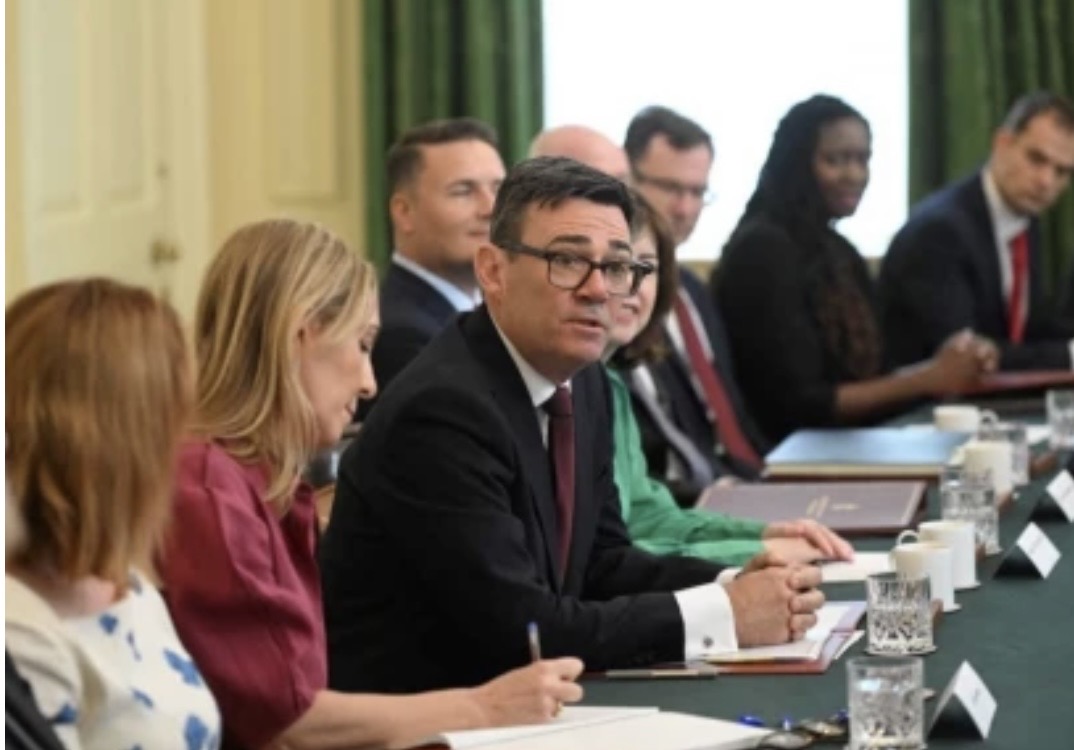
British Prime Minister Andy Burnham announced on Tuesday that his government would remove value-added tax from domestic electricity bills from October 1, cutting around £45 from the average annual bill of approximately £1,862 that households pay. The move, announced on his second day in office, is part of a series of early measures aimed at easing cost-of-living pressures and signaling his intent to deliver change after years of political instability.

Burnham said the tax cut would be funded by savings from the cancellation of a £1.8 billion digital ID programme, which was announced on Sunday. “We’re taking immediate action to cut taxes on energy bills, put more money in people’s pockets and bring back hope,” he said in a statement, having pledged to give people more money to spend.

The 56-year-old former Greater Manchester mayor wants to move quickly to show people he is “serious about helping them out.” He said on Monday that his early policies might not “take all of the pressure off” people struggling with rising prices, and that a longer-term plan would be set out later in the year. However, his calls for the governing Labour Party to get behind his agenda may have fallen on deaf ears. An ally of former prime minister Keir Starmer, Darren Jones, questioned whether the new leader had the money to cover his policy move on energy bills, saying the digital ID scheme was unfunded.

Burnham, dubbed the “King of the North” for his dogged defence of Greater Manchester, is currently the most popular leader of Britain’s main political parties. But Britain’s revolving door of prime ministers over the past decade has underlined how quickly parties can move against leaders who are not seen as delivering for voters. In his first speech as prime minister on Monday, Burnham said his ambition was to end rough sleeping in Britain. He is also expected to consider caps on bus fares, something he implemented in Manchester, and other measures to back up his assertion that “I will put the care of people at the heart of everything I do.”

The tax cut has drawn criticism from some quarters, with Ruth Curtice, chief executive of the Resolution Foundation, saying the move could benefit higher income families because the cuts were not targeted. “With bills still set to rise over £150 this October, this money would have been better spent on more targeted support,” she said. Despite the criticism, Burnham has said he will unveil more early policies, telling reporters he wanted his new government “to do some things that people will feel and feel quite quickly,” especially those on the lowest incomes. As he navigates the challenges ahead, Burnham’s early moves will be closely watched as a test of his ability to deliver on his promises and restore public confidence in the UK’s political system.

Similar Posts

  • | |

    Pakistan unveils four-year Hajj policy

    The government has introduced a four-year Hajj policy covering arrangements from 2027 to 2030. Federal Minister for Religious Affairs Sardar Muhammad Yousaf presented the policy on Wednesday. He described it as a major step toward improving and modernising Hajj arrangements in Pakistan. Speaking at a briefing, the minister said this was the first time the government had introduced a four-year Hajj policy. He said the initiative would provide a long-term framework for organising the pilgrimage. Yousaf said the policy had been prepared under the guidance of Prime Minister Shehbaz Sharif. It focuses on technology, transparency and improved services for pilgrims. According to the minister, the new framework aims to bring Pakistan’s Hajj arrangements closer to international standards. It will also introduce several new facilities for pilgrims. For the first time, applicants will have access to a registration and waiting-list system. The government expects the system to make the process more organised and transparent. The minister said the government and private Hajj schemes would retain their existing quota division. Sixty per cent of the quota will remain with the government scheme, while private operators will receive 40 per cent. The Ministry of Religious Affairs will continue to oversee and regulate Hajj arrangements. It will also monitor the performance of private Hajj companies. Under the new policy, applicants will be able to enter the pilgrims’ list after paying 10 per cent of the required amount. The government has also planned greater transparency in procurement. Purchases made in Pakistan and Saudi Arabia will be carried out through transparent procedures. Yousaf said any money remaining after meeting the required expenses would be returned to the pilgrims. The measure is aimed at improving financial transparency and protecting the interests of Hajj applicants. The government also plans to change the way private Hajj companies are monitored. Their registration and oversight will not depend only on the quota allocated to them. Instead, their performance will be an important factor in determining their registration and continued participation in the Hajj programme. A digital complaint-resolution system is also being introduced. Pilgrims will be able to submit complaints and seek quick action through the new system. An appeal mechanism will also be established. This will provide pilgrims with another channel to challenge decisions or seek resolution of their complaints. The minister said the government would also improve training programmes for Hajj pilgrims. The aim is to prepare pilgrims more effectively before their departure for Saudi Arabia. The Hajj Muhafiz Scheme will continue under the new policy. The government considers the scheme an important part of its arrangements for pilgrims. Yousaf said the new policy had been developed in line with Saudi Arabia’s Vision 2030. The framework is intended to improve coordination and service delivery during the pilgrimage. The minister said the government’s objective was not limited to managing logistical arrangements. It also wanted to ensure that Pakistani pilgrims received a dignified and comfortable Hajj experience. The estimated cost of the government Hajj package is expected to remain between Rs1.2 million and Rs1.3 million. However, the final cost may depend on various arrangements and expenses associated with the pilgrimage. Yousaf also clarified that any increase or decrease in Pakistan’s Hajj quota would require a decision from the federal cabinet. He said Pakistan had received recognition and awards for its Hajj arrangements in the past. The government now wants to further improve the system through long-term planning and greater use of technology. The four-year policy is expected to provide greater continuity in Hajj preparations. Officials believe the long-term framework will also make planning easier for both the government and pilgrims.

  • | | | | |

    Iran displays wreckage of US, Israeli aircraft in …

    Iran’s Islamic Revolutionary Guard Corps (IRGC) has put the wreckage of US and Israeli aircraft on public display, offering a dramatic glimpse of the military hardware Tehran says was destroyed during the recent war. Images released by Iranian state-linked media show sections of aircraft arranged as part of an exhibition, including what has been identified as the remains of a US F-15 fighter jet. The display reportedly includes the aircraft’s ejection seat, canopy and part of its tail. The exhibition appears designed not only to showcase recovered wreckage but also to underline Iran’s claims about the effectiveness of its air-defence capabilities during the conflict. The appearance of the F-15 debris is particularly significant. Recent reporting has identified the wreckage as belonging to an F-15E Strike Eagle, while Iranian authorities have presented it as evidence of a successful engagement against US airpower. However, claims surrounding aircraft losses have been contested throughout the conflict. In earlier incidents, Iranian officials announced that US aircraft had been destroyed, while American officials disputed some of the claims. Independent identification of battlefield wreckage has also sometimes proved difficult. Iranian forces have previously showcased captured or downed US military equipment as symbols of resistance. A similar exhibition in Tehran in 2019 displayed wreckage of a US Global Hawk drone claimed to have been shot down by Iran. The latest display comes after Iran also claimed on July 30 that three US F-35 fighter jets had been destroyed at Jordan’s Al Azraq airbase. That claim has not been independently established. By placing the aircraft remnants on display, Tehran is turning battlefield debris into a powerful political and military message—one intended to demonstrate that even advanced American and Israeli aircraft can be targeted during wartime. The exhibition is likely to fuel further debate over the scale of aircraft losses during the conflict and the competing narratives presented by Iran, the US and Israel.

  • | |

    Six militants killed in Mastung security operation

    Six suspected militants were killed and several others, including male and female suicide bombers, were arrested during an intelligence-based operation carried out by security forces in the Khad Kocha area of Mastung district, Balochistan, on Thursday. The operation was conducted as part of the ongoing Operation Shaban, a joint counterterrorism campaign involving the Pakistan Army, Frontier Corps (FC) and Balochistan Police. The campaign was launched after the terrorist attack on the Mangi Dam Police Station and continues in different parts of the province to eliminate militant networks. According to official sources, security forces launched the raid after receiving credible intelligence about the presence of militants in the area. During the operation, troops surrounded the suspected hideouts and engaged the militants in an exchange of fire. Officials said six militants were killed during the operation, while several others were taken into custody. Those arrested included alleged facilitators as well as male and female suicide bombers who were reportedly planning future attacks. Security personnel also destroyed multiple militant hideouts and recovered a large cache of weapons, ammunition and explosives from the site. The military said security forces have intensified intelligence-based operations across Balochistan to dismantle terrorist networks and prevent attacks on civilians and security personnel. Officials maintained that such operations would continue until militant infrastructure is completely dismantled. Interior Minister Mohsin Naqvi praised the security forces for the successful operation and commended their professionalism and courage. He said the forces had once again foiled the plans of militants attempting to spread violence and instability in Balochistan. He added that the government’s resolve to eliminate terrorism remains unwavering and that the entire nation stands with the armed forces and law enforcement agencies in their efforts to restore peace and stability. The latest operation came only hours after unidentified gunmen attacked a vehicle carrying members of the judiciary on the National Highway in Mastung. A district and sessions judge and his security guard were killed in the attack, while an additional sessions judge and another person suffered serious injuries. Security forces later cordoned off the area, launched a search operation and established checkpoints to trace the attackers. The operation also follows another series of intelligence-based raids carried out a day earlier, during which security forces killed 10 suspected militants and arrested two female suicide bombers along with a facilitator in different areas of Balochistan.

  • | |

    Lil Wayne reveals he recorded music over the phone…

    Lil Wayne has opened up about one of the most challenging periods of his life, revealing that he continued making music even while serving an eight-month sentence at New York City’s Rikers Island in 2010. During a recent appearance on the Keep Secrets podcast, the Grammy-winning rapper shared how his passion for music never faded, even behind bars. The 43-year-old artist explained that he found a creative way to keep recording despite the restrictions of prison life. According to Lil Wayne, he would use the prison phone system to record verses, calling producers and collaborators who would capture his vocals on the other end of the line. Although the audio quality was far from perfect, he said it allowed him to continue writing and creating music during one of the most difficult chapters of his career. Lil Wayne, whose real name is Dwayne Michael Carter Jr., was sentenced to eight months at Rikers Island after pleading guilty to attempted criminal possession of a weapon stemming from a 2007 incident. He entered the correctional facility in March 2010 and was released in November of the same year after serving approximately eight months. Reflecting on that time, the rapper said music became a source of motivation and helped him stay mentally focused. Rather than letting prison halt his creativity, he used every opportunity he could find to keep working on new material. His determination to remain productive, even under difficult circumstances, demonstrated the dedication that has defined much of his career. Lil Wayne has long been regarded as one of hip-hop’s most influential artists, with a catalog that includes hit albums such as Tha Carter III, Tha Carter IV, and Tha Carter V. Throughout his career, he has earned multiple Grammy Awards and inspired a new generation of rappers with his distinctive style and lyrical creativity. During the podcast conversation, Wayne also reflected on the importance of resilience. He suggested that difficult experiences can shape an artist’s perspective and fuel creativity rather than stop it. His willingness to adapt, even while incarcerated, highlights the relentless work ethic that has kept him relevant in the music industry for decades. Fans have responded with admiration to the revelation, praising Wayne’s determination to continue making music despite the limitations he faced. Many said the story offers a new appreciation for the effort that went into his work during that period. More than 15 years after his release, Lil Wayne’s latest comments provide a rare behind-the-scenes look at how he stayed connected to his craft while incarcerated. His story serves as a reminder that, for some artists, creativity can endure even in the most challenging environments, proving that passion often finds a way to overcome obstacles.

  • | | | |

    US strikes Iran for 13th night as Trump escalates threats

    The United States carried out fresh air strikes on Iran for the 13th consecutive night, further intensifying the military confrontation between the two countries. The latest attacks came as US President Donald Trump warned that Washington is prepared to launch even larger military operations if Iran continues targeting American interests and regional allies. According to the US military, the strikes targeted facilities linked to Iran’s Islamic Revolutionary Guard Corps (IRGC). Officials said the operation was intended to reduce Iran’s military capabilities and protect commercial shipping routes and US forces operating in the Middle East. Reports from Iran said explosions were heard in several parts of the country. Blasts were reported on Qeshm Island as well as in Khuzestan province. Missile strikes were also reported in the cities of Andimeshk and Omidiyeh. In the southern port city of Bandar Abbas, local media reported that attacks on a residential neighbourhood injured at least two civilians. Speaking earlier, President Trump said he was considering the largest military operation against Iran since the conflict began. He stated that preparations were complete and that a final decision could be taken soon if Iran continued its attacks on US allies and military assets in the region. The latest American strikes followed another round of Iranian missile and drone attacks on Bahrain, Kuwait and Jordan. Iranian military officials said the attacks targeted US military facilities stationed in those countries. Tehran described the strikes as retaliation for continued US attacks on Iranian territory and infrastructure. Iran also claimed responsibility for striking a telecommunications tower in Kuwait. Iranian officials said the attack was carried out in response to previous US strikes on communication facilities inside Iran. Kuwaiti authorities later confirmed that hostile drones also targeted the Abdali border crossing with Iraq, raising security concerns along the frontier. Iranian Foreign Minister Abbas Araghchi warned that the country would continue responding to every attack under an “eye for an eye” policy. Military officials said Iran’s retaliatory operations would continue for as long as American forces targeted Iranian infrastructure and coastal areas. The conflict has now spread beyond Iran and the United States, increasing fears of a wider regional war. Yemen’s Houthi movement claimed responsibility for attacks on two Saudi oil tankers in the Red Sea. The group warned that additional energy infrastructure could also become a target if the conflict continues. The growing violence has disrupted security across key maritime routes, including the Strait of Hormuz and the Bab al-Mandeb Strait, both of which are among the world’s most important oil shipping corridors. Continued attacks have increased risks to commercial shipping and raised concerns over global energy supplies. The worsening conflict has also pushed international oil prices above $100 per barrel, reflecting fears of prolonged supply disruptions. Analysts warned that further escalation could place additional pressure on the global economy by increasing fuel prices, disrupting trade and creating greater uncertainty in international energy markets.

  • | |

    LHC grants bail to Libya boat tragedy suspect

    The Lahore High Court (LHC) has granted post-arrest bail to Muhammad Tahir, a suspect in the Libya boat tragedy case, ruling that investigations into international human trafficking cases must be supported by credible and legally admissible evidence rather than mere suspicion. Justice Amjad Rafiq issued a detailed 10-page written verdict explaining the reasons for granting bail. The court observed that allegations of human trafficking, being an international crime, require thorough and professional investigations based on concrete evidence. The court noted that the Federal Investigation Agency (FIA) should have obtained evidence from abroad and sought legal assistance from relevant international authorities during the investigation. It said cooperation with foreign agencies is essential in cases involving cross-border human trafficking. According to the written order, investigators should have collected digital and documentary evidence, including WhatsApp chats, call records, bank records, travel documents and other electronic data. The court stressed that such evidence is necessary to establish the active role of an accused in an alleged trafficking network. The judgment further stated that the standard of investigation must be strong enough to legally prove an accused person’s involvement rather than relying on assumptions or incomplete evidence. The court also highlighted the need for reforms to effectively combat human trafficking. It said stronger legislation, improved investigative methods and better law enforcement mechanisms are essential to tackle organised trafficking networks. The LHC ruled that the transfer of money into a person’s bank account alone cannot be treated as proof of involvement in human trafficking. It added that suspicion, speculation or banking transactions by themselves are insufficient to establish criminal liability in such cases. The court ordered the release of Muhammad Tahir on post-arrest bail against surety bonds of Rs500,000, subject to the conditions set by the court. The case will continue in accordance with the law while further investigation proceeds.

Leave a Reply

Your email address will not be published. Required fields are marked *