morocco names 655mile
|

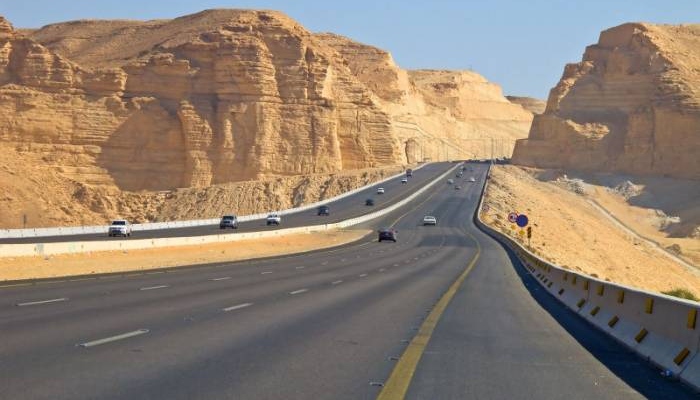
Morocco names 655-Mile coastal highway


RABAT: Morocco has officially named its 655-mile (1,055-kilometer) coastal expressway after U.S. President Donald J. Trump, according to reports. The decision was announced through a royal decree issued by King Mohammed VI, recognizing the highway as the Donald J. Trump Expressway.

The expressway stretches from the city of Tiznit in southern Morocco to Dakhla, a strategically important city located in the country’s southern region. Previously known as the Tiznit–Dakhla Expressway, the highway is one of Morocco’s most significant infrastructure projects. It covers approximately 655 miles (1,055 kilometers) and was built at an estimated cost of around US$1 billion.

The project was designed to improve transportation and strengthen economic links between Morocco’s northern and southern regions. The expressway is expected to facilitate trade, encourage tourism, and provide easier access to remote areas. It also plays an important role in connecting communities and supporting regional development.

The decision to rename the highway reflects Morocco’s recognition of President Donald Trump’s contributions to strengthening relations between the United States and Morocco. The announcement has attracted international attention because of the symbolic significance of naming such a major national infrastructure project after a foreign leader.

In response to the announcement, U.S. President Donald Trump expressed his gratitude to King Mohammed VI. In a message, President Trump thanked the Moroccan monarch for what he described as a “great honor.” He said he deeply appreciated the gesture and praised the strong friendship between the two countries.

President Trump also stated that he hopes to have the opportunity to travel on the newly renamed expressway in the near future. He described the highway as an impressive achievement and said he looked forward to visiting Morocco again.

The Tiznit–Dakhla route is considered one of Morocco’s largest transportation investments in recent years. It was developed to improve road safety, reduce travel time, and support economic activity throughout the country’s southern provinces. The highway also serves as an important transportation corridor for commercial vehicles carrying goods between different regions.

Infrastructure projects of this scale are often viewed as symbols of national development and long-term economic planning. Renaming the expressway after President Trump has generated interest internationally and is likely to be seen as a diplomatic gesture highlighting the close ties between Morocco and the United States.

Morocco and the United States have maintained longstanding diplomatic relations, cooperating in areas such as trade, security, investment, and regional stability. The renaming of the expressway further underscores the importance both countries place on their bilateral partnership.

The announcement has been widely reported by regional media and has sparked discussion about the significance of honoring foreign leaders through national landmarks. Whether viewed as a diplomatic tribute or a symbolic act of friendship, the decision marks a notable moment in Morocco–U.S. relations and adds another chapter to the history of cooperation between the two nations.

Similar Posts

  • |

    Thai teen’s shooting sparks school safety review

    Thai police said a 14-year-old boy accused of carrying out a deadly shooting near Bangkok had shown an interest in firearms for up to two years and had watched violent material online. The teenager allegedly killed his grandparents at their home on Friday before shooting six people at his school and taking his own life. More than 20 others suffered injuries in the attack, which became Thailand’s deadliest mass shooting since 2022. Deputy Commissioner of Provincial Police Region 1 Atthapol Anusit told reporters that investigators had questioned 17 witnesses so far. Police also found a knife in the teenager’s school bag, along with a firearm, spent cartridge cases and a personal computer. Investigators examining the computer found social media content involving violence. Police also said the boy had used social media to learn about firearms, although they have not yet found evidence that he regularly practised shooting. A teacher had confiscated a BB gun from the boy at school last year, according to police. The teenager had lived with his grandparents for about 12 years after his parents separated. In response to the tragedy, Thailand’s Ministry of Education said it would introduce new school safety measures within three months. The plan includes mental health screening, referrals for students considered at risk, emergency response drills, stronger anti-bullying measures and tighter checks to prevent weapons and other dangerous items from entering schools. The shooting has renewed calls for stronger firearm controls in Thailand, which has one of the highest rates of civilian gun ownership in Southeast Asia.

  • | |

    Zelensky says Russia deploying North Korean missil…

    Ukrainian President Volodymyr Zelensky said Russia used North Korean missiles in overnight strikes on Zaporizhzhia that killed at least six people and injured 19 others, as both sides continued exchanging attacks across the front line. In a video address Monday evening, Zelensky said Russia has reached a point where it “cannot wage war without reinforcements from North Korea” for the first time. He warned that continued use of North Korean missiles and troops inside Ukraine and across Europe allows Pyongyang to identify and fix weaknesses in its weapons systems, calling this a growing danger that extends beyond the immediate conflict. Zaporizhzhia regional governor Ivan Fedorov shared images of burning vehicles and damaged buildings, saying Russian forces struck the city with missiles and guided bombs. He said the attack damaged industrial sites, infrastructure and non residential buildings across the city, in addition to causing casualties. The strikes followed a separate wave of Ukrainian drone attacks that killed at least 13 people, including a child, in Russia’s republic of Tatarstan, located more than 1,100 kilometers, or roughly 680 miles, from the Ukrainian border. Ukraine’s Armed Forces said the strikes hit the city’s Tanevo oil refinery, and verified social media footage showed large plumes of smoke and daytime flames at the site as air raid sirens sounded nearby. Officials said at least 75 people were injured in that attack, which ranks among the deadliest single strikes on Russian territory since the full scale invasion began in 2022. Uzbekistan’s consulate in Tatarstan said seven of those killed held Uzbek citizenship. In Kyiv, air raid sirens sounded twice overnight and explosions struck the outskirts of the capital, sparking fires and injuring one person. A strike also damaged a hospital in the city, though officials said staff and patients had already moved to shelter. Separate strikes on power substations in Kherson and Kharkiv caused outages in both cities. In Sumy, a Russian drone strike injured two women, aged 52 and 66, according to Sergiy Kryvosheenko, head of the Sumy City Military Administration. He said both were treated at the scene and that the strike also damaged civilian vehicles, warehouse buildings and other infrastructure. Ukrainian officials said Russia launched 120 drones overnight along with a mix of missile types, though for the first time authorities did not disclose how many missiles were fired or intercepted. The omission followed a statement from Ukraine’s Air Force on Monday asking media outlets to avoid sensationalized coverage or pessimistic framing regarding the country’s shortage of air defence interceptors. Ukraine also struck Russian territory overnight, hitting warehouses belonging to online retailer Wildberries in the Voronezh region in southern Russia. Wildberries, often described as Russia’s answer to Amazon, has faced repeated attacks on its facilities in recent weeks. The company has not confirmed the latest strike but said it evacuated facilities in the border region as a precaution. In July, Ukrainian drone strikes on several Wildberries warehouses disrupted operations for a large number of small and medium sized Russian businesses. Kyiv said at the time that it was targeting logistics hubs Russian buyers used to acquire military equipment, part of a broader effort to disrupt supply lines feeding the Russian military. In his Monday address, Zelensky also praised a separate strike on a Russian petrochemical plant in western Siberia, calling it a significant achievement for Ukraine’s military. He pledged additional long range Ukrainian strikes intended to convince Russia and the Russian public that peace remains necessary. This is not the first time Zelensky has raised alarm over North Korean military support for Russia. He said over the weekend that as many as 50,000 North Korean soldiers have been deployed to fight alongside Russian forces, part of a growing pattern of cooperation between Moscow and Pyongyang that Ukrainian officials say is reshaping the battlefield and raising broader security concerns well beyond the immediate conflict.

  • | |

    Bangladesh jet crash survivors and families mark o…

    Families and survivors of a Bangladesh jet crash that killed dozens at a Dhaka school gathered this week to mark one year since the disaster, with many saying they are still waiting for accountability. Nure Jannat Yusha was a sixth grade student going through an ordinary school day when a Bangladeshi air force jet went down over her campus in the capital. The crash killed 36 people, most of them children, and turned Milestone School and College, a private institution that had been full of students moments earlier, into a scene of fire and panic within minutes. The disaster remains the deadliest aviation accident Bangladesh has recorded in several decades. Earlier this week, relatives and survivors came together to mark the anniversary. Many of the attendees were students who say the trauma of that day continues to shape their daily lives, including Yusha. She told a local broadcaster that fear still follows her whenever she encounters aircraft. “Even now, if I go to school and see a plane, I feel afraid,” she said. She added that the memory disrupts her sleep and resurfaces in nightmares that place her back in the fire. Yusha was among more than 160 people injured in the crash. She attended a memorial held at a hospital in Dhaka on Tuesday, where several families said they still lack clear answers about how and why the crash happened. Her mother, Yasin Akter, said the accident has changed her daughter in ways that go beyond physical injury. Yusha had once hoped to become a dancer, an ambition her mother says has since faded. “My daughter screams all day and is afraid,” Akter said, explaining that her daughter now associates the sky and passing aircraft with danger. The anniversary gathering highlighted a broader pattern common after major air disasters, where survivors and grieving families continue to seek transparency long after public attention shifts elsewhere. Psychological trauma among child survivors, in particular, tends to persist well beyond the initial recovery period, often requiring sustained mental health support that is not always readily available in the aftermath of large scale emergencies. Aviation authorities in South Asia have faced scrutiny in recent years over oversight of military and civilian flight paths near populated areas, an issue that has resurfaced in public discussion following the Milestone School crash. Analysts who study aviation safety note that incidents involving military aircraft over densely populated zones often prompt renewed debate about flight corridor planning and emergency response coordination, though structural changes can take years to implement even after a high profile disaster. For families like Yusha’s, the anniversary was less about policy debate and more about the everyday reality of raising a child who survived a catastrophe that claimed the lives of classmates and teachers. As the investigation into the crash continues, many of those affected say they simply want acknowledgment and clarity on what went wrong, along with continued support as their children work through the lasting effects of that day.

  • | | | |

    IRGC releases satellite images of US jets in Jordan

    Iran’s Islamic Revolutionary Guard Corps (IRGC) has released satellite images that it says show hangars housing US military aircraft at Jordan’s Al Azraq air base, escalating its information battle with Washington. The IRGC also called on the United States to end what it described as censorship and urged officials to provide the public with accurate information about the ongoing conflict. The release comes after the United States rejected an Iranian claim that its forces had destroyed US F-35 fighter jets. Iranian authorities had earlier claimed that three American fighter aircraft were destroyed at the Al Azraq air base in Jordan. In a statement, the IRGC said its forces had targeted three US F-35 aircraft stationed at the base. The claim has not been independently verified, while US officials have denied that Iran destroyed any American F-35s. By publishing the satellite imagery, the IRGC appears to be seeking to support its version of events and challenge the US account of the reported attack. However, the images alone do not independently confirm whether any aircraft were damaged or destroyed. The conflicting claims come amid heightened regional tensions and an ongoing exchange of accusations between Iran and the United States over military operations and attacks in the Middle East.

  • | | |

    Uganda backs sending troops to planned Gaza peace …

    Uganda’s Parliament has approved a government proposal to deploy troops to a planned international peace and stabilisation force for Gaza, marking the country’s first commitment to the proposed multinational mission. The resolution was introduced by Uganda’s Minister of Defence and received parliamentary approval following debate among lawmakers. With the decision, Uganda joins Morocco, which has also announced its willingness to contribute troops to the proposed force. The Ugandan government has not publicly disclosed the diplomatic discussions or political considerations behind its decision. However, the move sparked debate in Parliament, with opposition members expressing concerns about the potential implications for Uganda’s foreign policy and regional relationships. Opposition lawmaker Hassan Kiromera questioned the mission’s objectives, asking which parties Ugandan troops would ultimately be expected to confront if deployed. He argued that the government should provide greater clarity regarding the mandate of the proposed force before committing military personnel. Defence Minister Jacob Oboth-Oboth defended the proposal, stating that the Uganda People’s Defence Forces (UPDF) possess extensive experience in international peacekeeping operations, including missions in Somalia and other conflict zones. He said that this experience would enable Ugandan troops to contribute effectively to efforts aimed at restoring peace and stability in Gaza. According to the report, the proposed Gaza International Stabilisation Force is expected to consist of approximately 20,000 personnel from multiple countries. The force is reportedly planned under a proposal associated with US President Donald Trump’s Board of Peace and would be commanded by US Major General Jasper Jeffers. The mission is intended to help maintain law and order in Gaza following the end of hostilities between Israel and Hamas. Reports indicate that the proposal was first introduced earlier this year as part of broader discussions on post-conflict governance and security arrangements in the territory. The development follows recent announcements regarding a reported agreement under which Hamas would disarm and Israel would gradually withdraw its military forces from Gaza. Under the reported framework, the international stabilisation force would be deployed after the phased Israeli withdrawal. However, uncertainty remains over the implementation of the proposed arrangement. Israeli officials have reportedly expressed serious security concerns after reviewing the reported agreement, arguing that certain provisions could pose risks to national security. As a result, questions remain about the timeline and conditions for the deployment of the multinational peace force despite Uganda’s parliamentary approval.

Leave a Reply

Your email address will not be published. Required fields are marked *