tell partners they
| |

US to tell partners they must pick sides in AI race with China

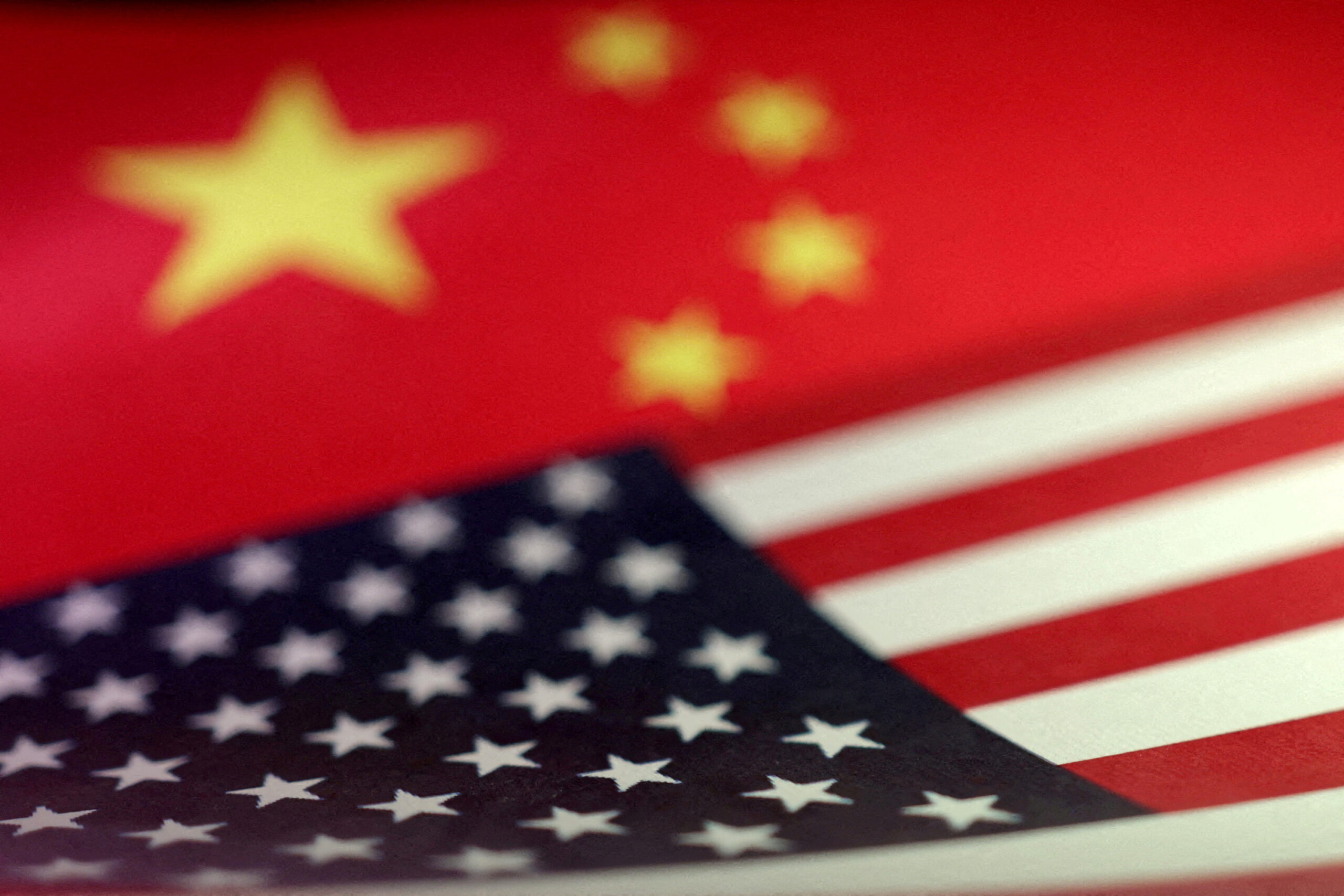
WASHINGTON, US – The US is preparing to tell dozens of countries they must pick sides in the artificial intelligence race with China, warning they will be excluded from a US-led AI coalition if they also sign up for Beijing’s competing framework, according to a US official and an internal draft reviewed by Reuters.

Washington last year launched the Pax Silica initiative aimed at securing supply chains for AI models, semiconductors and critical minerals, amid a fierce technology rivalry with Beijing.

About two dozen countries have joined, including Kazakhstan, a key potential source of critical minerals that has also joined China’s coalition, as well as close US allies such as Japan, Australia and South Korea.

The draft letter, prepared by the State Department, is addressed to the 35 signatories of a US “AI Opportunity Statement” signed in June, which includes members of the non-binding Pax Silica framework and other countries that have expressed a desire to align cooperation on AI with Washington.

By pressing countries to choose sides the US hopes to starve China of resources in a race to make the most sophisticated AI, which could be used for military or economic dominance.

In July, Chinese President ​Xi Jinping launched a rival “World Artificial Intelligence Cooperation Organization,” promoting his country’s open-weight technology as a challenge to US influence over ‌the fast-moving sector.

Kazakhstan is the only country so far known to have joined both initiatives, setting off alarm bells in Washington.

“To be part of everything is to be part of nothing. Signature of the Pax Silica Declaration is not merely a membership subscription, but a commitment,” the letter says, urging countries to “choose deliberately” on AI.

“It cannot be held alongside membership in duplicative initiatives whose expectations conflict with our own,” the letter said, without specifically mentioning China.

Reuters could not determine when the US intends to send the letter or whether it might be amended before sending. The draft was undated.

The State Department told Reuters it would not comment on “purportedly leaked internal documents.”

The Chinese and Kazakh embassies in Washington did not respond immediately to requests for comment.

Must Read

Pax Silica highlights need for clearer industrialization policy


Pax Silica highlights need for clearer industrialization policy

‘Can’t have it both ways’

The Pax Silica agreement aims to push US allies and partners toward joint projects and export controls, and ultimately reduce reliance on adversaries for critical minerals, AI models and the semiconductor chips that power them.

The race between the US and China for technological leadership has reached a pivotal moment, as Chinese open-weight AI models have made rapid gains against proprietary systems from US companies such as OpenAI and Anthropic.

The exponential growth of the technology’s capabilities, including the ability to hack autonomously, has forced a global reckoning over its power.

Beijing is weighing restrictions on overseas access to some ​of China’s leading AI models, highlighting the growing tension with its stringent national security agenda.

The US touted Kazakhstan in June as the first country in Central Asia to join Pax Silica, bringing significant reserves of critical minerals that fuel advanced technologies.

China has used its current near-monopolies over critical minerals as a retaliatory weapon in a tariff war launched last year by US President Donald Trump, who has ramped up US efforts to source the minerals domestically and from allies.

Members of Pax Silica have access to shared investment opportunities in AI-related projects while those who sign the AI Opportunity Statement have symbolically agreed on a “common purpose” and “shared vision” with the US, according to the statement posted on the State Department’s website.

US officials drafted the letter to make clear that “you can’t have it both ways,” the US official told Reuters, speaking on condition of anonymity given ongoing internal discussions on the issue.

“It’s difficult to see how a country can credibly position themselves as trusted partners in one technology ecosystem while simultaneously signing up for an initiative designed by China to advance a competing vision for AI,” the official said. – Rappler.com

Must Read

Ask Me Anything with lawyer Carlo Ybanez, and IBON Foundation on the Pax Silica debate


Ask Me Anything with lawyer Carlo Ybanez, and IBON Foundation on the Pax Silica debate

Similar Posts

  • | | |

    Balochistan attack: sessions judge Abdul Hakeem Ka…

    District and Sessions Judge Abdul Hakeem Kakar and his security guard were killed in an armed attack while traveling toward Mastung from Quetta, officials confirmed on Thursday. According to officials, Judge Kakar was traveling with Additional Sessions Judge Tariq Lashari when unidentified armed men targeted their vehicles near Wali Khan crossing. The attack resulted in the deaths of Judge Kakar and his guard, while Judge Lashari and another person sustained injuries. Balochistan Home Department officials said the injured victims were shifted to a hospital in Mastung for medical treatment. Authorities have launched an investigation into the attack and are collecting evidence from the crime scene. Balochistan Chief Minister Sarfraz Bugti took notice of the incident and directed authorities to investigate all aspects of the attack. Officials said strict action would be taken if any negligence was found during security arrangements. The provincial government described the attack as a targeted assault against the judicial community. Officials said such incidents were aimed at creating fear and challenging the authority of state institutions. President Asif Ali Zardari strongly condemned the attack and expressed grief over the deaths of the judge and his guard. He said the sacrifices of those killed in such attacks would not go in vain and reaffirmed the country’s commitment to fighting terrorism. Interior Minister Mohsin Naqvi also condemned the incident, saying such acts could not weaken the nation’s determination against terrorism. PPP Chairman Bilawal Bhutto-Zardari expressed solidarity with the victims’ families and vowed that those responsible would be brought to justice. The attack comes amid heightened security concerns in Balochistan, where several violent incidents have recently taken place. Just a day earlier, three people were killed and several others injured in an attack on a passenger bus in Mastung, while a bridge on the national highway was damaged in a separate incident. Security forces have intensified operations across the province following a rise in militant activities. Authorities say counterterrorism efforts are continuing to restore peace and prevent further attacks. The investigation into the killing of Judge Abdul Hakeem Kakar and his guard remains ongoing, with security agencies working to identify and arrest those responsible.

  • | |

    Kushner meets Netanyahu to revive stalled Gaza pea…

    US President Donald Trump’s envoy and son-in-law Jared Kushner met Israeli Prime Minister Benjamin Netanyahu in Jerusalem on Monday as Washington stepped up efforts to revive its stalled plan for ending the Gaza war. The meeting came a day after Kushner held talks in Cairo with Hamas representatives, including senior leader Khalil Al-Hayya, marking his second known direct engagement with the Palestinian group. Kushner was accompanied in Jerusalem by Trump’s Board of Peace envoy for Gaza, Nickolay Mladenov. The latest diplomatic push comes amid deep disagreements over the implementation of the US-backed Gaza plan. Under the proposal, Hamas and other armed groups would surrender their weapons while Israeli forces would gradually withdraw from Gaza. An international stabilisation force, alongside a new Palestinian police force, would then help maintain security in the territory. Netanyahu, however, has insisted that Israeli troops will not withdraw until Hamas and other armed groups are fully disarmed. Israel has also rejected a separate US-backed roadmap aimed at moving the broader peace plan forward. Diplomats say Israel is unlikely to make major concessions on Gaza ahead of the country’s October 27 election, adding another challenge to Washington’s efforts to break the deadlock. The talks have gained urgency as implementation of the ceasefire framework remains limited, with Israeli strikes continuing in Gaza despite commitments under the US plan. Hamas has said it accepts the proposed disarmament framework but argues that its implementation depends on Israel fulfilling its own obligations, including withdrawing forces and ending attacks. Kushner previously met Hamas officials alongside US envoy Steve Witkoff in October 2025. Those discussions helped produce an agreement that led to a Gaza ceasefire and the release of hostages captured during the October 7, 2023 attack. The latest meetings suggest Washington is seeking to reopen negotiations and bridge the widening gap between Israel and Hamas before the Gaza peace initiative loses further momentum.

  • |

    Germany weighs tougher rules on sick leave

    BERLIN: Germany is considering tougher rules for workers taking sick leave, but researchers warn that stricter requirements may not address the deeper reasons behind the country’s high absenteeism. German employees took an average of around 22 sick days in 2024. The figure is among the highest reported internationally. The government’s proposed changes are part of a wider effort to improve productivity. Germany is dealing with an ageing population and years of weak economic growth. Under the proposed changes, employers could require workers to provide a medical certificate from the first day of absence. Telephone-based sick notes could also be scrapped. However, researchers say the debate should focus on why workers are becoming ill rather than simply making it harder to take sick leave. Healthcare, education and social services are among the sectors reporting the highest levels of absenteeism. Workers in these fields often face heavy workloads. They also deal with staff shortages, emotional pressure and difficult working conditions. BKK data shows that women working in healthcare and social work took an average of 27 sick days in 2024. Teachers recorded around 24 days. The figures were lower in several other sectors. Workers in finance averaged about 18 days, while employees in communications recorded around 16 days. Researchers say mental health is an important part of the problem. Mental health-related cases represent a relatively small share of total sickness cases. However, they often result in much longer absences. Data from AOK shows that sick-leave days linked to mental health problems have increased by 47% since 2014. Mental health conditions are now one of the biggest causes of prolonged absence after respiratory illnesses. Experts say burnout and exhaustion can develop without reaching the level of a diagnosed mental disorder. Healthcare workers and teachers are particularly exposed to these pressures. They carry significant responsibilities while dealing with emotional and sometimes physical challenges. Teachers have reported violence and aggressive behaviour in schools. A 2024 survey found that almost half had experienced psychological or physical violence among pupils at their schools. More than one-third also reported feeling emotionally exhausted several times a week. Nursing faces similar difficulties. Germany has a shortage of healthcare workers, but studies indicate that wage growth has remained limited in some hospitals and public institutions. Researchers describe the situation as an imbalance between effort and reward. Workers face high demands but may receive relatively low pay, limited career opportunities and insufficient recognition. Studies have linked such conditions to mental health problems and long-term sickness absence. However, experts caution against blaming Germany’s absenteeism solely on workplace stress. Sick leave is affected by many factors. These include the age of the workforce, working conditions, social attitudes and differences in healthcare systems. Germany also has generous sick-pay provisions. Workers can generally receive full wages during the initial period of illness. Several other European countries, however, report even higher levels of sick leave among full-time employees. Researchers have also found little evidence of widespread abuse of sick-note rules. A study by DAK and the IGES Institute found that the sharp rise in recorded absences in 2022 was largely linked to improved electronic reporting and unusually high levels of respiratory infections and Covid-19. Sick-leave levels have since stabilised. Researchers also found no clear evidence that telephone sick notes introduced during the pandemic caused the increase. The government’s proposal has faced opposition from labour representatives. The Verdi services union has described the plan as creating a culture of distrust towards employees. Doctors have also warned that tougher certification requirements could put additional pressure on already busy medical practices. The government has defended its approach. It says employers would have the option of requiring certificates from the first day of illness while allowing companies to retain existing arrangements. The debate is therefore moving beyond the question of whether German workers take too many sick days. Researchers argue that reducing absenteeism in the long term may require better staffing, improved working conditions, stronger career prospects and greater support for workers facing emotional pressure.

  • |

    Death toll rises to 254 after powerful Colombia earthquake

    The death toll from a powerful earthquake that struck western Colombia on Monday has risen to 254, according to foreign media reports, as rescue teams continue searching through devastated areas for survivors. The 7.4-magnitude earthquake caused widespread destruction across the affected region, with dozens of buildings collapsing and significant damage reported to infrastructure. Several communities remain without electricity and access to essential services, making rescue and relief operations increasingly difficult. Colombian authorities have warned that the full scale of the disaster may not become clear for several days. Rescue workers are still assessing damaged areas, while officials are working to determine the exact number of casualties and the extent of property damage. The earthquake also disrupted basic services in several affected communities, leaving residents struggling to access electricity and other necessities. Emergency teams have been deployed to assist victims, search damaged buildings and provide immediate relief to people who have lost their homes. Officials expect the death toll and damage estimates to change as rescue crews reach areas that remain difficult to access. Authorities have urged residents to remain cautious and follow emergency instructions as assessments and relief efforts continue. The 7.4-magnitude tremor stands among the most destructive earthquakes to hit western Colombia in recent years, causing severe damage and a major humanitarian challenge for local authorities.

  • |

    New anti-Taliban group emerges in Afghanistan

      Armed resistance against the Taliban appears to be expanding in Afghanistan, with a new anti-Taliban group reportedly emerging in the northern province of Faryab. Sources say growing opposition to the Taliban’s style of governance, alleged ethnic discrimination and corruption has fueled resistance among sections of the Afghan population. Opposition has also increased over restrictions on education, employment and basic human rights, while the ongoing situation has contributed to a rise in Afghan migration toward Europe. According to sources, fighters affiliated with the newly formed Liberation Front carried out an attack against Taliban forces in Faryab province on Monday. The group is expected to formally announce its organisational structure, leadership and future activities within the next few days. The emergence of the new group comes as other anti-Taliban factions also signal plans to intensify their activities. General Sami Sadat, head of the Afghanistan United Front, and General Yasin Zia of the Afghanistan Freedom Front have both announced their intention to step up resistance against the Taliban. The developments indicate growing challenges for the Taliban as it continues to face opposition from armed groups as well as criticism over its policies on governance, human rights, education and employment.

  • | | |

    Iran calls Kurdistan drone attack a ‘false-flag?…

    TEHRAN: Iranian Foreign Minister Abbas Araghchi has condemned a drone attack targeting the office of the Kurdistan Regional Government’s prime minister in Iraq, while warning Kurdish authorities to remain alert to what he described as possible “false-flag” operations. The remarks came after two drones targeted the office of Kurdistan Region Prime Minister Masrour Barzani in Erbil on Monday. Kurdish authorities said the attack caused no casualties, although the incident has added to concerns over the increasingly tense security environment in northern Iraq. Araghchi said nothing justified what he called a reckless attack and urged Iran’s Kurdish neighbours to be cautious of attempts to create divisions and discord between neighbouring countries. In a statement posted on social media, the Iranian foreign minister said Kurdish communities and officials should remain vigilant against operations designed to provoke tensions. He also referred to Iran’s past support for Kurdish people during conflicts with Saddam Hussein’s government and the Islamic State group. The comments came as questions remained over who was responsible for the latest attack. The Kurdistan Regional Government’s security agency said the drones originated from Iranian territory, according to Reuters. Iranian officials, however, have not directly accepted responsibility for the strike. Instead, Tehran has highlighted the possibility that the attack could have been carried out as a “false-flag” operation aimed at damaging relations between Iran and Iraq’s autonomous Kurdish region. The attack has further complicated an already sensitive regional security situation. Erbil has experienced repeated drone incidents in recent months amid the wider confrontation involving Iran, the United States and Israel. In July, several drones were intercepted over the city, with local authorities reporting no casualties. Kurdistan Region President Nechirvan Barzani has also condemned the latest attack, describing the incident as unacceptable and calling for Iraq’s federal government to fulfil its responsibility to protect the region’s security and stability. The latest confrontation comes as Iraqi Kurdistan attempts to avoid being drawn deeper into wider regional hostilities. The region’s strategic location and close ties with Western partners have repeatedly made it a sensitive point in the broader Middle Eastern conflict. With competing claims surrounding the drone attack, the incident is likely to increase diplomatic pressure on Baghdad, Erbil and Tehran to prevent further escalation and clarify responsibility for attacks on Kurdish territory.

Leave a Reply

Your email address will not be published. Required fields are marked *