japan orders evacuations
|

Japan orders evacuations as Typhoon Dolphin approaches, cancels 500 flights

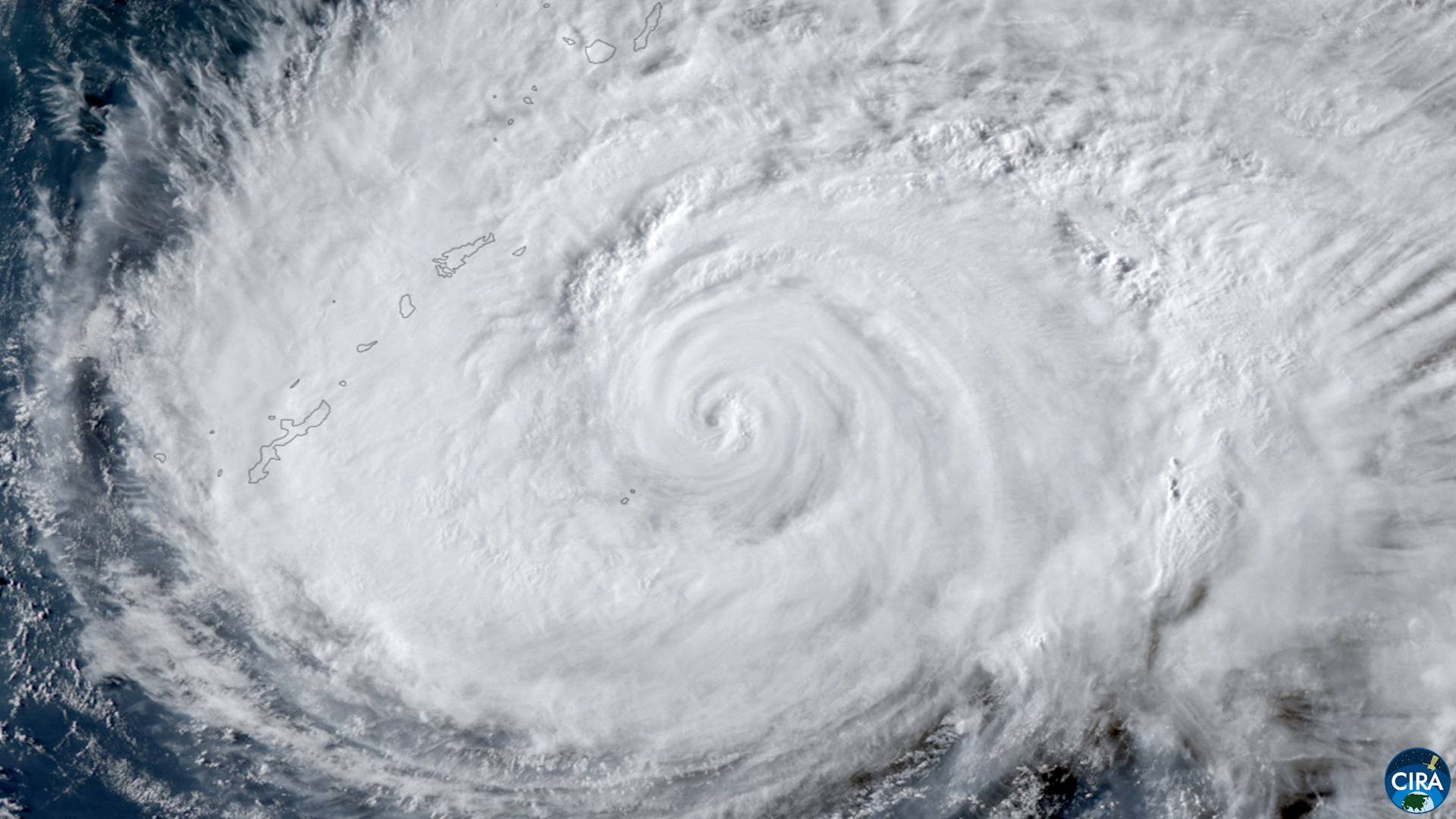
TOKYO, Japan – Hundreds of thousands of people in southwestern Japan were ordered to evacuate and more than 500 flights canceled on Friday, August 7, as slow-moving Typhoon Dolphin approached the region to bring violent winds, heavy rain and high waves.

The Category 1 typhoon had maximum sustained winds of 144 kph (89.5 mph) with gusts reaching 198 kph and was nearing a chain of islands between the Kyushu region and Okinawa prefecture, the Japan Meteorological Agency (JMA) said.

Authorities issued evacuation orders for nearly 260,000 residents in Kagoshima and Okinawa prefectures, while Toyota suspended work at nine factories on Friday.

Dolphin was expected to maintain its strength as it approached Okinawa prefecture, raising the risk of winds that could damage or collapse some structures, authorities warned. A linear rain band — or a narrow band of intense precipitation and thunderstorms — could also develop, possibly triggering flooding, the weather agency said.

The large storm was also enveloping much of the southernmost main island of Kyushu with strong winds, including Kumamoto prefecture, still reeling from last week’s magnitude 7.1 earthquake.

Some 6,700 Kumamoto residents remain in evacuation centres after many houses collapsed. The weather agency has also warned of heatstroke risks with temperatures expected to reach 36 degrees Celsius (97 degrees Fahrenheit) in some areas. – Rappler.com
Similar Posts

  • | | | |

    Iran says US strikes kill 55, injure 645 as confli…

    TEHRAN: Iran’s Ministry of Health has claimed that at least 55 people were killed and 645 others injured in the latest wave of US military strikes across the country, as hostilities between Tehran and Washington continue to escalate. According to Iranian officials, the heaviest casualties were reported in the country’s southern and southwestern provinces, where several sites were allegedly targeted during the attacks. Iran’s state-affiliated Fars News Agency quoted a Health Ministry spokesperson as saying that the death toll had reached 55, while the number of injured had climbed to 645. The ministry described the strikes as among the deadliest incidents since the recent escalation in military tensions. Officials said Khuzestan Province suffered the highest number of casualties, followed by Hormozgan and Sistan and Baluchestan, where hospitals reportedly received dozens of wounded civilians following the attacks. The Health Ministry added that 586 of the injured have already been discharged after receiving treatment, while several others were treated for minor injuries and allowed to return home shortly afterward. According to the ministry, eight people remain hospitalized, with some expected to undergo additional surgeries due to the severity of their injuries. Iranian authorities condemned the attacks as an act of “American aggression” and called on the international community to respond to what they described as violations of international law. Officials urged global organizations to investigate the reported strikes and their humanitarian consequences. As of the time of publication, the United States had not issued an official response to the casualty figures released by Iran’s Health Ministry. The reported death toll and injury count have also not been independently verified, and international monitoring organizations have yet to confirm the claims. The latest figures come as military tensions between Iran and the United States continue to rise, fueling concerns about the humanitarian impact of the conflict and the risk of further regional instability. Security analysts warn that continued military exchanges could deepen the crisis across the Middle East, with civilians increasingly caught in the crossfire. They say the absence of verified information from independent sources makes it difficult to assess the full scale of the damage, but the competing claims from both sides underscore the rapidly evolving nature of the conflict. With diplomatic efforts showing little sign of progress, observers fear that further escalation could lead to additional civilian casualties and heightened security risks across the region, while the international community continues to monitor developments closely.

  • |

    Man arrested over US Consulate bomb threat

    A man has been arrested in Halifax, Canada, after allegedly threatening to blow up the US Consulate, triggering a major security operation in the area. According to US media reports, Canadian authorities found flammable materials inside the suspect’s vehicle near the consulate. Police responded quickly to the bomb threat and evacuated several blocks surrounding the diplomatic facility as a precaution. The security operation continued for more than five hours as police and emergency teams searched the area and assessed the potential threat. Authorities later cleared the site and confirmed that there was no longer any danger to the public. Canadian police said they had taken a man into custody in connection with the incident. However, authorities have not yet filed criminal charges against him, and investigators are continuing to examine the circumstances surrounding the threat. The incident prompted heightened security measures around the US diplomatic facility and temporarily disrupted activity in the surrounding area. The security scare comes amid increased concern over attacks targeting US diplomatic facilities in Canada. US media reports that the American Consulate in Toronto has come under gunfire twice this year, although the Halifax incident has not been publicly linked to those attacks. Canadian authorities are expected to continue their investigation to determine the suspect’s motive and whether he intended to carry out an actual attack.

  • |

    UN Security Council begins informal voting to choose next secretary general

    The United Nations Security Council will begin its first round of informal voting on Thursday to measure support for candidates seeking to become the next UN secretary general. The confidential ballots mark the start of a selection process that will eventually determine who succeeds Antonio Guterres when his second five year term ends later this year. Seven candidates from different regions are currently competing for the position. They include Argentina’s Rafael Grossi, who heads the UN nuclear watchdog, former Chilean President Michelle Bachelet, former Costa Rican Vice President Rebeca Grynspan, former Ecuadorian Foreign Minister Maria Fernanda Espinosa, former Guyanese Foreign Minister Carolyn Rodrigues-Birkett, former Senegalese President Macky Sall and Ugandan diplomat Olara Otunnu. Additional candidates are still allowed to enter the race before the selection process concludes. The next secretary general will take charge of the United Nations at a time when the organization faces mounting criticism over its effectiveness and structure. Calls for reform have increased as member states push for a more efficient institution, arguing that the UN must reduce bureaucracy, eliminate overlapping responsibilities among its agencies and improve its ability to respond to global crises. The first stage of the selection process involves informal straw polls conducted behind closed doors among the Security Council’s 15 members. During these secret ballots, council members indicate whether they encourage, discourage or have no opinion on each candidate. The votes are non binding but provide an early indication of which candidates have the strongest support and which face significant opposition. At this stage, all Security Council members use identical ballots, meaning diplomats can see the overall level of support for each candidate without knowing whether opposition comes from one of the council’s five permanent members. Those permanent members are China, France, Russia, the United Kingdom and the United States, each of which holds veto power over the final recommendation. As the selection process moves forward, the permanent members will use ballots in a different color during later rounds of voting. This allows diplomats to determine whether any candidate has received a negative vote from a veto holding country, information that often plays a decisive role in narrowing the field. There is currently no clear favorite to replace Guterres. Previous UN leadership contests have required several rounds of voting over many weeks before a consensus candidate emerged. Diplomats expect this year’s process could continue throughout the summer and possibly into late September or early October if no candidate gains broad enough support. If the Security Council remains divided, the process could take even longer. Once the council agrees on a single candidate, it will formally recommend that person to the 193 member UN General Assembly. The recommendation requires at least nine votes in favor and no veto from any of the five permanent members. The General Assembly then votes to confirm the appointment, a step that has traditionally been considered a formality after the Security Council reaches agreement. The current president of the Security Council is the Democratic Republic of the Congo. Its ambassador to the United Nations, Zenon Mukongo Ngay, confirmed that the first round of straw polls will take place on Thursday morning. He also said that Ugandan candidate Olara Otunnu will participate in the voting despite not taking part in the informal public hearings completed by the other candidates. According to his biography, Otunnu played an important role in shaping the current selection process. He states that he introduced the system of informal straw polls while serving as president of the Security Council in 1981. That method has since become a key part of the process used to identify the candidate most likely to secure broad international support before the final appointment is made.

  • | | |

    Trump says US has ample weapons, ammunition stockpiles

    US President Donald Trump has said the United States possesses extensive stockpiles of weapons and ammunition, dismissing concerns about shortages during recent military operations. In a statement, Trump said the country is continuing to manufacture weapons on a large scale while also procuring additional supplies as needed. He added that defense companies are building a record number of plants and factories to strengthen America’s military production capacity. Trump also warned that those responsible for leaking what he described as “treasonous statements” would be identified and face lengthy prison sentences. His remarks came after reports in the US media claimed that he had questioned Defense Secretary Pete Hegseth over alleged shortages in US weapons stockpiles during the conflict with Iran. According to the reports, the issue had limited Washington’s military options against Tehran. The reports stated that Trump raised the matter during a Cabinet meeting held at Camp David in Maryland last week, where he reportedly sought an explanation from Hegseth about the significant decline in ammunition reserves. However, US officials have denied the media reports, rejecting claims that the country faced a critical shortage of weapons or that military options against Iran were constrained because of depleted stockpiles.

  • | | |

    Man arrested after alleged sexual assault of woman…

    A 28-year-old man has been arrested on suspicion of sexually assaulting a 20-year-old woman on Brighton Beach, as Sussex Police continue their investigation into the incident. According to police, the alleged assault took place overnight between Tuesday and Wednesday on Brighton seafront. Officers responded to reports of the incident and immediately secured the area near the Brighton i360 tower, where forensic specialists examined the scene and gathered evidence. A significant police presence remained at the location while investigations were carried out. Sussex Police confirmed that a 28-year-old suspect was taken into custody on suspicion of rape. Authorities said the man remains under investigation and has not yet been formally charged. Under UK legal procedures, suspects are considered innocent unless proven guilty in court. Police have not released the identity of either the suspect or the victim. Officials also declined to disclose the suspect’s nationality, explaining that such information is generally not made public before formal charges are filed. The force said the woman is receiving support from specially trained officers and victim support services as the investigation continues. Authorities emphasized that protecting the victim’s privacy remains a priority. Investigators have appealed to members of the public who were in the Brighton Beach or Brighton i360 area at the time of the alleged incident to come forward with any information. Police are particularly interested in mobile phone footage, photographs, CCTV recordings, or eyewitness accounts that could assist with the ongoing inquiry. Sussex Police stressed that the investigation is still in its early stages and that further updates will be released as more information becomes available. Officers urged the public to avoid speculation while inquiries are ongoing. The latest investigation comes only weeks after another high-profile criminal case involving a sexual assault on Brighton Beach concluded in court. In that separate case, three men were convicted and sentenced to lengthy prison terms for the rape of an unconscious woman. That case is unrelated to the current investigation but has drawn renewed attention to public safety along the popular seaside destination. Police have reiterated their commitment to conducting a thorough investigation into the latest allegations and ensuring that anyone with relevant information contacts the authorities. The outcome of the case will depend on the evidence gathered during the investigation and any subsequent legal proceedings.

  • |

    US investigates possible Russian role in Iranian strikes on CIA facilities

    US intelligence agencies are examining whether Russia helped Iran carry out drone attacks on CIA facilities in the Gulf, raising fresh concerns about growing military cooperation between Moscow and Tehran. Officials are reviewing intelligence to determine whether Russia provided targeting information, advanced drone technology, or other forms of support that may have increased the accuracy of the attacks. According to sources familiar with the investigation, analysts have not reached any final conclusions about Russia’s involvement. However, the precision of the strikes and Russia’s long history of military and technical cooperation with Iran have led intelligence officials to explore whether Moscow played a direct role in planning or supporting the operations. The investigation follows a series of Iranian drone attacks that targeted sensitive US intelligence locations in the region. At least two CIA facilities were reportedly hit in March. One of the sites was located inside the US Embassy in Riyadh, Saudi Arabia, while another was in eastern Iraq. Officials familiar with the matter said additional CIA locations may also have been attacked, although they declined to reveal further details because of security concerns. Western intelligence officials have also reviewed reports suggesting that Russia may have assisted Iran in selecting the targets. One intelligence assessment reportedly concluded that Russia likely contributed to identifying regional CIA facilities, although officials stressed that the findings remain under review and have not been publicly confirmed. According to officials briefed on intelligence reports, the attack on the US Embassy compound in Riyadh involved two upgraded versions of Iran’s Shahed drones. They said one drone created an opening in the embassy’s outer structure while the second entered through the damaged area before exploding inside. No casualties were reported, but the operation demonstrated a level of accuracy that surprised intelligence analysts. The investigation comes as tensions between the United States and Iran remain high following months of military exchanges across the Middle East. American officials are also examining recent Iranian strikes on a US military base in Jordan where ballistic missiles killed two American soldiers. Those attacks have intensified concerns that Iran may be receiving more advanced military support from Russia. Analysts believe Russia has spent years helping Iran improve its drone capabilities. Intelligence sources say Moscow has assisted Tehran in increasing the range and precision of its Shahed drones through technical upgrades. Reports also suggest Russia supplied Iran with the Kometa M satellite navigation system, which is believed to provide greater accuracy and stronger resistance to electronic interference than Iran’s previous guidance systems. Russia has denied supplying the technology and dismissed earlier reports on the matter. The White House referred questions about the investigation to the CIA, which declined to comment. Iran’s mission to the United Nations, the Russian Defense Ministry, and Saudi authorities also did not respond to requests for statements. The exact number and locations of the targeted CIA facilities remain classified. Intelligence sources said more than one site but fewer than a dozen were struck during the attacks. Overseas CIA operations often include embassy based stations as well as secure facilities used for surveillance, logistics, intelligence gathering, and other sensitive missions. US analysts are also investigating whether Russia supplied the intelligence used to identify the Riyadh facility. Some officials remain cautious, noting that Iran may have intended to strike the US Embassy as a whole rather than specifically targeting the CIA station located within the compound. Others believe very few countries possess both the intelligence capabilities and the strategic motivation to identify and support attacks against such highly sensitive US facilities. Former CIA station chief Daniel Hoffman said closer military cooperation between Russia and Iran makes such assistance plausible. He argued that both countries share a common interest in reducing American influence across the Middle East and other regions where they seek greater strategic control. The investigation remains ongoing as US intelligence agencies continue to assess the available evidence.

Leave a Reply

Your email address will not be published. Required fields are marked *