russia oppose talks
| |

US and Russia to oppose talks on limiting autonomous weapons

GENEVA, Switzerland – Major arms producers the United States and Russia look set to oppose a push at a global meeting in Geneva this week to launch negotiations on legally binding rules for autonomous weapons, in what diplomats and rights groups expect to be difficult talks.

The rise of artificial intelligence has boosted development of drones, robots, tanks, submarines and other military hardware capable of killing without human involvement. Semi-autonomous, AI-assisted weapons have already been used in Ukraine, Sudan, and the Middle East, despite ethical concerns.

The UN-hosted meeting starting on Monday, November 16, is due to decide whether to launch negotiations for a legally binding agreement on prohibitions and regulations for Lethal Autonomous Weapons Systems (LAWS).

But while most of the 128 states party to the Convention on Certain Conventional Weapons support that, major military nations including the US, Russia and Israel oppose it, arguing that existing humanitarian law is sufficient.

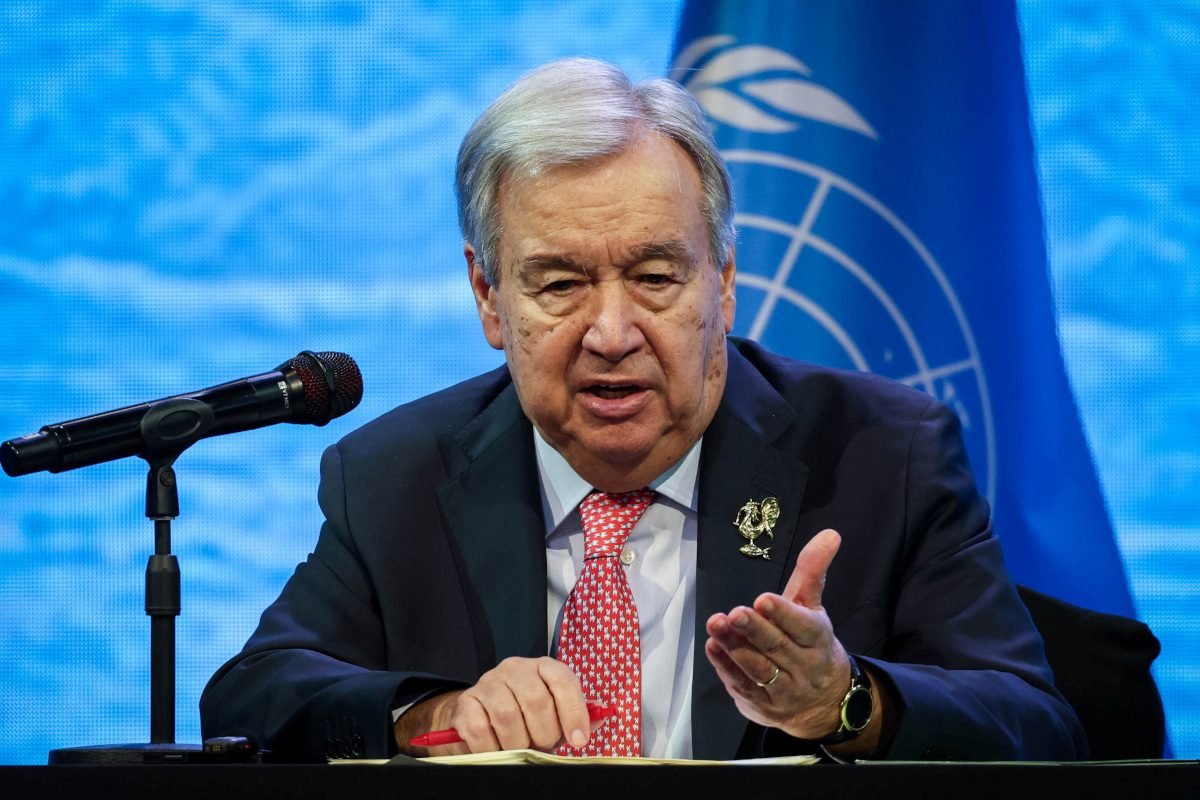
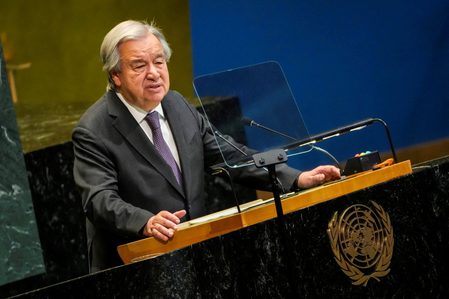
As talks opened in Geneva on Monday, the UN secretary-general urged states via video message to agree to move towards negotiating a legally binding instrument to regulate autonomous weapon systems, including clear prohibitions and restrictions.

“The nature of warfare is changing. New technologies – including autonomous weapon systems – present new humanitarian, legal, ethical and security challenges,” Antonio Guterres said in a statement.
Must Read

UN and Red Cross call for urgent rules on autonomous weapons


UN and Red Cross call for urgent rules on autonomous weapons

The International Committee of the Red Cross, along with the pope, has also warned of the dangers from autonomous weapons and support regulation.

“Machines should never be allowed to decide who lives and dies on a battlefield but that is the dystopian reality that is fast approaching,” said Verity Coyle from Human Rights Watch, which is urging the Review Conference to take firm action.

Two diplomats told Reuters the discussions looked set to be challenging. But states could build bridges to find a compromise agreement by the end of the week, they said. All options are on the table, from legally binding to non-legally binding, as well as a hybrid agreement with both elements, one of the diplomats added.

Risk of error

Campaigners say autonomous weapons systems can behave unpredictably, raising the risk of fatal errors.

Anna Hehir, head of military AI governance at the Future of Life Institute – a US-based nonprofit organization focused on reducing the risks of advanced technologies, including AI – said LAWS were no longer science fiction, pointing to media reporting of early use of fully autonomous systems in Ukraine.

The US favors guidelines over binding rules on LAWS, arguing that international law already provides a framework to govern warfare. It has proposed a five-year mandate for talks towards a non-binding agreement.

The Red Cross says humanitarian law does not sufficiently address specific risks from autonomous weapons.

Russia has not publicly stated its position going into the talks, but has previously resisted proposals for a legally binding agreement. It plans to block the European Union, an observer to the talks, from taking the floor, a senior Western diplomat told Reuters.

Hehir told Reuters the US and Russia would probably seek to water down any outcome as they did in September with a text about autonomous weapons and their potential for harm.

The chair of this week’s talks has proposed a two-year mandate to negotiate a legally binding protocol.

The UK, Germany, and France propose negotiations on an instrument that leaves open whether it would be legally binding or not, Coyle told Reuters. – Rappler.com
Similar Posts

  • | |

    Iran says it is ready for war again

    Iran has claimed that it has significantly strengthened its military and defense capabilities during the ceasefire with the United States, warning that its armed forces are fully prepared if diplomacy fails and hostilities resume. Speaking to Iranian state television, a military spokesperson said the armed forces used every moment of the ceasefire to reinforce the country’s defenses. According to the spokesperson, Iran upgraded existing weapons, developed new air defense systems, restored facilities damaged during the conflict, and accelerated work on advanced military technologies. The spokesperson also revealed that Iran deployed a new generation of drones during the recent conflict. While officials did not disclose technical details, they said more information about the drones will be released at a later stage. According to Arab media reports, Iran’s acting defense minister said missile and drone production continued without interruption throughout the ceasefire. He claimed that drone manufacturing has increased to nearly three times its pre-war level, reflecting Tehran’s efforts to rapidly rebuild and expand its military capabilities. The acting defense minister also stated that the Iranian armed forces maintained their command structure despite the deaths of several senior military commanders. He added that revised battlefield strategies enabled Iranian forces to surprise their opponents during the conflict. Meanwhile, a spokesperson for the Islamic Revolutionary Guard Corps (IRGC) said Iran improved both the production speed and accuracy of its missile program during the ceasefire. However, officials declined to reveal the size of the country’s remaining weapons stockpiles or provide details about military losses suffered during the fighting. Several U.S. media outlets have also reported that Iran still possesses roughly 70 percent of its pre-war missile inventory and about 40 percent of its drone arsenal. Analysts believe those remaining capabilities could allow Tehran to sustain a prolonged campaign of asymmetric warfare if tensions escalate again. Arab media further reported that Iran could soon receive around 400 shoulder-fired air defense missile systems manufactured in China. However, both China and Pakistan have rejected those reports, while Iranian authorities have not issued any official comment on the claim. A former Iranian military commander also argued that thousands of U.S. and Israeli strikes failed to eliminate Iran’s military capabilities. He said the country continues to improve the range, precision, and destructive power of its domestically produced missiles while bringing newly developed weapons from underground missile and drone facilities into operational service. The latest statements highlight Iran’s determination to strengthen its military readiness despite international pressure, while also signaling that Tehran remains prepared for another confrontation if diplomatic efforts with Washington fail.

  • | |

    Bessent says Hormuz shipping deal with Iran could …

    US Treasury Secretary Scott Bessent said on Tuesday that a deal to reopen the Strait of Hormuz to normal shipping traffic could be reached within a day or two, as diplomatic activity intensified across the Gulf region. Speaking in a television interview, Bessent said American officials are in active discussions with Iranian counterparts and expressed optimism about a near term breakthrough. “There is a chance we may have a deal today or tomorrow,” he said, adding that the goal is to move toward a more normalized posture in the conflict. Asked whether any agreement would let Iran charge ships a toll for using the waterway, Bessent said he expects the outcome to guarantee freedom of movement rather than a fee based system. He noted that vessel traffic through the strait has picked up in recent days despite lingering danger, and predicted that energy prices would ease once a deal takes hold. His comments followed a report from The New York Times saying Iran and Oman have moved close to an arrangement that would restore commercial shipping through the strait. Under the terms described in that report, inbound vessels would travel through a corridor close to the Iranian coast while outbound ships would use a route nearer Oman. Iranian officials told the newspaper that no formal tolls would apply, though they said a service charge tied to environmental protection, cargo security and staffing costs would be split evenly between Tehran and Muscat. A US official pushed back on that characterization, calling the Iranian version inaccurate and insisting any temporary shipping lanes would not need Iranian sign off or involve fees. The report also noted that some Pentagon officials worry the arrangement could look like a concession to Tehran, while some Iranian officials privately questioned whether it would actually stop further American strikes. Qatar’s Foreign Ministry said Tuesday that mediators including Doha, Pakistan and Oman continue to coordinate closely to bridge the gap between Washington and Tehran, exchanging draft proposals between the two sides. Ministry spokesperson Majed Al Ansari said there is still no clear timeline for a final agreement, and Qatar separately called for a return to normal conditions in the strait while diplomacy continues. Tension over the waterway remained visible even as talks progressed. A dry bulk carrier called the Minoan Pioneer, sailing under the Liberian flag, was struck by an unidentified projectile near Oman’s coast on Tuesday, according to maritime security sources. The strike reportedly hit the engine room and sparked a fire in the crew’s living quarters, forcing the entire crew to abandon ship. One crew member, the vessel’s third engineer, was reported missing. The ship’s Greece based operator did not immediately respond to requests for comment. The incident followed an earlier report from the UK Maritime Trade Operations center, which said a separate cargo vessel had broadcast that it was hit by an unknown projectile about 20 nautical miles northeast of Khasab, Oman. No group has claimed responsibility for either strike, and authorities have opened an investigation. In Tehran, President Masoud Pezeshkian used a televised address to reject reports that he had offered his resignation amid the ongoing standoff with Washington. “If I were going to resign, I would announce it publicly,” he said, denying any rift with Supreme Leader Ali Khamenei or the armed forces and insisting the leadership is working in full coordination. He separately said Iran intends to defend its territorial integrity but has no interest in expanding the conflict, while claiming Iranian missile and drone strikes had disrupted US military goals during a recent 17 day period of fighting. The regional picture grew more complicated elsewhere. Yemen’s Houthi movement claimed responsibility for a drone strike on Najran Airport in southern Saudi Arabia, with military spokesman Yahya Saree saying the attack struck its target accurately. He described the strike as retaliation for alleged Saudi drone incursions over Yemen’s Saada and Hajjah provinces and warned that further violations would draw a response. Saudi authorities had not commented on the claim as of Tuesday. In Lebanon, a seventh round of direct negotiations with Israel opened in Rome under American sponsorship, continuing talks tied to a framework agreement the two sides signed in June covering a phased Israeli withdrawal from Lebanese territory in exchange for Lebanese army deployment and the disarming of armed factions, a clear reference to Hezbollah. Hezbollah Secretary General Naim Qassem used a speech at an Arbaeen commemoration in Baalbek to criticize the talks, saying they have delivered only “shame, humiliation, despair and repeated concessions” for Lebanon. He accused Lebanese President Joseph Aoun of acting with bias rather than serving as a unifying figure and argued that only the earlier US brokered truce between Washington and Tehran had kept Israeli strikes at bay. Financial markets showed relief at the signs of diplomatic movement. Brent crude futures fell about 7 percent to near $83.77 a barrel on Monday, while the Dow Jones Industrial Average closed at a record high. Asian stocks and oil prices ticked higher again on Tuesday. In a Truth Social post, Trump described Iran’s leadership as “unbelievably duplicitous” while claiming more talks were scheduled for the near future. He also reasserted that the US Navy maintains full control over the strait, writing that nothing passes through unless Washington allows it. The exchange fits a broader pattern that has defined the conflict since it began roughly five months ago under the codename Operation Epic Fury. Trump has repeatedly threatened major military escalation only to step back and cite diplomatic openings, while Iran has publicly refused direct talks with Washington since a memorandum of understanding both sides signed collapsed in early July. Washington maintains that June’s memorandum obligated Iran to open the Strait of Hormuz to shipping, while Tehran insists the agreement preserved its authority over traffic through the waterway, a disagreement that continues to sit at the center of the standoff.

  • | |

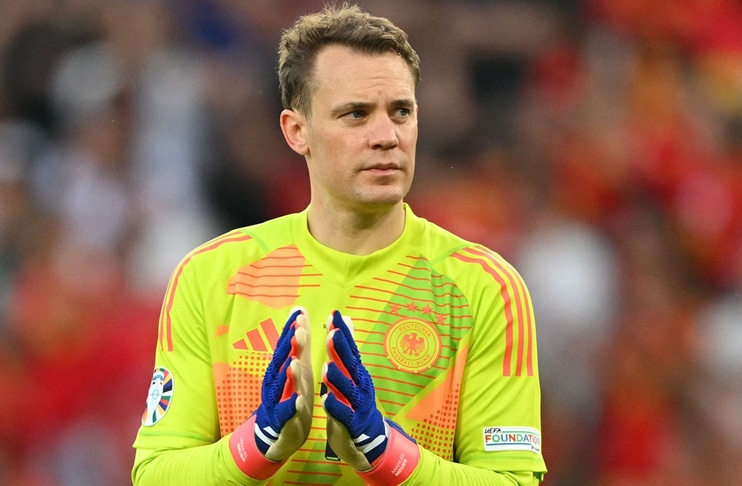
    Manuel Neuer signals likely retirement at season’s end

    Bayern Munich captain Manuel Neuer has said it is “very likely” he will retire at the conclusion of the upcoming campaign, bringing an end to a career that has defined modern goalkeeping. Speaking at Bayern’s training camp in southern Bavaria, the 40‑year‑old confirmed that his one‑year contract extension signed in May would almost certainly be his last. “It certainly looks very likely I’m going to retire,” Neuer told reporters, adding that the strength of the current squad convinced him to play one more season. Neuer has battled recurring muscle injuries but remains a key figure for Bayern, who won the Bundesliga and German Cup double last season before falling to Paris Saint‑Germain in the Champions League semi‑finals. He missed the German Cup final against Stuttgart, with Jonas Urbig deputising in goal. The 2014 World Cup winner retired from international football after Euro 2024 but briefly returned for the most recent World Cup, where Germany exited in the last 32 against Paraguay. Since joining Bayern from Schalke in 2011, Neuer has collected 13 Bundesliga titles, six German Cups and two Champions League crowns. Despite hinting at retirement, he insisted the coming season would not be treated as a farewell tour. “I’m not playing these matches just to say, ‘This is my last game,’” he said.

  • |

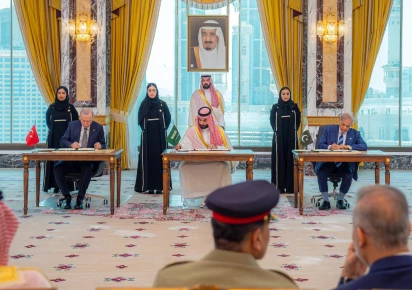
    Bangladesh signals interest in joining Pakistan-Saudi Arabia-Türkiye defence framework

      DHAKA: Bangladesh has indicated that it is open to joining the Makkah Joint Defence Agreement signed by Pakistan, Saudi Arabia and Türkiye, as Dhaka looks to broaden its strategic partnerships while maintaining a foreign policy centred on national interests. According to the state-run Bangladesh Sangbad Sangstha (BSS), Bangladesh Prime Minister’s Adviser for Foreign Affairs Humayun Kobir said the country maintained a positive outlook towards the possibility of becoming part of an economic or defence framework involving Saudi Arabia, Pakistan and Türkiye. Kobir said any decision regarding participation would be considered in light of Bangladesh’s national interests as well as changing global economic and trade dynamics. He stressed that Dhaka was pursuing a balanced foreign policy under its “Bangladesh First”approach, with national priorities remaining at the heart of its international engagement. He said Bangladesh was also working to strengthen its bilateral relationship with Pakistan through normal diplomatic channels. According to Kobir, the two countries were particularly focusing on expanding trade and improving people-to-people contacts and connectivity. The Bangladeshi adviser’s remarks come amid signs of improving diplomatic engagement between Dhaka and Islamabad. He also said Prime Minister Tarique Rahman’s proposed visit to Riyadh, following an invitation from Saudi Crown Prince and Prime Minister Mohammed bin Salman was expected to be finalised after the summer. The possibility of Bangladesh joining the defence framework comes shortly after Pakistan, Saudi Arabia and Türkiye signed the Makkah Joint Defence Agreement in Makkah on August 7. Under the agreement, an armed attack against any one of the three participating countries is to be treated as an attack against all three. The pact also provides a framework for greater defence cooperation, coordination and collective deterrence among the signatories. The agreement has attracted regional and international attention because of its potential to expand security cooperation among key Muslim-majority countries. Turkish Foreign Minister Hakan Fidan has described the arrangement as technically comparable to NATO’s Article 5 principle of collective defence, while emphasising that the agreement is not aimed at Iran or any other specific country. Ankara has also suggested that the framework could potentially be expanded to include additional regional states. Egypt has previously been mentioned as a possible participant in the broader security arrangement. Pakistan has similarly maintained that the agreement is defensive in character and is not directed against any particular country. Islamabad has also indicated that the framework remains open to states that are willing to support its principles and objectives. Deputy Prime Minister and Foreign Minister Ishaq Dar has said the agreement does not seek to replace existing bilateral or multilateral defence and security arrangements. Instead, he said, it provides an additional platform for cooperation based on mutual respect, shared interests and peaceful resolution of disputes. Bangladesh’s latest position suggests that Dhaka is carefully assessing emerging regional partnerships while seeking to preserve strategic flexibility. Its potential participation could further broaden the Makkah agreement’s regional significance and strengthen cooperation among Pakistan, Saudi Arabia, Türkiye and other interested countries. For Bangladesh, however, any decision to join would ultimately depend on how the proposed framework aligns with its national interests, foreign policy priorities and assessment of the evolving regional and global security environment.

Leave a Reply

Your email address will not be published. Required fields are marked *