commander warns troops
| |

US commander warns troops over social media posts

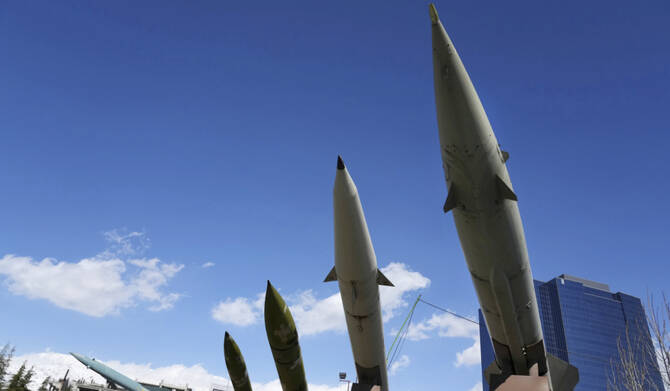
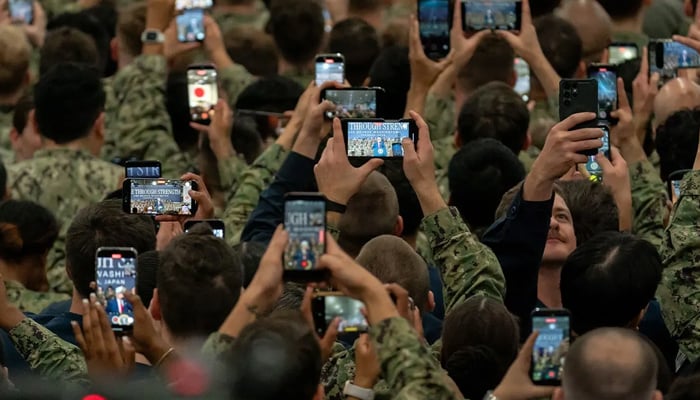
The top US military commander overseeing American forces in the Middle East has warned troops that photos and videos shared on social media could help Iran quickly assess the damage caused by attacks on US bases.

According to Reuters, US Central Command chief Admiral Brad Cooper made the warning in a July 28 letter to service members. He said Iran was using media reports, along with images and videos posted by US troops, to determine whether its attacks had succeeded or failed.

Cooper urged military personnel to follow operational security rules more strictly, although he did not outline any specific measures in the letter.

Reuters reported that some US troops stationed in Jordan have been told that authorities could take away their mobile phones in the coming days. Another source said officials were also considering similar measures elsewhere in the region, although no final decision has been made.


US Central Command spokesman Captain Timothy Hawkins said the message aimed to remind troops about the importance of operational security.

The warning followed the appearance of a video on social media earlier this month that showed a US service member recording himself while heading toward a bunker during an Iranian attack on Jordan’s Muwaffaq Salti Air Base.

Cooper said the soldier recorded the video using Meta smart glasses, potentially giving Iran information about the troops’ location and their response to the attack.

He said that without publicly available images, videos and reports, Iran would have a harder time determining whether its strikes hit their intended targets. However, such material can effectively provide Iran with a free assessment of battlefield damage.

According to Reuters, 18 US service members have been killed and more than 600 injured since the conflict with Iran began on February 28. The US Department of Defense has limited the release of information about the attacks and military casualties due to security concerns.
Similar Posts

  • |

    Russia-Ukraine war intensifies, 13 killed as Franc…

    KYIV: The Russia-Ukraine war has entered another dangerous phase as fresh attacks across both countries killed at least 13 people, while France moved to strengthen Ukraine’s air defences with additional missile interceptors. The latest violence came as Russian and Ukrainian forces continued exchanging long-range strikes, with civilian areas once again bearing much of the cost. Seven people were reported killed in Ukraine, while four died in Russia and two others were reportedly killed in Russian-occupied Crimea. In the Ukrainian city of Kryvyi Rih, emergency workers continued searching through the wreckage of a shopping centre damaged in a Russian drone strike a day earlier. That attack reportedly killed 16 people and left dozens injured, adding to growing concerns over the safety of civilians as aerial attacks intensify. The escalating strikes have also renewed pressure on Ukraine’s allies to provide stronger air-defence systems. French President Emmanuel Macron has pledged to accelerate the delivery of French interceptor missiles to Ukraine following discussions with Ukrainian President Volodymyr Zelensky. Macron has stressed that Ukraine needs the necessary means to protect its airspace and defend its population against Russian attacks. Ukraine has faced particular difficulty countering Russian ballistic missiles, which can reach targets within minutes and are considerably harder to intercept than many drones and cruise missiles. Kyiv has repeatedly appealed to Western allies for additional air-defence systems, especially Patriot interceptors. Recent Russian attacks have demonstrated the scale of the challenge. A major August assault on Kyiv and surrounding areas killed at least 16 people and damaged residential buildings, a school and a children’s medical facility, according to Ukrainian officials. The violence has been accompanied by Ukrainian drone strikes inside Russia. Russian officials said a Ukrainian drone attack in the southern city of Yeysk struck a residential property, killing two children and injuring their parents. With attacks intensifying, diplomatic efforts to end the war remain stalled. Several rounds of US-backed discussions have failed to produce a lasting breakthrough, leaving the prospect of a ceasefire uncertain. France and Britain are also preparing to bring allied countries together for further discussions on strengthening Ukraine’s defences and increasing pressure on Moscow. For civilians on both sides, however, the latest escalation is a grim reminder that despite diplomatic efforts, the war continues to expand its human toll. As missiles and drones cross borders, the immediate priority remains protecting people caught in the path of an increasingly intense conflict.

  • |

    India warns border tensions could affect ties with China

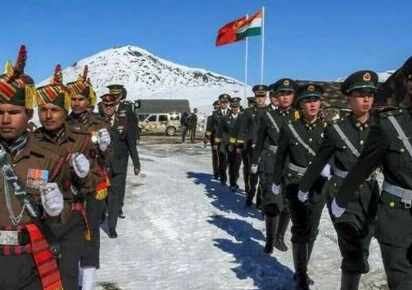
      India has stressed that maintaining peace along its disputed border with China is essential for improving relations between the two Asian powers. The statement comes amid reports of renewed encounters between Indian and Chinese troops in a remote part of the Himalayas. India’s latest remarks mark the second time in less than a week that New Delhi has addressed concerns over the border. The two countries have been attempting to rebuild relations after deadly clashes in 2020 severely damaged diplomatic ties. The issue is particularly significant ahead of the BRICS summit, scheduled to take place in New Delhi from September 12 to 13, where Chinese President Xi Jinping is expected to participate. Speaking at a regular media briefing on Tuesday, Indian Foreign Ministry spokesperson Randhir Jaiswal said New Delhi considers border matters with China extremely serious. He stressed that the situation along the disputed frontier would have a direct impact on the broader relationship between the two countries. Jaiswal said India had consistently communicated to Beijing that the condition of the border was closely connected to the overall state of bilateral relations. His comments came in response to questions about reports of a recent military encounter between troops from both countries. China’s Foreign Ministry and Defence Ministry did not immediately respond to requests for comment regarding the reported developments. According to news , Indian and Chinese military patrols reportedly came into contact in late July near Taksing, a remote village in Arunachal Pradesh’s Upper Subansiri district. The area lies along the border with Tibet and is located in the eastern Himalayas. China claims Arunachal Pradesh as part of what it describes as southern Tibet, referring to the region as Zangnan. India strongly rejects Beijing’s claim and maintains that Arunachal Pradesh is an integral part of Indian territory. The reported encounter allegedly occurred around 2.5 kilometres inside territory controlled by India. Chinese personnel reportedly withdrew from the area initially but returned in early August and set up two tents. However, Indian defence officials have rejected reports suggesting that the developments represent a significant increase in military tensions. The defence spokesperson responsible for Arunachal Pradesh described the reports as unverified and lacking sufficient evidence. A residents’ welfare organisation in the region had earlier raised concerns in a July 26 letter sent to local authorities. The group claimed that Chinese personnel were increasing their presence and moving into strategically important areas near the border. Reuters reviewed the letter. Military patrols from India and China occasionally encounter one another along their disputed 3,488-kilometre frontier. Such confrontations are not unprecedented, although they do not happen regularly. Relations between the two countries deteriorated sharply after a deadly confrontation in the western Himalayas in 2020. Twenty Indian soldiers and four Chinese troops were killed during the clashes, leading both sides to deploy tens of thousands of troops and large quantities of military equipment along the frontier. Tensions gradually began to ease after Indian Prime Minister Narendra Modi and Chinese President Xi Jinping held talks in 2024. The two leaders agreed to take steps to end the prolonged military standoff and work toward reducing tensions. Despite those efforts, the latest reports highlight the continuing sensitivity of the border dispute and the importance of maintaining stability as India and China attempt to restore their broader relationship.

  • | | |

    US forces thwart Iranian missile barrage as region…

    WASHINGTON: A fragile pause in hostilities between the United States and Iran came to an abrupt end on Tuesday after Iranian forces launched multiple ballistic missiles toward US military positions in the Middle East, according to the US military. The US Central Command (CENTCOM) said the missiles were fired by Iran’s Islamic Revolutionary Guard Corps (IRGC) in what it described as a surprise attack. In a statement posted on X, CENTCOM reported that all incoming missiles were successfully intercepted, preventing any reported damage or casualties. However, it did not disclose the exact locations that were targeted. The latest exchange marks a renewed escalation after several days of relative calm. Both countries had refrained from military action over the weekend following nearly two weeks of intense conflict, during which the United States carried out nightly strikes on Iranian positions while Tehran responded with repeated missile and drone attacks against US allies across the Gulf region. The recent confrontation traces back to mid-July, when Iran targeted several commercial vessels in the Strait of Hormuz, triggering a sharp rise in regional tensions and prompting a sustained military response from Washington. The temporary ceasefire had raised hopes for diplomacy, with US President Donald Trump stating there was a strong possibility of progress in negotiations aimed at ending the conflict. The lull in fighting also contributed to a decline in global oil prices, reflecting growing market optimism that the crisis could be contained. Tuesday’s missile launch, however, signals that tensions remain high, casting fresh uncertainty over diplomatic efforts and raising concerns about the potential for another round of military escalation in the Middle East.

  • |

    India’s top court orders release of minors amid exam protests

    NEW DELHI: India’s Supreme Court has ordered authorities to release minors detained during protests over examination paper leaks and directed officials to preserve evidence linked to allegations of excessive police force. Chief Justice Surya Kant reportedly issued the interim directions while hearing petitions filed by student protesters and activists. The petitions accuse police and paramilitary personnel of using excessive force, including baton charges and other crowd-control measures, against demonstrators. The court also directed authorities to preserve all available surveillance material from the protests. This includes CCTV recordings, drone footage and body-camera video. Officials were further told to protect the personal and digital information of protesters and ensure that it is not publicly disclosed. The court reportedly barred authorities from taking coercive action against protesters while the matter remains under consideration. Justice Kant stressed the importance of an independent investigation into allegations of mistreatment. He said accountability must be established if wrongdoing occurred. The government has defended the security forces’ response, describing the measures as necessary for crowd control. Solicitor General Tushar Mehta told the court that around 250 police officers were also injured during the unrest. He reportedly said the government had no objection to an investigation into allegations involving protesters. The protests erupted after question papers for a national medical college entrance examination were leaked. The controversy triggered demonstrations in New Delhi and several other parts of India. Protesters demanded reforms to the examination system, withdrawal of cases against demonstrators and compensation for families of students who died by suicide following the controversy. The demonstrations ended after the education minister resigned and the government agreed to several demands raised by the protesters. Meanwhile, the Indian government has proposed tougher penalties for examination paper leaks. Under the proposed amendments, the maximum prison sentence could be increased to 10 years, while fines could rise to more than $1 million. The government says the proposed changes are intended to strengthen the examination system, speed up legal proceedings and restore confidence among students and young people. The issue has also created political tension in parliament. Opposition lawmakers have repeatedly raised concerns about the police response to the protests and demanded accountability. In several cities, clashes between demonstrators and security personnel led to tear gas and baton charges. Authorities also suspended a police officer in an eastern state after he allegedly fired rounds into the air while attempting to disperse student protesters. Concerns have additionally emerged over the use of artificial intelligence-powered surveillance during demonstrations. Activists have questioned the deployment of police surveillance equipment capable of providing wide-area monitoring of protest gatherings. A protest group that helped lead the movement has claimed that hundreds of students were arrested in different states. However, the figure has not been independently verified.

  • | |

    Biden’s cancer has spread and become very pa…

    Former President Joe Biden’s prostate cancer has spread beyond his bones and has become very painful, his son Hunter Biden revealed in a new interview, offering the most detailed public update yet on the 83-year-old’s deteriorating health condition. Hunter Biden told the BBC’s Newsnight programme that his father’s cancer has metastasized into his bones and beyond, according to video footage of the interview posted online on Friday. He described the condition as very painful and debilitating in many respects, offering a stark assessment of how far the disease has progressed since it was first diagnosed. A spokesman for the former Democratic president declined to comment on Hunter Biden’s remarks when reached on Saturday, leaving the son’s account as the most recent and detailed public statement on the elder Biden’s health status. Diagnosis first revealed in 2025 Biden first disclosed his prostate cancer diagnosis in May 2025, less than four months after leaving the White House. At the time, his office described the diagnosis as an aggressive form of the disease and confirmed that it had already spread to his bones, marking a serious health revelation that came just months after he left office following a single term as president. A spokesman for Biden said in October that the former president had begun undergoing radiation treatment alongside hormone therapy in an effort to manage the disease, representing the most recent official update on his treatment regimen prior to Hunter Biden’s latest comments. A presidency shaped by scrutiny over age and health Biden made history as the oldest person ever elected to the American presidency when he won the office in 2020. His physical health and mental acuity faced sustained public scrutiny throughout his presidency, which ran from 2021 to 2025, with questions about his fitness for office becoming a recurring theme during his time in the White House and throughout his time seeking reelection. Despite the health challenges that have emerged since leaving office, Biden has continued to make public appearances. He attended the dedication of former President Barack Obama’s presidential library in Chicago in June, marking one of his more notable public appearances since departing the presidency. Biden served as vice president under Obama from 2009 to 2017, a partnership that has continued to define much of his political legacy. Memoir set for November release Biden’s presidential memoir is scheduled for release on November 17, offering what is expected to be his own detailed account of his one term in office. The timing of the book’s release means it will arrive as public attention remains focused on his health, with Hunter Biden’s latest comments likely to intensify interest in how the former president addresses his cancer diagnosis and its impact on his post-presidency in his own written account. The revelation adds to a year marked by significant health developments for the former president, whose battle with an aggressive and now advancing form of cancer has become an increasingly prominent part of his public story since leaving the White House.

Leave a Reply

Your email address will not be published. Required fields are marked *