usiran strikes raise
|

US-Iran strikes raise fears of renewed war across the Middle East

Fears of renewed escalation gripped the Middle East on Wednesday, September 2, after the United States and Iran exchanged their biggest barrage since July, with Washington striking Iran’s southern coast and Tehran firing at US bases across the region.

With the US threatening further strikes, Iran accused Washington of hitting a wedding party, killing four people and wounding dozens. Its health minister later said 18 people in total had been killed and 108 injured in the latest wave of US strikes.

The US military said it struck air defenses, radar systems, maritime assets, mine-laying capabilities and communications sites on Tuesday, September 1, Iran reported hits on multiple targets near the Strait of Hormuz.

Must Read

US launches new strikes on Iran as Tehran hits back in widening conflict


US launches new strikes on Iran as Tehran hits back in widening conflict

The flare-up threatens to deepen a conflict that has dragged on since the US launched strikes on Iran in February, disrupting global energy supplies and drawing opposition from a majority of Americans ahead of November’s congressional elections.

“Last night was like the end of the world,” Mahmoud, 38, a municipal worker in Sirik County along the strait, told Reuters by telephone, describing attacks on the area that includes the city where the wedding was reported to have been hit.

President Donald Trump said the US hit Iran “very hard” and that Iran only responded with a “love tap.”

“It was a very heavy attack last night, and we’re prepared to do another one any time we want,” Trump told reporters at the White House.

Iran struck what it said were US assets in Bahrain, Jordan, Kuwait and Iraq, and said its aim was now to drive US forces from the vast network of military bases they have maintained for decades across the Middle East.

“American evil in the region will be met with heavier, more widespread, and devastating responses, and any country that cooperates with the aggressive American army must accept its dangerous consequences,” Iran’s military command said.

Iran said it killed US forces in Jordan and at a base in northern Iraq, but US officials told Reuters there had not been any casualties, according to initial assessments.

In Kuwait, Iran said it had carried out a missile and drone attack on the US Ali Al Salem air base and on a residential complex used by a US commander. Kuwait’s fire service said it put out a blaze at a residential complex hit by a drone.

Qatar, home of the largest US air base in the Gulf, said it held Iran responsible for attacks and their repercussions. Bahrain, which houses the regional headquarters of the US Navy, said Iranian drones were intercepted and destroyed.

Iran also said two tankers had been struck by mines while being steered through the Strait of Hormuz by US personnel.

Washington says that despite Iranian attacks it is guiding ships through the strait. Energy Secretary Chris Wright said more than 17 million barrels of oil exited on Monday.

Iran blacklisted 11 more ships, bringing the total number of such vessels to 56, a government website showed, meaning it would consider them subject to fines, confiscation or detention if they try to sail through the Strait of Hormuz without Tehran’s permission.

Trump repeated his assertion that the strait, which handled 20% of global oil and liquefied natural gas shipments before the war, was open to shipping.

Iran says wedding struck

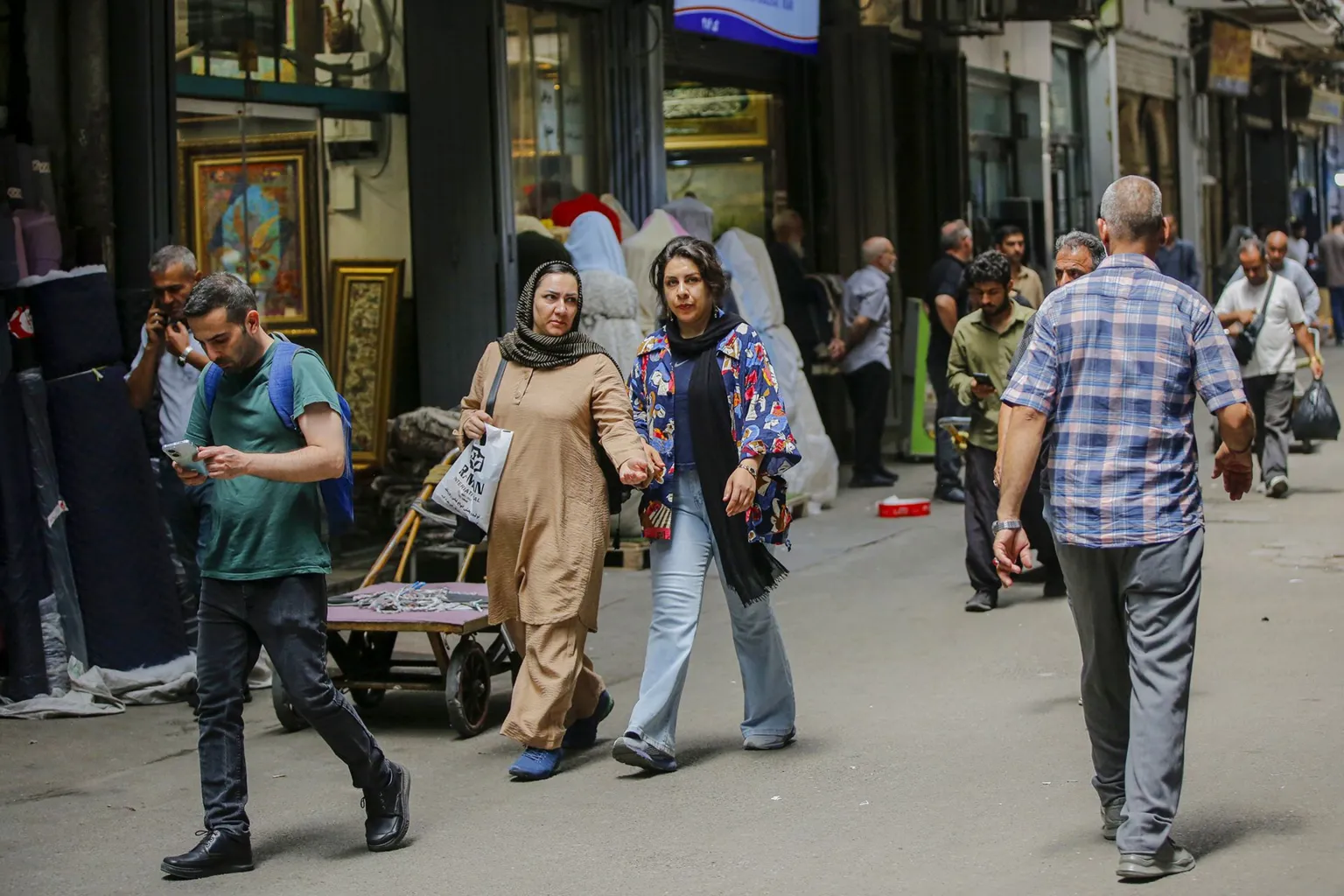
Iranians were fearful that the new strikes signalled war could restart at full scale.

“It’s very difficult to live like this. We don’t know when America will strike,” Mahpari, 28, a woman in the southern port city of Bandar Abbas, told Reuters by phone.

Iran said four people including a 4-year-old were killed while celebrating a wedding at a home in Sirik. Iranian media said as many as 68 people were wounded there, and released images of injured children in hospital.

Reuters was unable to independently verify the incident.

US Navy Captain Tim Hawkins, a spokesperson for Central Command, said: “We are aware of reports, which originated from Iranian state media. The US military never targets civilians, unlike the IRGC,” referring to Iran’s Revolutionary Guards.

Video shot by Iran’s West Asia News Agency at the purported site showed rubble strewn across rooms and a courtyard. A pair of strappy women’s dress sandals lay abandoned on a blood-soaked carpet.

“I am just glad the casualties weren’t even worse,” said Ali Molahi, identified as the father of the bride.

Conflict draining both sides

The exchange of fire was the worst since July, when Trump abruptly halted two weeks of intense bombing of Iran after warnings from his military brass that they were using up munitions and running out of meaningful targets.

Trump has yet to achieve the aims he set when launching “Operation Epic Fury” in February – to end Iran’s nuclear programme, deprive it of the ability to strike its neighbors and create conditions for Iranians to topple their rulers.

But the US has seriously degraded Iran’s conventional military forces and taken a toll on Iran’s already weakening economy, US officials say.

Sources have told Reuters Trump aides are trying to keep the war quiet for now to avert a defeat in the midterm elections in November. Polls show Americans oppose the war by more than a two-to-one margin. – Rappler.com
Similar Posts

  • | | |

    Iran executesan accused of helping US, Israel duri…

    TEHRAN: Iran has executed a man accused of supporting the United States and Israel during the country’s January anti-government protests, adding to growing international concern over Tehran’s use of capital punishment against people linked to the unrest. Iranian judicial authorities identified the man as Majid Adineh, saying he was arrested during the protests and accused of involvement in activities carried out in support of groups considered hostile to Iran. According to the judiciary, Adineh was accused of deliberately committing arson, participating in gatherings aimed at undermining national security and conspiring against the state. Authorities also alleged that he had worked with opposition groups linked to the United States and Israel. Iran’s judiciary said the Revolutionary Court in Karaj convicted him after considering documents, evidence and statements attributed to the defendant. The court also ordered the confiscation of his property. The allegations could not be independently verified, and the account published by Iranian authorities did not include comments from Adineh’s lawyer or family. The execution comes amid an increasingly severe crackdown following nationwide protests that began in late December and expanded across Iran in January. The demonstrations were initially fuelled by economic grievances but quickly developed into broader anti-government protests. Iranian authorities have repeatedly described some protesters as agents or operatives working for foreign enemies, while rights organisations have challenged the fairness of several cases brought against demonstrators. The latest execution also follows a broader increase in executions connected to the unrest. The UN human rights chief said earlier this month that Iran had executed at least 56 people on national-security-related charges since March 19, including 27 people linked to the anti-government protests. Human rights organisations have warned that dozens of other protesters remain at risk of execution. Amnesty International said in July that at least 60 people, including some who were children when arrested, were at risk after receiving death sentences connected to the protests. The UN’s Iran fact-finding mission has also urged Tehran to halt executions linked to the protests, expressing concern over accelerated proceedings and allegations surrounding the fairness of trials. Iran, however, maintains that its courts are dealing with serious national-security offences and that capital punishment is lawful. The executions have intensified debate over the government’s response to dissent. While officials portray the cases as necessary measures against threats to national security, rights groups argue that protesters and political dissidents are being subjected to harsh sentences after proceedings that fail to meet international fair-trial standards. With further cases reportedly moving through Iran’s Revolutionary Courts, the execution of Adineh is likely to renew scrutiny of Tehran’s treatment of those accused of involvement in the January protests.

  • | |

    US reviews military strategy as weapons stockpile …

    WASHINGTON: Senior US officials have reportedly raised concerns over the country’s military readiness as the conflict with Iran intensifies, prompting the Trump administration to temporarily pause its air campaign while continuing diplomatic efforts. According to US media reports, Vice President JD Vance and Chairman of the Joint Chiefs of Staff General Dan Caine briefed President Donald Trump during a White House meeting on the escalating conflict and the potential impact of prolonged military operations on US weapons stockpiles. Sources said military leaders expressed concern over the depletion of key defence munitions and outlined the risks of expanding the conflict. While General Caine reportedly assured the president that the US military remains capable of carrying out all available operational options, he also highlighted the strategic consequences of continued military escalation. Following the meeting, the United States halted its nightly airstrikes on Iran after nearly two weeks of sustained attacks. Defence officials described the pause as temporary, although they did not confirm whether it was directly linked to concerns over weapons supplies or other strategic considerations. President Trump said negotiations with Iran remain ongoing but warned that military operations could resume or intensify if necessary. He also acknowledged appeals from several Gulf nations urging Washington to exercise restraint as regional tensions continue to rise. White House Communications Director Steven Cheung reiterated that President Trump continues to favour a diplomatic resolution but stressed that all military options remain available if Iran threatens international shipping in the Strait of Hormuz or targets US allies. He added that after nearly two weeks of economic pressure and strikes on military targets, the administration believes Tehran should pursue negotiations to avoid further escalation.

  • |

    Global chip market set to cross $1 trillion as AI demand surges

    The global semiconductor industry is on track to surpass $1 trillion in annual revenue in 2026, driven largely by the rapid expansion of artificial intelligence infrastructure. AI-related chips are reshaping the semiconductor business. Although advanced AI processors represent only a tiny share of total chip shipments, they are expected to generate almost half of the industry’s overall revenue this year. The surge reflects the enormous investment being made in AI data centres around the world. The five largest global technology hyperscalers have allocated more than $600 billion to AI data-centre infrastructure in 2026. The growing demand is also increasing the importance of advanced chip manufacturing. Producing a sophisticated 3-nanometre processor can take around six months, highlighting the complexity and limited capacity of the global supply chain. Taiwan Semiconductor Manufacturing Company (TSMC) remains central to the production of the world’s most advanced processors. The company manufactures an estimated 90% of the most sophisticated chips, making it a critical supplier for the rapidly expanding AI industry. This concentration has also raised concerns about supply-chain vulnerability. Any major disruption to advanced chip production could affect technology companies, AI developers and governments that are investing heavily in artificial intelligence. Nvidia has emerged as one of the biggest beneficiaries of the AI boom. The company reported revenue of $215.9 billion, strengthening its position as a leading supplier of processors used to train and operate advanced AI models. The chip industry’s challenges extend beyond processors. High-bandwidth memory (HBM), which is essential for AI computing, has become another major supply constraint. Much of the available HBM production capacity is already committed through 2026. The global memory market is also expected to generate substantial revenue, with estimates putting fiscal 2026 revenue at around $594.7 billion. The figures underline how quickly AI is transforming the global semiconductor industry. Demand is shifting toward fewer but far more valuable advanced chips, while manufacturers face pressure to expand capacity and secure critical components. As AI investment continues to grow, semiconductor production is increasingly becoming a strategic issue for technology companies and governments. The ability to manufacture advanced processors and memory at scale could determine how quickly the next phase of AI development progresses.

  • | |

    Iran vows to withstand sweeping new US sanctions

    TEHRAN: Iran has said it is fully prepared to deal with the latest expansion of US economic sanctions, as Washington launches what it describes as a major campaign to cut Tehran off from international financial and trade networks. Iranian Economy Minister Ali Madanizadeh said the government had anticipated the new measures and prepared a long-term strategy to limit their impact. He said Tehran had its own economic tools and expected to continue commercial relations with countries willing to trade with Iran. The remarks came after US Treasury Secretary Scott Bessent announced a broad package of sanctions targeting Iran’s financial connections and revenue sources. Washington said the measures were designed to put further pressure on Tehran and force it to choose between greater international isolation and a return to normal economic relations. Bessent described the campaign as an unprecedented financial offensive against Iran. He said the United States would target networks and channels allegedly used by Tehran to generate revenue and bypass existing sanctions. The new measures cover several sectors, including digital assets, technology, gold, aviation and shipping. The US Treasury also announced sanctions against dozens of entities, individuals and vessels allegedly connected to Iran’s economic activities. Washington warned governments, banks and businesses that continue dealing with Iran that they could also face consequences. Bessent said the administration would move quickly against entities that continued to support Tehran’s financial networks. Iran, however, rejected the pressure campaign and said it expected to maintain economic relations with key trading partners. China has also criticised the latest US measures, describing unilateral sanctions as illegitimate. Beijing said economic pressure would not resolve disputes and stressed that it would protect its own economic interests. China is particularly important to Iran because it remains a major buyer of Iranian oil. Analysts say the effectiveness of the latest sanctions will depend heavily on whether countries such as China enforce Washington’s restrictions. Experts have also questioned how much additional pressure the new measures can place on Iran’s energy sector. Some analysts argue that existing restrictions and disruptions to oil exports have already significantly affected Tehran’s energy revenues. The confrontation is also affecting global energy markets. Oil prices have risen sharply since the conflict began, raising concerns about inflation and fuel costs in several countries. Iran has warned that it could take further action against regional oil exports if the conflict continues. Tehran has also issued warnings to vessels seeking to pass through the Strait of Hormuz, a strategically important waterway through which a significant share of global oil and gas shipments normally travels. The latest sanctions come after months of escalating pressure between Washington and Tehran. The United States has repeatedly sought to use economic measures to force Iran to change its policies, while Tehran has continued to reject what it calls unilateral American pressure. The economic consequences are also being felt in the United States. Higher oil prices have pushed gasoline costs above $4 per gallon in parts of the country, adding to concerns over household expenses ahead of the November midterm elections. For Iran, the latest US campaign presents another major economic challenge. However, Tehran’s response indicates that it intends to rely on existing trade relationships, particularly with countries that oppose unilateral US sanctions, to keep its economy functioning.

  • |

    High Commissioner Tipu Usman unveils people-centred consular reforms for British Pakistanis

    LONDON:Pakistan’s High Commissioner to the United Kingdom, Tipu Usman, has announced a series of people-centred reforms aimed at improving consular services for the British Pakistani community. As part of the new measures, consular services at the Pakistan High Commission in London will now begin at 8:00 am, Monday to Friday, increasing the number of appointments available each day and helping reduce waiting times. The High Commission has also introduced a daily walk-in facility from 3:00 pm to 4:00 pm, Monday to Friday, on a first-come, first-served basis. The service will cover passport issuance and renewal, NADRA-related services, document attestation, including Powers of Attorney, and Police Character Certificates. The reforms are among the first major public service initiatives introduced by High Commissioner Tipu Usman since assuming office. They are aimed at making consular services more accessible, efficient and responsive to the needs of overseas Pakistanis living in London and surrounding areas. Members of the British Pakistani community have welcomed the initiative, describing it as a practical step that will ease access to essential consular services and improve the overall public service experience at the Pakistan High Commission in London.

  • | | | |

    Iranian president rejects resignation rumours

    TEHRAN: Iranian President Masoud Pezeshkian has firmly denied reports claiming he had submitted his resignation, saying he remains fully committed to leading the country despite ongoing regional tensions and recent military escalation involving the United States. Speaking in a televised address, Pezeshkian dismissed speculation about stepping down, stating that he would publicly announce such a decision if it were ever made. He emphasized that he has no intention of resigning and will continue carrying out his responsibilities. The Iranian president also rejected reports suggesting differences with Mojtaba Khamenei and the country’s armed forces. He said the government, military leadership and state institutions were working in close coordination and remained united on national issues. His remarks came after opposition-linked media claimed that he had submitted his resignation several times amid growing political and security challenges. Iranian officials have not confirmed those reports. Meanwhile, diplomatic efforts to ease tensions between Lebanon and Israel continued as the two sides launched the seventh round of direct negotiations in Rome under United States sponsorship. According to Lebanese media reports, delegations from both countries are discussing the implementation of a US-backed framework agreement reached in June. The agreement outlines a gradual Israeli withdrawal from occupied Lebanese territory in exchange for the deployment of the Lebanese army and the disarmament of armed groups operating in those areas. The latest negotiations follow six previous rounds of talks aimed at reducing border tensions and advancing the implementation of the agreement. Separately, a report published by The New York Times claimed that Iran and Oman are close to reaching an arrangement to restore normal commercial shipping through the Strait of Hormuz, one of the world’s most important energy transit routes. According to the report, the proposed arrangement would establish separate shipping channels for vessels entering and leaving the Gulf. Iranian officials reportedly said the plan would include a service fee to cover environmental protection, maritime security and operational costs, with revenue shared between Iran and Oman.

Leave a Reply

Your email address will not be published. Required fields are marked *