launches strikes iran
| | | |

US launches strikes on Iran after attack on Jordan base

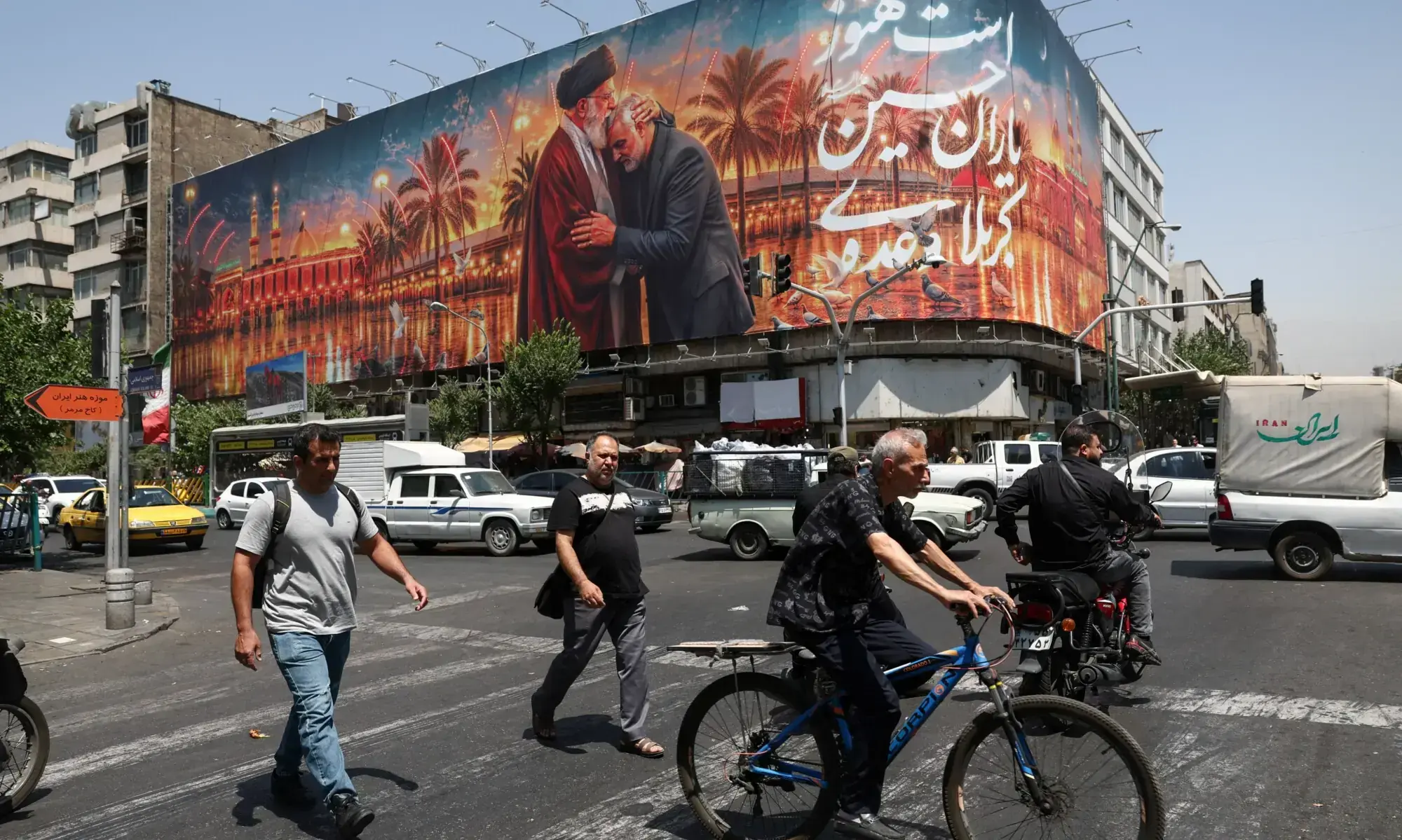
WASHINGTON/TEHRAN: Tensions between the United States and Iran have sharply escalated after Washington launched strikes against Iranian targets following a ballistic missile attack on a US military base in Jordan.

US Central Command said its forces began the strikes at around 8pm Eastern Time on Wednesday. CENTCOM described the operation as a “powerful response” to attempted attacks against American forces in the Middle East.

The strikes came after Iran’s Islamic Revolutionary Guard Corps claimed responsibility for operations targeting US military assets in Jordan. The IRGC said it had targeted an airbase and a command centre.

US President Donald Trump had earlier warned that Iran would face a strong military response. Trump said the United States would hit Iran “very hard” after the attack, despite reports that US forces had intercepted the missiles.

The latest developments have raised fears of a wider regional conflict. Military activity has also been reported across southern Iran.

Iranian state broadcaster IRIB reported explosions in Bushehr province, home to the country’s only nuclear power plant. Several explosions were also reported on Qeshm Island. Iranian media said a missile may have struck a residential area, although details about casualties were not immediately available.

Other explosions were reported at several locations in southern Iran following the launch of the US operation.

The conflict has also intensified around Iraq. Baghdad condemned US and Saudi strikes that reportedly killed members of Iraq’s Popular Mobilisation Forces. The group said at least 20 of its fighters were killed and 32 others were wounded.

Iranian media separately reported that four Iranian advisers were killed in the strikes.

The situation around the Strait of Hormuz has also become increasingly tense. Iran’s Revolutionary Guard said its naval forces targeted three oil tankers that were allegedly approaching the strategic waterway using routes not approved by Tehran.

Iran has rejected an Omani proposal concerning shipping routes through the Strait of Hormuz. Tehran has also discussed imposing charges on vessels using the strategically important passage.

Iranian officials have insisted that mine-clearing operations in the waterway should be carried out by Iranian forces. Tehran has warned that any European involvement could turn those forces into potential targets.

The latest escalation comes only days after Trump said Washington was holding what he described as positive talks with Iran. He had also warned that military action could resume if Tehran failed to show seriousness in negotiations.

Analysts have warned that continued retaliation could create a dangerous cycle of escalation. They say repeated strikes could eventually expand beyond military targets and increase the risk to civilians and critical infrastructure.
Similar Posts

  • | |

    Sohail Afridi denied meeting Imran at Adiala Jail

    RAWALPINDI: Khyber-Pakhtunkhwa Chief Minister Sohail Afridi was stopped from meeting Pakistan Tehreek-e-Insaf founder Imran Khan at Adiala Jail on Thursday. Afridi reached the Medicine Factory checkpoint on Adiala Road with several PTI leaders and lawmakers. Police stopped the delegation from moving towards the prison. The chief minister was accompanied by Mena Khan, Shafi Jan, Ahad Shah, Abdul Salam Afridi and Shahid Khattak. Police had earlier blocked Adiala Road from Gorakhpur towards the jail. Traffic was diverted to alternative routes. Afridi questioned the SHO Saddar Beroni about the restrictions. He also asked what instructions had been issued to the authorities. The chief minister remained at the checkpoint until the scheduled meeting time ended. He and the accompanying PTI leaders were not allowed to meet Imran. After the delegation left, police removed the barriers. Traffic on Adiala Road was restored. Speaking to the media, Afridi announced a protest call if he was not allowed to meet the PTI founder. He said PTI workers would come out across the country at 10pm. He urged them to gather at major intersections while carrying the national and party flags. Afridi also asked workers to stay focused on the party’s planned march towards Islamabad on September 27. He claimed that the PTI planned to bring two million people to Islamabad. He said the number could be even higher. The chief minister said the authorities should allow a meeting with Imran before September 28 if they wanted to reduce political tensions. Afridi also criticised the treatment of Imran and PTI since 2022. He accused the authorities of pushing the country towards instability because of political differences and stubbornness. He further criticised other political parties and questioned their role in the country’s political situation. The latest incident comes amid growing concern within PTI over Imran’s health and access to him. The party has repeatedly demanded that its founder be allowed to meet family members, lawyers and party leaders. Imran has remained incarcerated at Adiala Jail since 2023. His wife, Bushra Bibi, is also imprisoned. The PTI founder has faced several legal cases during his imprisonment. He and Bushra Bibi were sentenced to 17 years in prison in the Toshakhana-II case in December 2025. PTI has also raised concerns over Imran’s eyesight and medical treatment. Earlier this year, doctors from the Pakistan Institute of Medical Sciences examined him at the jail. PIMS later confirmed that he had received an anti-VEGF injection for a condition affecting his right eye. A later medical examination indicated improvement in his eyesight following treatment. Imran’s sisters and PTI supporters have also held regular gatherings outside Adiala Jail on designated meeting days. However, access to the former prime minister has remained restricted in recent months. Afridi’s unsuccessful visit on Thursday is likely to further intensify the political confrontation between PTI and the authorities.

  • | | |

    AJK polling enters third phase amid tight security

    MUZAFFARABAD: Voting in the third phase of the Azad Jammu and Kashmir general elections began on Monday in four constituencies of Bagh and Haveli districts. Polling started at 8am and will continue until 5pm. Security has been tightened across the constituencies due to concerns over possible clashes and disturbances. Authorities have declared most of the 803 polling stations sensitive or highly sensitive. A large security contingent has been deployed to maintain law and order. Around 10,300 additional security personnel have been sent to Bagh and Haveli. Officials said the deployment was aimed at providing a safe environment for voters and election staff. The third phase was originally planned for all 11 constituencies of Poonch Division. However, voting was restricted to Bagh and Haveli after authorities reviewed the security situation. The remaining seven constituencies are expected to be polled later this month. Election officials have indicated that voting could take place on August 20 or 21, depending on the security situation. The current phase has attracted considerable political attention. Several prominent leaders are contesting the four seats. AJK Prime Minister Faisal Mumtaz Rathore is seeking to retain his constituency. Two former prime ministers, Sardar Tanveer Ilyas and Sardar Attique Ahmed Khan, are also in the electoral race. A total of 460,371 voters are eligible to cast their ballots. They include 238,664 men and 221,707 women. The election is being held at 803 polling stations. These stations have 1,254 polling booths. As many as 82 candidates are competing in the four constituencies. LA-14 Dhirkot has the highest number of candidates. Thirty candidates are contesting the seat. LA-17 Haveli has nine candidates, the lowest number among the four constituencies. In LA-17 Haveli, Prime Minister Rathore is facing PML-N candidate Engineer Mohsin Aziz and independent contender Khawaja Tariq Saeed. Rathore and Saeed were previously political allies. They had reportedly agreed to contest the seat alternately. Their political relationship changed after Rathore became prime minister. Rathore sought Saeed’s withdrawal from the contest. Saeed refused to step aside. The two former allies are now competing against each other. Mohsin Aziz is also running an active campaign. His father, Chaudhry Mohammad Aziz, had won the constituency several times in the past. The PML-N candidate is expected to receive support from sections of the Gujjar community. Saeed is believed to have support among parts of the Kashmiri community and several smaller clans. Rathore has expressed confidence about retaining the seat. He has highlighted the performance of his government during his tenure. The constituency has also witnessed allegations of electoral irregularities. Claims circulated on social media about alleged manipulation by two presiding officers. Election officials rejected the allegations as presented on social media. However, they confirmed receiving complaints against the two officials. Both were subsequently removed from election duties. In LA-15 Wasti Bagh, former prime minister Sardar Tanveer Ilyas is facing several strong contenders. The candidates include PML-N nominee and former minister Mushtaq Ahmed Minhas. PPP candidate and sitting minister Sardar Ziaul Qamar is also contesting. Jamaat-i-Islami candidate retired Brigadier Dr Mohammad Khan is another key contender. Ilyas had initially announced a boycott of the third phase. He later reversed the decision and returned to the election campaign. He has described the contest as important for his political future. He has also linked his campaign to the possibility of securing a senior constitutional position after the election. Ilyas and Ziaul Qamar belong to the same Madiyal tribe. Brigadier Khan belongs to the Narma clan. He is backed by several influential Jamaat-i-Islami figures and local supporters. Mushtaq Minhas is benefiting from the PML-N’s position as the leading party in the elections held so far. The party has secured the largest number of seats in the previous phases and is expected to play a major role in forming the next government. In LA-16 Sharqi Bagh, former ministers Sardar Mir Akbar and Sardar Qamar Zaman are among the main contenders. Mir Akbar is contesting on the PML-N ticket. Qamar is representing the PPP. The LA-14 Dhirkot contest has also emerged as one of the closely watched races. Sardar Attique Ahmed Khan, head of the Muslim Conference, is seeking another victory from the constituency. He has represented the seat for several years and previously served as AJK prime minister. He is facing a strong challenge from Sajid Iqbal Abbasi of the Awam Dast-o-Bazu Party. Abbasi is a contractor and philanthropist. He has reportedly spent substantial personal resources on welfare and development projects in the constituency. His supporters believe his community work has helped him build a strong voter base. The contest has become more interesting because Attique and Abbasi belong to the same tribe. PML-N candidate Raja Faisal Azad and PPP nominee Raja Mubashar Ejaz are also contesting Dhirkot. However, the main competition is expected to remain between Attique and Abbasi. The results of the third phase could influence the political balance in AJK. The PML-N has already emerged as the strongest party in the earlier phases. The PPP and other political groups will now seek to strengthen their position in the remaining contests.

  • |

    Kriti Sanon urges people to prioritise mental health

    Bollywood actress Kriti Sanon has opened up about the importance of mental and emotional well-being, urging people to pay as much attention to their minds as they do to their physical health. The National Award-winning actress reflected on how her experiences while working on films such as Mimi and Do Patti changed her perspective on acting and the emotional impact of portraying complex characters. According to Kriti, she once believed that the characters she played remained confined to the world of cinema and did not have any lasting effect on her personal life. However, her experiences with these two films made her realise that characters can leave an unconscious emotional impact on actors. Kriti explained that the effect of a demanding role does not always become apparent immediately. Sometimes, an actor may complete filming and only begin noticing emotional changes several days later. She said that a character can continue to influence a person’s mood, behaviour and thoughts even after the cameras stop rolling. The actress said this experience taught her the importance of consciously separating herself from the characters she portrays. While actors are expected to completely immerse themselves in their roles, Kriti believes that it is equally important to know when to step away from the emotional world created for a film. She also recalled times when she was personally dealing with difficult or emotionally challenging situations while having to continue working on a comedy project. Despite going through personal struggles, she still had to portray cheerful and entertaining characters in front of the camera. Kriti pointed out that actors repeatedly draw upon their own emotions while performing. They have to access different feelings and sometimes revisit difficult emotional spaces to make their performances believable. Because of this, she believes that maintaining good mental and emotional health should be an important part of an actor’s life. The actress encouraged people to find healthy ways of managing their emotions and maintaining mental balance. She suggested practices such as meditation, therapy and other activities that help individuals feel mentally grounded and emotionally stable. Kriti also shared that she personally turns to meditation from time to time and finds it beneficial. For her, taking a pause and reconnecting with herself helps maintain emotional balance, particularly after working on emotionally demanding projects. Her comments highlight a broader reality of the entertainment industry, where performers are often required to move between intense emotions and different personalities within a short period of time. While professional commitment is important, Kriti believes that taking care of one’s mental health should never be overlooked. Kriti Sanon was most recently seen alongside Shahid Kapoor and Rashmika Mandanna in Cocktail 2. The actress continues to remain one of Bollywood’s prominent performers, balancing commercially successful projects with roles that require emotional depth and versatility.

  • | |

    Imran’s sister allowed to meet him at Adiala

    Pakistan Tehreek-e-Insaf (PTI) founder Imran Khan’s sister Noreen Niazi was allowed to proceed to Adiala Jail on Tuesday to meet him after the Supreme Court directed authorities to facilitate family meetings. Noreen, along with Imran’s sisters Aleema Khan and Dr Uzma Khanum, reached the Dahgal checkpoint on the road leading to the prison. Police initially stopped all three women but later allowed Noreen to continue towards the jail. The development came shortly after a three-member Supreme Court bench ordered weekly meetings between Imran and his family. The court was hearing petitions concerning his access to relatives and personal physicians, as well as his medical condition. Noreen told reporters before leaving for the prison that she would inform Imran about the Supreme Court’s decision and the efforts made by his supporters. She did not respond when asked whether she would speak to the media after the meeting. Separately, Bushra Bibi’s daughter and sister-in-law were also permitted to meet her at Adiala Jail. The meeting was attended by Musarrat Khawar Maneka and Mehrunnisa, according to jail officials. The Supreme Court’s decision followed medical reports raising concerns about Imran’s fluctuating blood pressure, anxiety and other symptoms. The court said family access should not be treated as a favour and directed authorities to facilitate regular meetings. The court also ordered Imran’s transfer to Shifa International Hospital for treatment. A medical board comprising an eye specialist, general physician and cardiologist will examine him, while his personal physician Dr Faisal Sultan will also be given access. His sister Dr Uzma is to be associated with the medical board. PTI representatives have agreed to comply with the court’s condition that political activity and media statements should not be conducted after meetings with Imran. Speaking at the Dahgal checkpoint, Aleema Khan welcomed the court’s decision and said the family had been demanding Imran’s hospital treatment for months. She also confirmed that Noreen had been allowed to meet him. Aleema rejected allegations that the family was using Imran’s health for political purposes. She said they were raising concerns as his sisters and seeking what they considered to be his legal rights. She further argued that Bushra Bibi should also have received similar relief. According to Aleema, the family had already given its commitment before the Supreme Court that it would not gather outside the prison or hospital and address the media following meetings. Imran’s spokesperson Niazullah Khan Niazi said the PTI founder had a right to meet his family regularly. He welcomed the Supreme Court’s directions and said the party would fully comply with the restrictions imposed by the court. The Supreme Court also directed authorities to arrange telephone communication between Imran and his children and ordered that his medical records remain confidential. The latest medical report submitted to the court stated that Imran had experienced fluctuating blood pressure, palpitations, headaches, restlessness and anxiety. A cardiologist who examined him earlier this month recommended measures to reduce stress, including increased family interaction. A four-member medical board later recorded his blood pressure at 140/80mmHg and recommended walking, relaxation and more frequent interaction with his immediate family and wife. The report said Imran had undergone dozens of medical examinations since his imprisonment and was being monitored regularly by jail medical staff. It also stated that his ECG was normal and that his eyesight had improved following treatment. PTI has questioned the adequacy of the medical reports and continued to demand examinations by Imran’s personal physicians and an independent medical board. The government, however, has rejected allegations that Imran is being denied medical treatment. Government officials have maintained that he is receiving healthcare from qualified specialists and that prison meetings are being conducted according to court orders and applicable law. Imran and Bushra Bibi remain incarcerated at Adiala Jail. The former prime minister has been in custody since August 2023 and is also facing several legal cases.

  • | |

    PIMS gets Rs22bn in three years amid staffing, saf…

    ISLAMABAD: The Pakistan Institute of Medical Sciences (PIMS) has received a total budget of around Rs22 billion over the past three years, according to official budget documents obtained by Minute Mirror. The financial figures have come under scrutiny following the deadly fire in the Mother and Child Health (MCH) Ward on August 26. The incident has raised questions about the hospital’s financial management, staffing levels, maintenance and fire safety arrangements. According to the documents, PIMS was allocated Rs6.84 billion during the previous financial year. However, the hospital spent Rs7.51 billion, exceeding the allocated amount by around Rs670 million, or Rs67 crore. For the current financial year, the federal government has allocated Rs7.63 billion to PIMS. The hospital has also been provided Rs500 million, or Rs50 crore, under the repair and maintenance head in the current budget. The allocation has attracted particular attention after the fire. Questions are now being raised about whether adequate funds were used to maintain electrical systems, hospital infrastructure and fire safety equipment. The financial questions have emerged alongside a serious staffing shortage at PIMS. The hospital has 949 vacant positions against 2,451 sanctioned posts. The vacancies include 385 doctors and clinicians, 363 nurses and 201 paramedical staff. Health experts have questioned how a major public hospital receiving billions of rupees in government funding continues to face shortages of medical personnel and concerns about infrastructure and safety. They say staffing gaps can place additional pressure on existing employees and affect patient care, emergency response and hospital management. The August 26 fire has intensified these concerns. Prime Minister Shehbaz Sharif took notice of the incident and directed Federal Health Minister Mustafa Kamal to visit PIMS and assess the situation. Minister of State for Interior Talal Chaudhry said the prime minister had also ordered a high-powered investigation into the tragedy. The Establishment Division subsequently suspended National Health Services Secretary Muhammad Aslam Ghauri for 120 days. Capt. (Retd.) Muhammad Mahmood, Secretary Housing and Works, was given additional charge of the Health Secretary for three months. The developments have increased calls for the investigation to examine not only the immediate cause of the fire but also the hospital’s broader administrative and financial arrangements. A senior officer, speaking on condition of anonymity, claimed that authorities had repeatedly been informed about shortages of staff, equipment and safety facilities. The officer questioned whether the Rs50 crore allocated for repair and maintenance would be used to address fire safety and infrastructure requirements. The official spending figures have also raised questions about the reasons for the previous year’s expenditure exceeding the approved allocation by Rs67 crore. However, the available figures alone do not establish financial wrongdoing. A detailed audit would be required to determine how the additional expenditure was incurred, whether it was properly authorised and where the funds were spent. PIMS is part of a wider staffing problem affecting federal healthcare facilities in Islamabad. More than 1,470 positions are reportedly vacant across four major government hospitals. Besides PIMS, the Polyclinic Hospital has 439 vacant positions, the National Institute of Rehabilitation Medicine has 29, while the Federal General Hospital has more than 57 vacancies. The combination of large public allocations, vacant positions and concerns over hospital infrastructure has prompted calls for greater transparency in the use of government funds. The key questions now facing authorities include whether maintenance funds were adequately utilised, who authorised spending beyond the allocated budget, whether previous warnings were acted upon and whether the investigation into the PIMS fire will examine possible administrative or financial failures. A comprehensive audit and transparent investigation could help determine whether the problems resulted from insufficient resources, poor utilisation of available funds, weak oversight or administrative failures. Officials have yet to make public a detailed audit of PIMS expenditure or announce a firm timeline for filling the hospital’s vacant positions.

  • |

    Iranian lawmaker questions Saudi defence pact with Pakistan, Türkiye

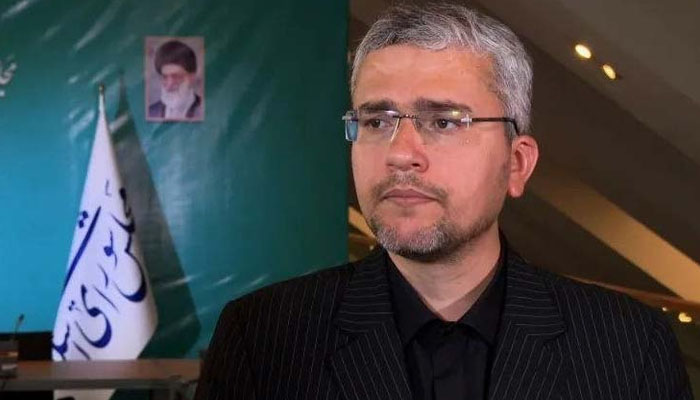
    TEHRAN: Iranian parliamentarian Ebrahim Rezaei has questioned whether Saudi Arabia’s new defence agreement with Pakistan and Türkiye can guarantee the Kingdom’s security. Rezaei, a member of Iran’s Parliament National Security and Foreign Policy Committee, made the remarks in a social media post. He said Saudi Arabia should understand that the agreement with Pakistan and Türkiye would not provide the level of protection Riyadh had failed to obtain despite decades of reliance on the United States. Rezaei described the agreement as a “paper pact” and urged Saudi Arabia to reconsider its policies so that it would not have to seek security guarantees from other countries. His comments came shortly after Saudi Arabia, Pakistan and Türkiye signed a joint defence agreement in Makkah. The agreement was signed amid concerns over potential attacks on Saudi Arabia by Iran-aligned militias in Iraq and Yemen. Saudi officials have reportedly warned of such security threats. Under the new agreement, an attack against any one of the three countries will be considered an attack against all three. The pact aims to strengthen defence cooperation and develop joint capabilities among Saudi Arabia, Pakistan and Türkiye. A trilateral defence summit was held at Al-Safa Palace in Makkah, attended by Saudi Crown Prince Mohammed bin Salman, Turkish President Recep Tayyip Erdogan and Pakistani Prime Minister Shehbaz Sharif. According to Pakistan’s Foreign Office, the three leaders signed the agreement, formally described as the Makkah Defence Joint Agreement.

Leave a Reply

Your email address will not be published. Required fields are marked *