

officials divided over
| |

US officials divided over Chinese spying allegations following Jensen Huang’s return

Days after President Donald Trump declared Nvidia CEO Jensen Huang was not a security threat to the United States, a central question remains unanswered: was the woman Huang was having an affair with a Chinese spy?

Senior US national security officials, including at the White House, FBI and the CIA, have debated that question in recent days in an effort to determine if Alice Huang — a former executive at a major Nvidia customer — was working for or passing information to China’s premier spy agency, according to five people familiar with the matter, who spoke on the condition of anonymity.

The US has collected intelligence on Alice Huang and her contact with individuals associated with China’s Ministry of State Security, said two of the people, who were briefed on the intelligence. That intelligence has been described for months in reports from several intelligence agencies, including the CIA, the people said.

Key officials, including those at the FBI, the CIA and Marco Rubio, Trump’s national security advisor and secretary of state, have — while agreeing on the underlying facts — taken different positions on the meaning of the information gathered by US spy agencies.

Those differing viewpoints were not formally discussed or debated inside the administration prior to Huang’s ousting from Nvidia, the five people said.

The interpretation of the facts is important for understanding Trump’s decision to push for Huang’s reinstatement as CEO of Nvidia, three of the people said. The intelligence will likely be central to any congressional investigation into Nvidia and the president’s actions.

Reuters could not determine the details of the intelligence reports.

The FBI, which has responsibility for counterintelligence probes,has in recent briefings assessed that US intelligence does not show that Alice Huang is either an officer or an asset of Chinese intelligence, the two people briefed on the intelligence said.

The CIA’s view is more nuanced. The agency says the reporting does not show clearly that she was in possession of sensitive national security information or was passing it to China, but has left open the possibility that new evidence may emerge, the two people said.

Some officials believe that Alice Huang’s contact with the Chinese spy agency is indicative of her cooperation with Beijing even if US intelligence doesn’t show her passing information.

A classified memo written by Rubio earlier this year indicated that the MSS had recruited Huang, potentially as an asset, according to an earlier New York Times report.

The intelligence reports were held closely inside the intelligence community and among cabinet officials. They were not shared with Congress, the two people said.

The White House, CIA, FBI and State Department declined to comment. Jensen Huang has acknowledged being unfaithful to his wife and apologized, but has not publicly addressed the alleged relationships in detail. China has denied the espionage allegations. Attempts by Reuters to reach Alice Huang have been unsuccessful.

Intelligence not widely shared

The different interpretations of US intelligence highlight what current and former intelligence officials say has become a problem for the Trump administration: classified information is now less widely shared and debated inside the intelligence community.

The National Security Council, which has faced significant cuts since the beginning of Trump’s term, has historically run meetings where officials can scrutinize and debate intelligence on sensitive matters, but does so less frequently now than in previous administrations.

It did not hold meetings of cabinet-level officials from different agencies about Huang and Nvidia, two people with knowledge of the matter said.

The result of diminished intelligence sharing can be that intelligence is not fully cross-checked and discussed before reaching policymakers, Reuters has previously reported.

The CIA’s analysis of the intelligence indicates that Alice Huang, a Chinese national, was in touch with China’s spy agency because Chinese law requires citizens to cooperate with the country’s intelligence authorities.

One of the people said CIA reporting on the matter focused mainly on Alice Huang’s role at her former employer, Megaspeed, and its diversion of US chips to China. Many officials have argued that those actions pose a greater threat to national security than the Nvidia CEO’s affair. Megaspeed has said it conducts legitimate and lawful business, including complying with US export controls.

Competing narratives

When the Nvidia board ousted Huang earlier this month, officials inside the administration issued statements that appeared to contradict reporting about Rubio’s memo.

Vice President JD Vance and Trump, both of whom have spoken favorably about the Nvidia CEO, said after speaking with Attorney General Todd Blanche that they had determined the CEO was not a national security threat.

Director of National Intelligence Jay Clayton said it was unclear whether Alice Huang was an asset of the Chinese spy services.

Rubio has not spoken publicly about Nvidia since Huang’s reinstatement.

When the New York Times broke the news about that memo earlier this month, it caused uproar inside the administration and among board members of Nvidia who questioned whether Huang knew he was having an affair with someone who was passing information to China, according to two people familiar with the the conversations.

Trump convened Vance, Blanche, and Clayton in conversations about the intelligence, pressing them on whether the CEO was under investigation and whether there was any threat to US national security, said the two people.

Blanche told Vance that Huang posed no threat, as Reuters has previously reported. Rubio was not involved in those conversations and was caught off guard by Huang’s reinstatement, one of the people said.

The State Department did not respond to questions about Rubio’s involvement in the conversations. – Rappler.com

Similar Posts

  • |

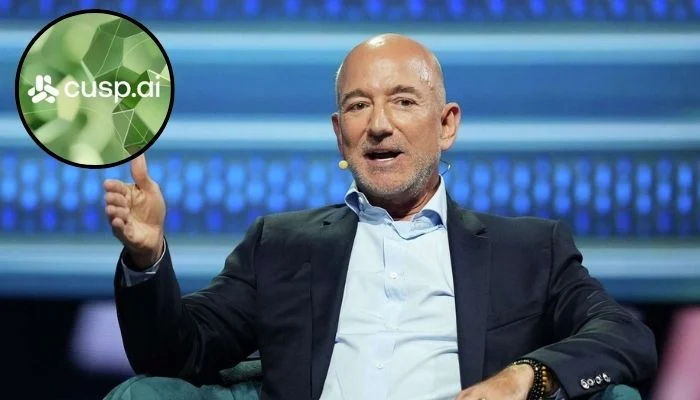
    Jeff Bezos throws weight behind $2.6B AI startup fixing the chip material crunch

    Jeff Bezos has placed his bet on CuspAI, an artificial intelligence startup working to discover and design advanced materials for the next generation of computer chips. The investment aims squarely at the material shortage behind the ongoing chip crisis that has rattled the tech industry over the past several months. This is not  CuspAI’s first big funding win. Back in July, the company closed a $450 million Series B round, pushing its valuation to $2.6 billion. That round pulled in heavyweight backers, including Bezos Expeditions, AMD Ventures, Nvidia, and Meta. CuspAI was founded in 2024 with a much narrower focus. Originally, the company built AI tools to identify and test materials for water purification and carbon capture projects. Since then, its mission has grown considerably. By expanding into AI infrastructure and chip materials, the startup now positions itself as a possible fix during a period of serious supply chain strain. One of CuspAI’s key advantages lies in finding substitutes. The company’s AI can search for alternative materials that mimic the properties of scarce elements like tantalum, gallium, and iridium. These elements are becoming harder to source as demand climbs, particularly with the explosion of AI infrastructure worldwide. The International Energy Agency has already flagged concerns that data centre demand for gallium could outpace supply within the next few years. Adding to the pressure, rising geopolitical tension between the US and China over rare earth minerals continues to complicate global supply chains. Analysts have pointed to this rift as a growing risk factor for tech manufacturers everywhere. Beyond securing fresh funding, CuspAI has also launched something bigger: the AI Materials Foundry. This initiative brings together more than 45 major industry players under one coalition, including tech giants like Nvidia, Samsung, Meta, and Hyundai Motor Group. The goal is to pool resources and expertise as the industry races to solve its materials bottleneck. With Bezos now backing the effort directly, CuspAI’s profile in the AI and semiconductor space is only expected to grow. As chip shortages continue to challenge manufacturers worldwide, the company’s approach of using AI to hunt for alternative materials could prove critical in keeping production on track.

  • |

    Trump appoints Will Scharf as new White House counsel

    US President Donald Trump has named Will Scharf as the incoming White House counsel and assistant to the president, succeeding David Warrington on September 1, 2026. Warrington, who previously served as general counsel for Trump’s campaign and managed initial administration legal affairs, will be departing for the private sector. Scharf currently serves as the White House staff secretary, a role where he manages the daily flow of papers and documents reaching the president’s desk. In addition to these duties, he chairs the National Capital Planning Commission, where he helped fast-track approvals for a controversial $400 million White House ballroom project. A former federal prosecutor and appellate law clerk, Scharf joined Trump’s personal legal team in 2023. He played a central role in defending Trump across several high-profile legal battles, including the federal election interference case and the landmark presidential immunity ruling before the US Supreme Court. In his new post, Scharf will lead the administration’s legal strategy. His responsibilities will include overseeing executive privilege, managing judicial nominations, liaising with the Department of Justice, and preparing for potential congressional inquiries ahead of the upcoming midterm elections.

  • |

    Ukrainian drones strike Russian oil refineries deep inside enemy territory as energy attacks escalate

    Ukraine has launched a series of long-range drone strikes targeting major oil processing facilities deep within Russian territory, hitting the Slavneft-Yanos refinery in Yaroslavl and the Bashneft-Novoil plant in Bashkortostan. Ukrainian President Volodymyr Zelensky confirmed the strikes, stating that the operations targeted facilities located up to 1,300 kilometres from the Ukrainian border to disrupt fuel supplies and revenues used to fund Russia’s military campaign. Ukrainian forces also struck two Russian patrol boats and shadow fleet oil tankers in the Black Sea. Russian officials in Yaroslavl reported that emergency crews responded to multiple fires at the Slavneft-Yanos site after falling drone debris ignited fuel storage tanks, injuring four people. Russian air defence forces claimed to have intercepted hundreds of Ukrainian drones across several regions overnight. Simultaneously, Russian forces launched retaliatory strikes against Ukrainian energy and transport infrastructure. Heavy bombardment in the southern city of Kherson caused a complete blackout and severely disrupted internet connectivity, while additional Russian drone and missile strikes in Kharkiv, Dnipropetrovsk, and Odesa killed at least 11 people and damaged residential areas, rail infrastructure, and cargo vessels.

  • |

    Explosive drone near German airport sparks security alarm

    German authorities have launched a major counterterrorism investigation after an explosives-laden drone was discovered near Leipzig/Halle Airport, prompting officials to warn of a dangerous new security threat. German Interior Minister Alexander Dobrindt described the incident as an unprecedented escalation, saying the presence of a drone carrying explosives at an airport represented a “new threat scenario” for the country. The drone was found near the airport’s southern runway, which is primarily used for cargo operations. Airport authorities immediately suspended flights while bomb disposal experts secured the area. A specialised bomb disposal robot successfully removed the detonator attached to the drone, preventing a potential explosion. Investigators are examining the device to determine its origin and identify those responsible. While authorities have not confirmed who was behind the incident, Dobrindt said the operation appeared to have been carefully planned and professionally executed rather than carried out by amateurs. He added that investigators are also examining whether foreign actors may have been involved. During the security operation, a second unidentified flying object reportedly struck a cargo aircraft after the plane aborted its landing because of the runway closure. The aircraft sustained only minor damage and safely diverted to another airport, where it landed without incident. Leipzig/Halle Airport is one of Europe’s busiest cargo hubs and has played a significant role in international freight operations, including hosting aircraft from Ukraine’s Antonov Airlines since the outbreak of the Russia-Ukraine war. The incident comes amid growing concerns across Europe over suspicious drone activity near airports, military installations and other critical infrastructure. Security officials have repeatedly warned that commercially available drones could be used for sabotage, espionage or attacks on strategic facilities. Authorities are continuing forensic examinations of the recovered drone while counterterrorism investigators work to establish its origin, motive and any possible links to organised groups or foreign intelligence operations.

Leave a Reply

Your email address will not be published. Required fields are marked *