trump administration has
|

Trump administration has revoked more than 175,000 visas, State Department says

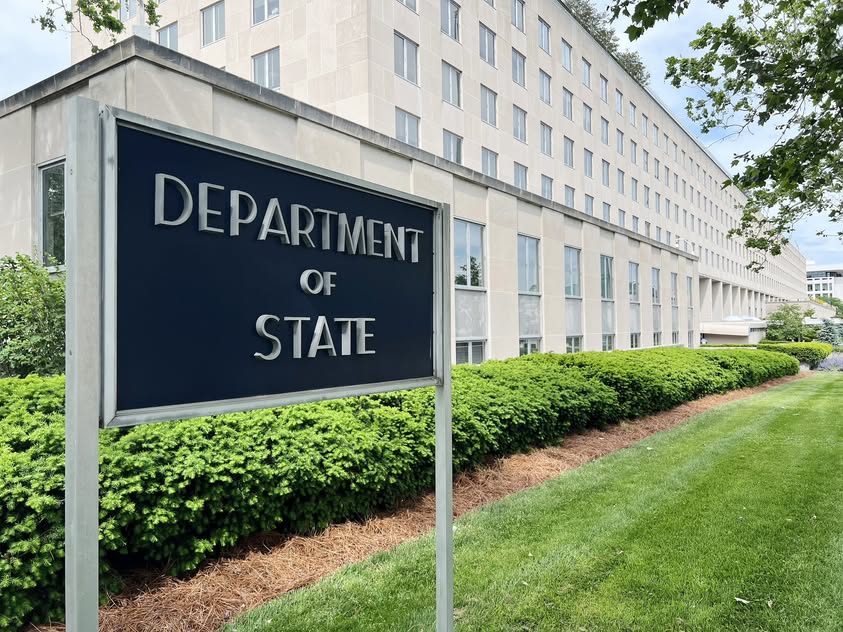
The US State Department said on Monday, August 10, it has revoked more than 175,000 visas from foreign nationals under President Donald Trump’s administration, as it continues a sweeping immigration crackdown that has stripped travel and immigration privileges from tens of thousands more people.

The department said in a statement the revocations targeted foreigners who “violated the terms of their visas, committed crimes, called for violence against US citizens, defrauded Americans, abused our immigration system, or endangered national security.”

Most visas were revoked following “law enforcement encounters,” with assault, driving under the influence, theft and drug crimes the leading causes, the department said.

Specific cases cited by the department include a person charged with felony rape and sexual battery, another charged with kidnapping and human trafficking, and a person facing more than a dozen counts of possessing child sexual abuse material. A US embassy in North Africa revoked more than 100 visas from “birth tourist” parents who allegedly came to the US primarily to give birth so their children would receive US citizenship, it said.

The department also said it had revoked the visas of multiple foreigners who “celebrated” the assassination of conservative activist Charlie Kirk, including one who said he “died too late.”

In January, the department said it had revoked more than 100,000 visas, a record at the time.

The extent of the revocations reflects the broad immigration crackdown initiated when Trump returned to the White House last year, deporting an unprecedented number of migrants including some who held valid visas. The administration has also adopted a stricter policy on granting visas, with tightened social media vetting and expanded screening.

Rights advocates and human rights experts have condemned the Trump administration’s social media screening efforts, which they say threaten free speech and are akin to surveillance and singling out of immigrants. – Rappler.com


Similar Posts

  • |

    China launches Arctic route to bypass global shipping chokepoints

    China is preparing to open a regular container shipping route through the Arctic as disruptions at major maritime chokepoints continue to affect global trade. The new service will operate through Russia’s Northern Sea Route along the Arctic coast. It is being presented as an alternative route between Asia and Europe. Chinese shipping company Sea Legend is expected to launch its first regular service on the route. The service will connect Ningbo in China with Felixstowe in the United Kingdom. The route has been described as the “Ice Silk Road”. It is designed to provide faster access to European markets. It could also improve trade links with Turkey and North Africa. The Arctic route could significantly reduce sailing times between China and Europe. The journey between Ningbo and Felixstowe normally takes around 40 days by traditional routes. The Northern Sea Route could cut the travel time by roughly half under suitable conditions. The route has gained attention as shipping companies look for alternatives to heavily congested and politically sensitive waterways. The Strait of Hormuz and the Bab al-Mandab have become major areas of concern for international shipping. Rising tensions in these regions have increased risks for vessels and raised costs for shipping companies. Marine risk experts say the Arctic is attracting greater interest from shipowners because it can offer shorter journeys and reduce exposure to geopolitical conflict zones. The Northern Sea Route is divided into 28 sections. Different rules and operating requirements apply along the route. Ships generally need permission from the Northern Sea Route administration, which is controlled by Russia’s state nuclear energy company Rosatom. Interest in the Arctic route is not new. Several international shipping companies have previously tested the Northern Sea Route. However, many European operators later avoided regular use of the route because of worsening relations with Russia. Concerns over the potential environmental impact of increased shipping in the fragile Arctic ecosystem have also remained a major issue. The changing climate has added another dimension to the debate. Shrinking sea ice has made some Arctic routes more accessible during parts of the year. The Arctic is now becoming an increasingly important area of competition among major powers. Russia considers the region strategically important for its economy and national security. It also views the Northern Sea Route as a major trade corridor. China has described itself as a “near-Arctic state” and has promoted the concept of a “Polar Silk Road”. Beijing sees greater Arctic access as an opportunity to expand trade and strengthen its global supply chains. The United States, meanwhile, has opposed efforts that could give Russia and China excessive control over Arctic routes. Washington has repeatedly supported freedom of navigation and greater international access to the region. The growing use of the Arctic shipping corridor could therefore have implications beyond commercial trade. For China, the route offers a potential way to reduce dependence on traditional maritime passages. For Russia, it could strengthen the economic importance of its Arctic coastline.

  • | | |

    Urmila Matondkar’s ex-husband Mohsin Akhtar shar…

    Mohsin Akhtar, the former husband of veteran Bollywood actress Urmila Matondkar, has shared a fresh collection of romantic photographs with his new wife, Nida Bhatt, giving fans another glimpse into their wedding celebrations. The 43-year-old businessman and model posted photographs from his walima ceremony several months after announcing his marriage to Nida. Alongside the pictures, Mohsin shared an emotional message expressing his love and appreciation for his new wife. In his heartfelt post, Mohsin described Nida as much more than his wife, calling her his “home” and “peace.” He also promised to stand by her, value her and continue loving her throughout every chapter of their journey together. The new photographs offer glimpses of the couple celebrating their marriage with family and friends. Mohsin had previously shared pictures from his wedding with Nida in June, officially revealing details of his new marriage to his followers. His latest social media post has attracted attention largely because of his previous high-profile marriage to Urmila Matondkar, one of Bollywood’s well-known actresses. Before marrying Nida, Mohsin was married to Urmila. The couple tied the knot on February 4, 2016, in an intimate ceremony attended by close friends and family members. Their relationship attracted considerable attention at the time, partly because of their age difference and their interfaith marriage. Mohsin, who comes from a Kashmiri business background and has worked as a model, is around 10 years younger than Urmila. Following their separation, both have continued with their respective lives and careers. Mohsin’s latest posts now focus on his new relationship and marriage, with his affectionate message to Nida offering a glimpse into his current personal life. The newly shared wedding photographs have given fans a closer look at the celebrations surrounding Mohsin and Nida’s marriage. His romantic caption has also drawn attention, particularly his description of his wife as his source of comfort and happiness. While Urmila Matondkar remains a prominent name in Indian cinema, Mohsin Akhtar’s latest social media update has shifted the spotlight toward his new chapter in life. The couple’s wedding pictures are continuing to attract interest online as fans react to the romantic moments and Mohsin’s emotional message for his new bride.

  • |

    Nearly 100 children wrongly detained as adults under UK-France migration deal

    At least 94 children were mistakenly identified as adults and held in immigration detention under Home Secretary Shabana Mahmood’s “one in, one out” agreement with France, according to details disclosed in a letter from the Independent Monitoring Boards (IMB). Between August 2025 and May 2026, Home Office officials recorded 304 age-disputed cases arising from the scheme, officially named Operation Hillmore, with 31% ultimately confirmed to be minors. Standard UK policy strictly prohibits the detention of unaccompanied minors beyond 24 hours. The critical findings, sent to Home Office Minister Anna Turley by interim IMB chair Jane Leech, highlighted severe safeguarding and procedural failures. Age assessments at immigration removal centers took up to 40 days to resolve in certain instances, while some individuals faced deportation delays of up to 27 weeks, far exceeding the scheme’s 28-day target. Additionally, detainees were slated for removal despite requiring urgent hospital care or suffering from active tuberculosis. The Refugee Council condemned the findings, urging the government to rely on social-worker-led assessments rather than administrative border checks. In response, a Home Office spokesperson stated that age assessment procedures are being modernized, including plans to roll out AI tools next year to support determinations.

  • |

    Pope Leo urges end to West Bank violence

    Pope Leo has called for an immediate end to violence against Palestinians in the occupied West Bank. Speaking after the Angelus prayer at his residence in Castel Gandolfo near Rome, the Pope expressed concern over repeated violence targeting Palestinian civilians. He urged the international community to take practical steps to help end the conflict and advance efforts for a two-state solution. The Pope said lasting peace would require a fair political settlement that guarantees the rights and security of both Palestinians and Israelis. His comments come amid growing tensions in several parts of the West Bank. Violence involving Israeli settlers and Palestinians has increased, while restrictions and confrontations have added to concerns among local residents. The situation in the village of Qusra has also drawn attention. Reports have described severe restrictions on residents, including disruptions to essential services and movement. Rights organisations have raised concerns that increasing settler activity and pressure on Palestinian communities could contribute to further displacement and the expansion of Israeli settlements. The Vatican has consistently supported the establishment of a Palestinian state as part of a negotiated two-state settlement. More than 150 of the 193 UN member states recognise Palestine. The future of the West Bank remains one of the central issues in the Israeli-Palestinian conflict. Palestinians seek the West Bank, Gaza Strip and East Jerusalem as the basis of an independent state. Israeli settlement expansion in the West Bank has remained a major source of international criticism. Palestinian officials and rights groups say the continued expansion threatens the possibility of establishing a viable Palestinian state. The Israeli government, however, disputes the international characterisation of the West Bank as occupied territory and considers it disputed land.

  • | | |

    Iran defied plan to become ‘Venezuela’, says P…

    TEHRAN: Iranian President Masoud Pezeshkian has said his country is facing a difficult economic and military situation but has remained resilient, arguing that national unity prevented what he described as an attempt by Iran’s enemies to push the country towards a Venezuela-like crisis. Speaking at a ceremony, Pezeshkian said Iran was operating under what he called illegal wartime conditions while continuing efforts to provide services and support to its people. The president portrayed the country as facing simultaneous economic and security challenges, but said the Iranian public had remained united despite the pressure. According to Pezeshkian, Iran’s opponents wanted to see the country weakened and destabilised. He argued that the unity of the Iranian people had instead helped Iran emerge as a stronger force. “Today, we are in a state of economic and military war,” Pezeshkian said, while stressing that the government was continuing to work for citizens despite the difficult circumstances. His comments came as Tehran has faced intense pressure over its economic situation and wider confrontation with the United States and its allies. Pezeshkian said Iran’s adversaries had intended to turn the country into “Venezuela”, apparently referring to the severe economic and political difficulties that have affected Venezuela over the past decade. He claimed that the plan had failed because Iranians had maintained a united position in the face of the challenges. The president also referred to a memorandum of understanding reached amid the difficult circumstances. He said the agreement had been shaped by the country’s determination to protect its interests while seeking a way forward through diplomacy. According to Pezeshkian, experts had described the memorandum as being based on “prudence, dignity and wisdom”. He argued that those criticising the agreement did not fully understand the circumstances surrounding it. The remarks suggest that Iran’s leadership is attempting to present the agreement as a strategic decision rather than a concession under pressure. Pezeshkian’s comments also come against the backdrop of signals that Tehran may be seeking a way to end its confrontation with Washington from a position it considers strong. Iranian officials have repeatedly stressed that any diplomatic arrangement must protect the country’s national interests and sovereignty. For Pezeshkian, domestic unity remains central to navigating the crisis. He argued that despite economic hardship and military pressure, the country had avoided the collapse that its opponents allegedly expected. The president’s message was therefore aimed not only at Iran’s external rivals but also at domestic critics of the memorandum. As pressure on Iran continues, Tehran faces the difficult task of managing economic challenges while maintaining political cohesion and determining whether diplomacy can reduce tensions. Pezeshkian’s latest remarks underline his argument that Iran’s resilience, rather than isolation, will shape the next phase of the country’s confrontation with its adversaries.

Leave a Reply

Your email address will not be published. Required fields are marked *