uss abraham lincoln

USS Abraham Lincoln Arrives in Thailand After Middle East Deployment

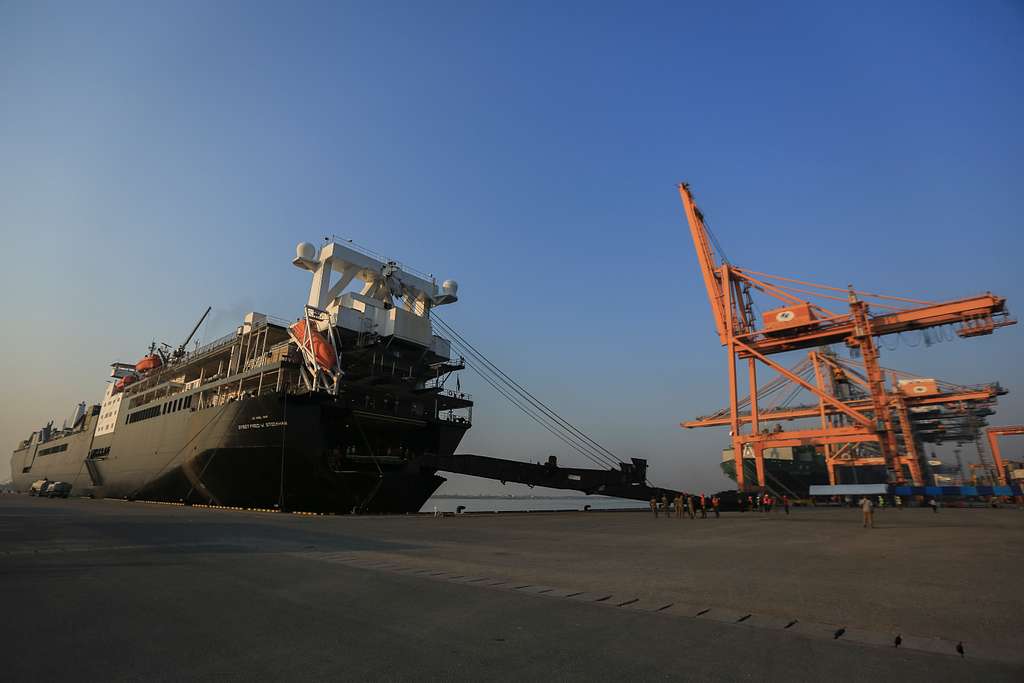
LAEM CHABANG, Thailand – The United States Navy aircraft carrier USS Abraham Lincoln steamed into Thailand’s Laem Chabang deep-sea port on Wednesday morning after more than 200 days at sea, including a long deployment in the Middle East, amid reports of mental health concerns and deteriorating conditions aboard the vessel. The Lincoln, with approximately 5,000 sailors and Marines aboard, has set a modern-day record for consecutive days at sea, according to Democratic lawmakers, as typical naval deployments last between six and nine months but can be extended during times of conflict.

Pattaya Arrests Street Prostitutes Ahead Of US Carrier Visit

Accompanied by other US naval vessels, the aircraft carrier will stop in Thailand, the United States’ only treaty partner in mainland Southeast Asia, for rest and recuperation for five days, according to Thai officials. The arrival of thousands of military personnel has raised hopes of an economic boost in the nearby resort city of Pattaya, which also has a long-standing reputation as a sex tourism destination, with a fleet of approximately 40 buses set to ferry personnel between Pattaya and the port.

Pattaya Mayor Poramase Ngampiches stated that there are certain places and activities that the personnel are prohibited from participating in, such as all kinds of water sports, jet skiing, bungee jumping, wrestling, and boxing. Police will deploy additional patrols around Pattaya’s main beachfront and nightlife district, following raids over the weekend that led to 40 to 50 people being detained for suspected prostitution, officials said. Although illegal in Thailand, the sex industry is openly visible in major tourism hubs, including parts of Bangkok and Pattaya, despite occasional crackdowns.

Pattaya Prepares To Welcome 5,000 Us Navy Personnel As Aircraft Carrier Arrives

The visit marks a significant moment for the US Navy, which has been operating in the Middle East region amid ongoing tensions, and offers a rare opportunity for crew members to rest after an extended deployment. The economic impact of the visit is expected to be substantial, with local businesses preparing for an influx of visitors, though authorities have also taken steps to ensure public order and safety during the port call. The Lincoln is scheduled to depart on September 7, with its next destination not yet disclosed.

-Thailand News (TN)

Similar Posts

  • | | |

    Imran Khan’s sons renew concerns over father…

    The sons of former prime minister Imran Khan have once again expressed concern over their father’s health, saying they have been unable to receive reliable information about his condition due to continued restrictions on family access. Speaking in an interview with an international news outlet, Kasim Khan and Sulaiman Khan said they have not been allowed to communicate with their father for several months and claimed that his family, lawyers and personal doctors have also been denied regular access. Kasim said the family has remained in the dark about Imran Khan’s health throughout his imprisonment. He referred to an Islamabad High Court order that directed authorities to facilitate regular phone calls, but claimed the arrangement has not been effectively implemented. The brothers, who were interviewed in London, also said they have been trying to travel to Pakistan but have faced difficulties related to travel documentation. According to them, their National Identity Cards for Overseas Pakistanis (NICOPs) have expired, while visa-related issues have prevented them from visiting their father. The Ministry of Information, however, rejected the allegations, maintaining that the brothers possess NICOPs and therefore do not require visas to enter Pakistan. The ministry described their claims as misleading and said an administrative matter should not be turned into a political issue. The government did not comment on the brothers’ claim that their identity cards had expired. Asked whether Imran Khan might reach a political understanding with the government, both sons expressed doubt. Sulaiman said his father would be unlikely to agree to any arrangement that did not also address the situation of other political prisoners. Kasim added that the family’s inability to obtain updated medical information made it difficult to assess his father’s current health. The brothers also criticised the legal cases against the former prime minister, insisting the allegations were politically motivated. Kasim urged the international community to pay attention to the situation, claiming that his father remained imprisoned despite enjoying widespread public support. Imran Khan has been in prison since August 2023 after being convicted in the Toshakhana case. He is also serving a sentence in the £190 million corruption case and continues to face several other legal proceedings, including cases linked to the May 9 riots. His health has remained a point of dispute between the government and the opposition since he was diagnosed earlier this year with central retinal vein occlusion (CRVO), an eye condition affecting vision. Opposition leaders and members of his family have repeatedly demanded access for his personal doctors and called for his transfer to a private hospital for further treatment.

  • | |

    Sir David Attenborough continues to mark milestone…

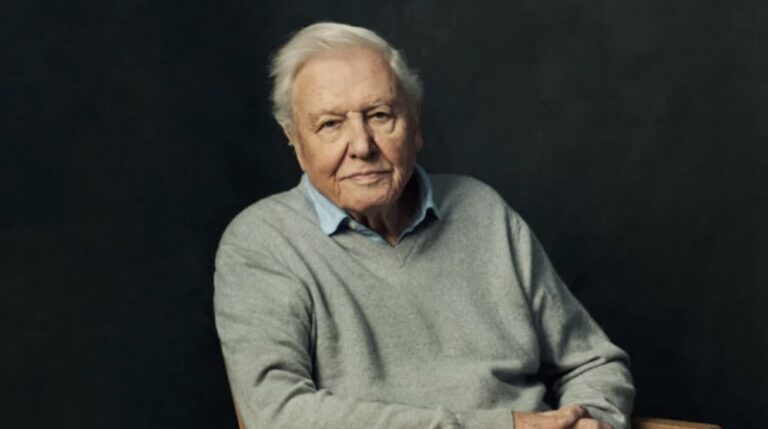
    Sir David Attenborough’s 100th year is proving to be just as remarkable as the career that came before it. The legendary broadcaster and natural historian continues to receive major recognition for his contribution to television and his lifelong work inspiring people to care about the natural world. Attenborough turned 100 on May 8, 2026, reaching the extraordinary milestone after more than seven decades in broadcasting. Rather than slowing down, he has continued to work on new projects while celebrating a century of life filled with exploration, storytelling and environmental advocacy.  His latest recognition comes through two major television award nods. Attenborough has been nominated for a 2026 Primetime Emmy Award, making him the oldest-ever nominee in the history of the awards. He received the nomination for his work as a narrator, adding another remarkable achievement to an already impressive list of honours.  He has also received his first-ever nomination for the National Television Awards. Attenborough is shortlisted in the TV Presenter category alongside well-known names including Ant and Dec, Claudia Winkleman, Alison Hammond and Stacey Solomon. The winners will be announced at the NTA ceremony at London’s O2 Arena on September 8.  The recognition comes during an especially busy year for the broadcaster. Several projects have been released to celebrate his centenary, including Wild London, Secret Garden and A Gorilla Story. The latter sees Attenborough return to the story of gorillas he first encountered while filming Life on Earth in Rwanda decades ago.  His 100th birthday was also marked with a major celebration at London’s Royal Albert Hall. The BBC event brought together musicians, celebrities and environmental figures to honour his extraordinary contribution to television and natural history. Attenborough said he had expected to celebrate quietly but was overwhelmed by the enormous number of birthday messages he received.  Institutions around the world have also joined the celebrations. Kew Gardens praised his lifelong commitment to plants, fungi and biodiversity, while the Natural History Museum named a newly discovered parasitic wasp Attenboroughnculus tau in his honour.  Attenborough’s influence extends far beyond television awards. Through programmes such as Life on Earth, Blue Planet and Planet Earth, he has helped generations understand the beauty and fragility of the planet. At 100, his latest nominations show that his voice and influence remain as powerful as ever. His extraordinary year is not simply a celebration of age, but a reminder of a lifetime spent bringing the wonders of nature into people’s homes.

  • | |

    President approves Nishan-i-Imtiaz for Strategic C…

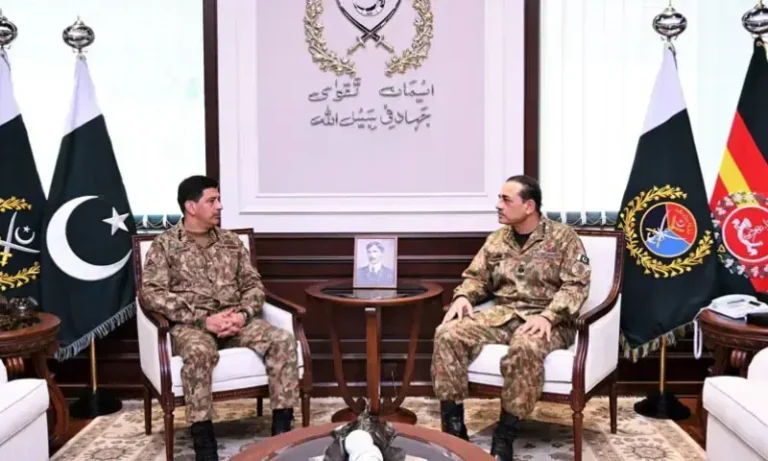
    President Asif Ali Zardari has approved the conferment of the Nishan-i-Imtiaz (Military) on General Syed Aamer Raza, the newly appointed Commander of the National Strategic Command (NSC). The announcement was made by the President’s Secretariat through a post on X, stating that the country’s highest civilian office had endorsed the prestigious military honour for General Raza in recognition of his distinguished service. General Raza has previously received the Hilal-i-Imtiaz (Military) and the Sitara-i-Basalat, reflecting a career marked by operational leadership and professional excellence. His latest recognition comes shortly after his promotion to the rank of four-star general and appointment as Pakistan’s first Commander of the National Strategic Command. The position was created as part of the sweeping reforms introduced under the 27th Constitutional Amendment, which reshaped the country’s higher defence structure. Under the new framework, the office of the Chairman Joint Chiefs of Staff Committee was abolished and replaced by the position of Chief of Defence Forces, a role currently held concurrently by Field Marshal Asim Munir as Chief of Army Staff. The National Strategic Command serves as the unified operational headquarters for Pakistan’s strategic forces, bringing together the strategic commands of the Army, Navy and Air Force under one command. Despite this restructuring, the National Command Authority, chaired by the prime minister, remains the country’s highest decision-making body on nuclear policy and strategic employment. General Raza was appointed to the post by Prime Minister Shehbaz Sharif on the recommendation of the Chief of Defence Forces. As provided under the amended Army Act, the appointment carries a three-year tenure. Before assuming his new responsibilities, General Raza served as Chief of General Staff, where he supervised key operational planning and played a central role in implementing military reforms introduced after the constitutional changes. He also oversaw organisational restructuring following last year’s conflict with India, including the establishment of the Army Rocket Force Command. Commissioned into the 6th Lancers in 1988 after graduating from the Officers Training School (OTS), General Raza has held several important command and staff appointments throughout his military career. These include commanding an armoured regiment, an armoured brigade, an infantry brigade in South Waziristan, an infantry division and Lahore’s IV Corps. He has also served as Chairman of Heavy Industries Taxila, Director General Weapons and Equipment, and Chief of Staff at II Corps.

  • | |

    DI Khan church still guards colonial memories

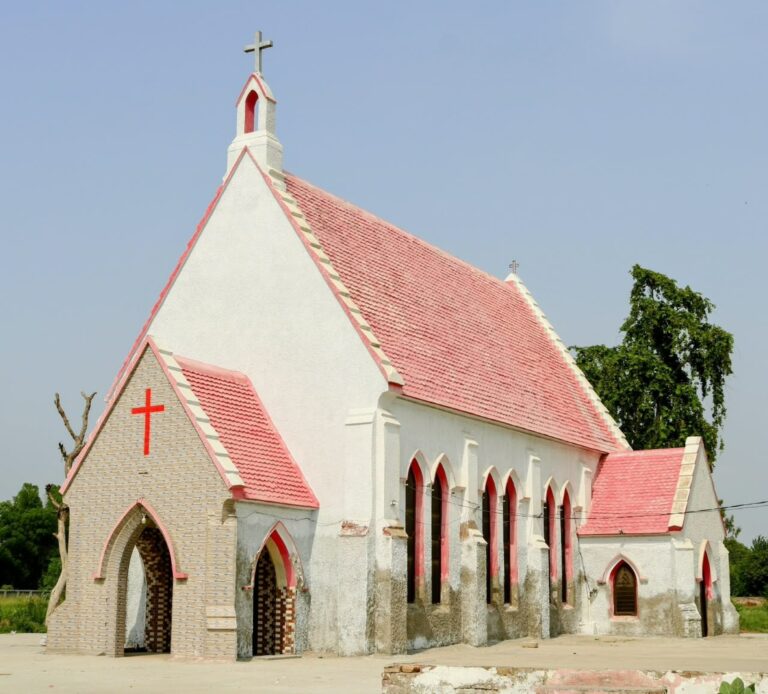
    There are some places we pass every day without realising how much history they hold. They remain untapped until some visitors put their eyes on them. During summer vacations, I travelled to Dera Ismail Khan, a district situated in southern Khyber Pakhtunkhwa. It takes six hours from Lahore to arrive in this historic city. During my stay there, I came across one such place that immediately captured my attention, and I thought to write about it. It was St Thomas Church, sacred place of worship for Christian community. A large cross standing at the entrance, old rusty walls, and an ambience of spiritualism. But the Church showcased more than that. Its walls contain historical accounts of colonial past, the military campaigns led by British soldiers in this area and a grave of one Lieutenant Governor of Punjab.   St Thomas Church was built in 1856 during British rule in the Indian subcontinent. It is one of the oldest churches in present-day Pakistan. It has survived political changes, the Partition of 1947, and the passing of time. Even today it stands as a symbol of the rich and diverse heritage of Dera Ismail Khan. The church is not only a place of worship but also a reminder that different faiths and communities have long been part of the history of this region. As we walked inside, we met the old priest and caretaker of the church named Chand. He welcomed us warmly and narrated the remarkable history of this place. There are memorials of British soldiers who lost their lives in this region during military campaigns. The priest stood in front of each tablet inscribed on the church wall and briefed about it. One memorial narrates the names, ranks and units of one hundred and 69 British military officers and other ranks who were killed or died due to injuries or disease in Waziristan military campaigns launched between 1919 to 1921.     Another memorial lists details of sixty-eight officers and other ranks who met a similar fate during the 1936-1938 Waziristan military campaigns. Similarly, one tablet erected by friends and fellow officers mourns the death of Herbert Walter Gee, ICS, deputy commissioner of Dera Ismail Khan, who died in 1901. There are other memorials as well, erected by colleagues in memory of the fallen officers. I thought that these names contain historical accounts year by year about what happened in this part of the world at that time. Every sentence of the Priest carried a new story, such as how the church has witnessed a lot of happenings through generations and that it still serves the small Christian community living in Dera Ismail Khan. As we stepped outside, believing our visit had come to an end, the priest said, “Wait. I have to show you one more thing.” He took me to the back of the building, where I saw a large white grave standing quietly among the dusty bushes. Here rests Lieutenant General Sir Henry Marion Durand (1812-1871). Durdand – a quite familiar name for the people of Pakistan and Afghanistan. Sir Durand was a career British military officer, diplomat, and administrator. He served in the East India Company Army, took part in several military campaigns, and later became the Lieutenant Governor of Punjab from 1870 to 1871. His son Sir Mortimer Durand is the one who drew the contours of the border between British India and Afghanistan in 1893. A man who once held such an important position now lies in silence behind an old church, while many people living nearby are unaware that his grave even exists. Henry Marion Durand died in 1871 at the age of 58 from a tragic accident. He was visiting Nawab of Tank Shahnawaz Khan along with his daughter when he fell from an elephant. The elephant was passing through the gateway by the town of Tank with the Nawab on the same elephant and an official (Chaprassy). The gate was too low to cross an elephant with howdah. The howdah struck the walls of crossing and the elephant got frightened resulting in the fall of Durand. He remained unconscious for a few days and never recovered. He was buried beside St. Thomas’ Church in Dera Ismail Khan. The British suspected some conspiracy into this incident. One of descendent of Nawab Shahnawaz Khan says that The British launched an enquiry into it. But the daughter of Durand gave testimony in favour of the Nawab that it was just an accident and there was no fault on his part. However, as a punishment, the British authorities stripped the powers of Nawab Shahnawaz Khan in 1875 and sent him to Lahore under strict watch. He passed away in 1881 while under surveillance. Standing beside the grave of Sir Henry Durand, I felt as if I had stepped into a forgotten chapter of history. The name engraved on the stone reminded me that many important events and personalities of the past remain connected to places that we often overlook. How easily history can fade from people’s memories, even when it is standing right in front of us. As I left St Thomas Church, I felt that I had walked through a chapter of history that few people ever get to read. Sir Henry Durand ruled Punjab from this soil, and his son later sat across a table in Kabul and drew the line that still separates Afghanistan and Pakistan today. That line appears in newspapers and political debates all the time. Yet the grave of the man whose name it carries lies quietly behind a church in Dera Ismail Khan.

  • | |

    Zelensky removes army chief Syrskyi after week of …

    Ukrainian President Volodymyr Zelensky has dismissed the country’s commander in chief, Oleksandr Syrskyi, just days after removing popular Defence Minister Mykhailo Fedorov in a move that triggered widespread street protests across Ukraine. Early speculation that Fedorov’s removal stemmed from tension between him and Syrskyi was soon confirmed. Fedorov, 35, has drawn broad praise for reenergizing the defence ministry, driving reforms across the armed forces and pushing an anti corruption campaign. Syrskyi, 60, has been viewed by many in Ukraine as a Soviet trained commander resistant to sweeping changes within the military. In a farewell message posted on Telegram, Syrskyi defended his record, noting that the army he led through a difficult defensive campaign two years ago now stands on the offensive. He said he was handing over to his successor a force that is not just holding ground but advancing, and expressed hope that the offensive would continue. Zelensky named Mykhailo Drapatyi, 43, a popular and battle tested general, as Syrskyi’s replacement. Drapatyi said on Facebook that he would approach the role with full focus, responsibility and respect for those currently defending the country. He also thanked Syrskyi for his consistent work strengthening the Ukrainian army, saying he had grown up within it professionally. In a video posted late Tuesday, Zelensky thanked Syrskyi for his military leadership, including his role defending Kyiv during the earliest days of Russia’s full scale invasion in 2022. Zelensky also said he met with Fedorov earlier that day and offered him a worthy position within the government, though he did not specify whether Fedorov had accepted. Fedorov had been replaced last week by Yevhenii Khmara, a former senior official at Ukraine’s Security Service. Zelensky said all decisions would be formalized the following day. Fedorov congratulated Drapatyi on his new role, describing the appointment as a new source of hope in the broader fight of free people for freedom and justice, and calling it the voice of change that could no longer be ignored. Fedorov also said he called Syrskyi personally to thank him for defending the Kyiv region and for other significant battles, while adding that Ukraine needs to move even faster and correct past mistakes. Fedorov had only taken over as defence minister in January but quickly earned praise for using data driven analysis to improve battlefield performance. A former minister of digital transformation, he built a volunteer cyber unit known as the IT Army of Ukraine early in the full scale invasion. He later led a successful fundraising initiative called the Army of Drones and introduced elements of gamification into the war effort, creating a system that rewarded Ukrainian military units with credits for striking Russian targets. Fedorov’s removal sparked six days of widespread protests, placing mounting pressure on Zelensky to dismiss Syrskyi. Zelensky appeared to respond to that pressure by replacing him with Drapatyi, viewed as a younger and more innovative commander who is also considered a close friend of Fedorov’s. Fedorov’s clear support for Drapatyi’s appointment is likely to help ease the political tension that built up over the past week. Acting Defence Minister Khmara remains in his position for now, with Zelensky asking him and Drapatyi to develop a new defence strategy addressing issues including reform of the military corps system, weapons supply and drone capabilities. In an op-ed published Monday on the Militarny website, Syrskyi described his relationship with Fedorov as strictly professional and offered an apology if he had offended him. He said decisions surrounding military contracts, procurement and mobilization involve far more complexity than most people recognize, arguing that real progress, not public drama, ultimately determines the outcome of the war. Protesters are expected to continue pushing for Fedorov’s return to a position of genuine authority where he can keep driving innovation in Ukraine’s fight against Russia. Should that happen, Zelensky may succeed in repairing much of the immediate political damage, though many Ukrainians remain unlikely to forgive what they viewed as his original misstep in removing Fedorov in the first place.

  • | | |

    Pakistan to lead new Turkey-Saudi defence pact

    ISLAMABAD: Pakistan is set to take the first three-year leadership of a new secretariat established under the defence agreement signed by Pakistan, Türkiye and Saudi Arabia in Makkah on Aug 7, giving Islamabad a prominent role in coordinating the emerging regional security framework. According to Turkish and international media reports, the secretariat will serve as the central mechanism for implementing decisions taken by the three countries and coordinating their growing defence cooperation. After Pakistan’s initial three-year term, leadership is expected to pass to Saudi Arabia and then Türkiye. The agreement is built around a collective-security principle under which an armed attack against one member would be regarded as an attack against all three. However, unlike NATO’s automatic response mechanism, the pact leaves the nature of any response to be determined according to the circumstances and the request of the affected country. A high-level council comprising foreign and defence ministers as well as military chiefs is also expected to oversee the arrangement. The council is expected to meet twice a year, while cooperation could range from intelligence sharing and logistics to direct military assistance when required. The partnership also places a strong emphasis on defence technology. The three countries plan to expand cooperation in unmanned systems, electronic warfare and artificial intelligence, alongside joint military exercises designed to improve coordination among their armed forces. Joint defence production, research and technology transfer are also part of the broader framework. For Pakistan, the first leadership term could prove strategically significant. Islamabad already maintains longstanding defence ties with both Ankara and Riyadh, and its role at the secretariat could give it greater influence in regional security diplomacy. Türkiye has stressed that the agreement is defensive and is not directed against any particular country. Turkish Foreign Minister Hakan Fidan said the pact is intended to strengthen regional security rather than replace existing alliances. With the Middle East facing continued instability, the new arrangement could become an important test of how effectively three regional powers can turn political solidarity into practical defence cooperation.

Leave a Reply

Your email address will not be published. Required fields are marked *