vantage point philwebs
| | | | | | | |

[Vantage Point] Philweb’s risky bet on JKS, and why it must put cards on the table

PhilWeb Corporation says its investment in JKS Tech Solutions will restore its balance sheet. Its filings instead reveal an almost peso-for-peso round-trip of funds, an unexplained P2.88-billion funding gap, and a valuation that cannot yet be independently verified.

The company believes it has found the antidote to an ailing financial snapshot. The gaming-technology firm — saddled with negative equity of P193.48 million against just P548.46 million in assets as of June 30 — is acquiring a 30% stake in JKS Tech Solutions Inc. for P4.226 billion. To put that in perspective, the planned investment is 7.7 times the size of PhilWeb’s entire asset base.

Management frames the transaction as an “immediate balance sheet restoration,” pitching it as a clean way to monetize dormant treasury shares, lift the drag on equity, and gain immediate exposure to a profitable digital-infrastructure player.

Before popping the champagne, however, investors need clarity on three fronts: where the cash is actually coming from, what PhilWeb is truly buying, and how an enterprise that launched its current commercial operations only in February managed to command an implied P14.1-billion valuation.

The deal’s first leg raises the most eyebrows. 

Under the agreement, JKS buys 81.38 million PhilWeb treasury shares at P16.50 each, totaling P1,342,783,068. In turn, PhilWeb subscribes to 3.41 million JKS Common B shares for P1,342,783,126. The net difference between those massive sums is exactly P58.

The payment schedules match this mirror-image design. At the initial closing, JKS remits P335,695,783.50 to PhilWeb, which promptly wires back P335,695,781.50, a nominal P2 variance. 

At the second closing, the respective tranches are P1,007,087,284.50 and P1,007,087,344.50, swinging just P60 in JKS’s favor. Across both rounds, a net total of P58 actually shifts hands to JKS.

Cross-investments are not inherently suspect. When the dust settles, JKS ends up with roughly 4.85% of PhilWeb, while PhilWeb and its subsidiary secure 30% of JKS. 

Who actually owns and controls JKS?

But dressing this arrangement up as the simple monetization of treasury shares masks its economic substance: almost every single peso JKS pays out is scheduled to circle straight back into its own coffers as subscription capital.

On paper, the accounting treatment still flatters PhilWeb’s equity. Because treasury shares are booked as a deduction against net worth, reissuing them erases that drag, while any excess over historical cost flows into additional paid-in capital.

PhilWeb then replaces the fleeting cash with an equity investment in JKS. The balance sheet certainly emerges looking fortified, but the company has neither generated P1.34 billion from operations nor retained a cent of that cash. In essence, it traded its own paper for a piece of the entity buying it.

This dynamic becomes all the more vital against PhilWeb’s existing shareholding structure. 

Crisanto Roy Alcid beneficially controls 497.74 million shares (31.2%) via Nexora Holdings Inc., while Baiji Yang holds 331.83 million shares (20.8%) through Velora Holdings Inc.

Together, Nexora and Velora command a decisive 52% majority. Chairman Lance Gokongwei holds a 10% direct stake through 159.53 million common shares, with 93.84 million convertible preferred shares that could lift his ownership to around 15%. Edgar Brian Ng continues at the helm as president. 

While JKS is slated to join this roster as a major stakeholder, PhilWeb’s regulatory filings remain conspicuously silent on who actually owns and controls JKS.

The far heavier question, however, hangs over the second tranche. 

Wholly owned PhilWeb Capital Corporation is lined up to subscribe to an additional 7.32 million JKS shares for P2.883 billion, starting with an initial payout of P180.21 million followed by P2.703 billion once the Securities and Exchange Commission (SEC) approves JKS’s capital increase.

How PhilWeb plans to shoulder that commitment is anyone’s guess. As of June, the company carried just P265 million in current assets against P586.87 million in short-term liabilities, with total obligations reaching P741.95 million.

Yet despite labeling the transaction a “zero-debt capital reallocation,” the disclosure never clarifies where this fresh P2.883 billion will originate. Will it require an aggressive secondary share sale, a fresh capital injection, an asset fire sale, internal advances, or third-party debt that has yet to see the light of day?

Aggressive valuation

Then comes the question of JKS’s price tag. PhilWeb asserts that the P394 subscription price represents a “highly accretive, single-digit” price-to-earnings multiple based on JKS’s annualized run rate. 

But that claim stands in an informational vacuum: the disclosures offer zero data on historical revenue, bottom-line net income, operating cash flow, customer concentration, or audited first-half numbers.

The arithmetic behind this valuation is undeniably aggressive. Paying P4.226 billion for a 30% slice values JKS in its entirety at P14.09 billion. For that entry multiple to sit comfortably below 10 times earnings, JKS would need to generate an annualized net profit north of P1.41 billion—a staggering run rate for an enterprise whose commercial revenue engine fired up only seven months ago.

Consider, too, where JKS started. The firm reported just P25 million in paid-up capital across 250,000 shares at a P100 par value. A proposed par-value split to P1 appears designed to multiply those into roughly 25 million shares. 

Adding PhilWeb’s 10.73-million-share subscription brings the expanded base right in line with the target 30% stake. At P394 per share, the founders’ post-split equity suddenly carries a paper value of roughly P9.85 billion.

That sudden surge does not automatically mean JKS is overvalued. Historical paid-in capital rarely captures economic worth, particularly for a software and technology outfit whose franchise value rests on proprietary code, contracts, and recurring revenue streams. 

But it underscores precisely why public shareholders are entitled to audited statements, independent appraisal reports, and the real identities of the individuals reaping that windfall.

PhilWeb must put its cards on the table. That means identifying JKS’s ultimate beneficial owners, spelling out Common B share rights, opening up audited financials, and substantiating its aggressive earnings claims.

Above all, it must clarify where PhilWeb Capital will find P2.883 billion in cash and provide a clear pro forma balance sheet tracing every cent of this mirror-image trade.

Authentic balance-sheet restoration cannot be engineered on paper alone; it takes resilient capital, proven profitability, and real liquidity. 

Until PhilWeb reveals the funding source for the P2.88-billion tranche, unmasks the players behind JKS, and substantiates its P14.1-billion valuation, investors are being asked to endorse a miracle before seeing any proof. 

This analysis draws from PhilWeb’s PSE EDGE disclosures: Sept. 9 substantial-acquisition filing; Sept. 7 treasury-share sale; amended Sept. 8 JKS subscription filing; June 30 quarterly report; Alcid–Nexora beneficial-ownership filing; Yang–Velora beneficial-ownership filing; Gokongwei subscription disclosure; Aug. 27 board-change filing.

I welcome your views on these and other issues where decisions made in power shape the country’s economic future. – Rappler.com

Below are some Vantage Point pieces you might have missed:

Click here for other Vantage Point articles.

Similar Posts

  • | |

    Pakistan exports rise 13.1% to $3.94 billion in Ju…

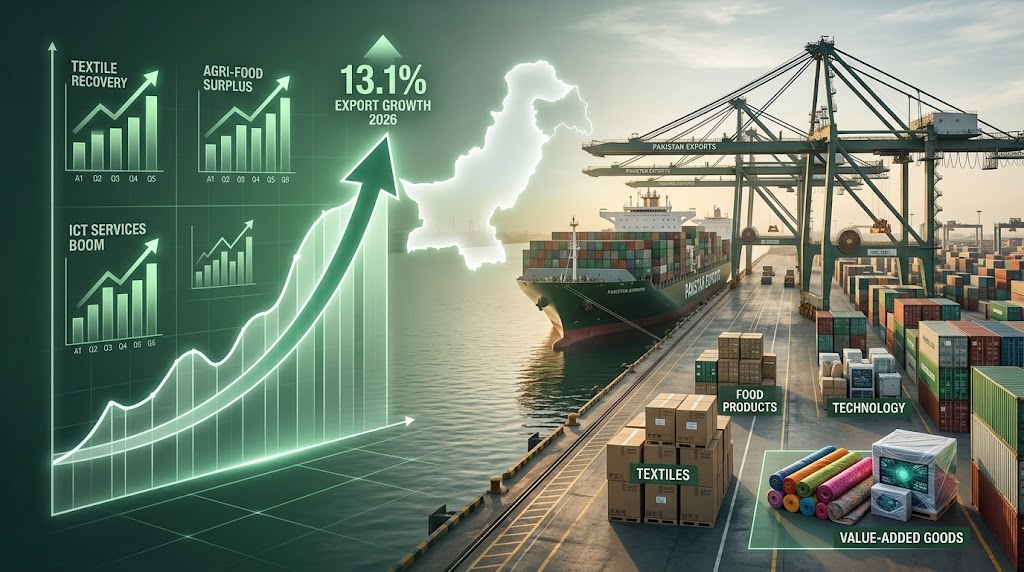
    ISLAMABAD: Pakistan’s exports of goods and services rose by 13.1 percent year-on-year to $3.94 billion in July 2026, providing an encouraging start to the new fiscal year and signalling continued improvement in the country’s external sector. Federal Minister for Planning, Development and Special Initiatives Ahsan Iqbal shared the figures on Saturday while presenting the Monthly Development Update for August 2026. He said exports stood at $3.48 billion in July 2025, meaning the latest increase reflects stronger performance across several major export categories. According to the minister, merchandise exports increased by 9.4 percent to around $3 billion in July 2026 from $2.8 billion a year earlier. When services exports are included, the combined figure reached approximately $3.9 billion, compared with $3.5 billion in July last year. Key export sectors show growth Ahsan Iqbal said the improvement in exports was supported by higher shipments across several important sectors. Surgical goods recorded the strongest growth among the highlighted export groups, increasing by 16.3 percent. Food exports rose by 8 percent, while leather goods registered growth of 7.8 percent. Textile exports, one of Pakistan’s largest sources of foreign exchange, also increased by 3.9 percent during the month. The minister said the figures indicated that Pakistan’s external sector had started the new fiscal year on a positive trajectory, although maintaining this momentum would require continued reforms, improved competitiveness and greater diversification of export products and markets. Manufacturing sector stages strong recovery The positive external-sector performance coincided with a broad-based recovery in domestic industrial activity. According to Ahsan, Large-Scale Manufacturing (LSM) expanded by 5 percent during fiscal year 2025-26, reversing a 0.74 percent contraction recorded in the preceding fiscal year. He said the recovery was spread across the industrial sector, with 16 of the 22 LSM sectors registering positive growth. The automobile sector posted the highest increase at 57.8 percent, followed by transport equipment at 42.4 percent. Electrical equipment production grew by 14.3 percent, tobacco by 12.6 percent and food manufacturing by 7 percent. The figures, he said, reflected an improvement in industrial activity and could provide support to investment, employment and overall economic growth if the recovery remains sustained. FBR collection, remittances improve The government also reported improvement in tax revenues at the beginning of FY2026-27. Federal Board of Revenue tax collection increased by 8.4 percent to Rs820.9 billion in July 2026, according to the minister. He said stronger revenue mobilisation, together with fiscal discipline, was helping improve the country’s overall financial position. Workers’ remittances also remained a major source of support for Pakistan’s external account. Remittance inflows reached $3.63 billion in July 2026, up 13 percent from approximately $3.2 billion in the same month of 2025. Ahsan said the latest increase followed record remittances of $41.6 billion received during the previous fiscal year. He noted that remittances not only strengthened Pakistan’s foreign exchange position but also provided direct financial support to millions of households across the country. Current account deficit remains contained Despite continued pressure on the external account, the current account deficit remained relatively contained. The deficit stood at $328 million in July 2026, compared with $529 million during the same month of the previous year. The minister described the development as another indication of improved external-sector stability. He also highlighted the growing contribution of Pakistan’s technology sector. Information and Communication Technology exports reached $417 million in July 2026, underlining the increasing role of digital services in generating foreign exchange. The government has been seeking to expand technology exports as part of a broader strategy to diversify Pakistan’s sources of external earnings beyond traditional sectors such as textiles and agricultural products. Inflation moderates Ahsan Iqbal also pointed to a moderation in consumer price pressures at the start of the new fiscal year. Consumer Price Index inflation eased to 9.2 percent in July 2026, compared with 11.7 percent in May 2026. The minister said the decline suggested that inflationary pressures were beginning to moderate. He added that changes in the year-on-year inflation rate were also influenced by base effects as well as the impact of international food and energy prices. The government is aiming to maintain price stability while supporting economic activity and protecting the purchasing power of households. Fiscal position strengthens The planning minister said Pakistan’s fiscal position had also improved significantly during FY2025-26. The fiscal deficit narrowed to 2.6 percent of GDP from 5.4 percent in FY2024-25. According to Ahsan, this represented the lowest fiscal deficit recorded in two decades. He said stronger fiscal management would remain essential during FY2026-27 as the government seeks to maintain macroeconomic stability while creating room for development spending and economic expansion. Development spending and job creation Public investment is another major component of the government’s economic strategy. Projects approved during July 2026 are expected to create around 7,851 direct jobs and 14,053 indirect employment opportunities across different sectors. The minister said employment generation would remain an important objective of development planning, particularly as the country seeks to create greater opportunities for its young population. He said Pakistan had undergone a difficult period of economic adjustment and that the stability achieved in recent years had required significant effort. Under the government’s URAAN Pakistan initiative, the next phase would focus on converting macroeconomic stability into long-term economic transformation, with exports positioned as a key driver of growth. According to Ahsan, higher exports could help generate employment, increase household incomes, expand opportunities for young people and improve living standards. Rs211.3 billion authorised for development projects The Ministry of Planning authorised Rs211.327 billion, equivalent to 21.1 percent of the relevant allocation, during July 2026 to facilitate timely financing for priority development projects. The minister said the move was aimed at ensuring that strategically important schemes received funding without unnecessary delays. During July, the Central Development Working Party (CDWP) also reviewed a number of development proposals. It approved nine projects, three position papers and one concept clearance proposal, while nine projects were recommended for consideration by the Executive Committee of the National Economic Council (ECNEC). Three projects were deferred, while

  • The Lord Of The Rings: The Third Age Would Thrive With a Remaster Now More Than Ever

    The Lord of the Rings has expanded a lot over the years, but it’s been years since the franchise had its golden age of video games. While games like Shadow of Mordor and Gollum have shown just how vast the gulf of quality can be in these tie-ins in the last decade, the period surrounding […]

Leave a Reply

Your email address will not be published. Required fields are marked *