viral video highlights

Viral video highlights risky school route in India

Millions of children around the world go to school every day but for some simply reaching the classroom can be a dangerous journey.

In India a viral video has raised concerns after showing schoolchildren taking a highly risky route to get to school in Madhya Pradesh’s Vidisha district.

The students reportedly have to jump across a river embankment to reach their school while strong water flows below.

The dangerous journey has shocked people on social media and raised serious questions about the safety of the children.

Parents and local residents say there is no safe route for the children to reach school forcing them to take the dangerous path every day.

The situation becomes even more risky during the rainy season when the water level and flow increase.

Locals have urged the authorities to inspect the area immediately and provide a safe and permanent route for the students instead of waiting for a tragic accident to happen.

Similar Posts

  • Thieves cook 14 egg omelet before robbery

    In a strange burglary case from India’s Rajasthan state thieves surprised police by stopping to cook and eat a 14 egg omelet before stealing valuables from a house. According to Indian media reports the burglars broke into an empty home and stole an LED TV cash and jewelry worth thousands of dollars. Before leaving they went into the kitchen cooked a large omelet using 14 eggs and ate it. Police said the house belongs to Harjit Singh who was in Mumbai with his family for cancer treatment when the burglary happened. The thieves searched the house and left many rooms in a mess before escaping with the stolen items. Officers reached the scene after receiving a report and started an investigation. Since the family is still in Mumbai police have not yet confirmed the full list of stolen items or the total financial loss. A police official added that the neighborhood had a private security guard but the thieves managed to enter the house without being caught.

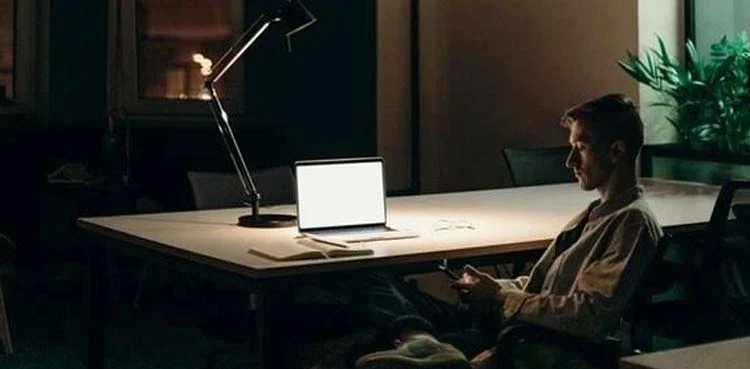
  • Night shifts harm mental health

    A new study suggests that working night shifts may have a negative effect on mental health.  People who work at night may experience more stress anxiety and depression than those who work during the day. Researchers reviewed seven previous studies involving 28,438 people.  They looked at the participants working hours and mental health and found that night-shift workers were more likely to experience symptoms of depression and anxiety. According to the findings around 33% of people working night shifts showed signs of depression or anxiety compared with those working daytime shifts. Luciana Torquati from the University of Exeter who led the study explained that night work can disturb the body’s natural clock. Our bodies are designed to sleep at night and stay active during the day so working against this natural pattern can affect sleep and mood. Poor sleep and an irregular routine may also cause irritability and mood changes. Night shift workers may feel lonely or disconnected from others because their work schedule can make it harder to spend time with family and friends. The study also reported that night shift work may have a stronger negative effect on women’s mental health than on men’s. Overall the research suggests that working at night may affect not only sleep but also a person’s mood relationships and overall mental well being.

  • Smart uses for leftover cooking oil

    After frying puris pakoras, or other foods leftover oil is often thrown away. If the oil has been heated many times it may no longer be safe for cooking, especially if its color smell or taste has changed. Instead of wasting it you can use old cooking oil for some simple household tasks. Remove sticky stickers A few drops of oil can help loosen stubborn stickers and labels from plastic glass or steel items. Apply a little oil to the sticker leave it for a few minutes and then gently peel it off. Loosen rusty nuts and bolts If a rusty nut or bolt is stuck put a few drops of leftover oil around the joint. Wait for a while and then try to loosen it.  The oil can reduce friction and make the job easier. Add shine to wooden furniture You can use a small amount of oil to give old wooden furniture a fresh look. Put a little oil on a soft cloth gently rub the wood and then wipe it with a clean dry cloth. Always test the oil on a small hidden area first to make sure it does not damage the wood. Polish leather items Leftover oil can sometimes be used to add shine to leather shoes bags or decorative items.  Apply only a very small amount and wipe it gently. However, not all types of leather react well to oil, so test it on a hidden spot first. Stop squeaky doors and windows If a door or window makes a squeaky sound put a few drops of oil on its hinges.  This can reduce friction and help make the noise quieter. Store leftover oil safely Before using leftover oil for household tasks strain it to remove food particles. Store it in a clean dry airtight jar. Do not use the oil if it smells bad becomes very dark or shows any unusual changes. It is also better to avoid repeatedly using the same oil for cooking or frying.

  • The Kinship Conundrum: Tradition vs. Compatibility in Cousin Marriages

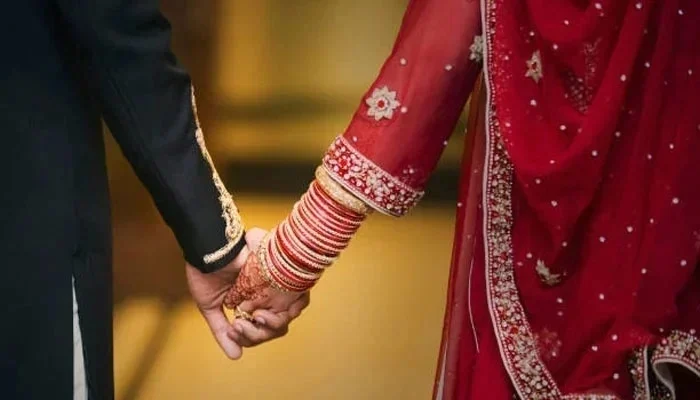
    While cousin marriage often offers a sense of cultural continuity, it frequently introduces complex emotional, financial and relational challenges that can strain familial bonds. In many traditional settings couples grow up together and are engaged at an early age. However this deep familiarity can sometimes work against the union.   Because the groom is already a member of the same extended family there is often less structural or financial obligation such as a substantial dowry or independent financial planning which can lead to early imbalances in the household.   Over time these unions can give rise to deep seated regret between both parties. Paradoxically while the shared family network is originally intended to keep the couple together it can also inadvertently lower the barrier to divorce as broader familial disputes quickly spill over into the marriage itself.   Ultimately cousin marriage represents a delicate conflict between cultural tradition and individual happiness. While it may appear socially practical from the outside it often masks fundamental incompatibilities between partners who were chosen for their lineage rather than their personal alignment. For these marriages to endure families must pivot away from rigid customs and instead prioritize open communication mutual compatibility and emotional well-being.   A bond sustained solely by kinship rarely stands the test of time proving that personal alignment must ultimately take precedence over tradition.

  • | |

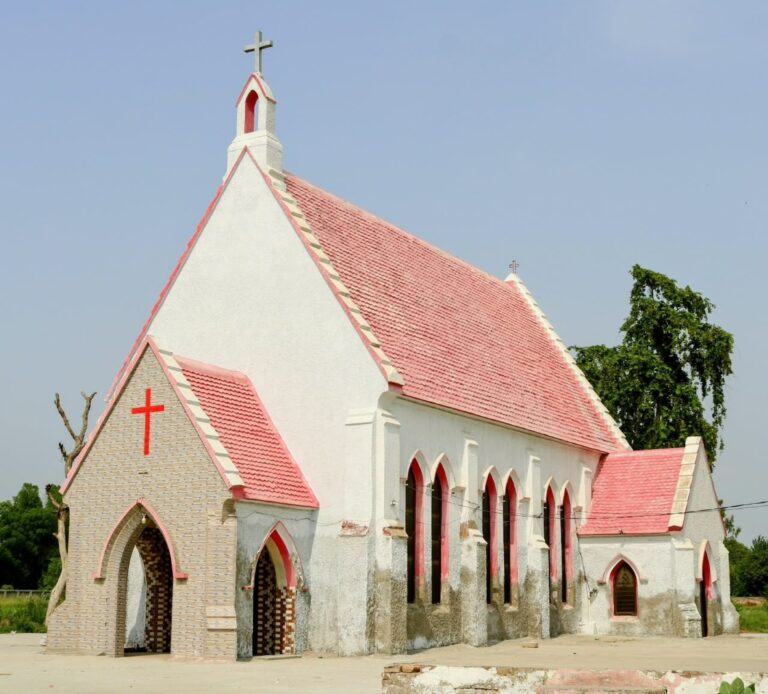
    DI Khan church still guards colonial memories

    There are some places we pass every day without realising how much history they hold. They remain untapped until some visitors put their eyes on them. During summer vacations, I travelled to Dera Ismail Khan, a district situated in southern Khyber Pakhtunkhwa. It takes six hours from Lahore to arrive in this historic city. During my stay there, I came across one such place that immediately captured my attention, and I thought to write about it. It was St Thomas Church, sacred place of worship for Christian community. A large cross standing at the entrance, old rusty walls, and an ambience of spiritualism. But the Church showcased more than that. Its walls contain historical accounts of colonial past, the military campaigns led by British soldiers in this area and a grave of one Lieutenant Governor of Punjab.   St Thomas Church was built in 1856 during British rule in the Indian subcontinent. It is one of the oldest churches in present-day Pakistan. It has survived political changes, the Partition of 1947, and the passing of time. Even today it stands as a symbol of the rich and diverse heritage of Dera Ismail Khan. The church is not only a place of worship but also a reminder that different faiths and communities have long been part of the history of this region. As we walked inside, we met the old priest and caretaker of the church named Chand. He welcomed us warmly and narrated the remarkable history of this place. There are memorials of British soldiers who lost their lives in this region during military campaigns. The priest stood in front of each tablet inscribed on the church wall and briefed about it. One memorial narrates the names, ranks and units of one hundred and 69 British military officers and other ranks who were killed or died due to injuries or disease in Waziristan military campaigns launched between 1919 to 1921.     Another memorial lists details of sixty-eight officers and other ranks who met a similar fate during the 1936-1938 Waziristan military campaigns. Similarly, one tablet erected by friends and fellow officers mourns the death of Herbert Walter Gee, ICS, deputy commissioner of Dera Ismail Khan, who died in 1901. There are other memorials as well, erected by colleagues in memory of the fallen officers. I thought that these names contain historical accounts year by year about what happened in this part of the world at that time. Every sentence of the Priest carried a new story, such as how the church has witnessed a lot of happenings through generations and that it still serves the small Christian community living in Dera Ismail Khan. As we stepped outside, believing our visit had come to an end, the priest said, “Wait. I have to show you one more thing.” He took me to the back of the building, where I saw a large white grave standing quietly among the dusty bushes. Here rests Lieutenant General Sir Henry Marion Durand (1812-1871). Durdand – a quite familiar name for the people of Pakistan and Afghanistan. Sir Durand was a career British military officer, diplomat, and administrator. He served in the East India Company Army, took part in several military campaigns, and later became the Lieutenant Governor of Punjab from 1870 to 1871. His son Sir Mortimer Durand is the one who drew the contours of the border between British India and Afghanistan in 1893. A man who once held such an important position now lies in silence behind an old church, while many people living nearby are unaware that his grave even exists. Henry Marion Durand died in 1871 at the age of 58 from a tragic accident. He was visiting Nawab of Tank Shahnawaz Khan along with his daughter when he fell from an elephant. The elephant was passing through the gateway by the town of Tank with the Nawab on the same elephant and an official (Chaprassy). The gate was too low to cross an elephant with howdah. The howdah struck the walls of crossing and the elephant got frightened resulting in the fall of Durand. He remained unconscious for a few days and never recovered. He was buried beside St. Thomas’ Church in Dera Ismail Khan. The British suspected some conspiracy into this incident. One of descendent of Nawab Shahnawaz Khan says that The British launched an enquiry into it. But the daughter of Durand gave testimony in favour of the Nawab that it was just an accident and there was no fault on his part. However, as a punishment, the British authorities stripped the powers of Nawab Shahnawaz Khan in 1875 and sent him to Lahore under strict watch. He passed away in 1881 while under surveillance. Standing beside the grave of Sir Henry Durand, I felt as if I had stepped into a forgotten chapter of history. The name engraved on the stone reminded me that many important events and personalities of the past remain connected to places that we often overlook. How easily history can fade from people’s memories, even when it is standing right in front of us. As I left St Thomas Church, I felt that I had walked through a chapter of history that few people ever get to read. Sir Henry Durand ruled Punjab from this soil, and his son later sat across a table in Kabul and drew the line that still separates Afghanistan and Pakistan today. That line appears in newspapers and political debates all the time. Yet the grave of the man whose name it carries lies quietly behind a church in Dera Ismail Khan.


  • |

    Marc Padeu is reimagining renaissance masterpieces

    In the global art world, classical European masterpieces have long held a dominant position in defining sacred aesthetics, grand narratives, and historical gravity. However, Cameroonian visual artist Marc Padeu is challenging this historical monopoly by taking the iconic compositions of Old Masters such as Caravaggio, Diego Velázquez, and Titian. He’s transplanting them directly into the lush, everyday landscapes of rural Central Africa. Padeu’s striking large-scale canvases reimagine classic biblical motifs and European artistic traditions against the backdrop of cocoa plantations and rural villages in Cameroon. Far from being a mere imitation of Western techniques, Padeu’s work represents a deliberate re-centering of world history, spiritual heritage, and local identity. A Dual Spiritual and Cultural Inheritance Born and raised in Cameroon, Padeu grew up navigating two distinct spiritual and cultural realities. The formal structure of Catholic devotion and the indigenous customs of Bamiléké animism. This dual background permeates his paintings, where sacred rituals and everyday agricultural labor exist side by side. In Padeu’s compositions, classical Christian iconography such as the baptism of Christ, the martyrdom of saints or solemn biblical gatherings is integrated into scenes of fieldworkers harvesting cocoa pods along riverbanks. Rather than treating these scenes as contradictory, Padeu views them as a natural reflection of human experience. He points out that the original stories of the Bible were ultimately rooted in the lives of ordinary people engaging in daily, unvarnished labor. Extending the Legacy of the Old Masters When Padeu incorporates the compositions, dramatic lighting, and gestures of European Renaissance masters, his objective is not passive homage or simple satire. Instead, he describes his creative philosophy as an extension of the art historical narrative. By placing Black African figures at the center of classical visual compositions, Padeu reframes European iconographic conventions as a shared human language. His paintings suggest that spiritual gravity, dignity and monumental art belong just as naturally to a Cameroonian cocoa harvest as they do to a 16th-century Italian cathedral. The Art of Patience and Global Recognition Padeu’s meticulous process reflects a deliberate rejection of fast-paced contemporary art production: Deliberate Pace: He completes rarely more than ten paintings per year. Long Incubation: Months are spent conceptualizing each piece before a brush ever touches the canvas. Global Reach: His recent solo exhibition in London highlights his growing prominence on the international stage.   Padeu’s ultimate creative ambition is both subtle and transformative. Rather than shaping his art to explain Africa to Western audiences, his goal is to present the wider world through an African lens. His work offers a perspective rooted firmly in the soils, traditions, and realities of Cameroon.

Leave a Reply

Your email address will not be published. Required fields are marked *