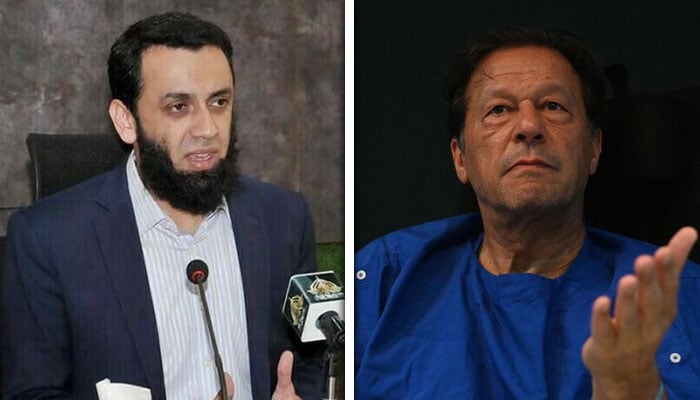
imran khan taken
| |

Why was Imran Khan taken to Pims, not Shifa hospit…

Federal Minister for Information Attaullah Tarar has issued a statement regarding the transfer of Pakistan Tehreek-e-Insaf (PTI) founder and former prime minister Imran Khan from Adiala Jail for medical examination.

Tarar said Imran was taken to hospital between the night of August 20 and 21 under strict security arrangements.

According to the minister, Imran was examined by qualified doctors, including an ophthalmologist, cardiologist and physician. The doctors declared him medically fit, he said.

Tarar clarified that the medical examination was conducted at the Pakistan Institute of Medical Sciences (Pims), where doctors from Shifa International Hospital were also present.

He said Imran was initially scheduled to be taken to Shifa International Hospital. However, PTI workers allegedly created a security situation outside the hospital and along the route, prompting authorities to take him to Pims instead.

The minister said the medical examination at Pims found Imran to be in good health.

Tarar added that Imran’s sister, Uzma Khan, remained present throughout the medical examination and treatment process.

Imran Khan returns to Adiala Jail

After completing the medical examination, Imran was shifted back to Adiala Jail at around 5am on August 21, Tarar said.

The minister maintained that medical facilities had previously been provided to Imran whenever required and that the government would continue to ensure necessary healthcare in the future.

Jail sources also confirmed that Imran had been taken back to Adiala Jail.

According to the sources, he was transported from the hospital to the prison under extremely tight security.

Similar Posts

  • Influencer Pimrypie Takes 10 Million Baht Loss on Durian Sales, Sparks National Debate

    BANGKOK — Popular Bangkok-based influencer Pimradaporn “Pimrypie” Benjawattanapat has accepted losses of more than 10 million baht after staging a 100-baht durian sales campaign aimed at helping Thai farmers clear excess supply, an initiative that has sparked both praise and sharp criticism while igniting a parliamentary debate over agricultural pricing. A Breakthrough Skincare from Young […]

  • Thailand Tightens Cannabis Sales Regulations

    BANGKOK, Thailand — Thailand’s Department of Thai Traditional and Alternative Medicine has implemented stricter controls on cannabis sales following new ministerial regulations that restrict cannabis use exclusively to medical purposes, marking a significant policy shift after four years of regulatory uncertainty since the plant’s decriminalization in 2022. Chinese Man Falls Ill After Trying Cannabis for […]

  • | |

    Nolan’s Odyssey explores the cost of flawed choices

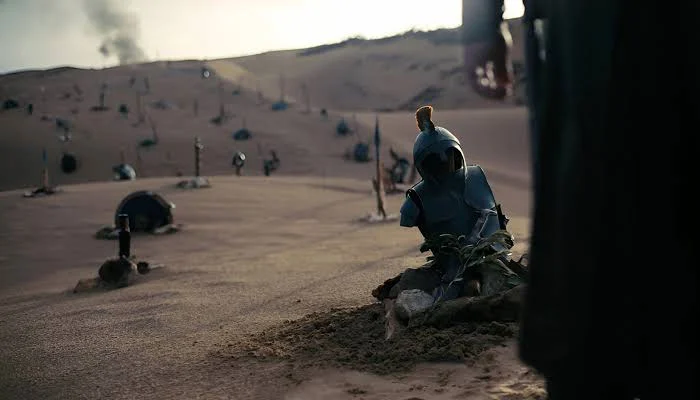
    Christopher Nolan’s The Odyssey explores a character who is far from a conventional hero. Odysseus is brave, intelligent and determined. He is also deeply flawed. That complexity appears to be at the centre of Nolan’s interest in the ancient Greek epic. The nearly 3,000-year-old story follows Odysseus as he attempts to return to Ithaca after the Trojan War. His journey is filled with violence, loss, temptation and encounters with powerful gods and mythical creatures. Yet the film is not simply about a warrior trying to find his way home. It is also about the consequences of his decisions. Odysseus repeatedly makes choices that produce consequences he struggles to control. His actions often begin with understandable motives. Revenge, anger, pride and a desire to protect his men push him into increasingly dangerous situations. His treatment of the Trojans is one example. Odysseus considers himself a man who respects the rules of combat. However, the Trojan War forces him into tactics that contradict his personal principles. The wooden horse becomes the most striking example of this conflict. His deception helps the Greeks defeat Troy, but it also establishes a chain of events that follows him long after the war ends. His encounter with the Cyclops Polyphemus further exposes his weaknesses. Odysseus and his crew manage to escape the Cyclops’ cave. But instead of leaving quietly, Odysseus attacks again. His decision is driven by anger and revenge. The consequences are devastating. Polyphemus calls upon his father, Poseidon, to punish Odysseus. The resulting curse turns the journey home into an extended ordeal. Odysseus continues trying to save his men. However, his efforts repeatedly end in tragedy. One decision leads to another, and the consequences gradually become impossible to contain. His crew members begin to lose faith in their commander. The man determined to bring them home becomes the leader whose decisions ultimately contribute to their deaths. This moral conflict is familiar territory for Nolan. The director has repeatedly built stories around protagonists whose choices carry enormous consequences. Bruce Wayne, for example, attempts to protect Gotham by allowing a dangerous lie surrounding Harvey Dent to survive. The consequences eventually force him to confront the price of that decision. In Oppenheimer, the central character develops the atomic bomb in an attempt to help defeat Nazi Germany. Yet his success leaves him haunted by the destructive power he helped unleash. Dunkirk presents another interpretation of home. For the soldiers trapped on the beaches of France, home represents survival, safety and the possibility of returning with their dignity intact. For Oppenheimer, however, home becomes something more complicated. It represents the peace of mind he can no longer recover after witnessing the consequences of his work. For Odysseus, home is deeply personal. Ithaca represents his family, his kingdom and the identity he lost during two decades away. Returning home is therefore more than reaching a physical destination. His journey changes him. He leaves as a king and eventually returns disguised as a beggar. Along the way, he encounters monsters, hostile forces and divine punishment. He also watches his companions disappear one by one. By the time Odysseus reaches the end of his journey, the question is no longer simply whether he can return home. The bigger question is whether a man who has experienced so much violence can ever truly return as the person he once was. That question sits comfortably within Nolan’s broader storytelling style. His characters often achieve their goals but pay an enormous personal price. Their victories rarely come without consequences. The Odyssey brings that recurring theme to one of its most ancient and powerful forms. Odysseus survives the journey, but survival does not erase what happened along the way. His homecoming becomes a reckoning with the violence, losses and choices that shaped him. Nolan’s interpretation therefore turns the epic into more than an adventure story. It becomes a meditation on guilt, responsibility, identity and the lasting cost of extraordinary choices. At its heart, The Odyssey asks what happens when a man spends years fighting to return home, only to discover that the journey has changed the meaning of home itself.

  • | | | |

    Iran warns Oman deal does not mean Hormuz is fully…

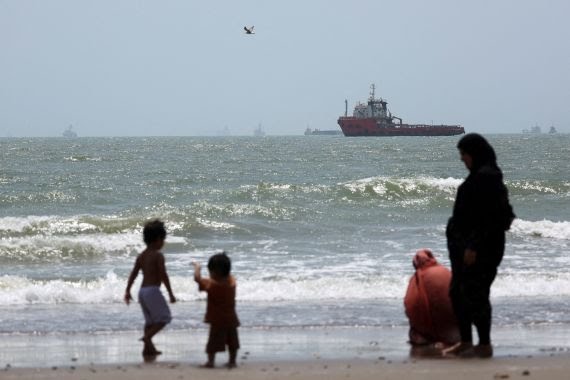
    TEHRAN: Iran has cautioned that its emerging understanding with Oman over the management of the Strait of Hormuz should not be interpreted as a guarantee that the strategic waterway will immediately reopen to normal international shipping. The clarification came after Iran and Oman agreed on a temporary maritime corridor intended to facilitate navigation through the strait. Iranian officials stressed that the arrangement remains limited and does not amount to a full restoration of commercial traffic. Mukhtar Haddad, editor-in-chief of Iran’s Al-Wefaq newspaper, told Arab media that Tehran and Muscat had been discussing the management of the waterway for some time. He said the talks could lead first to a temporary agreement and eventually to a permanent arrangement, but neither step should automatically be seen as a decision to fully restore shipping. Iranian Deputy Foreign Minister Kazem Gharibabadi also sought to temper expectations, saying Tehran and Muscat had agreed on a new temporary route but that the understanding did not mean the strait would be completely and immediately reopened. Gharibabadi said Iran remained in a state of war and had made clear to mediators that conditions during an armed conflict could not be treated in the same way as normal circumstances. He added that the United States would need to fulfil its obligations under an earlier memorandum of understanding before Iran considers fully reopening the waterway. Under the joint Iranian-Omani framework, the proposed maritime corridor would be temporary. Russian media reported that vessels entering the Persian Gulf would pass through Iranian waters, while ships returning from the Gulf would use Omani waters. The reported corridor would operate like a two-way maritime route and have a width of about 11.25 kilometres. Iran and Oman are expected to hold further negotiations over the next 30 to 60 days to discuss the possibility of establishing a permanent navigation arrangement. The developments come as the Strait of Hormuz remains at the centre of a wider regional security crisis. The waterway is one of the world’s most important energy routes, connecting the Persian Gulf with the Gulf of Oman and the Arabian Sea. US President Donald Trump, meanwhile, claimed that the US Navy had removed or neutralised all mines in international waters of the Strait of Hormuz. He warned that any vessel that attempted to lay new mines would be destroyed. Despite the temporary corridor agreement, Iran’s latest statements underline that a complete reopening of Hormuz remains a separate and politically sensitive issue. For shipping companies and global energy markets, the distinction could prove crucial: a limited navigation arrangement may ease some pressure, but it does not yet signal a return to normal maritime traffic.

  • | |

    Perez Hilton’s brother-in-law shares update on his physical and mental health

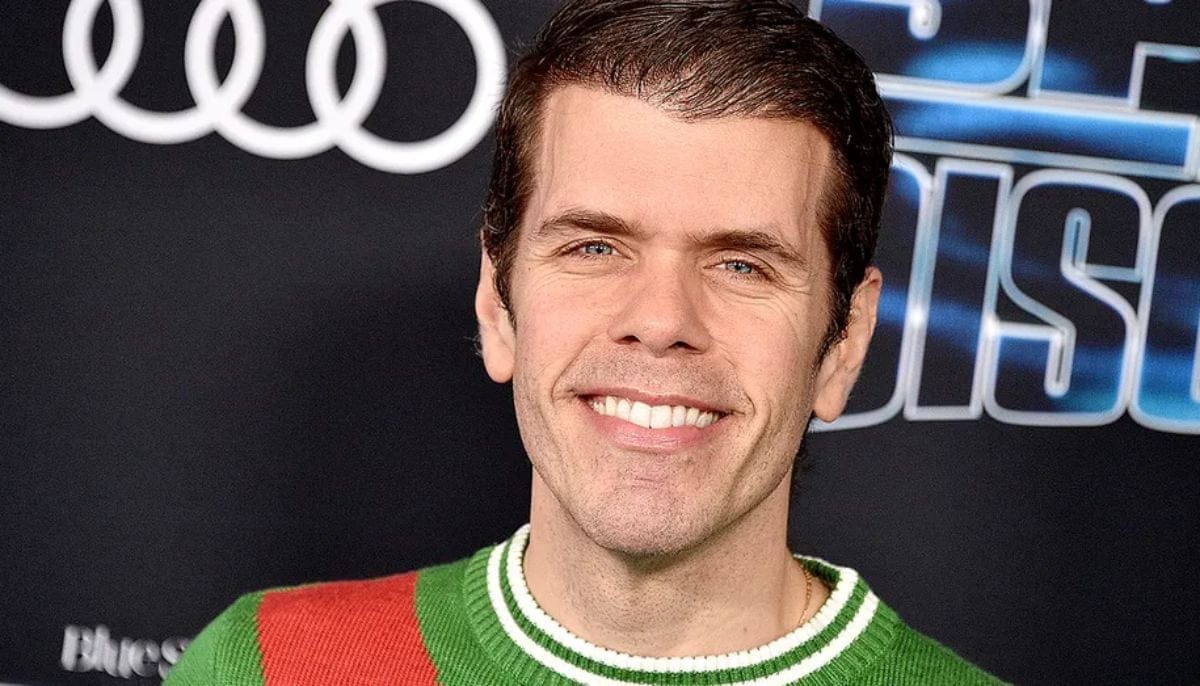
    Celebrity blogger Perez Hilton’s brother-in-law Tom has shared an update on his physical and mental health, saying that he is now transitioning from treatment for his physical injuries to receiving attention for his mental well-being. Tom, who is married to Perez’s sister Barbara Lavandeira, shared the update during an interview on The Perez Hilton Podcast on August 23. The podcast is co-hosted by Chris Booker. According to Tom, Perez has been receiving treatment for physical injuries following an incident at his Miami home on August 4, which occurred around 48 hours before the recording of the podcast. Perez has remained hospitalized since the incident. Tom said that Perez suffered multiple cuts and several broken bones as a result of “a couple of falls” during the incident. “So we are now just transitioning into the mental side of things,” Tom said. He explained that while Perez has been receiving treatment for his physical injuries, psychiatrists have also been checking on him and monitoring his mental condition. Tom said that medical professionals have been ensuring that Perez is not at risk of harming himself, while the underlying causes of what he described as his “mental breaks” have not yet been fully determined. However, Perez’s brother-in-law shared some reassuring news, saying that Perez is “lucid” while in the hospital and has spoken with him, his mother and his sister Barbara. During the podcast, Chris Booker asked Tom whether Perez remembered the August 4 incident. Tom said he had not discussed the incident in detail with Perez because he did not want to trigger anxiety or distress. Instead, he wanted Perez to focus on recovering from his physical injuries, including the lacerations and broken bones. “I don’t know how much he really does recall or doesn’t recall,” Tom added. Tom also revealed that Perez’s children have not visited him in the hospital and that he is not using electronic devices at the moment. However, Perez remains able to communicate with his family through the nursing station. Tom said Perez can call Barbara, his mother and him. The latest update indicates that Perez continues to receive medical care in the hospital, with his family now focusing on both his physical recovery and mental well-being.

  • |

    Six candidates prepare for first televised debate in UN leadership race

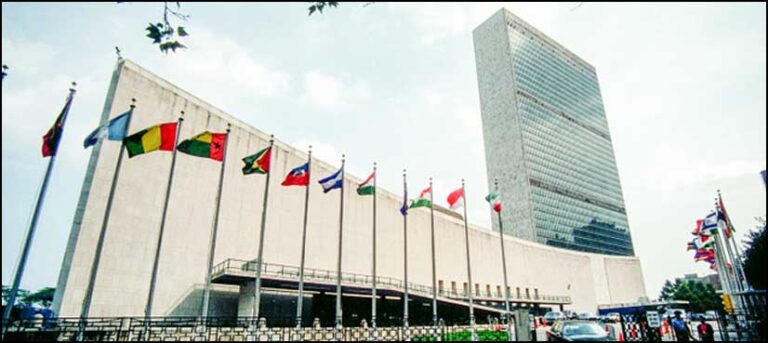
    The six candidates competing to become the next Secretary General of the United Nations are set to take part in a televised debate ahead of the official selection process, offering diplomats, UN staff, and the public a chance to hear their plans for leading the organisation through one of the most challenging periods in its history. The debate will be held in the United Nations General Assembly Hall in New York and comes just one week before the Security Council begins formally considering candidates to succeed Secretary General Antonio Guterres, whose term ends later this year. The 90 minute event will feature questions from diplomats, United Nations employees, and representatives of civil society, and will be broadcast live. The six candidates are former Chilean President Michelle Bachelet, former Ecuadorian Foreign Minister Maria Fernanda Espinosa, Argentine diplomat Rafael Grossi, Costa Rican economist Rebeca Grynspan, Guyanese Foreign Minister Carolyn Rodrigues Birkett, and former Senegalese President Macky Sall. Each is seeking to lead the global organisation at a time when it faces financial pressures, political divisions, and increasing criticism from member states. General Assembly President Annalena Baerbock said the debate provides a valuable opportunity for the candidates to present their leadership vision and priorities before the selection process begins. She stressed that the next Secretary General must not only improve the efficiency of the United Nations but also defend the principles of the UN Charter, including peace and security, human rights, and sustainable development. The organisation is currently facing one of its most difficult periods in recent years. The administration of US President Donald Trump has criticised the United Nations for what it describes as excessive spending, expanding beyond its core responsibilities, and failing to produce effective results. Washington has called for the organisation to focus more closely on maintaining international peace and security, while many other member states argue that protecting human rights and promoting development remain equally important responsibilities. Over recent weeks, each candidate has already answered several hours of questions from representatives of the UN’s 193 member states. During those discussions, most pledged to continue reform efforts aimed at making the organisation more efficient, transparent, and responsive to global challenges. Many also emphasised the need for a more active diplomatic role for the Secretary General in preventing conflicts and supporting peace negotiations. The formal selection process begins on July 30 when the 15 members of the UN Security Council hold their first confidential straw poll. During these informal votes, council members anonymously indicate their preferred candidates. Several rounds of voting may take place until one candidate secures the required support of at least nine council members without being vetoed by any of the five permanent members, namely the United States, China, Russia, the United Kingdom, and France. Once the Security Council agrees on a candidate, the recommendation will be sent to the General Assembly for final approval. The successful candidate will officially begin serving as Secretary General on January 1, 2027. Diplomats say the race remains highly competitive with no clear favourite. Rafael Grossi is widely viewed as one of the strongest contenders because of his international profile and experience leading the International Atomic Energy Agency. However, several diplomats believe Rebeca Grynspan and Carolyn Rodrigues Birkett also enjoy significant support among member states. Speculation continues over whether another candidate could still emerge before the final decision is made. Reports have also mentioned the name of FIFA President Gianni Infantino as a possible outsider, although he is not among the officially declared candidates. This year’s contest has also renewed calls for the United Nations to appoint its first female Secretary General. Many member states argue that after eight decades of male leadership, the organisation should choose a woman for its highest office. Latin American countries are also pressing their case under the informal tradition of rotating the position among different world regions, making the current race one of the most closely watched leadership contests in recent UN history.

Leave a Reply

Your email address will not be published. Required fields are marked *