former queen bassist
| |

Former Queen bassist Barry Mitchell dies at 80, le…

The Queen family is mourning the loss of Barry Mitchell, an early bassist who played an important role during the legendary rock band’s formative years. Mitchell died on August 17, 2026, according to reports, prompting tributes from fans and people connected to Queen. (The Sun⁠)

Although Mitchell was not part of Queen’s classic lineup, his contribution came during a crucial period when the band was still finding its sound. He joined Queen in 1970 after original bassist Mike Grose left. The official Queen live archive confirms that Mitchell played the next 11 shows during the band’s earliest performing days. (Queen Online⁠)

At the time, Queen consisted of Freddie Mercury, Brian May, Roger Taylor and Mitchell on bass. The group had not yet become the worldwide rock phenomenon fans know today. John Deacon would join later in 1971 and complete the classic lineup.

Mitchell’s time with Queen was brief. He remained with the band for around six months before leaving in early 1971. Reports say he played approximately 13 performances, mostly in the United Kingdom. (The Sun⁠)

Even though his time in the group was short, Mitchell was present while some of Queen’s earliest songs were being developed. His period with the band included work around tracks such as “Liar,” “Son and Daughter” and “Keep Yourself Alive,” giving him a unique connection to the band’s beginnings. (Queen Vault⁠)

Queen’s official archivist Greg Brooks confirmed the sad news and remembered Mitchell warmly. He described the former bassist’s stories about Queen’s early years as fascinating and said he would be greatly missed. (Edinburgh Live⁠)

For longtime Queen fans, Mitchell represented a piece of the band’s history that is often overlooked. Before Queen filled stadiums and produced some of rock’s most famous albums, the group was a young band playing small venues and experimenting with its musical identity.

Mitchell later returned to music after spending some time away from the industry. He also remained connected with the Queen fan community, attending conventions and sharing memories from his time alongside Mercury, May and Taylor. (The Sun⁠)

His death marks another poignant moment for fans looking back at Queen’s remarkable journey. While Barry Mitchell may not have been part of the lineup that eventually conquered the world, he was there when the story was only beginning.

His contribution lasted just months, but his place in Queen’s history will remain part of the band’s extraordinary early chapter.
Similar Posts

  • |

    Lahore High Court rules abused women retain dower rights following divorce

    The Lahore High Court has ruled that a woman who seeks a divorce on the grounds of her husband’s cruelty, abuse, or marital misconduct is not automatically deprived of her right to receive her unpaid dower, known as haq mehr. Delivering the judgment, Justice Mohsin Akhtar Kayani dismissed a petition filed by a man challenging lower court decisions in Toba Tek Singh that awarded 50 percent of a deferred dower to his former wife, Nisha Shahid. The petitioner argued that under family law provisions, the court lacked a legal basis to grant dower following a khula dissolution. However, the High Court drew a clear distinction between a standard khula, where a woman seeks separation solely due to personal incompatibility, and a judicial dissolution triggered by a husband’s mistreatment. The court clarified that abuse encompasses physical violence as well as psychological, emotional, verbal, and economic misconduct, noting that a wife is not required to present formal medical reports or police filings to establish her claim. The ruling directed Family Courts to assess the underlying causes of a marital breakdown rather than stripping a woman of her dower rights purely because the separation is categorized as a khula. Additionally, the Lahore High Court recommended that the Punjab government and the Law and Justice Commission of Pakistan update relevant family laws to ensure clear determinations of fault in dower disputes.

  • | |

    New provinces debate gains momentum as coalition p…

    A renewed debate over the creation of new provinces in Pakistan has gathered political momentum after two major coalition partners publicly endorsed Interior Minister Mohsin Naqvi’s proposal to restructure the country’s administrative system. However, the ruling Pakistan Muslim League-Nawaz (PML-N) has yet to officially comment, fueling speculation over its stance on the sensitive issue. The discussion began after Naqvi argued that Pakistan’s existing administrative framework had become ineffective and called for a national consensus on establishing smaller provinces to improve governance and public service delivery. His remarks quickly drew support from coalition allies, including the Muttahida Qaumi Movement-Pakistan (MQM-P) and the Istehkam-e-Pakistan Party (IPP). Federal Health Minister Mustafa Kamal described the proposal as an urgent national necessity rather than a political choice, stressing that decentralizing administrative powers was essential for effective governance. The MQM-P has long advocated the creation of an additional province in Sindh, making the party one of the strongest supporters of the initiative. Privatization Minister Abdul Aleem Khan of the IPP also endorsed the proposal, suggesting that each of Pakistan’s four existing provinces could eventually be divided into three administrative regions. He argued that smaller provinces would bring government closer to the people and reduce the hardships faced by citizens traveling long distances to provincial capitals. Despite growing support from coalition partners, the proposal faces significant constitutional and political challenges. Any change to provincial boundaries requires a two-thirds majority in the affected provincial assembly, making consensus difficult to achieve. The Pakistan Peoples Party (PPP), which governs Sindh and is also part of the federal coalition, has expressed strong reservations, warning that such a move could create more problems than solutions. Opposition leaders have also criticized the proposal, arguing that the government lacks the political mandate for such a major constitutional change. They insist that strengthening democratic institutions and improving governance should take priority over redrawing provincial boundaries. Political analysts have offered differing views on the initiative. Some believe creating new provinces could deepen ethnic and regional divisions, while others see the debate as an attempt to shift public attention away from pressing national issues, including recent unrest in Azad Jammu and Kashmir and ongoing security challenges in Balochistan. Many experts argue that empowering local governments under the 18th Constitutional Amendment would be a more practical and effective way to improve governance without altering provincial boundaries. Mustafa Kamal also acknowledged that stronger local governments are essential regardless of whether new provinces are eventually created. With the PML-N maintaining silence and key coalition partners taking opposing positions, the proposal has opened a fresh political debate that is likely to remain at the center of Pakistan’s national discourse in the coming months.

  • | |

    Oman oil spill spreads dramatically, nearing scale…

    An oil spill off the coast of Oman is rapidly expanding into one of the worst maritime environmental disasters in years after weeks of largely unchecked spread, according to international agencies, satellite imagery and environmental organizations. The slick, which originated from a grounded tanker carrying Russian crude, had reached Oman’s mainland by Wednesday, the United Nations shipping agency confirmed. John Amos, an oil spill specialist who reviewed satellite imagery, said the affected area now covers more than 2,000 square kilometers. The vessel involved, the Caroline Bezengi, was carrying an estimated 800,000 barrels of Russian oil and operates under international sanctions. It ran aground on June 30 near an Omani island that forms part of a protected marine nature reserve. The tanker first reported trouble off the coast of Yemen on June 8, and maritime sources said an explosion appeared to have occurred on board. No party has claimed responsibility for any attack, though the ship was navigating waters tied to two separate conflicts during its voyage from Russia to India. The tanker departed the Black Sea port of Novorossiysk in April, a region central to the ongoing war between Russia and Ukraine. Ukrainian forces have targeted vessels belonging to the so called shadow fleet used to transport Russian oil, a network that includes the Caroline Bezengi. Ship tracking data shows the tanker then passed through the Suez Canal in late May before sailing near Yemen, where Iran aligned Houthi forces have become entangled in the broader regional conflict involving the United States, Israel and Iran. A tangled set of war related and sanctions related shipping regulations is already complicating the emergency response and could further delay efforts to contain the disaster, according to insurers and analysts. The IOPC Funds, the intergovernmental body responsible for compensating tanker spill damages, told a foreign news agency it will not cover cleanup costs since the incident is being classified as an act of war rather than an ordinary accident. The 25 year old tanker also lacks coverage from any recognized Western insurer. Amos, who serves as chief executive of the environmental nonprofit SkyTruth, said the worst case outcome would involve no adequate response capable of preventing further damage. He said the spill’s scale could ultimately rival the 1989 Exxon Valdez disaster and noted that the tanker is comparable in size to the Sanchi, an Iranian vessel that collided with a freighter off China in 2018 in what became the world’s worst tanker disaster in decades. Slick accelerates toward mainland The spill was first identified by analysts in early July and has since begun reaching Oman’s mainland, according to the International Maritime Organization. A spokesperson for the agency said oil is drifting offshore northeast of Al Qibliyyah Island, with some already washing ashore, and confirmed that contingency planning for the spill is underway. The IMO said seasonal monsoon weather has restricted access to the tanker and delayed salvage efforts. Satellite images show the vessel grounded at Al Qibliyyah Island, part of a nature reserve that includes the Hallaniyat Islands and provides habitat for endangered sea turtles, humpback whales and coral reef ecosystems, all of which now face heightened risk from the spreading oil. Omani officials said Monday the slick covers nearly 400 square kilometers, though they have not responded to requests for additional detail on containment efforts beyond confirming the use of booms to limit the spread. Environmental groups and independent specialists estimate the true size at several times that figure, and say the rate of spread has accelerated sharply since early August. Greenpeace reported Tuesday that the affected area grew from around 45 square kilometers at the end of July to 150 square kilometers by early August, then quadrupled to roughly 600 square kilometers within just two days, according to Hanen Keskes, the group’s political campaigns lead for the Middle East. Amos’s estimate of 2,000 square kilometers suggests the spill has grown more than 40 times larger since the start of August alone. Amos said containing the disaster will require more than floating booms, including stabilizing the grounded vessel and transferring any remaining crude to another tanker. He warned that delays in salvage operations will only worsen the tanker’s condition and make the eventual recovery effort more complicated and dangerous.

  • | |

    PPP, PML-N hold unity talks over AJK polls

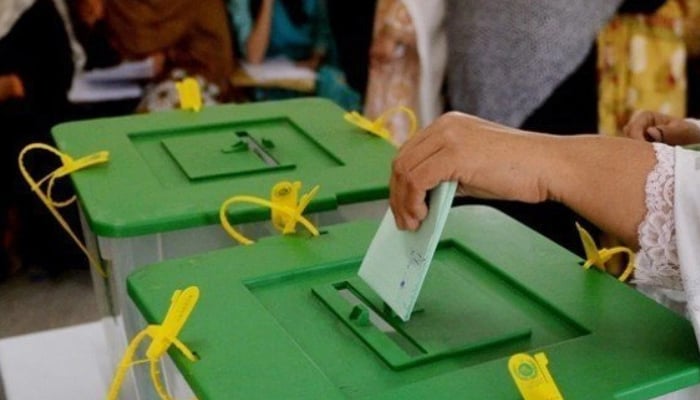
    Senior leaders of the Pakistan Peoples Party (PPP) and the Pakistan Muslim League-Nawaz (PML-N) held a high-level meeting in Muzaffarabad on Thursday to defuse growing political tensions over the ongoing Azad Jammu and Kashmir (AJK) elections. The meeting came after days of heated exchanges between the two coalition partners following the Mirpur election. The PPP had accused the electoral process of being marred by widespread irregularities and raised concerns over the credibility of the results. According to sources, the talks were aimed at preventing the election dispute from affecting the working relationship between the two parties in the federal coalition government. The meeting was reportedly arranged after consultations at the federal level. Some sources claimed that the initiative received support from both the Presidency and the Prime Minister’s Office. However, this could not be independently verified. The PPP delegation included Qamar Zaman Kaira, Nadeem Afzal Chan, AJK Prime Minister Faisal Rathore and Nayyar Bukhari. They met with senior PML-N leaders Rana Sanaullah and Amir Muqam. During the meeting, both sides openly discussed their concerns over statements made during the election campaign and after the announcement of the Mirpur results. PML-N leaders asked the PPP to present evidence supporting its allegations of organised election rigging. In response, PPP leaders said their objections were limited to four constituencies — LA-5, LA-9, LA-11 and LA-12 — where they believe serious irregularities took place. PML-N leaders argued that by restricting its objections to only four constituencies, the PPP had effectively accepted the results of the remaining nine seats. They noted that PML-N won five of those seats, while the PPP secured four. After detailed discussions, both parties agreed that political tensions should not be allowed to escalate further. They also agreed that the dispute should not affect the remaining phases of the AJK elections. The meeting also reviewed security arrangements for polling in the remaining constituencies, particularly in Muzaffarabad. Both parties agreed that no individual should be allowed to carry weapons inside or around polling stations. They stressed that strict security measures were necessary to ensure peaceful, transparent and orderly polling. Political observers view the meeting as the first major reconciliation effort by the two coalition partners to contain the election dispute

  • | |

    AJK police accuse banned JAAC of armed violence, b…

    MUZAFFARABAD: Azad Jammu and Kashmir (AJK) Police have alleged that the banned Joint Awami Action Committee (JAAC) is pursuing a coordinated agenda to disrupt peace and destabilise the region, claiming recent clashes with security forces demonstrate that the group has transformed into an armed organisation. Addressing a press conference in Rawalakot, AJK Police spokesperson Senior Superintendent of Police (SSP) Khawar Ali Shaukat said the violence of the past two days contradicted claims circulating on social media that the movement was peaceful. He alleged that armed individuals occupied buildings, established fortified positions and opened fire on police and security personnel using automatic and sophisticated weapons. According to the police, law enforcement personnel had been deployed across various parts of Rawalakot to maintain public order when they came under attack. Shaukat said authorities had exercised restraint throughout the situation but were compelled to respond in accordance with the law after security forces were targeted. The police spokesperson maintained that the nature of the weapons used and the organised tactics adopted during the clashes suggested the involvement of more than an ordinary protest movement. He further claimed that the group’s activities were intended to damage social harmony, weaken the atmosphere of brotherhood in AJK and create instability in the region. Officials said the confrontation claimed the life of a Rangers official, while around 15 police officers and other law enforcement personnel were injured during the exchanges. Police have reiterated that operations are being carried out under the law to restore order, while investigations into the incidents and the alleged network behind the violence remain ongoing.

  • |

    Turkish President Erdogan: Makkah pact to reshape regional security

    Turkish President Recep Tayyip Erdogan has said the joint defence agreement signed by Türkiye, Pakistan and Saudi Arabia will strengthen security cooperation and contribute to peace and stability in the region. In a statement posted on his X account, Erdogan said he visited Makkah at the invitation of Saudi Crown Prince and Prime Minister Mohammed bin Salman. During the visit, Erdogan said he met with Crown Prince Mohammed bin Salman and Pakistani Prime Minister Shehbaz Sharif. The three leaders subsequently signed a joint defence agreement, according to Erdogan. He said the agreement is based on the principle of collective defence and would further strengthen security and military cooperation among the three countries. Erdogan said the pact would also encourage joint projects in the defence industry and facilitate stronger cooperation in combating terrorism. The Turkish president said the agreement reaffirmed the right to self-defence recognised under Article 51 of the United Nations Charter. He stressed that the agreement was not directed against any country. Instead, Erdogan said the pact remained open to brotherly countries that seek peace, prosperity and stability in the region. He added that Türkiye would continue to pursue its principled position of resolving conflicts and crises through dialogue and diplomacy. Erdogan also expressed hope that the visit to Makkah and the agreement reached by the three countries would bring peace, stability and prosperity to the wider region. The agreement marks a significant step in defence cooperation between Türkiye, Pakistan and Saudi Arabia and establishes a framework for closer coordination against shared security threats.

Leave a Reply

Your email address will not be published. Required fields are marked *