you crave fried

Why you crave fried foods

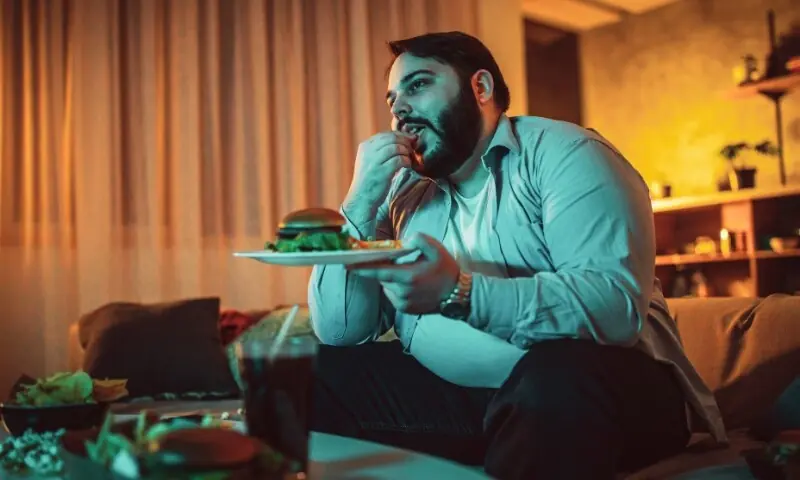
Have you ever finished a full meal but still wanted to eat fries samosas fried chicken, or pakoras? Many people think it is simply a lack of self control but scientists say there is much more to it.

Research suggests that our brain taste buds and eating habits all work together to make fried foods hard to resist.

When food is fried its texture smell and flavor change.  According to research from the University of São Paulo in Brazil, frying removes water from food making the outside crispy and crunchy.

At the same time proteins and starches change through a process called the Maillard reaction which gives fried foods their golden color rich aroma and delicious taste.

Scientists say the brain also plays an important role.  A study published in Nature Reviews Neuroscience found that eating favorite foods activates the brain’s dopamine system.

Dopamine is not just linked to pleasure it also helps the brain remember enjoyable experiences and encourages us to repeat them.

This is why the smell or sight of French fries samosas or fried chicken can make you want to eat them even if you are not hungry.

Experts also say that craving fried foods does not usually mean your body is missing a specific nutrient.

These cravings are more often influenced by habits tempting smells emotions memories and the foods around you.

Does this mean fried food is bad for your health?

•Not necessarily

Eating fried foods occasionally is generally not a problem.  However making them a regular part of your diet may increase health risks.

In a large study by researchers at the Harvard T.H. Chan School of Public Health more than 110,000 adults were followed for over 20 years.

People who ate fried foods seven or more times a week had a higher risk of developing type 2 diabetes and a slightly higher risk of heart disease than those who ate fried foods less than once a week.

Researchers believe that weight gain high blood pressure, and unhealthy cholesterol levels may partly explain this increased risk.

Experts do not recommend giving up fried foods completely.

Instead they suggest eating balanced meals avoiding skipping meals and enjoying fried foods only in moderation.

This approach may help reduce cravings while supporting better overall health.

Scientists say the attraction of fried food comes from a powerful combination of crispy texture rich flavor tempting smell and the brain’s memory of enjoyable eating experiences.

That’s why even after a full meal one hot and crispy bite can still be hard to resist.

Similar Posts

  • Whitening creams may damage your skin

    Many people use skin whitening creams and bleaching products to make their skin look lighter and brighter. While these products may change skin tone for a short time experts say they can cause serious skin problems if used for a long period. In Pakistan and many other Asian countries skin lightening creams are widely used. Many people buy and use these products without first talking to a dermatologist. According to skin experts many whitening creams contain strong chemicals and steroids. These ingredients can make the skin appear lighter for a while but they may also damage the skin over time and lead to long lasting problems. One common side effect is acne. Experts say corticosteroids found in some creams can make the skin look smooth at first but continued use may trigger pimples. These pimples can later leave permanent dark marks or scars. This problem can affect both men and women. Some whitening creams also contain hydroquinone. Research suggests that using hydroquinone for a long time may cause a condition called exogenous ochronosis. This condition leads to blue or dark patches on the skin especially in people with sensitive skin. These marks can be difficult to hide even with makeup. Another possible risk is dermatitis a skin condition that causes irritation and inflammation. It may lead to redness itching, swelling, dry skin, rashes blisters and in severe cases painful sores. Dermatologists advise stopping the use of any whitening cream if you notice redness itching swelling unusual spots or other skin changes. They recommend seeking advice from a qualified skin specialist instead of relying on products that promise quick results. Protecting your skin and following professional medical advice is a safer and healthier choice.

  • |

    Tradition, impersonality and mythic structure in “The Waste Land”

    Eliot’s masterpiece The Waste Land is published in 1922 just three years after “Tradition and the Individual Talent“. The poem serves as the ultimate practical demonstration of his theoretical ideas. Rather than describing tradition abstractly, Eliot uses allusion, polyphony, structural juxtaposing, and mythic framing to explain how a modern poem can absorb European history to process post-WWI disillusionment. Eliot argued that a poet must possess a historical sense. It is an awareness of the past’s presence alongside the contemporary moment. In The Waste Land, centuries of literary tradition exist on a single plane. In Section I (The Burial of the Dead), the speaker encounters acquaintance in modern London named Stetson and asks:    That corpse you planted last year in your garden, Has it begun to sprout?  In the very next line, Eliot links this modern London scene directly to the Punic Wars between Rome and Carthage. You who were with me in the ships at Mylae!   Modern industrial London and ancient Rome are collapsed into the same spiritual wasteland. The historical sense allows Eliot to treat human trauma across millennia as simultaneous rather than sequential. In his Impersonal Theory, Eliot argued that the poet’s mind acts as a catalytic medium. It’s  fusing disparate feelings and literary artifacts into a new substance without injecting personal bias. Throughout the 433 lines of The Waste Land, Eliot incorporates over 35 distinct literary references, 6 foreign languages, and references to sacred texts across Eastern and Western traditions. Eliot quotes Edmund Spenser’s Renaissance poem Prothalamion: Sweet Thames, run softly, till I end my song. He juxtaposes Spenser’s idyllic, nymph-filled river with the industrial Thames of 1920s London, scattered with silk handkerchiefs, cardboard boxes, cigarette ends. As commuters cross London Bridge, Eliot echoes Dante’s Inferno (Canto III): I had not thought death had undone so many. The modern office workers are literally mapped onto the souls trapped in Hell’s vestibule. He isn’t relying on a traditional narrative arc or a subjective personal narrative. Eliot uses what he famously called the Mythic Method (a technique he also praised in James Joyce’s Ulysses)..Eliot grounds the entire poem in two scholarly texts on mythology and ritual. From Ritual to Romance (the Grail Legend and the sterile Fisher King). The Golden Bough (ancient fertility cults, dying-and-rising gods). The underlying archetype, a sterile land awaiting a spiritual rain to restore fertility, unifies the fragmented scenes of modern decay (mechanized sex, empty conversations, spiritual apathy). Therefore, the individual talent grounds chaos in timeless mythic order. In order to achieve the extinction of personality, Eliot abandons a central I persona. Instead, he speaks through a chorus of shifting voices. A Marie in Munich, a hyacinth girl, a cockney woman in a pub, and Saint Augustine. In his famous explanatory notes to line 218, Eliot exposes he unifying center of the poem:  Tiresias, although a mere spectator and not indeed a ‘character’, is yet the most important personage in the poem, uniting all the rest… What Tiresias sees, in fact, is the substance of the poem. Tiresias: the blind, bisexual prophet of Greek myth (from Sophocles and Ovid). It has lived as both man and woman and seen the depths of classical tragedy. Eliot submerges his own biographical ego into an ancient, collective consciousness by adopting Tiresias as the central perspective Eliot’s concept of tradition is not narrowly provincial. His concept relates to the broader heritage of human thought. In the final section “What the Thunder Said”, the modern mind seeks a cure for its spiritual dryness not in the West, but in the Upanishads. The thunder speaks the Sanskrit syllables: Datta (give), Dayadhvam (sympathize) and Damyata (control). The poem concludes with the solemn formal chant: Shantih shantih shantih The Peace which passeth understanding. The final line: “These fragments I have shored against my ruins” summarizes Eliot’s entire philosophy of tradition. Modern civilization may be in ruins, but the individual poet reconstructs meaning by gathering and rearranging the enduring fragments of global tradition.  

  • Why are young bodybuilders dying so early

    Brazilian bodybuilder and fitness influencer Melson Araujo recently shared a gym photo showing his impressive physique. Just a few hours later the 35 year old reportedly became ill at home and died suddenly. The exact cause of his death has not been officially confirmed. However his passing has added to growing concerns about the number of young bodybuilders who have died unexpectedly in recent years. Earlier this year 22 year old Brazilian bodybuilder Gabriel Ganley also died after suffering sudden cardiac arrest. In 2024, two other Brazilian bodybuilders in their 30s and 40s also died from heart related problems including one who collapsed during a competition. Similar cases have been reported around the world. American bodybuilder Dallas McCarver died in 2017 at the age of 26, while German fitness influencer Jo Lindner passed away in 2023 at the age of 30. These deaths have raised an important question. why are some people who appear extremely fit and healthy dying at a young age? A 2025 study published in the European Heart Journal examined nearly 20,000 amateur and professional bodybuilders who competed between 2005 and 2020. Researchers found that professional bodybuilders were more than five times more likely to die from sudden cardiac arrest than amateur competitors. The study recorded 121 deaths including 46 caused by sudden cardiac arrest. The average age at death was 45 years but for active competitors it was only 34.7 years. Researchers believe several factors may increase the risk, including the use of performance enhancing drugs rapid weight loss before competitions and extremely intense strength training. Another 2025 study from Denmark published in the journal Circulation followed 1,189 men who used anabolic steroids and compared them with nearly 60,000 men over 11 years. The researchers found that steroid users had a nine times higher risk of developing cardiomyopathy a disease that weakens the heart muscle. They also had about three times the risk of heart attack and heart failure. Experts say anabolic steroids may also raise blood pressure speed up the build up of plaque in the arteries and change the structure of the heart. Autopsy reports from several bodybuilders have shown that many had enlarged hearts and thicker heart walls especially in the left ventricle. These changes can increase the risk of dangerous heart rhythm problems and heart failure. One of the best known cases was Dallas McCarver, whose heart weighed 833 grams more than twice the normal weight of an adult male heart. A 2022 review also found that many American bodybuilders had hearts that were much larger and thicker than normal. In some cases even athletes in their 20s showed enlarged hearts thickened heart muscles, and serious coronary artery disease.

  • 6 Foods for better sleep

    If you often stay awake late at night without any reason it is important to know that not getting enough sleep can increase the risk of serious health problems. Poor sleep has been linked to heart disease stroke and other long term illnesses. If you struggle to fall asleep even when you are tired a few simple changes to your diet may help. Some foods contain natural nutrients that support better sleep and may help you fall asleep more easily. •Bananas Bananas are rich in tryptophan an amino acid that helps the body produce melatonin the hormone that controls sleep. They also contain magnesium which helps relax muscles and supports restful sleep. • Warm milk A glass of warm milk before bed is a popular bedtime drink. Milk contains tryptophan which may help the brain produce more melatonin and improve sleep quality. • Honey A spoonful of honey before bedtime may help you sleep better. Honey contains small amounts of tryptophan and its natural sugars may help the body use this amino acid more effectively. • Jalebi Some people believe that eating jalebi before bed can make you sleepy because it raises blood sugar and insulin levels. However there is limited scientific evidence to support this and eating sugary foods at night is generally not recommended as a regular sleep aid. • Cherries Cherries especially tart cherries are a natural source of melatonin. Research suggests that drinking cherry juice may improve sleep quality and help some people sleep longer. • Almonds Almonds are rich in magnesium a mineral that supports healthy sleep and muscle relaxation. Studies suggest that low magnesium levels may contribute to sleep problems. While these foods may support better sleep they are not a cure for chronic insomnia. If you have ongoing sleep problems it is best to speak with a healthcare professional to find the underlying cause.

  • |

    The limits and depth of human consciousness

    For millions of years, the survival of living species depended almost entirely on practical adaptations. The core of living was finding food, securing shelter, avoiding predators, and reproducing. Yet, at a crucial juncture in evolutionary history, Homo sapiens began engaging in a behavior that offered no immediate physical utility like making art. From red ocher hand stencils on cave walls in Sulawesi and Western Europe to intricate bone flutes and sculpted figurines, early humans devoted valuable time and energy to symbolic creation. Today, neuroscientists, cognitive psychologists, and evolutionary anthropologists increasingly view art not as a secondary cultural luxury, but as a foundational hallmark of human consciousness. The Evolutionary Emergence of Symbolic Thought The birth of artistic expression marks a profound cognitive transition. While many animals exhibit complex behaviors, these actions are largely instinctual and functional. Human art, by contrast, relies on abstract symbolic thinking. The capacity to let one object, shape, or sound represent an idea, emotion, or absent reality. When an early human carved a figure or painted a thundering herd of bison onto rock, they were not merely copying their surroundings. They were projecting an internal mental world onto an external physical canvas. This ability to externalize subjective experience required a sophisticated architecture of consciousness, including robust working memory, metacognition (thinking about one’s own thinking), and a developed theory of mind. It’s the understanding that others possess distinct mental states and can interpret shared symbols. The Neurobiology of Aesthetic Experience Modern neuroimaging reveals that creating and contemplating art engages large-scale, interconnected brain networks. When a person immerses themselves in a painting, music, or literature, the Default Mode Network (DMN) works with sensory and emotional circuits. Artistic engagement triggers a dynamic dialogue between the visual or auditory cortex, the limbic system (which processes emotion), and executive regions in the prefrontal cortex. This complex cross-talk allows humans to experience qualia. The subjective, qualitative feel of conscious experiences. A visual composition does not simply register as light wavelengths in the brain; it evokes nostalgia, awe, melancholy, or inspiration. This capacity to synthesize raw sensory inputs with deep emotional resonance and reflective thought is a unique feature of high-level conscious awareness. Lived Experience versus Machine Patterning In an era dominated by artificial intelligence algorithms capable of generating hyper-realistic images and musical compositions in seconds, the relationship between art and consciousness has taken on renewed urgency. While generative models analyze billions of data points to predict and replicate aesthetic patterns, they operate entirely without subjective awareness, intent, or emotional feeling. Human art originates from a grounded biological reality: the lived experience of mortality, joy, heartbreak, bodily sensation, and social existence. The power of a masterpiece lies not merely in its formal technique, but in the implicit bridge it constructs between the inner world of the artist and that of the observer. Art is fundamentally a dialogue of consciousnesses. It is a mechanism through which one conscious entity communicates what it feels like to exist. A Mirror to Human Identity Ultimately, art serves as both a product and a mirror of conscious awareness. It enables individuals to simulate hypothetical scenarios, process complex social dynamics, and navigate existential questions about purpose and mortality. By translating internal emotional states into tangible forms, humans construct shared cultural meaning and foster deep social cohesion.   As science continues to explore the mystery of how physical brain matter generates subjective experience, art remains our most visible and enduring cognitive fingerprint. It stands as compelling proof that human consciousness is defined not just by how we perceive the objective world, but by our infinite capacity to imagine and construct new ones.

  • Don’t ignore shortness of breath

    Feeling short of breath  while walking climbing stairs jogging or doing simple daily activities has become a common problem for people of all ages. While it was once mostly seen in older adults many young people now experience it too. Health experts say that if you often become short of breath you should not ignore it. Finding the real cause is important because it may be a sign of an underlying health problem. One of the main reasons is a lack of physical activity. Many people spend hours sitting in front of their phones computers or TVs especially after meals. Over time this inactive lifestyle can reduce fitness and make breathing more difficult during even light exercise. Doctors explain that getting out of breath after only a little effort may sometimes be linked to problems with the heart lungs kidneys or liver. Swelling around the eyes or face may point to liver disease swollen feet may be related to kidney problems and swelling in the hands feet and face together could be a sign of heart disease. Instead of treating yourself at home it is important to see a qualified doctor. Other common causes of shortness of breath include anemia (low blood) weakness asthma seasonal allergies colds cough mucus in the airways lung diseases and long term smoking. Because every person is different only a proper medical check up can identify the real cause. In some people stomach problems such as gas and acid reflux can also make breathing feel difficult. Sitting for a long time after eating may increase these problems causing chest discomfort and a feeling of breathlessness. Eating a balanced diet exercising regularly and taking a short walk after meals may help improve digestion and overall health. Some traditional remedies suggest soaking three dried figs in water overnight and eating them on an empty stomach in the morning to support digestion. Others use basil leaves or basil seeds as an herbal drink.  However there is only limited scientific evidence to support these remedies so they should not replace proper medical treatment. If you experience frequent shortness of breath especially with chest pain severe weakness dizziness blue lips or skin or swelling seek medical care immediately. Early diagnosis and treatment can help prevent serious health problems.

Leave a Reply

Your email address will not be published. Required fields are marked *