rana sanaullah rejects
| |

Rana Sanaullah rejects PPP claim over AJK worker?…

Special Assistant to Prime Minister for Political Affairs Rana Sanaullah has rejected Pakistan Peoples Party (PPP) Chairman Bilawal Bhutto Zardari’s claim about the death of a party worker during the Azad Jammu and Kashmir (AJK) elections.

Rana Sanaullah said Bilawal Bhutto had not received complete information about the incident.

He said the PPP worker was killed during an exchange of fire between two groups. He also clarified that the PML-N candidate was not present at the scene when the firing took place.

The incident occurred in the Nikyal area of Kotli during the first phase of the AJK Legislative Assembly elections.

Rana Sanaullah said tensions had already existed between the two sides in the area. He said the dispute was not limited to election day.

He recalled an earlier incident involving a PML-N election rally. According to him, the rally had come under fire. One PML-N worker was killed in that incident, while four others were injured.

Rana Sanaullah said another firing incident during polling resulted in one death and injuries to several people.

He described the incidents as isolated. He said no major incident had been reported across AJK apart from the Nikyal incident.

The PML-N leader also praised the overall election arrangements. He said authorities had made satisfactory preparations to facilitate polling and maintain security.

The comments came after Bilawal Bhutto expressed concern over the death of a PPP worker in Nikyal.

Bilawal had questioned the authorities over the incident. He also asked where the relevant officials were and demanded action over the death of his party worker.

The incident added to political tensions during the first phase of the AJK elections. Political parties had already raised concerns about alleged disruptions and security issues at some polling stations.

Meanwhile, Punjab Information Minister Azma Bukhari said the people of AJK had rejected calls for unrest.

She said voters had chosen the democratic process instead. According to Bukhari, polling was taking place despite attempts to create disorder.

Bukhari also highlighted the performance of the Punjab government. She said the provincial government’s development work was being discussed among voters in AJK.

She referred to the government’s response to heavy monsoon rains in Punjab.

Bukhari said Lahore received several hours of continuous rainfall. She claimed that underpasses were cleared within a few hours.

She also said government officials and administrative teams remained present in the field during the rain.

The minister said monsoon rains had also caused rising water levels in Punjab’s rivers. She said authorities were monitoring the situation continuously.

According to Bukhari, a central digital control room has been established for round-the-clock monitoring.

She said the system was being used to track the situation and coordinate the government’s response.

Bukhari also spoke about the Punjab Beautification Programme. She said plans were being made to shift hanging utility wires underground.

The programme is aimed at improving the appearance and infrastructure of urban areas, according to the minister.

The political statements came as vote counting began after polling ended in the first phase of the AJK elections.

The first phase covered 13 constituencies in Mirpur Division. The constituencies are spread across Mirpur, Kotli and Bhimber.

Election authorities have said that security arrangements were put in place to protect voters and election staff.
Similar Posts

  • |

    Govt increases petrol by Rs1.09, HSD by Rs2.42

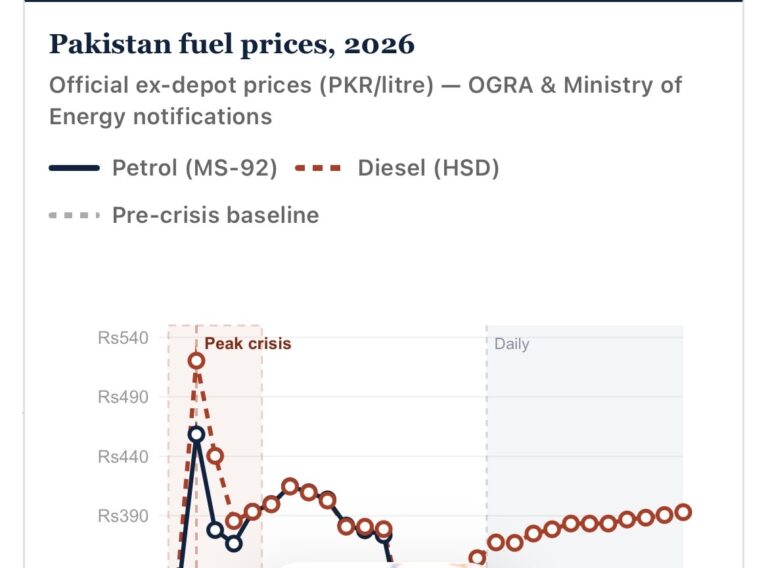
    The government on Thursday increased the prices of petrol and high-speed diesel (HSD) by Rs1.09 and Rs2.42 per litre, respectively, passing on the impact of fluctuating global oil prices amid ongoing Middle East tensions. Following the revision, petrol will retail at Rs336.15 per litre, while HSD will cost Rs393.04 per litre. The government continues to levy Rs110 per litre in taxes and duties on petrol and Rs96 per litre on diesel. The Petroleum Division’s notification said the new prices would be applicable for July 31 (Friday). The diesel price has come down from a peak of Rs520.35 recorded on April 3, after beginning its upward trajectory from Rs281 per litre when the US-Iran war broke out on February 28. Similarly, petrol had peaked at Rs458.41 on April 3 after rising from Rs266 in the first week of March. Earlier, Petroleum Minister Ali Pervaiz Malik announced that fuel prices would now be fixed on a daily basis due to fluctuations in international market prices following renewed hostilities between Iran and the US. The government had been announcing weekly revisions since early March, alongside conservation measures amid possible oil supply disruptions due to the ongoing conflict in the Middle East. In April, the federal government also announced targeted relief measures to provide subsidised fuel. The petroleum minister stated that the cabinet and the prime minister had decided to give the Oil and Gas Regulatory Authority (OGRA) the responsibility of deciding fuel prices on a daily basis based on international market trends. The daily pricing decision was rejected by the All Pakistan Dealers Association, which said it would consider a protest plan this week. Petrol is mainly used in private transport, small vehicles, rickshaws and two-wheelers, and changes in its price affect the middle and lower-middle classes. Similarly, diesel price changes impact the public at large, as it is primarily used in the heavy transport sector, power plants and large generators. Petrol and HSD are the major revenue earners, with monthly sales of about 700,000 to 800,000 tonnes, compared to just 10,000 tonnes of monthly demand for kerosene.

  • |

    Pakistan digitises Hajj 2027, announces Rs1.2m cost

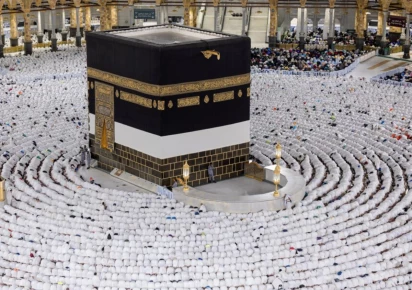
    Pakistan has moved towards a completely digital Hajj management system, enabling intending pilgrims to complete registration and make pilgrimage-related payments through the official Pak Hajj mobile application, Federal Minister for Religious Affairs Sardar Muhammad Yousuf announced on Monday. Speaking at a press conference in Islamabad, the minister outlined the government’s preparations for Hajj 2027, including the estimated cost of pilgrimage packages, payment schedules, allocation of seats for short-duration Hajj and arrangements for collecting payments from pilgrims. He said the government had taken steps to bring the entire Hajj process onto a digital platform in an effort to make registration, payments and other administrative procedures easier, more transparent and traceable. According to the minister, approximately 400,000 people have already registered and are currently progressing through the application process for the government’s Hajj arrangements. Hajj 2027 packages and costs Sardar Yousuf announced that the estimated expenditure for the regular government Hajj package, which will cover a stay of around 40 to 42 days, has been set at approximately Rs1.2 million. The cost of the shorter package, designed for pilgrims opting for a stay of approximately 20 to 22 days, will be around Rs1.3 million, he said. The government has allocated 30,000 seats specifically for pilgrims opting for the short-duration Hajj package. The minister said the government would begin collecting the first instalment of Hajj expenses from August 17, while the second instalment would be payable during the second week of October. He added that applicants who are not selected to perform Hajj in 2027 would be placed on a waiting list for consideration in the subsequent year. Payments to be processed digitally The minister said the digitalisation programme would cover financial transactions as well as the registration process. Pilgrims would be required to use the Pak Hajj application for making payments instead of relying on other payment channels. The same digital mechanism will also be available to pilgrims travelling under the private Hajj scheme, allowing them to make their payments through the application. Sardar Yousuf emphasised that the government intends to keep Hajj-related financial transactions within the designated digital system to improve monitoring and ensure greater transparency. Pilgrims opting for the private scheme, however, will retain the option of selecting an online Hajj service provider of their choice. Habib Bank selected for Hajj payments As part of the new financial arrangements, the Ministry of Religious Affairs has entered into an agreement with Habib Bank Islami to facilitate the collection of Hajj payments. The minister said the bank would work with the ministry as its authorised banking partner for receiving pilgrimage-related funds under the arrangements being introduced for the upcoming Hajj season. He expressed satisfaction over the partnership and said the agreement would formally be signed on Monday. Minister responds to question over bank selection During the press conference, a journalist questioned the ministry’s decision to authorise Habib Bank as the banking partner for collecting Hajj applications and payments, asking why other banks had not been selected. Responding to the question, Sardar Yousuf said the ministry had opened the process to banks and invited them to participate. He explained that the banks that submitted applications were evaluated against the ministry’s requirements. According to the minister, Habib Bank was the only institution that fulfilled the required criteria, particularly those related to digital payment facilities. He said other participating banks were unable to meet the ministry’s stipulated requirements, which ultimately led to Habib Bank being selected as the authorised partner. Government seeks greater transparency through digital system The government believes the new digital framework will reduce paperwork and simplify several stages of the Hajj process for Pakistani pilgrims. By shifting registration and payment procedures to a centralised digital platform, the Ministry of Religious Affairs aims to improve oversight of applications and financial transactions while reducing the scope for manual errors. The integration of both government and private Hajj arrangements into the app-based system is also expected to provide pilgrims with easier access to information and payment services.

  • | |

    Delhi court orders removal of objectionable content about Tabu

    NEW DELHI: Bollywood actress Tabu has received relief from the Delhi High Court in a personality rights case, with the court directing several websites and online platforms to remove content deemed objectionable by the actress. According to Indian media reports, Tabu had approached the court, arguing that the material available on various websites and digital platforms violated her personality rights and was defamatory and obscene. Justice Jyoti Singh, while hearing the petition represented by senior advocate Swati Sukumar, directed multiple social media platforms, e-commerce listings and websites to remove the allegedly objectionable content. Various scenes from Tabu’s films were also discussed during the hearing. Tabu’s lawyer told the court that certain video clips were being promoted using search terms that portrayed the actress in an inappropriate manner. Some scenes, the lawyer said, had been slowed down or given altered titles to create a sexualised impression. Sukumar argued that the repeated appearance of such material through new accounts and posts made the issue more serious than an ordinary copyright or content infringement dispute. During the hearing, counsel representing an online platform referred to another personality rights case being heard by the court on the same day. The lawyer suggested that personality rights proceedings could sometimes be used to seek removal of allegedly defamatory material. The court observed that the legal questions raised in Tabu’s case could have wider implications beyond the present matter. Justice Jyoti Singh said that highly harmful material may require a mechanism capable of preventing such content from appearing online in the first place. The court also examined the safeguards currently used by online platforms, including automated content detection systems, in-app complaint mechanisms and grievance redressal procedures under the Information Technology Rules. Justice Singh observed that the key challenge was not simply the formulation or implementation of policy, but the creation of an effective system capable of preventing objectionable material from being uploaded at the initial stage. The court said an amicus curiae would be appointed to assist it in examining the broader legal questions involved in the case. The proceedings will also identify related legal issues that may require detailed consideration at a later stage. The court further indicated that it would consider developing a standard operating procedure (SOP) for dealing with similar cases involving harmful or objectionable online content.

  • | |

    Woman booked over alleged airport misconduct

    A case has been registered against a female passenger over alleged misconduct and resistance towards immigration officials at Islamabad International Airport. The case was registered against the passenger, identified as Rabia, following a complaint filed by the Federal Investigation Agency’s (FIA) immigration authorities. According to police, the woman was scheduled to travel to the United Arab Emirates on a private airline under a family visit visa. She was stopped during the immigration process for further verification of her travel documents. Officials said the passenger was travelling on a paper-based visa, for which the airline was required to obtain an OK-to-Board (OKTB) verification before allowing her to travel. The airline staff reportedly took her boarding pass for the required verification process. According to the First Information Report (FIR), the passenger allegedly misbehaved with immigration officials and resisted their instructions during the process. The FIR further alleges that she attempted to take back her passport and other documents from the immigration staff and issued threats to officials. The incident was also reportedly recorded on video, which was later uploaded to social media. Police said the passenger was offloaded from the flight because of her alleged non-cooperation and resistance during the immigration procedure. Following the incident, she was taken to the police station at Islamabad International Airport for further legal proceedings. Authorities also took several items into custody, including her passport, mobile phone, Rs17,000 in cash, handbag and trolley bag. Police said further investigation into the incident was under way and the allegations would be examined as part of the legal process.

  • | |

    Ghazi University, Chinese academy sign MoU for agr…

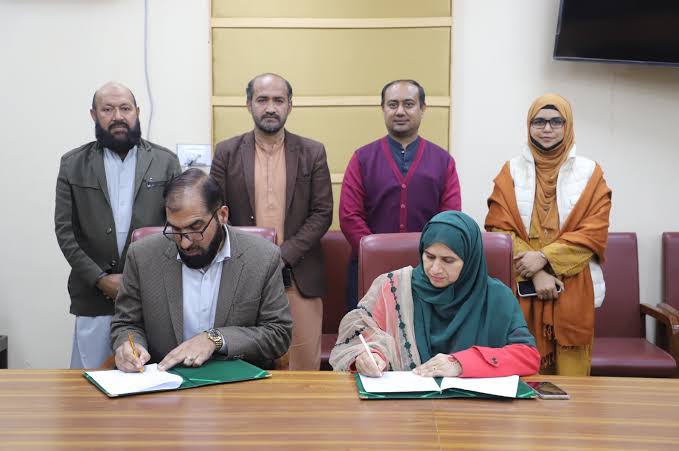
    By MIR HUNBAL BIRMANI DG Khan: Ghazi University has formally signed a Memorandum of Understanding (MoU) with the Chinese Academy of Agricultural Sciences (CAAS), China, establishing a strategic partnership aimed at advancing agricultural research and academic excellence.The agreement was officially signed by Dr. Muhammad Asif (Registrar, Ghazi University) and Dr. Zahoor Hussain on behalf of Ghazi University, alongside Prof. Dr. Xiaohui Zhang and Prof. Dr. Haiping Wang representing CAAS According to details , Department of Horticulture at Ghazi University, Dera Ghazi Khan, successfully organized a comprehensive one-day international workshop attended by scientists from china titled “Sustainable Vegetables Production Under Changing Climate” to address the growing challenges posed by global climate fluctuations on agricultural security. Registrar of Ghazi University, Dr. Muhammad Asif, who underscored the immense value of the event in enhancing the technical capacity and research aptitude of the university’s faculty members and senior students in attendance. The workshop’s core highlight featured keynote addresses delivered by a delegation of distinguished international agricultural scientists from the Chinese Academy of Agricultural Sciences (CAAS) in Beijing, China. The visiting panel included Prof. Dr. Xiaohui Zhang, Prof. Dr. Haiping Wang—Director, Chief Scientist of the Department of Vegetable Germplasm, and Curator of the National Vegetable Germplasm Resources Bank—and Dr. Jiangping Song, also a scientist and curator at the institution. During the technical sessions, these experts presented advanced, climate-resilient strategies tailored to modern horticultural demands, focusing on improved cultural practices, vegetable forcing techniques to optimize growth cycles, and controlled greenhouse production systems designed to maintain high yield quality despite extreme weather conditions. An interactive question-and-answer session was also part of the workshop, providing attendees with a valuable opportunity to engage directly with the keynote speakers and clarify complex concepts. The event concluded with a vote of thanks from Dr. Zahoor Hussain, Chairperson of the Department of Horticulture, who expressed deep gratitude to the honorable international guests, administration, and participants for contributing to the event’s success. Ultimately, the workshop served as a vital academic platform for knowledge transfer and scientific exchange, strengthening bilateral ties between Pakistani and Chinese agricultural researchers while setting a clear path forward for sustainable vegetable cultivation in the region. Ghazi University has formally signed a Memorandum of Understanding (MoU) with the Chinese Academy of Agricultural Sciences (CAAS), China, establishing a strategic partnership aimed at advancing agricultural research and academic excellence. The agreement was officially signed by Dr. Muhammad Asif (Registrar, Ghazi University) and Dr. Zahoor Hussain on behalf of Ghazi University, alongside Prof. Dr. Xiaohui Zhang and Prof. Dr. Haiping Wang representing CAAS. This bilateral agreement lays the groundwork for joint research initiatives, faculty and student exchange programs, and the provision of specialized scholarships. Additionally, the collaboration will focus on hosting joint workshops, technical training sessions, and capacity development programs designed to build expertise and strengthen global academic cooperation in agricultural sciences.

  • | | |

    US General warns more warships are needed to defen…

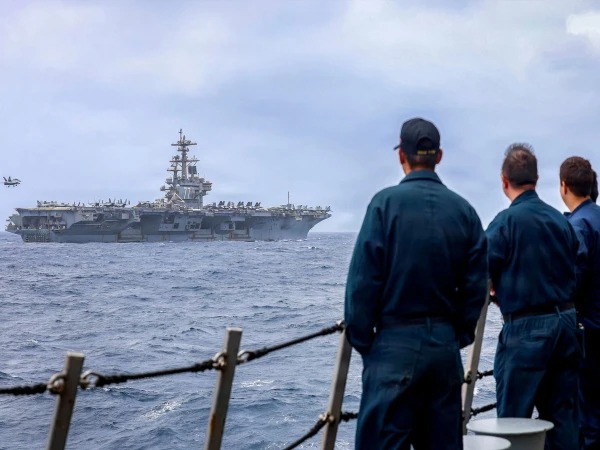
    A senior US military commander has reportedly warned the Pentagon that without additional naval resources, the United States may be forced to prioritize its own national defense over the defense of Israel. The reported warning underscores the growing strain on American military capabilities amid the ongoing conflict involving Iran. According to a report by The Washington Post, General Alexus Grynkewich, the top US military commander in Europe, informed Pentagon officials this week that the number of US Navy destroyers currently available is insufficient to continue defending Israel against ballistic missile threats while maintaining broader US security commitments. The report states that General Grynkewich submitted a written assessment to senior Pentagon leaders, warning that unless another guided-missile destroyer is assigned to his command, he may have no choice but to give priority to defending the United States rather than supporting Israel’s missile defense. US defense officials quoted in the report said the message reflects a long-standing military practice in which commanders notify the Pentagon when operational demands begin to exceed available resources. Such assessments are intended to help civilian and military leaders make decisions about force allocation and strategic priorities. The reported warning comes as the conflict involving Iran has placed increasing pressure on US military assets over the past several months. Continuous naval operations, missile defense missions, and regional security responsibilities have stretched the availability of key warships and other defense resources. US Navy destroyers stationed in the eastern Mediterranean have played a significant role in supporting Israel’s defense by helping intercept ballistic missiles and other aerial threats. Equipped with advanced radar systems and missile defense capabilities, these vessels have also been used to counter attacks launched by Iran-backed Houthi forces operating from Yemen. The report noted that US European Command is responsible for coordinating military operations across Europe and the Mediterranean while also maintaining readiness to respond to potential security challenges involving NATO allies. Balancing these commitments with operations in the Middle East has become increasingly difficult as demand for naval assets continues to grow. Despite plans to expand the US naval presence in Europe with an additional destroyer later this year, officials reportedly remain concerned about maintenance requirements and operational fatigue affecting the existing fleet. The report also said additional US naval forces, including aircraft carriers and multiple destroyers, remain deployed in the Arabian Sea and the Red Sea to support regional operations and safeguard commercial shipping routes. The reported warning highlights the strategic challenges facing US defense planners as they seek to balance commitments to allies with broader national security priorities amid rising tensions in the Middle East

Leave a Reply

Your email address will not be published. Required fields are marked *