make lgu funds
|

Make LGU funds ‘results-based’ amid pork barrel concerns — World Bank

MANILA, Philippines – The World Bank said the proposed P58-billion Local Government Support Fund (LGSF) in the 2027 national budget could help power regional development, but recommended tying allocations to actual project results and encouraging local governments to invest together, amid concerns the fund could become a source of political patronage.

Makiko Watanabe, the World Bank’s lead urban specialist for East Asia and the Pacific, said the Philippine government could adopt performance-based or results-based financing to improve accountability and reward local government units (LGUs) that deliver.
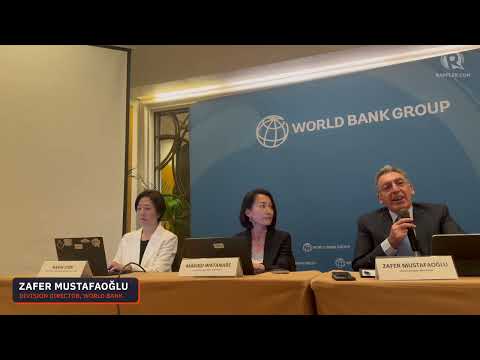

Make LGU funds ‘results-based’ amid pork barrel concerns — World Bank

“The short answer is, yes, we believe that LGSF can support genuine regional development so long as obviously it’s effectively utilized,” Watanabe said when asked by Rappler during the launch of the World Bank’s From Cities to Corridors report on Tuesday, October 27.

She suggested that allocations be made “performance-based or results-based” rather than set in advance, and that funding encourage “inter-LGU type of investments” rather than isolated projects.

These could include shared transportation and digital infrastructure, as well as disaster resilience projects that have spillover benefits beyond a single municipality or city.

World Bank Philippines division director Zafer Mustafaoğlu likewise emphasized the need for accountability, efficient spending, and timely project completion, while suggesting too that authorities should consider the economic potential of neighboring LGUs when allocating resources.

The proposed LGSF has drawn scrutiny over concerns that it could be used for discretionary spending and political patronage. Senate finance committee chairperson JV Ejercito has questioned the criteria for distributing the more-than-P58-billion fund and called for safeguards to ensure that allocations address local development needs rather than reward political allies. Senate President Sherwin Gatchalian also said that the LGSF needed to be transparent to promote good governance.

Must Read

[In This Economy] The 2027 budget: Hocus-pocus prevails once more


[In This Economy] The 2027 budget: Hocus-pocus prevails once more

Issues in local project funding

The World Bank’s latest report also identifies weaknesses in how local projects secure funding.

Only about 30% of investment proposals endorsed through regional development councils receive funding in a given budget cycle, which may create “uncertainties among LGUs about which of their endorsed priorities will receive the national government support,” the World Bank report said.

It also notes that projects outside local annual investment plans (AIP) can receive funding when they have political backing, while planned projects may go unfunded.

“While AIP is a standard vehicle for investment planning, [focus group discussion] shows that projects are also budgeted outside the AIP when there is political support, whereas AIP-listed items go unfunded when local priorities do not align,” the World Bank said in its report.

SITTING ON CASH? A World Bank analysis of 2023 year-end cash balance as a share of annual operating revenues by urban LGU size shows that LGUs are not utilizing large amounts of cash on hand. Chart from the World Bank’s report

Beyond the allocation process, many LGUs struggle to spend the funds they already have. Capital investments account for only about 15% of annual LGU expenditure, while poor project preparation and procurement add to delays.

This has left local governments sitting on cash reserves, with large urban LGUs holding an average of P9,263 per person in year-end cash on hand balances in 2023, funds that the World Bank said could have been better used to address infrastructure and service needs.

The report’s main recommendation is to shift away from individual LGU support to what it calls interconnected “corridor-based” development, with aligned national and local plans and better project implementation capacity. – Rappler.com

Similar Posts

  • | | |

    Aurangzeb, Baker discuss stronger Pak-US economic …

    Federal Minister for Finance Muhammad Aurangzeb met US Chargé d’Affaires Natalie Baker on Monday to discuss ways to strengthen Pakistan-US economic relations, trade and investment cooperation. According to the Finance Ministry, Aurangzeb briefed the US diplomat on his recent visit to Washington and meetings with senior American officials, including the US Treasury secretary. He also shared details of discussions with officials from the International Monetary Fund (IMF), US International Development Finance Corporation (DFC) and US Export-Import Bank. The meeting focused on increasing US investment and financing for commercially viable projects in Pakistan. Both sides also discussed improving Pakistan’s access to US markets and expanding Pakistani exports. The two sides agreed to advance a framework aimed at increasing bilateral trade and investment. They also discussed Pakistan’s participation in international capital markets and efforts to diversify the country’s sources of financing. According to the ministry, discussions also covered measures to strengthen foreign exchange reserves and improve Pakistan’s credit profile. Opportunities for greater investment by US financial institutions in Pakistan were reviewed. Cooperation in key sectors, including ports, logistics, energy and telecommunications, also came under discussion. The two sides explored potential collaboration in digital technology and artificial intelligence. Aurangzeb said significant progress had been made in negotiations on a bilateral trade framework between Pakistan and the United States. He said the government was working to create a more favourable environment for private-sector investment. The finance minister welcomed the interest of US companies and investors in Pakistan. He said the government was continuing reforms aimed at improving the business and investment climate. Aurangzeb also briefed the US chargé d’affaires on Pakistan’s new system for daily adjustments in petroleum product prices. He explained that the mechanism was designed to align domestic prices more closely with developments in the international market. He said the government’s priorities included maintaining fiscal discipline, strengthening foreign exchange reserves and increasing exports. He added that reforms were underway to improve economic stability and attract investment. Natalie Baker appreciated Pakistan’s efforts to manage its economic situation during a period of regional tensions. She also praised the country for maintaining economic and financial stability despite rising energy prices.

  • |

    PSX rallies over 400 points in early trading as investor sentiment improves

    KARACHI: Buying activity returned to the Pakistan Stock Exchange (PSX) on Monday, with the benchmark KSE-100 Index gaining more than 400 points during the opening phase of trading as investors showed renewed interest in major sectors. At around 9:50am, the benchmark index was trading at 181,880.56 points, recording an increase of 450.54 points, or 0.25%, compared with the previous close. The positive momentum was supported by buying across several key sectors, including automobile assemblers, cement companies, commercial banks, oil and gas exploration firms, oil marketing companies (OMCs) and refineries. Several heavyweight stocks also contributed to the upward movement. HUBCO, ARL, OGDC, POL, PPL, PSO, HBL, MCB, MEBL and NBP were among the prominent index constituents trading in positive territory during the early session. The latest gains came after the stock market delivered a strong performance last week, when easing geopolitical concerns helped improve investor confidence. Developments surrounding diplomatic efforts between Iran and Oman regarding shipping activity through the strategically important Strait of Hormuz, coupled with expectations of a possible wider understanding between the United States and Iran, provided some relief to financial markets. The KSE-100 Index had climbed 5,335.89 points, or around 3%, during the previous week, closing at 181,430.02 points. Global markets provide additional support The positive trend at the PSX was also in line with broader gains across Asian equity markets. Regional stocks moved higher on Monday after Wall Street ended the previous session at record levels, supported by weaker-than-expected US employment data. The softer US jobs figures reduced expectations of an immediate increase in borrowing costs, encouraging investors to take on more risk. However, uncertainty surrounding diplomatic developments in the Gulf continued to influence energy markets. Oil prices edged higher as concerns persisted over the movement of ships through the Strait of Hormuz, one of the world’s most important routes for global energy supplies. Iran said on Sunday that discussions with Oman over arrangements for new shipping lanes through the Strait of Hormuz were nearing completion. However, Tehran maintained that the waterway would not fully return to normal operations until the United States met additional conditions. The uncertainty contributed to a rise in international crude prices. Brent crude futures increased 0.9% to $84.32 per barrel, while US West Texas Intermediate crude gained 0.7% to $78.74 per barrel. US inflation data in focus Investors are also closely watching the upcoming US consumer inflation data, which could influence expectations regarding the Federal Reserve’s monetary policy. The US July consumer price report, due on Wednesday, is expected to show a 0.1% increase in headline inflation and a 0.2% rise in core inflation, according to market expectations. A stronger-than-anticipated inflation reading could revive concerns that the Federal Reserve may consider raising interest rates in the coming months. Conversely, a softer reading could strengthen expectations of a more accommodative monetary policy. Market pricing currently indicates that expectations for a September rate move have weakened. The probability of such a move has fallen to roughly 44%, compared with about 67% a week earlier. The decline in expectations for higher interest rates supported US Treasury bonds on Friday and helped major Wall Street indices finish at record levels. Asian equities follow Wall Street Asian markets broadly followed the positive lead from the United States on Monday. Japan’s Nikkei 225 advanced around 0.6%, while South Korea’s benchmark index gained approximately 0.5%. Meanwhile, MSCI’s broadest index of Asia-Pacific shares excluding Japan rose about 0.3%. For Pakistan’s equity market, the combination of stronger global sentiment, improved geopolitical expectations and renewed buying in heavyweight stocks provided support at the start of Monday’s session.

  • |

    Gold prices edge lower in Pakistan as global rates decline

    KARACHI: Gold prices recorded a modest decline in Pakistan on Saturday, with the domestic market following a slight downward movement in international bullion rates. According to data released by the All Pakistan Sarafa Gems and Jewellers Association, the price of gold fell by Rs500 per tola, bringing the price to Rs459,936 per tola. The association reported a corresponding decline in the price of 10 grams of gold. The rate for 10 grams was reduced by Rs429, settling at Rs394,320. The decrease in domestic gold prices came as international bullion rates also moved lower. In the global market, gold fell by $5 per ounce to $4,375 per ounce. Market participants closely monitor international gold prices, currency movements and domestic demand when determining bullion rates in Pakistan. Changes in the international market can have a direct impact on local prices, particularly when combined with fluctuations in the exchange rate. Gold remains a popular investment and savings instrument in Pakistan, where consumers and investors closely track daily changes in bullion prices. Jewellery demand, inflation expectations and movements in global financial markets can also influence local buying and selling activity. The latest reduction, however, was relatively limited, indicating that the domestic bullion market remained broadly stable despite the decline in international prices.

Leave a Reply

Your email address will not be published. Required fields are marked *