police personnel martyred

2 police personnel martyred in terrorist attack in Dera Ismail Khan

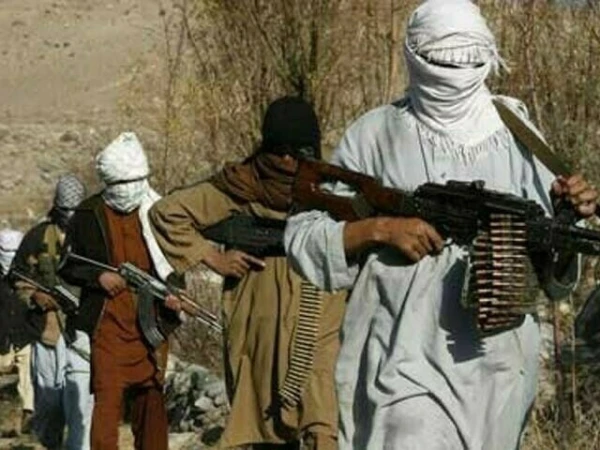
DERA ISMAIL KHAN: Two police personnel, including an Assistant Sub-Inspector (ASI), were martyred in an attack by suspected militants in the Shah Alam Mor area within the jurisdiction of Choudhwan Police Station, while an armoured personnel carrier (APC) of Daraban Police also came under attack in a separate incident. No casualties were reported in the APC attack.

According to Regional Police Officer (RPO) Dera Ismail Khan Ghulam Mubashir Maken, unidentified armed men attempted to stop two motorcycle riders in the Choudhwan area last night. When they did not stop, the assailants opened fire, killing a civilian identified as Adnan.

Following the incident, local residents blocked Daraban Road in protest on Sunday morning. Police held negotiations with the protesters and succeeded in reopening the road for traffic.

While returning after the negotiations, four Choudhwan police personnel travelling on two motorcycles came under a sudden attack near Shah Alam Mor. The militants opened indiscriminate fire on the policemen, resulting in the martyrdom of ASI Faqeer Muhammad, a resident of Jhok Sikandar Paroa, and Head Constable Wazir Khan.

Heavy police contingents rushed to the scene after receiving information about the attack, while local residents also reached the area to assist the police. The attackers fled after the firing. Police and security forces subsequently launched a search operation in the surrounding area.

In a separate incident, the police party accompanying the SHO of Choudhwan Police Station and an APC of Daraban Police, led by APC in-charge Abid Hussain, came under fire from militants at Darazinda Mor while returning after the protest. The police retaliated, forcing the attackers to flee. No loss of life was reported in the incident.

Police and security forces immediately reached the site and launched a search operation to track down the attackers.

Martyrs Laid to Rest with Full State Honours

The funeral prayers of martyred police personnel ASI Faqeer Ahmed and Head Constable Wazir Ahmed were offered at Ejaz Shaheed Police Lines in Dera Ismail Khan with full official honours.

Station Commander Brigadier Muhammad Abu Bakar, RPO Ghulam Mubashir Maken, DPO Ziauddin Ahmed, Deputy Commissioner Hikmatullah Wazir, SP CTD Iftikhar Ali Shah, senior civil and police officers, Pakistan Army officers, government officials, local elders, civil society representatives and the families of the martyrs attended the funeral.

A smartly turned out police contingent presented a guard of honour to the martyrs, whose bodies were wrapped in the national flag. Senior officials and other participants laid floral wreaths on the coffins and offered prayers for the elevation of the martyrs’ ranks, the security of Pakistan and lasting peace.

After the funeral, RPO Ghulam Mubashir Maken and DPO Ziauddin Ahmed met the families of the martyrs and expressed their condolences and solidarity.

The RPO said the martyrs were an asset to the nation and a source of pride for the police department, adding that their sacrifices would always be remembered.

He vowed that the blood of the martyrs would not go in vain and that the elements involved in the Shah Alam Mor attack would be arrested and brought to justice at the earliest. He said action would also be taken against their facilitators without discrimination.

Ghulam Mubashir Maken said Dera police would continue performing its duties with full force, professional commitment and national spirit until the menace of terrorism was completely eliminated. He added that efforts to maintain peace and protect the lives and property of citizens would continue.
Similar Posts

  • | |

    Khawaja Asif calls bureaucracy Pakistan’s real r…

    ISLAMABAD: Defence Minister Khawaja Asif has criticised Pakistan’s bureaucracy. He described it as the country’s “real and permanent rulers.” Asif said bureaucrats had remained largely beyond effective accountability during Pakistan’s 78-year history. He said politicians had faced accountability on numerous occasions. Other powerful groups had also been held accountable at different times. However, he said it was difficult to find similar examples involving senior bureaucrats. The defence minister made the remarks while sharing a social media post about alleged financial corruption involving a senior bureaucrat. Asif said the bureaucracy had gradually become a powerful and largely untouchable class. He questioned why bureaucrats had not been subjected to the same level of scrutiny as politicians. According to Asif, politicians themselves were partly responsible for the situation. He said political leaders had failed to establish an effective system to hold the bureaucracy accountable. The minister also referred to a former bureaucratic ruler while discussing the influence of senior officials in Pakistan. He said the former official used highly inappropriate and insulting language against politicians. Despite this behaviour, politicians continued to tolerate him, according to Asif. Asif’s comments highlight his criticism of the imbalance in accountability among powerful sections of Pakistani society. His remarks also raise questions about the role of the bureaucracy in governance and decision-making. The minister maintained that stronger accountability was needed for all powerful groups. He suggested that politicians could not blame bureaucrats alone for the existing system because political leaders had also contributed to its continuation.

  • | |

    Gun attack on Police van kills two officers in DI …

    DERA ISMAIL KHAN: Two police personnel, including an Assistant Sub-Inspector (ASI), were martyred after unidentified gunmen opened fire on a police van in the Daraban area of Dera Ismail Khan on Friday, authorities said. According to officials from the Counter Terrorism Department (CTD), the attack occurred near Shah Alam Mor, where the police team was travelling to conduct an operation after receiving intelligence about the presence of suspected militants in the area. As the police van reached the location, armed assailants launched a sudden attack, firing multiple rounds at the vehicle. The officers immediately returned fire, triggering a brief exchange of gunfire. Despite the retaliation, two police officials, including an ASI, sustained critical injuries and were martyred in the line of duty. Officials said the attackers managed to flee the scene under the cover of the exchange of fire. Security forces quickly cordoned off the area and launched a search operation to trace the attackers. Investigators are collecting evidence from the scene while intelligence agencies are assisting in identifying those responsible for the assault. No group immediately claimed responsibility for the attack, but authorities are treating it as an act of terrorism. The latest incident highlights the persistent security challenges in southern Khyber Pakhtunkhwa, where law enforcement personnel have increasingly come under attack during counterterrorism operations. Police officials vowed that those behind the ambush would be brought to justice, reaffirming their commitment to continuing operations against militant groups despite the growing threats. The sacrifice of the fallen officers, they said, reflects the courage and dedication of Pakistan’s security forces in maintaining peace and protecting citizens.

  • |

    Pakistan, Kazakhstan agree to accelerate trade and agricultural cooperation

    ISLAMABAD: Pakistan and Kazakhstan have agreed to speed up the implementation of previously signed agreements and memorandums of understanding (MoUs), with both sides seeking to convert existing commitments into practical trade, investment and business opportunities. The understanding was reached during a meeting between Federal Minister for National Food Security and Research Rana Tanveer Hussain and Kazakhstan’s Ambassador to Pakistan Yerzhan Kistafin in Islamabad, where the two sides reviewed a broad range of issues related to agriculture, food security, connectivity, farm mechanisation and private-sector cooperation. According to the Ministry of National Food Security and Research, the meeting focused on identifying areas where bilateral cooperation could produce commercially viable projects and contribute to stronger economic relations between the two countries. Rana Tanveer Hussain said agriculture represented one of the most promising areas for expanding Pakistan-Kazakhstan relations, particularly given the potential for increased trade in agricultural commodities, machinery and technology. The minister stressed that bilateral agreements should move beyond formal commitments and result in concrete projects that could benefit businesses and farmers in both countries. He also called for closer coordination among government departments, research institutions, agricultural organisations and the private sector to facilitate investment and technology transfer. Joint agriculture working group to meet in Kazakhstan Pakistan and Kazakhstan also agreed to hold the next meeting of their Joint Working Group on Agriculture in Kazakhstan. The forum is expected to assess progress on previously identified areas of cooperation and explore additional opportunities in agricultural trade, food security, mechanisation and related fields. The proposed meeting is also expected to provide a platform for officials and private-sector representatives to discuss practical barriers to trade and develop proposals aimed at increasing agricultural exchanges between the two countries. Kazakhstan, meanwhile, showed interest in supplying wheat to Pakistan. Pakistani authorities agreed to examine the proposal while taking into account factors including the prevailing price, quality standards and reliability of supply. The development comes as Pakistan continues to explore ways to diversify its sources of food commodities and strengthen trade relationships with Central Asian economies. Pakistan seeks greater access for agricultural exports During the discussions, Pakistan highlighted the export potential of several agricultural products, including mangoes, guava, dates, bananas, potatoes and onions. The Pakistani side expressed interest in securing greater access for these products in Kazakhstan and other Central Asian markets. Improved market access, the officials noted, could create new opportunities for Pakistani growers, exporters and agribusinesses. The two sides also discussed the importance of improving transport and logistics infrastructure to support agricultural trade. Connectivity was identified as a critical factor in expanding commercial relations, particularly through proposed rail and regional transportation routes linking Central Asian countries with Pakistan. Better transport links could reduce freight and transit costs, improve the movement of perishable agricultural goods and provide businesses in both regions with access to new markets. Mechanisation offers new area of cooperation Agricultural mechanisation was also identified as an area with considerable potential for joint ventures and investment. Particular attention was given to affordable tractors and agricultural machinery that could be used by small and medium-sized farmers. Cooperation in this field could help improve farm productivity while creating opportunities for manufacturers and investors from both countries. The Pakistani side also emphasised the importance of exchanging agricultural technology and research expertise, saying stronger institutional links could support innovation and improve agricultural productivity. The minister underscored the need for closer engagement between research organisations, agricultural institutions and business communities so that technical cooperation could be translated into commercially sustainable ventures. Kyrgyzstan supports stronger Pakistan business ties Separately, Pakistan’s private sector has also taken steps to deepen economic engagement with another Central Asian country, Kyrgyzstan. Kyrgyzstan’s Chargé d’Affaires Aibek Tilebaliev held a meeting with Federation of Pakistan Chambers of Commerce and Industry (FPCCI) President Atif Ikram Sheikh, during which the two sides discussed bilateral trade, investment and direct business-to-business contacts. The participants agreed that stronger interaction between companies from Pakistan and Kyrgyzstan would be essential for expanding bilateral commerce and identifying new investment opportunities. Atif Ikram Sheikh welcomed the increasing high-level engagement between the two countries, saying that considerable potential existed to expand trade and investment but that greater efforts were needed to convert this potential into actual business activity. He suggested that a Pakistani business delegation could visit Kyrgyzstan under the FPCCI platform to explore commercial opportunities, establish direct contacts with local companies and develop partnerships in different sectors. Joint Business Council proposed A key outcome of the meeting was agreement to accelerate the establishment of a Joint Business Council between Pakistan and Kyrgyzstan. The proposed council is expected to provide a formal platform for representatives of the two countries’ business communities to discuss trade barriers, investment opportunities, market access and potential joint ventures. Both sides agreed to expedite the necessary steps for setting up the council. Sheikh also highlighted the importance of regional forums, particularly the Shanghai Cooperation Organisation (SCO), in facilitating greater economic integration among member states. He said the platform could be used more effectively to promote trade, investment and business-to-business cooperation across the region. Tilebaliev reaffirmed Kyrgyzstan’s interest in strengthening economic and commercial relations with Pakistan. He stressed that more frequent and direct interaction between business communities would be important for translating political goodwill into tangible economic gains. The parallel initiatives involving Kazakhstan and Kyrgyzstan reflect Pakistan’s broader efforts to deepen economic engagement with Central Asia. Improved connectivity, stronger private-sector links and greater agricultural and industrial cooperation could provide new avenues for Pakistani exporters while opening opportunities for investment and regional trade.

  • | |

    New provinces debate gains momentum as coalition p…

    A renewed debate over the creation of new provinces in Pakistan has gathered political momentum after two major coalition partners publicly endorsed Interior Minister Mohsin Naqvi’s proposal to restructure the country’s administrative system. However, the ruling Pakistan Muslim League-Nawaz (PML-N) has yet to officially comment, fueling speculation over its stance on the sensitive issue. The discussion began after Naqvi argued that Pakistan’s existing administrative framework had become ineffective and called for a national consensus on establishing smaller provinces to improve governance and public service delivery. His remarks quickly drew support from coalition allies, including the Muttahida Qaumi Movement-Pakistan (MQM-P) and the Istehkam-e-Pakistan Party (IPP). Federal Health Minister Mustafa Kamal described the proposal as an urgent national necessity rather than a political choice, stressing that decentralizing administrative powers was essential for effective governance. The MQM-P has long advocated the creation of an additional province in Sindh, making the party one of the strongest supporters of the initiative. Privatization Minister Abdul Aleem Khan of the IPP also endorsed the proposal, suggesting that each of Pakistan’s four existing provinces could eventually be divided into three administrative regions. He argued that smaller provinces would bring government closer to the people and reduce the hardships faced by citizens traveling long distances to provincial capitals. Despite growing support from coalition partners, the proposal faces significant constitutional and political challenges. Any change to provincial boundaries requires a two-thirds majority in the affected provincial assembly, making consensus difficult to achieve. The Pakistan Peoples Party (PPP), which governs Sindh and is also part of the federal coalition, has expressed strong reservations, warning that such a move could create more problems than solutions. Opposition leaders have also criticized the proposal, arguing that the government lacks the political mandate for such a major constitutional change. They insist that strengthening democratic institutions and improving governance should take priority over redrawing provincial boundaries. Political analysts have offered differing views on the initiative. Some believe creating new provinces could deepen ethnic and regional divisions, while others see the debate as an attempt to shift public attention away from pressing national issues, including recent unrest in Azad Jammu and Kashmir and ongoing security challenges in Balochistan. Many experts argue that empowering local governments under the 18th Constitutional Amendment would be a more practical and effective way to improve governance without altering provincial boundaries. Mustafa Kamal also acknowledged that stronger local governments are essential regardless of whether new provinces are eventually created. With the PML-N maintaining silence and key coalition partners taking opposing positions, the proposal has opened a fresh political debate that is likely to remain at the center of Pakistan’s national discourse in the coming months.

  • |

    LHC warns of serious environmental consequences

    The Lahore High Court has issued a 265-page detailed judgment in cases related to smog and environmental degradation, warning that continued damage to nature could leave future generations without essential natural resources. The court said human activities have pushed the environment and climate to a critical stage. Pollution, excessive use of natural resources and environmental degradation are intensifying rapidly, making immediate and effective action necessary. The judgment stressed that environmental protection is not solely the responsibility of government departments. Citizens, institutions, businesses, educational organisations and local authorities must also play their part. The court expressed serious concern over the rapid decline in groundwater levels, describing the situation as extremely dangerous. It stressed that water remains essential for human survival and warned that its unnecessary consumption and wastage could create severe problems for future generations. The court directed relevant authorities to introduce practical measures to conserve water and reduce unnecessary consumption. As part of its water conservation measures, the court directed authorities to ensure that water used for ablution at mosques is collected instead of being wasted. The court ordered that the collected water should be reused for watering plants and greenery. It observed that even small conservation measures could have a significant impact when implemented on a large scale. The judgment highlighted the strong connection between environmental protection and fundamental human rights. The court noted that the right to a clean, healthy and sustainable environment has gained constitutional significance in Pakistan following the insertion of Article 9A into the Constitution. It called for long-term policies to protect air, water, soil, trees and other natural resources instead of relying only on temporary measures during severe smog episodes. The court warned that continued neglect of the environment could cause irreversible damage. It stressed that authorities must treat environmental protection as a permanent priority rather than responding only when smog or other environmental emergencies become severe. The Lahore High Court has issued several directions during the long-running smog case covering air pollution, tree plantation, groundwater conservation and urban environmental management. Through its continuing supervisory role, the court has also monitored the implementation of these measures by government departments and environmental bodies. The judgment called for collective action and changes in human behaviour to tackle Punjab’s growing environmental challenges and protect natural resources for future generations.

  • | | |

    India behind anti-Pakistan propaganda network: Tar…

    ISLAMABAD: Federal Minister for Information and Broadcasting Attaullah Tarar has alleged that an entire network involved in spreading misleading propaganda and disinformation against Pakistan and Pakistani agencies has links to India. Speaking at a press conference in Islamabad, the minister said most of the content being circulated was related to the banned Action Committee in Kashmir. Tarar claimed that evidence of Indian funding for elements associated with the banned Action Committee was now in the public domain. He said numerous Indian social media accounts had emerged with evidence linking them to the campaign. According to the minister, posts shared through these accounts were aimed at provoking people against the state. He alleged that social media platforms were being used to promote groups involved in mob mobilisation and attempts to take the law into their own hands. The minister said efforts had been made to encourage such elements through social media. He alleged that the campaign was designed to create unrest and chaos in Kashmir. Tarar said Pakistan’s recent successes had not been acceptable to its adversaries. He said Pakistan had achieved gains not only on the military front but also on the diplomatic front. The information minister said the government would continue defending Pakistan’s national interests on every front. He stressed that efforts to spread disinformation and destabilise the country would not be allowed to undermine Pakistan’s interests. Tarar’s remarks came amid continued debate over social media campaigns and alleged foreign influence in Pakistan’s internal affairs. The minister urged the public to remain alert to misleading content and propaganda being circulated online.

Leave a Reply

Your email address will not be published. Required fields are marked *